US finds 500 Native American boarding school deaths so far

Advertisement

Advertise with us

FLAGSTAFF, Ariz. (AP) — A first-of-its-kind federal study of Native American boarding schools that for over a century sought to assimilate Indigenous children into white society has identified more than 500 student deaths at the institutions, but officials expect that figure to grow exponentially as research continues.

Read this article for free:


or

Already have an account? Log in here »

To continue reading, please subscribe:

Subscribe and receive a limited-edition Free Press branded hat or tote.

Digital Subscription

One year of digital access for only $205*

  • Enjoy unlimited reading on winnipegfreepress.com
  • Read the E-Edition, our digital replica newspaper
  • Access News Break, our award-winning app
  • Play interactive puzzles

*First annual payment billed as $205.00 + GST for one year. This annual subscription will automatically renew at $233.00 + GST every 52 weeks (10% off the regular annual price of $259.35). Offer available to new and qualified returning subscribers only. Cancel any time.

To continue reading, please subscribe:

Add Free Press access to your Brandon Sun subscription for only an additional

$1 for the first 4 weeks*

  • Enjoy unlimited reading on winnipegfreepress.com
  • Read the E-Edition, our digital replica newspaper
  • Access News Break, our award-winning app
  • Play interactive puzzles
Start now

*Your next Brandon Sun subscription payment will increase by $1.00 and you will be charged $17.95 plus GST for four weeks. After four weeks, your payment will increase to $24.95 plus GST every four weeks.

Hey there, time traveller!
This article was published 11/05/2022 (1593 days ago), so information in it may no longer be current.

FLAGSTAFF, Ariz. (AP) — A first-of-its-kind federal study of Native American boarding schools that for over a century sought to assimilate Indigenous children into white society has identified more than 500 student deaths at the institutions, but officials expect that figure to grow exponentially as research continues.

The Interior Department report released Wednesday expands to more than 400 the number of schools that were established or supported by the U.S. government, starting in the early 19th century and continuing in some cases until the late 1960s. The agency identified the deaths in records for about 20 of the schools.

The dark history of Native American boarding schools — where children were forced from their families, prohibited from speaking their languages and often abused — has been felt deeply across Indian Country and through generations.
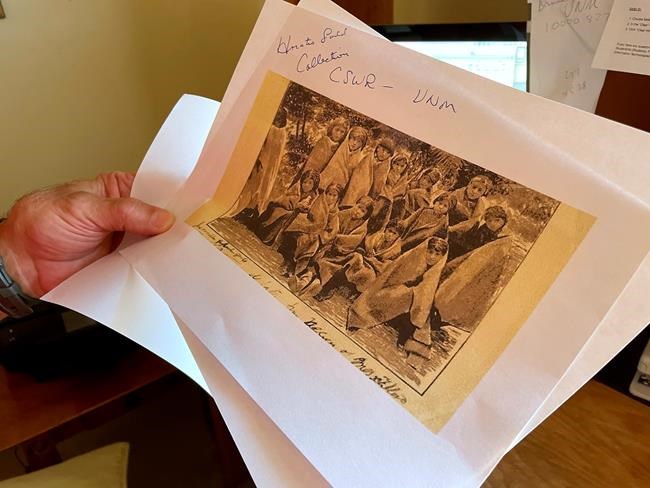
FILE - In this July 8, 2021, photo, adjunct history professor and research associate Larry Larrichio holds a copy of a late 19th century photograph of pupils at an Indigenous boarding school in Santa Fe during an interview in Albuquerque, New Mexico. The U.S. Interior Department is expected to release a report Wednesday, May 11, 2022, that it says will begin to uncover the truth about the federal government's past oversight of Native American boarding schools. (AP Photo/Susan Montoya Bryan, File)

Many children never returned home, and the Interior Department said that with further investigation the number of known student deaths could climb to the thousands or even tens of thousands. Causes included disease, accidental injuries and abuse.

“Each of those children is a missing family member, a person who was not able to live out their purpose on this Earth because they lost their lives as part of this terrible system,” said Interior Secretary Deb Haaland, whose paternal grandparents were sent to boarding school for several years.

The agency is in the process of poring through thousands of boxes containing more than 98 million pages of records, with help from many Indigenous people who have had to work through their own trauma and pain. Accounting for the number of deaths will be difficult because records weren’t always kept.

A second volume of the report will cover burial sites as well as the federal government’s financial investment in the schools and the impacts of the boarding schools on Indigenous communities, the Interior Department said. It has so far identified at least 53 burial sites at or near boarding schools, not all of which have marked graves.

Tribal leaders have pressed the agency to ensure that any children’s remains are properly cared for and returned to their tribes, if desired. To prevent them from being disturbed, the burial sites’ locations will not be publicly released, said Bryan Newland, the Interior Department’s assistant secretary for Indian Affairs.

At a news conference Wednesday, Haaland choked back tears as she described how the boarding school era perpetuated poverty, mental health disorders, substance abuse and premature deaths in Indigenous communities.

“Recognizing the impacts of the federal Indian boarding school system cannot just be a historical reckoning,” she said. “We must also chart a path forward to deal with these legacy issues.”
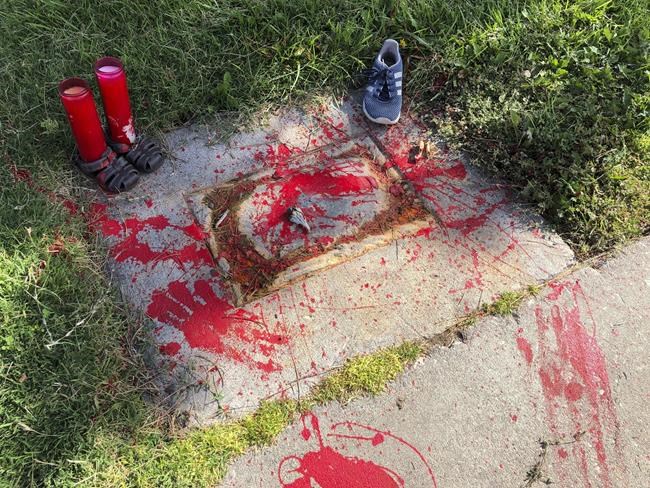
FILE - Red painted handprints cover the empty spot at a park in Albuquerque, New Mexico, on Thursday, July 1, 2021, where a historical marker for the Indigenous children who died while attending a boarding school nearby was removed. The U.S. Interior Department is expected to release a report Wednesday, May 11, 2022, that it says will begin to uncover the truth about the federal government's past oversight of Native American boarding schools. (AP Photo/Susan Montoya Bryan,File)

Haaland, who is Laguna, announced an initiative last June to investigate the schools’ troubled legacy and uncover the truth about the government’s role in them. The 408 schools her agency identified operated in 37 states or territories, many of them in Oklahoma, Arizona and New Mexico.

Others who spoke included Deborah Parker, chief executive of the National Native American Boarding School Healing Coalition, who tearfully recalled stories of a boarding school on the Tulalip reservation, where she’s from in Washington state. The school had a small jail cell and a basement where at least one girl routinely was chained to a heater and beaten, she said. Others hid to shield themselves from abuse.

“I am concerned when we begin to open these doors for our boarding school survivors to come forward and share their stories,” Parker said.

Basil Brave Heart attended Holy Rosary Mission in Pine Ridge, South Dakota, in the 1940s. He called having his hair cut by older students a “divide and conquer” strategy that made Native children take part in their own cultural destruction.

He was prohibited from practicing Lakota spiritual traditions and speaking his language that he said has a spiritual resonance not easily translated into English.

“Taking our language away is huge,” he said Wednesday. “It goes to our identity.”

The Interior Department acknowledged the number of schools identified could change as more data is gathered. The coronavirus pandemic and budget restrictions hindered some of the research over the past year, said Newland, a citizen of the Bay Mills Indian Community.
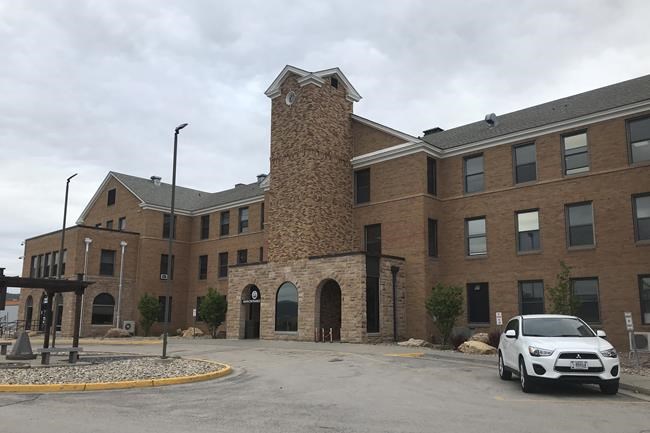
In this photo provided by Randi Oyan, is the former Rapid City Indian School, in Rapid City, S.D., on Wednesday, May 11, 2022. The school opened in the late 1800s and shut down in 1933. It was later converted into an asylum and a hospital, and now operates as an Indian Health Service clinic. A memorial is planned at a nearby hillside where researchers say dozens of boarding school children are buried in unmarked graves. (AP Photo/Randi Oyan)

The U.S. government directly ran some of the boarding schools. Catholic, Protestant and other churches operated others with federal funding, backed by U.S. laws and policies to “civilize” Native Americans. The federal government still oversees more than 180 schools in nearly two dozen states that serve Native Americans, but the schools’ missions are vastly different from the past.

The Interior Department report was prompted by the discovery of hundreds of unmarked graves at former residential school sites in Canada that brought back painful memories for Indigenous communities.

Haaland also announced Wednesday a yearlong tour for Interior Department officials that will allow former boarding school students from Native American tribes, Alaska Native villages and Native Hawaiian communities to share their stories as part of a permanent oral history collection.

The conditions at boarding and residential schools varied across the U.S. and Canada. While some former students have reported positive experiences, children at the schools often were subject to military-style discipline.

James LaBelle Sr., who is Inupiaq, said he attended to two federal boarding schools where he learned about European and American history and language, math and science but nothing about Indigenous cultures and traditions.

“I came out not knowing who I was,” he said.

The boarding school coalition, which created an early inventory of the schools and shared its research with the Interior Department, praised Interior’s work but noted the agency’s scope is limited. The coalition has identified about 90 other boarding schools that fall outside the federal government’s criteria.
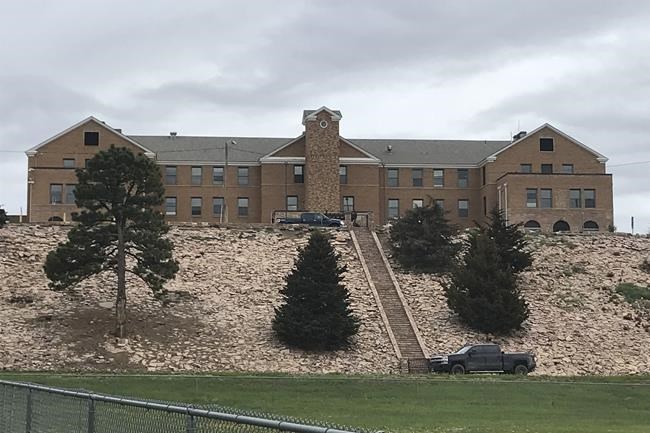
In this photo provided by Randi Oyan, is the former Rapid City Indian School, in Rapid City, S.D., on Wednesday, May 11, 2022. The school opened in the late 1800s and shut down in 1933. It was later converted into an asylum and a hospital, and now operates as an Indian Health Service clinic. A memorial is planned at a nearby hillside where researchers say dozens of boarding school children are buried in unmarked graves. (AP Photo/Randi Oyan)

A U.S. House subcommittee on Thursday will hear testimony on a bill to create a truth and healing commission modeled after one in Canada. Parker said it’s important in revealing a fuller truth about what happened to Native children.

“Our children deserve to be found,” she said. “Our children deserve to be brought home. We are here for their justice. And we will not stop advocating until the United States fully accounts for the genocide committed against Native children.”

___

Fonseca is a member of the AP’s Race and Ethnicity team. Follow her on Twitter at https://twitter.com/FonsecaAP. Associated Press writer Peter Smith in Pittsburgh, Pennsylvania, contributed to this report.

Report Error Submit a Tip

The Free Press acknowledges the financial support it receives from members of the city’s faith community, which makes our coverage of religion possible.
More Stories

National Black Canadians Summit celebrates culture, combats racism

Gabrielle Piché 4 minute read Preview

National Black Canadians Summit celebrates culture, combats racism

Gabrielle Piché 4 minute read Yesterday at 6:06 PM CDT

Despite the event’s name — the National Black Canadians Summit — Bruce Miller felt he should attend.

He booked a ticket. And so, this weekend, the Indigenous Manitoban joined roughly 1,500 people flocking to the RBC Convention Centre.

It’s a full schedule — addresses from a former Canadian governor general, sessions on Black mental health and anti-Black racism.

The annual event draws politicians, artists and other professionals from across the country.

Read
Yesterday at 6:06 PM CDT

Klein has burned bridges with PM, Gillingham says

Joyanne Pursaga 3 minute read Preview

Klein has burned bridges with PM, Gillingham says

Joyanne Pursaga 3 minute read Friday, Sep. 18, 2026

One mayoral candidate accused another of writing a column so critical it could compromise his ability to work with the federal government.

Read
Friday, Sep. 18, 2026

American Hostage stars recall warmth of Winnipeggers during brutal winter

Randall King 7 minute read Preview

American Hostage stars recall warmth of Winnipeggers during brutal winter

Randall King 7 minute read Friday, Sep. 18, 2026

TORONTO — When you stream the eight-part series American Hostage, a sense of familiarity may strike.

That’s because the show was shot in Winnipeg — especially in the Exchange District — from November of last year to the beginning of February, with Winnipeg portraying Indianapolis circa 1977.

The whole world seemed to be watching that midwest American city that year as a hostage crisis unfolded involving one Tony Kiritsis, an angry man who goes ballistic when a mortgage brokerage was poised to foreclose on property he had dreamed of developing into a shopping centre.

Kiritsis kidnapped his mortgage broker, Richard Hall, wiring a shotgun to the back of his head, and demanded a public airing of his grievances, with the reluctant help of popular radio broadcaster Fred Heckman.

Read
Friday, Sep. 18, 2026

A quick look at where provinces and territories stand on time changes

The Canadian Press 2 minute read Preview

A quick look at where provinces and territories stand on time changes

The Canadian Press 2 minute read Friday, Sep. 18, 2026

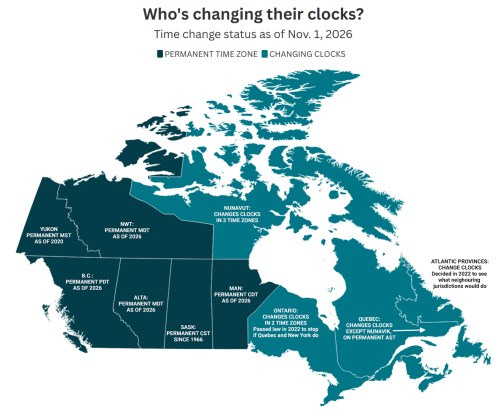
WINNIPEG - Manitoba's government said Thursday the province will be sticking with daylight time year-round, making it the latest jurisdiction to move away from twice-annual time changes. Here's a look at where things stand across Canada:

British Columbia said in March that it was moving to permanent Pacific daylight time. The change also means that parts of northeastern B.C., which have been on mountain standard time year round, are now in alignment with the rest of the province.

Alberta also switched to permanent daylight time this year in what it calls Alberta time. The change means it now has the same time as Saskatchewan year round.

Saskatchewan has been on permanent central standard time since 1966.

Read
Friday, Sep. 18, 2026

Gillingham in lead with decided voters

Nicole Buffie 6 minute read Preview

Gillingham in lead with decided voters

Nicole Buffie 6 minute read Friday, Sep. 18, 2026

A cloud of uncertainty is hanging over Winnipeg as October’s municipal election nears.

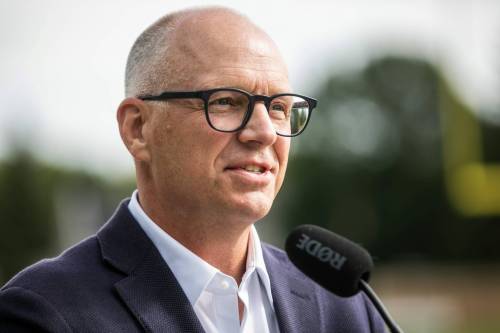
Three months after a poll showed more than 40 per cent of Winnipeggers wanted to see someone other than current mayor Scott Gillingham elected, a new Abacus Data poll indicates more than half of Winnipeg voters are undecided heading into next month’s civic election.

Of decided voters, 55 per cent favour Gillingham compared to 23 per cent for former councillor and provincial cabinet minister Kevin Klein and 11 per cent for funeral director Mike Vogiatzakis.

Of all respondents, just over 50 per cent said they were unsure while 13 per cent said they will not vote.

Read
Friday, Sep. 18, 2026

Desperate Poilievre wants Canadians to believe the sky is falling when it’s just cloudy outside

Tom Brodbeck 5 minute read Preview

Desperate Poilievre wants Canadians to believe the sky is falling when it’s just cloudy outside

Tom Brodbeck 5 minute read Friday, Sep. 18, 2026

Pierre Poilievre has a problem.

Canadians just don’t seem to be paying much attention to him anymore.

So, naturally, the Conservative Opposition leader has decided to turn up the volume.

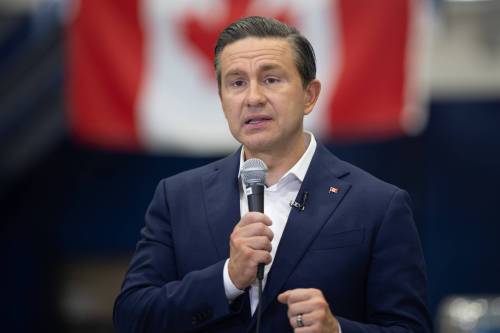
At a recent party caucus retreat in Penticton, B.C., Poilievre delivered the familiar message: Canada is in trouble, Canadians are hurting and the Liberal government is making everything worse.

Read
Friday, Sep. 18, 2026