Navajo sign water rights settlement with Utah and feds
Advertisement
Read this article for free:
or
Already have an account? Log in here »
To continue reading, please subscribe:

Digital Subscription
One year of digital access for only $205*
- Enjoy unlimited reading on winnipegfreepress.com
- Read the E-Edition, our digital replica newspaper
- Access News Break, our award-winning app
- Play interactive puzzles
*First annual payment billed as $205.00 + GST for one year. This annual subscription will automatically renew at $233.00 + GST every 52 weeks (10% off the regular annual price of $259.35). Offer available to new and qualified returning subscribers only. Cancel any time.
To continue reading, please subscribe:
Add Free Press access to your Brandon Sun subscription for only an additional
$1 for the first 4 weeks*
- Enjoy unlimited reading on winnipegfreepress.com
- Read the E-Edition, our digital replica newspaper
- Access News Break, our award-winning app
- Play interactive puzzles
*Your next Brandon Sun subscription payment will increase by $1.00 and you will be charged $17.95 plus GST for four weeks. After four weeks, your payment will increase to $24.95 plus GST every four weeks.
Read unlimited articles for free today:
or
Already have an account? Log in here »
Hey there, time traveller!
This article was published 27/05/2022 (1573 days ago), so information in it may no longer be current.
MONUMENT VALLEY, Utah (AP) — Federal officials signed an agreement with leaders of the Navajo Nation on Friday that provides funding for clean drinking water infrastructure for reservation residents and resolves questions about longstanding Navajo claims to water rights in the drought-stricken U.S. West.
The signing formalizes the Utah Navajo Water Rights Settlement, which became law in 2020 as part of President Joe Biden’s bipartisan infrastructure bill. As part of the agreement, the federal government will pay the Navajo Nation $210 million for drinking water infrastructure in San Juan County — the part of the 27,00-square-mile (71,000-square kilometer) reservation that lies in Utah.
Many Navajo homes lack running water. Residents often fill containers at public taps or rely on water deliveries from volunteer organizations.
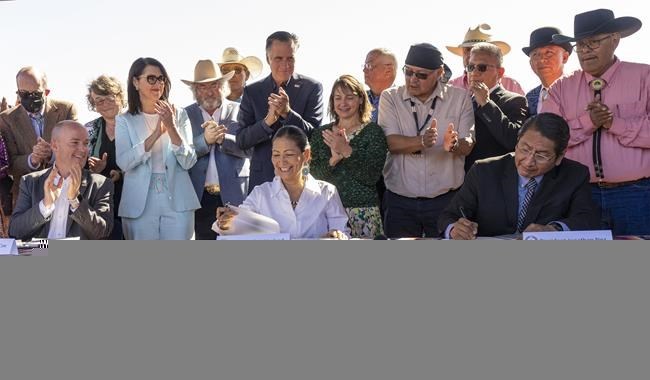
“As we seek to strengthen Indigenous communities and support tribal self-governance, today’s action and all of these investments will help provide the Navajo Nation with autonomy and flexibility to design and build appropriate water projects that will address current and future water needs,” U.S. Interior Secretary Deb Haaland said at a signing ceremony on the Navajo Nation.
Utah, which was also party to the agreement, will pay the Navajo $8 million as part of the settlement.
“We had two real problems in our state. One was the Navajo Nation had claims to the Colorado (River) that would impair Utah’s water rights,” U.S. Sen. Mitt Romney told The Salt Lake Tribune. “The other concern we had was about half the Navajo Nation residents (in Utah) didn’t have running water.”
The settlement also quantifies the Navajo Nation’s water rights, quelling Utah’s anxieties about its long-standing claims to a share of water, including from the Colorado River.
A 1908 court decision said tribes had rights to as much water as was needed to establish permanent homelands. Though they possess senior rights, the Navajo were left out when seven western states divided up shares as part of the Colorado River Compact a century ago.
The subsequent uncertainty and potential legal battles have emerged as an urgent issue as the region reckons with a hotter, drier future with less Colorado River water to be shared.
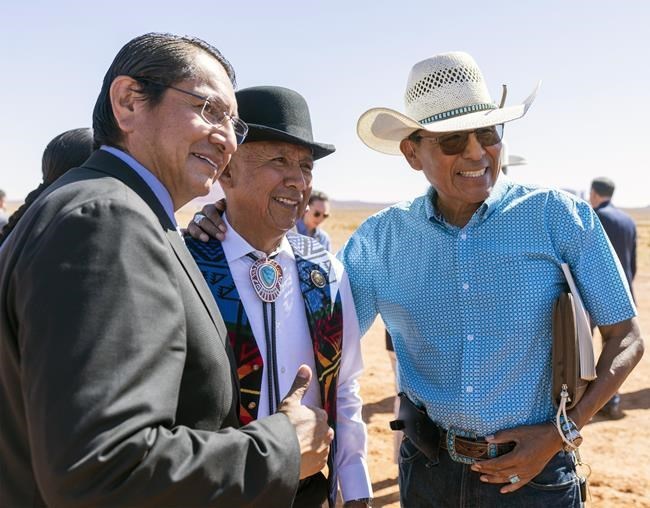
The settlement recognizes the Navajo’s right to 81,500 acre-feet of Utah water and allows them to draw the water from aquifers, rivers or Lake Powell, if they choose. The agreement also allows the Navajo to lease unused water to entities off the reservation and guarantees they won’t lose water rights not put to use.
It’s one of 16 tribal water rights settlements that the Biden administration is devoting $1.7 billion to fund from the recently enacted federal infrastructure bill.
“The hard work, however, must continue until all homes across the Navajo Nation have clean water running in faucets for all Navajo families,” Navajo Nation President Jonathan Nez told the newspaper.