Near-future pandemic story packs a punch

Advertisement

Advertise with us

Robert McGill’s second novel, 2013’s Once We Had a Country, was one of those books that should have sat high on all the Canadian prize shortlists. A wise, uncompromising novel, it is set during the time of the Vietnam War, as a young would-be filmmaker and her draft-dodging boyfriend start a commune in Canada, and then watch their utopian dream slowly implode.

Read this article for free:


or

Already have an account? Log in here »

To continue reading, please subscribe:

Subscribe and receive a limited-edition Free Press branded hat or tote.

Digital Subscription

One year of digital access for only $205*

  • Enjoy unlimited reading on winnipegfreepress.com
  • Read the E-Edition, our digital replica newspaper
  • Access News Break, our award-winning app
  • Play interactive puzzles

*First annual payment billed as $205.00 + GST for one year. This annual subscription will automatically renew at $233.00 + GST every 52 weeks (10% off the regular annual price of $259.35). Offer available to new and qualified returning subscribers only. Cancel any time.

To continue reading, please subscribe:

Add Free Press access to your Brandon Sun subscription for only an additional

$1 for the first 4 weeks*

  • Enjoy unlimited reading on winnipegfreepress.com
  • Read the E-Edition, our digital replica newspaper
  • Access News Break, our award-winning app
  • Play interactive puzzles
Start now

*Your next Brandon Sun subscription payment will increase by $1.00 and you will be charged $17.95 plus GST for four weeks. After four weeks, your payment will increase to $24.95 plus GST every four weeks.

Hey there, time traveller!
This article was published 25/06/2022 (1533 days ago), so information in it may no longer be current.

Robert McGill’s second novel, 2013’s Once We Had a Country, was one of those books that should have sat high on all the Canadian prize shortlists. A wise, uncompromising novel, it is set during the time of the Vietnam War, as a young would-be filmmaker and her draft-dodging boyfriend start a commune in Canada, and then watch their utopian dream slowly implode.

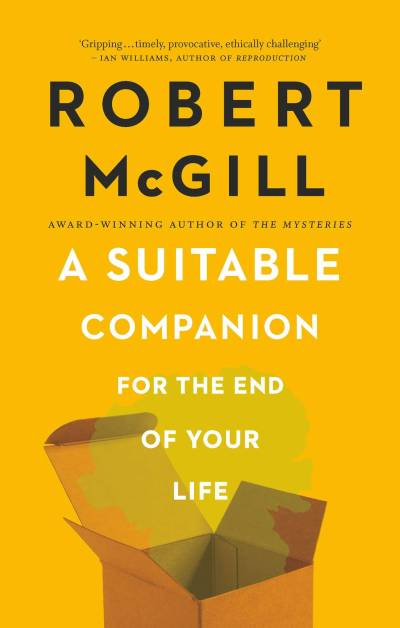
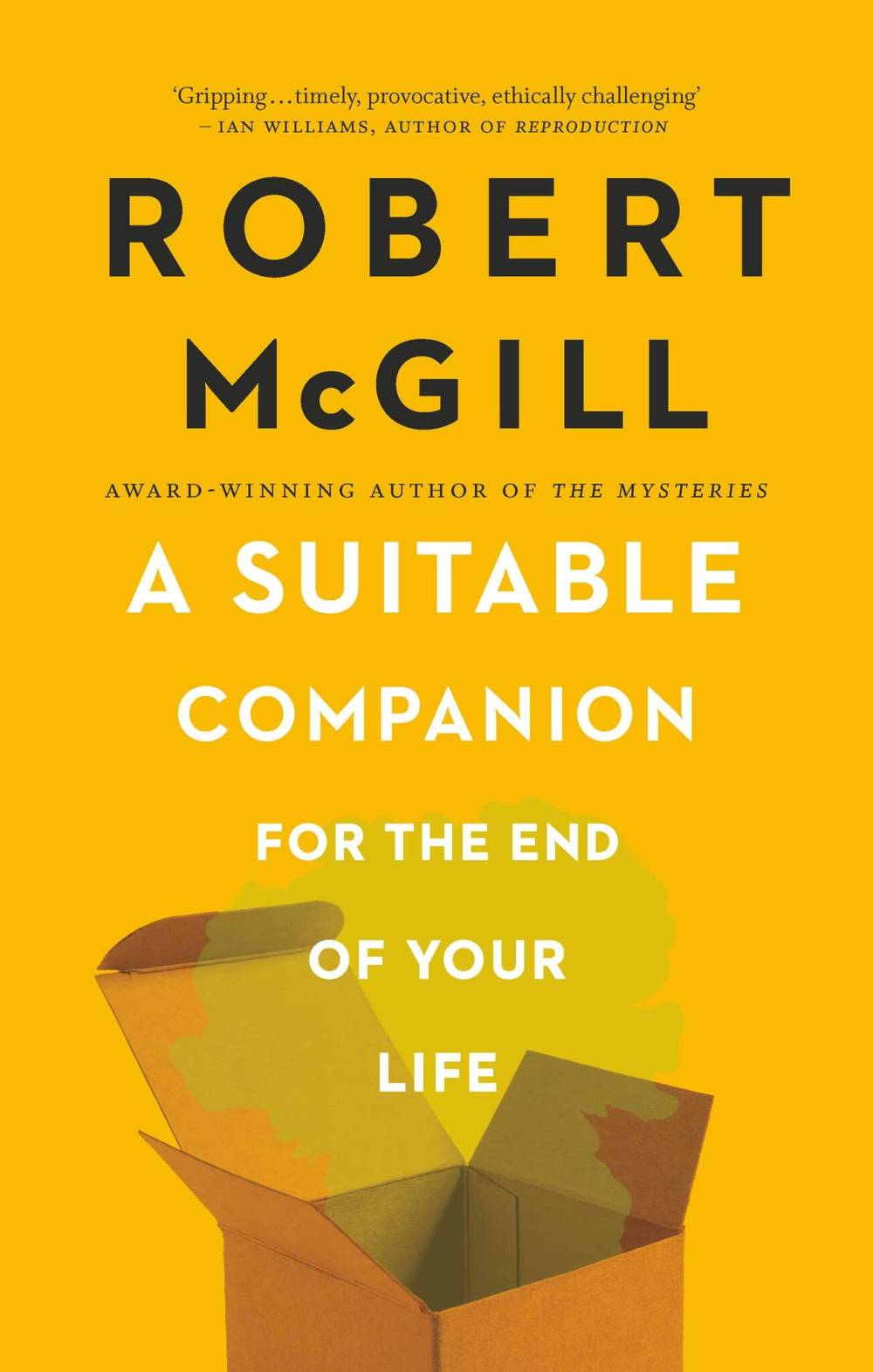
A Suitable Companion for the End of Your Life, a much slimmer book, still packs a punch. McGill once again lets his characters struggle with the kinds of moral problems that make his work so compelling. But this time, instead of looking back to 1972 before his birth, he looks forward into a near-future.

The novel takes place in Tkaronto — the place names (Oronhyatekha, Wonscotonach Valley) having been indigenized, though Rosedale is still hanging onto its old name. In McGill’s future, 18-year-old Regan wants to die. Her selfish father wants to escape drug rehab, her mother remains distant in both senses of the word, and Regan herself feels that she is nowhere. Choosing among the online suicide options, she orders a flatpack to be delivered to her home.
A Suitable Companion for the End of Your Life

Flatpacks are McGill’s black-humour updating of cryogenics. If you’re an Eastern European dying of a plague — “the worm” — you can pay to have your body undergo a chemical process that deflates you like a leftover Christmas yard ornament and sends you to the West. In A Suitable Companion, the hope is that once a cure for “the worm” is found you can be reinflated, cured and continue merrily on your way. Of course, it’s mostly people from poorer countries who need flatpacking.

Re-animation commences when someone blows into a little spigot behind the flatpack’s ears. But the flatpacks also apparently exude fatal gases; bad news for most blowers, good news for potential suicides.

To Regan, a flatpack seems, an easy route to a painless death; the seller has assured her flatpacks don’t remember their pasts, so she doesn’t think of these sacks as persons. But Ülle, the flatpack who is deposited at Regan’s door, starts calling Regan “Mama,” and then recovers bits of her past life.

Through “the worm,” McGill makes visceral and distressful the global division between haves (able to depend on strong health-care systems) and have-nots (who can’t evade “the worm”). He is at his best with the slow awakening of Ülle to consciousness, and with the moral struggle in Regan as she recognizes this peculiar immigrant as a person. Although Regan initially grapples with assisted suicide, her awareness slowly expands from justifiable self-centred concerns to questions of human rights, as she begins to see past her own troubles.

The novel is told both through Regan and through a woman who recounts Ülle’s life, and whose identity is a mystery until the very end. In Ülle’s section, we see what might make flatpacking enticing even for those without “the worm”: the difficulty of making a living, familial control, and videos of flatpacked people “being cared for by American families” and “cavorting with dogs and children.”

In its last quarter, the novel veers into thriller territory — exciting, but not necessarily a recommendation. The real interest lies in Regan and Ülle’s surprising, yet convincing, development of a surrogate mother/daughter relationship. That’s where McGill delivers.

Reinhold Kramer is a Brandon University English professor. His most recent book is Are We Postmodern Yet? And Were We Ever?
Report Error Submit a Tip

More Stories

Class delayed a day after mould found in Tyndall Park school

Maggie Macintosh 6 minute read Preview

Class delayed a day after mould found in Tyndall Park school

Maggie Macintosh 6 minute read Thursday, Sep. 3, 2026

The first day of school has been postponed at École Stanley Knowles School after teachers discovered mould on chairs, rugs and other items when they were setting up their classrooms.

Families were alerted Thursday afternoon that an “HVAC malfunction” required extensive cleanup and, as a result, a one-day delay to the new year.

“I called it a couple weeks ago — it smelled really strong of mould,” said Amanda Bell, a mother who’s gone to the building regularly all summer to drop off and pick up her children from the on-site daycare.

Bell recalled she and her partner got a whiff of “wet mould” in a first-floor hallway near the library in mid-August and flagged it to an employee who told them they’d contact a custodian.

Read
Thursday, Sep. 3, 2026

Puzzles Palace

1 minute read Monday, Jul. 27, 2026

To solve our puzzles, please subscribe with this special offer: |

Frequency of private plasma donations called into question

Marsha McLeod and Rylee Gerrard 9 minute read Preview

Frequency of private plasma donations called into question

Marsha McLeod and Rylee Gerrard 9 minute read Yesterday at 12:47 PM CDT

Two weeks after the death of a second plasma donor in Winnipeg at a privately run collection site, provincial and territorial health officials compiled a list of urgent questions for Health Canada.

A health department official in Nova Scotia, which leads the Provincial Territorial Blood Liaison Committee, wrote in mid-February to the federal regulator that their members had expressed “a great deal of curiosity tempered with concern” and forwarded two dozen questions, according to documents obtained by the Free Press.

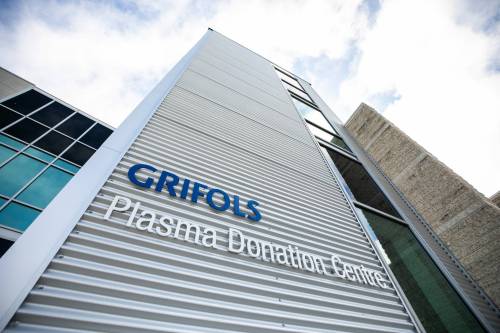
Under a section titled “MANITOBA ESTABLISHMENT INCIDENTS,” the provinces wanted to know: “What requirements are in place to ensure Grifols is ensuring collections frequency (does) not exceed the limit under the Health Canada licence?” and “Is Health Canada able to identify whether Grifols Canada has a donor system across establishments? (e.g., can identify when a donor last donated and where, similar to their operations in the United States).”

“Does the situation of two high-severity incidents in one Province or at establishments run by a relatively new entity to Canada, within a short period of time, initiate any additional protocols?”

Read
Yesterday at 12:47 PM CDT

Near-future pandemic story packs a punch

Reviewed by Reinhold Kramer 4 minute read Preview

Near-future pandemic story packs a punch

Reviewed by Reinhold Kramer 4 minute read Saturday, Jun. 25, 2022

Robert McGill’s second novel, 2013’s Once We Had a Country, was one of those books that should have sat high on all the Canadian prize shortlists. A wise, uncompromising novel, it is set during the time of the Vietnam War, as a young would-be filmmaker and her draft-dodging boyfriend start a commune in Canada, and then watch their utopian dream slowly implode.

A Suitable Companion for the End of Your Life, a much slimmer book, still packs a punch. McGill once again lets his characters struggle with the kinds of moral problems that make his work so compelling. But this time, instead of looking back to 1972 before his birth, he looks forward into a near-future.

The novel takes place in Tkaronto — the place names (Oronhyatekha, Wonscotonach Valley) having been indigenized, though Rosedale is still hanging onto its old name. In McGill’s future, 18-year-old Regan wants to die. Her selfish father wants to escape drug rehab, her mother remains distant in both senses of the word, and Regan herself feels that she is nowhere. Choosing among the online suicide options, she orders a flatpack to be delivered to her home.

Flatpacks are McGill’s black-humour updating of cryogenics. If you’re an Eastern European dying of a plague — “the worm” — you can pay to have your body undergo a chemical process that deflates you like a leftover Christmas yard ornament and sends you to the West. In A Suitable Companion, the hope is that once a cure for “the worm” is found you can be reinflated, cured and continue merrily on your way. Of course, it’s mostly people from poorer countries who need flatpacking.

Read
Saturday, Jun. 25, 2022

$8.7-million detox centre called ‘high-priced drunk tank’

Carol Sanders 4 minute read Preview

$8.7-million detox centre called ‘high-priced drunk tank’

Carol Sanders 4 minute read Updated: Yesterday at 6:08 PM CDT

The new facility to detain people in a drug psychosis for up to 72 hours is operating the way it should, the government said Friday, even though just 26 people have been held for that purpose since it opened.

“The (protective care centre) is doing what it’s meant to do: support people, meet them where they’re at, provide a caring environment,” Addictions Minister Bernadette Smith said after updated data were posted online.

The vast majority of those detained at the 20-room facility at 190 Disraeli Fwy. were recovering from alcohol intoxication, the update shows.

In total, 4,425 people were detained from the time the site opened on Dec. 2, 2025, until June 30, for an average of less than five hours.

Read
Updated: Yesterday at 6:08 PM CDT

Paper trail

Allison Gillmor closer look 4 minute read Preview

Paper trail

Allison Gillmor closer look 4 minute read 2:01 AM CDT

WHAT IT IS: Copy Paperis a 2014 textile-based piece by Ontario-born, Winnipeg-based artist Kristin Nelson, currently on view at WAG-Qaumajuq as part of the exhibition Terra Cognita/Incognita.

Of the 125 works in the show — which uses historical and contemporary pieces from WAG-Qaumajuq’s permanent collection to explore how artists have represented the landscape over time and across cultures —probably the most attention-getting are the beautiful paintings of Canada’s lakes, plains, forests and mountains.

So, how does this seemingly modest, somewhat enigmatic work connect to Terra Cognita/Incognita’s larger themes?

WHAT IT’S ABOUT: In the middle of the exhibition, an antique desk holds several objects of beauty and utility, and this is where Copy Paper sneaks in, as something both “cognita and incognita,” known and unknown.

Read
2:01 AM CDT