From marketing to design, brands adopt AI tools despite risk
Advertisement
Read this article for free:
or
Already have an account? Log in here »
To continue reading, please subscribe:

Digital Subscription
One year of digital access for only $205*
- Enjoy unlimited reading on winnipegfreepress.com
- Read the E-Edition, our digital replica newspaper
- Access News Break, our award-winning app
- Play interactive puzzles
*First annual payment billed as $205.00 + GST for one year. This annual subscription will automatically renew at $233.00 + GST every 52 weeks (10% off the regular annual price of $259.35). Offer available to new and qualified returning subscribers only. Cancel any time.
To continue reading, please subscribe:
Add Free Press access to your Brandon Sun subscription for only an additional
$1 for the first 4 weeks*
- Enjoy unlimited reading on winnipegfreepress.com
- Read the E-Edition, our digital replica newspaper
- Access News Break, our award-winning app
- Play interactive puzzles
*Your next Brandon Sun subscription payment will increase by $1.00 and you will be charged $17.95 plus GST for four weeks. After four weeks, your payment will increase to $24.95 plus GST every four weeks.
Read unlimited articles for free today:
or
Already have an account? Log in here »
Hey there, time traveller!
This article was published 08/03/2023 (1292 days ago), so information in it may no longer be current.
Even if you haven’t tried artificial intelligence tools that can write essays and poems or conjure new images on command, chances are the companies that make your household products are already starting to do so.
Mattel has put the AI image generator DALL-E to work by having it come up with ideas for new Hot Wheels toy cars. Used vehicle seller CarMax is summarizing thousands of customer reviews with the same “generative” AI technology that powers the popular chatbot ChatGPT.
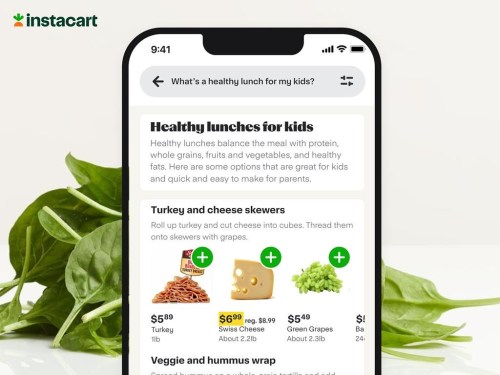
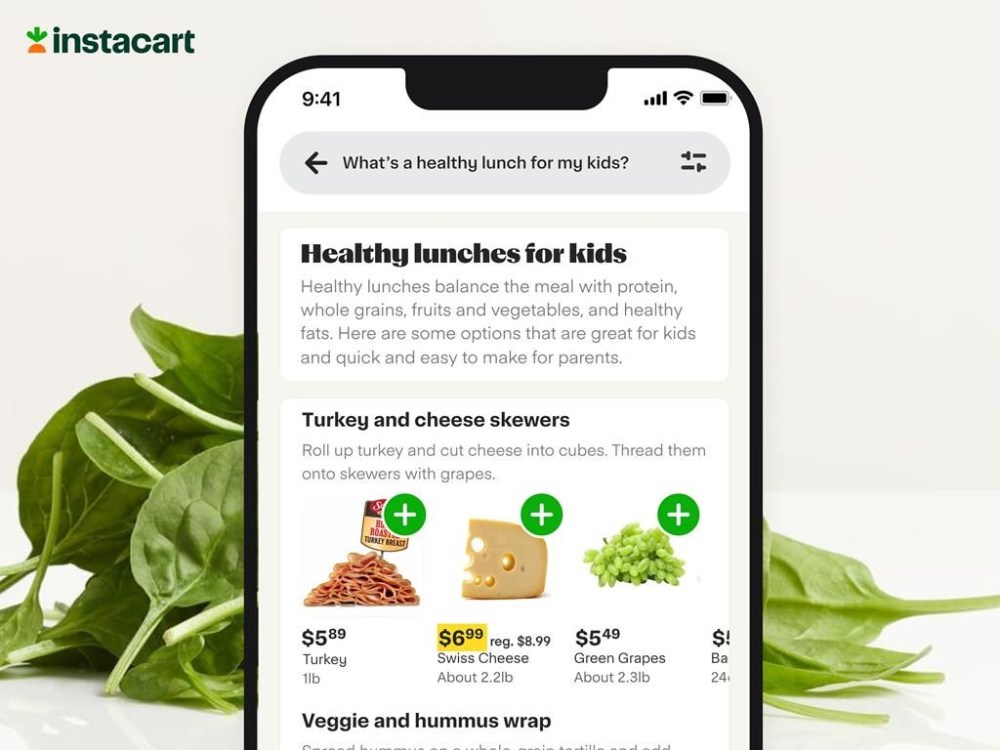
Meanwhile, Snapchat is bringing a chatbot to its messaging service. And the grocery delivery company Instacart is integrating ChatGPT to answer customers’ food questions.
Coca-Cola plans to use generative AI to help create new marketing content. And while the company hasn’t detailed exactly how it plans to deploy the technology, the move reflects the growing pressure on businesses to harness tools that many of their employees and consumers are already trying on their own.
“We must embrace the risks,” said Coca-Cola CEO James Quincey in a recent video announcing a partnership with startup OpenAI — maker of both DALL-E and ChatGPT — through an alliance led by the consulting firm Bain. “We need to embrace those risks intelligently, experiment, build on those experiments, drive scale, but not taking those risks is a hopeless point of view to start from.”
Indeed, some AI experts warn that businesses should carefully consider potential harms to customers, society and their own reputations before rushing to embrace ChatGPT and similar products in the workplace.
“I want people to think deeply before deploying this technology,” said Claire Leibowicz of The Partnership on AI, a nonprofit group founded and sponsored by the major tech providers that recently released a set of recommendations for companies producing AI-generated synthetic imagery, audio and other media. “They should play around and tinker, but we should also think, what purpose are these tools serving in the first place?”
Some companies have been experimenting with AI for a while. Mattel revealed its use of OpenAI’s image generator in October as a client of Microsoft, which has a partnership with OpenAI that enables it to integrate its technology into Microsoft’s cloud computing platform.
But it wasn’t until the November 30 release of OpenAI’s ChatGPT, a free public tool, that widespread interest in generative AI tools began seeping into workplaces and executive suites.
“ChatGPT really sort of brought it home how powerful they were,” said Eric Boyd, a Microsoft executive who leads its AI platform. ”That’s changed the conversation in a lot of people’s minds where they really get it on a deeper level. My kids use it and my parents use it.”
There is reason for caution, however. While text generators like ChatGPT and Microsoft’s Bing chatbot can make the process of writing emails, presentations and marketing pitches faster and easier, they also have a tendency to confidently present misinformation as fact. Image generators trained on a huge trove of digital art and photography have raised copyright concerns from the original creators of those works.
“For companies that are really in the creative industry, if they want to make sure that they have copyright protection for (the outputs of) those models, that’s still an open question,” said attorney Anna Gressel of the law firm Debevoise & Plimpton, which advises businesses on how to use AI.
A safer use has been thinking of the tools as a brainstorming “thought partner” that won’t produce the final product, Gressel said.
“It helps create mock ups that then are going to be turned by a human into something that is more concrete,” she said.
And that also helps ensure that humans don’t get replaced by AI. Forrester analyst Rowan Curran said the tools should speed up some of the “nitty-gritty” of office tasks — much like previous innovations such as word processors and spell checkers — rather than putting people out of work, as some fear.
“Ultimately it’s part of the workflow,” Curran said. “It’s not like we’re talking about having a large language model just generate an entire marketing campaign and have that launch without expert senior marketers and all kinds of other controls.”
For consumer-facing chatbots getting integrated into smartphone apps, it gets a little trickier, Curran said, with a need for guardrails around technology that can respond to users’ questions in unexpected ways.
Public awareness fueled growing competition between cloud computing providers Microsoft, Amazon and Google, which sell their services to big organizations and have the massive computing power needed to train and operate AI models. Microsoft announced earlier this year it was investing billions more dollars into its partnership with OpenAI, though it also competes with the startup as a direct provider of AI tools.

Google, which pioneered advancements in generative AI but has been cautious about introducing them to the public, is now playing catch up to capture its commercial possibilities including an upcoming Bard chatbot. Facebook parent Meta, another AI research leader, builds similar technology but doesn’t sell it to businesses in the same way as its big tech peers.
Amazon has taken a more muted tone, but makes its ambitions clear through its partnerships — most recently an expanded collaboration between its cloud computing division AWS and the startup Hugging Face, maker of a ChatGPT rival called Bloom.
Hugging Face decided to double down on its Amazon partnership after seeing the explosion of demand for generative AI products, said Clement Delangue, the startup’s co-founder and CEO. But Delangue contrasted his approach with competitors such as OpenAI, which doesn’t disclose its code and datasets.
Hugging Face hosts a platform that allows developers to share open-source AI models for text, image and audio tools, which can lay the foundation for building different products. That transparency is “really important because that’s the way for regulators, for example, to understand these models and be able to regulate,” he said.
It is also a way for “underrepresented people to understand where the biases can be (and) how the models have been trained,” so that the bias can be mitigated, Delangue said.
Related Articles
Microsoft adds AI tools to office apps like Outlook, Word
Advertisement Advertise With Us
Advertisement Advertise With Us