Trio of wartime collaborators chronicled
Advertisement
Read this article for free:
or
Already have an account? Log in here »
To continue reading, please subscribe:

Digital Subscription
One year of digital access for only $205*
- Enjoy unlimited reading on winnipegfreepress.com
- Read the E-Edition, our digital replica newspaper
- Access News Break, our award-winning app
- Play interactive puzzles
*First annual payment billed as $205.00 + GST for one year. This annual subscription will automatically renew at $233.00 + GST every 52 weeks (10% off the regular annual price of $259.35). Offer available to new and qualified returning subscribers only. Cancel any time.
To continue reading, please subscribe:
Add Free Press access to your Brandon Sun subscription for only an additional
$1 for the first 4 weeks*
- Enjoy unlimited reading on winnipegfreepress.com
- Read the E-Edition, our digital replica newspaper
- Access News Break, our award-winning app
- Play interactive puzzles
*Your next Brandon Sun subscription payment will increase by $1.00 and you will be charged $17.95 plus GST for four weeks. After four weeks, your payment will increase to $24.95 plus GST every four weeks.
Read unlimited articles for free today:
or
Already have an account? Log in here »
Hey there, time traveller!
This article was published 08/04/2023 (1260 days ago), so information in it may no longer be current.
Historically, collaborators are usually portayed as the blackest of black hats — bald-faced traitors who aided and abetted a brutal conquering foreign power.
Ian Buruma’s profiles of three Second World War collaborators presents a more complex and nuanced take on betrayers of a country, or a people.
While Buruma, a veteran historical writer (author of 19 prior books) and regular contributor to Harper’s and the New Yorker, ultimately indicts all three, he admits he was after something more in his portraits.
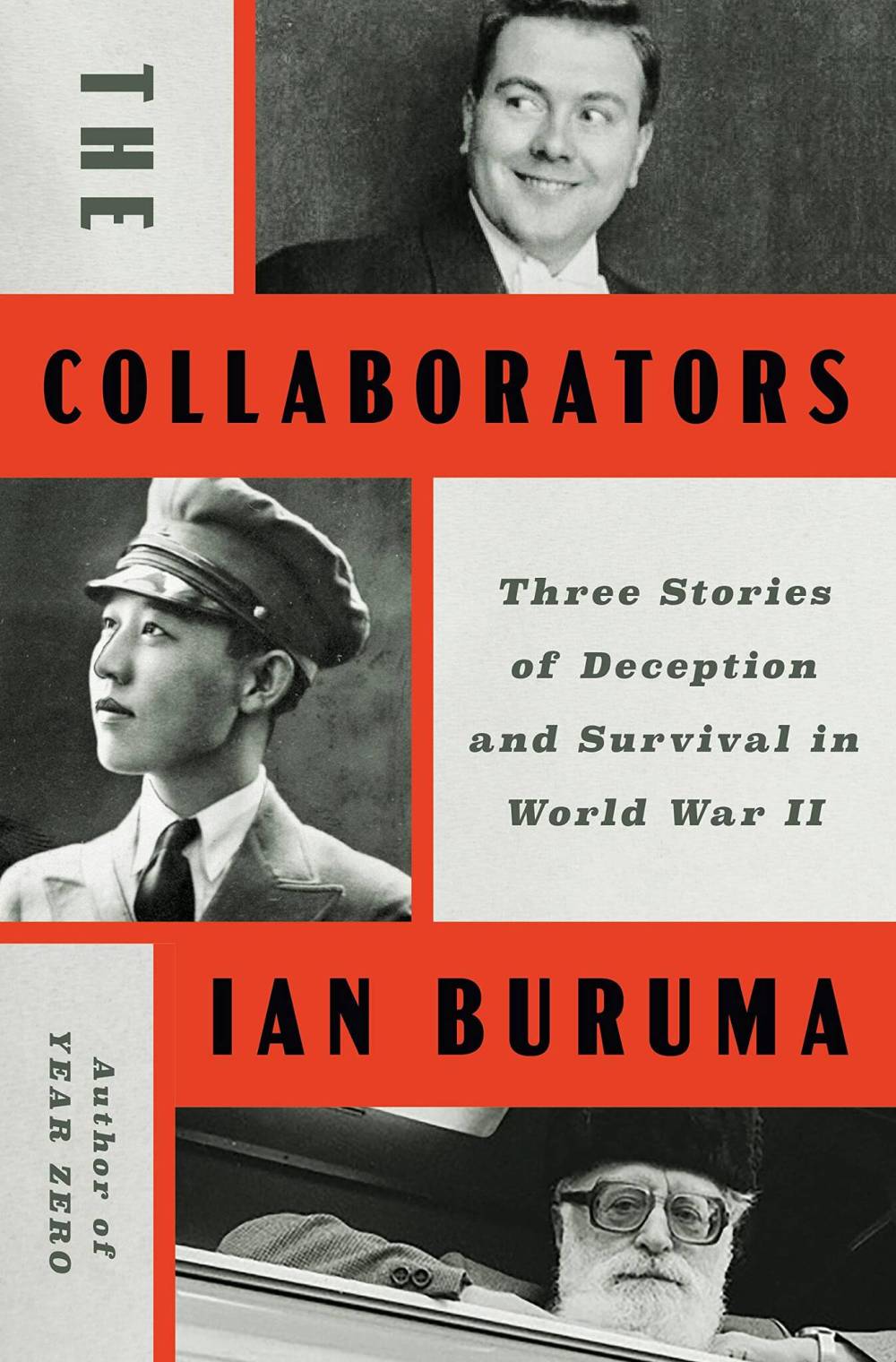
The Collaborators
“I don’t believe many people are totally good or bad, and if such people do exist, they wouldn’t interest me,” he writes. “There was good and bad in all three main characters of my book. Good or bad behaviour so often depends on the circumstances.”
In short, he believes they deserve something other than one-dimensional depiction as agents of evil regimes — here, the Nazis and Japanese military.
If there’s a common denominator it’s that each was a rogue, a self-promoter in the extreme and given to delusions of grandeur.
Of the three, the most despicable is Friedrich Weinreb, a Dutch Hasidic Jew who took large sums of money from fellow Jews in an imaginary scheme to save them from deportation to concentration camps.
He sold a con-artist fantasy of “lists” of Jews who were inviolate, safe from round-up by the German secret police, and eligible for trains that would take them to neutral states, instead of the death camps of Auschwitz, Sobibor and Bergen-Belsen.
He also had the temerity, when faced with post-war prosecution for his war crimes, to market himself as a hero. When faced with sentencing for his crimes, his supporters lauded him as the “Dutch Dreyfus.” And though he was handed a prison sentence by a Dutch court in 1968, Weinreb absconded to Switzerland, where he spent the rest of his life.
Felix Kersten was a Finn who became personal masseur to Nazi SS leader Heinrich Himmler, second only to Hitler as a leader of the Third Reich. Celebrated by Himmler, Kersten thereafter ingratiated himself with numerous senior Nazis and Wehrmacht officers.
Post war, rather than own up to being a Nazi crony, Kersten re-invented himself as a resistance hero who tempered Himmler’s murderous anti-Semitism and thereby saved countless Jews from death in the camps.
Kersten ultimately faced neither trial nor retribution. He died of a heart attack in 1960 while holidaying in rural Germany.
Buruma’s only female collaborator is a beautiful Manchurian princess who bore the Japanese name Kawashima Yoshiko. She was also the only one executed.
She spied for the Japanese against China before and during the Second World War, and was mythologized by the Japanese as a cross between Mata Hari and Joan of Arc. She was tried for and found guilty of treason by the Chinese government and executed, via a single bullet to the back of the head, in March 1948.
But in Japan she’s remembered as “the exotic continental princess who was on the side of Japan in its quest for an Asian utopia,” writes Buruma. As recently as 2020 a manga depicted her as a sexy heroine — “a young woman pointing a gun and half-dressed in a Japanese army uniform, her bare legs and white underwear saucily exposed.”
Buruma’s portraits seek to understand the pressures, motivations and eccentricities that led each to cooperate with a murderous regime.
But he also concludes they shared a psychopathology.
“They created their own realities,” he writes.
“They did this partly from fear, to survive in bad times, and partly out of hubris, to boost their own fortunes, or just for the hell of it.”
Douglas J. Johnston is a Winnipeg lawyer and writer.