Australian coal company withdraws plan for mine in Alberta foothills

Advertisement

Advertise with us

An Australian coal company is withdrawing its plan for a mine in the Crowsnest Pass region of the eastern slopes of Alberta's Rocky Mountains.

Read this article for free:


or

Already have an account? Log in here »

To continue reading, please subscribe:

Subscribe and receive a limited-edition Free Press branded hat or tote.

Digital Subscription

One year of digital access for only $205*

  • Enjoy unlimited reading on winnipegfreepress.com
  • Read the E-Edition, our digital replica newspaper
  • Access News Break, our award-winning app
  • Play interactive puzzles

*First annual payment billed as $205.00 + GST for one year. This annual subscription will automatically renew at $233.00 + GST every 52 weeks (10% off the regular annual price of $259.35). Offer available to new and qualified returning subscribers only. Cancel any time.

To continue reading, please subscribe:

Add Free Press access to your Brandon Sun subscription for only an additional

$1 for the first 4 weeks*

  • Enjoy unlimited reading on winnipegfreepress.com
  • Read the E-Edition, our digital replica newspaper
  • Access News Break, our award-winning app
  • Play interactive puzzles
Start now

*Your next Brandon Sun subscription payment will increase by $1.00 and you will be charged $17.95 plus GST for four weeks. After four weeks, your payment will increase to $24.95 plus GST every four weeks.

Hey there, time traveller!
This article was published 26/04/2023 (1242 days ago), so information in it may no longer be current.

An Australian coal company is withdrawing its plan for a mine in the Crowsnest Pass region of the eastern slopes of Alberta’s Rocky Mountains.

“The coal mine, in our minds, is a no-go,” said Peter Doyle, CEO of Montem Resources, which had proposed to redevelop the Tent Mountain site to produce steelmaking coal.

In a letter filed Tuesday, Montem Resources asked the Alberta Energy Regulator to end the environmental impact assessment for the proposal.
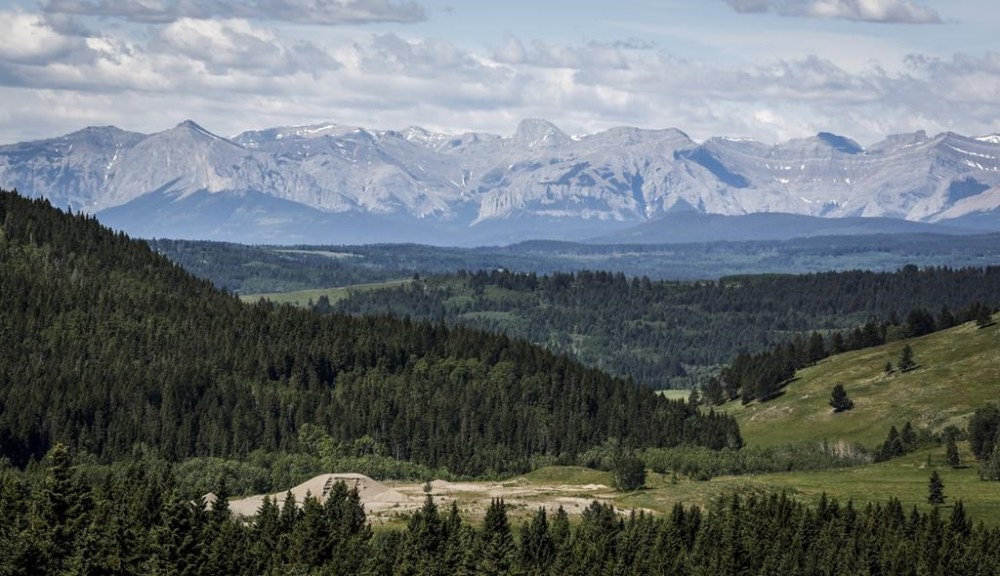
A section of the eastern slopes of the Canadian Rockies is seen west of Cochrane, Alta., Thursday, June 17, 2021. An Australian coal company is withdrawing its plan for a mine in the Crowsnest Pass region of the eastern slopes of Alberta's Rocky Mountains. THE CANADIAN PRESS/Jeff McIntosh

“Montem Resources Alberta Operations Ltd. will not be carrying out the resumption of mining activities at the project,” it says.

The decision brings to an end a short-lived resurgence of coal mining in Alberta, which began in 2020 when the United Conservative government revoked a decades-old policy that blocked open-pit coal mines in the eastern slopes of the Rockies. Within a year, thousands of hectares were staked for coal exploration up and down the province’s western boundary.

But that much-loved landscape is also the water source for millions of Albertans. Opening those summits and foothills to development provoked a severe and widespread backlash that ran from urban environmentalists to small-town mayors to country music stars.

The government commissioned a committee to canvass Albertans on the issue. After its report, then-energy minister Sonya Savage reinstated the protections of the original policy and blocked coal development in the area.

Four projects were exempted from Savage’s ministerial order. Tent Mountain was one of them.

Another, the Grassy Mountain proposal, was denied provincial and federal permits after an environmental review. A third, the Vista thermal coal project, faces a federal review and has been told that such projects are inconsistent with Ottawa’s plans to fight climate change.

The fourth, Valory Resources’ Mine 14 proposal for an underground mine for steelmaking coal near Hinton, Alta., does not face a federal review and is expected to apply for provincial permits.

Doyle said Montem is to focus its efforts on plans to turn the Tent Mountain site, which hasn’t produced coal since 1983, into a renewable energy facility. The company proposes to use wind power to pump water to a storage pond partway up the mountain and generate electricity as it is released back downhill.

He said Montem’s recent agreement with Alberta utility company TransAlta, which has agreed to pay up to $25 million for half of the project, “crystallized” the company’s focus on the pump hydro project.

“We’re full steam ahead on our new partnership with TransAlta,” said Doyle. “(It’s) a great win for everybody.”

Doyle said previous plans to use the generated electricity to split water molecules and create hydrogen have been set aside.

“There’s no viable water source,” he said.

He said Montem will make a final investment decision on the project in 2025.

Katie Morrison of the Canadian Parks and Wilderness Society, which vigorously opposed the expansion of coal mining in the Rockies, welcomed the Tent Mountain announcement.

“It’s a positive sign that we’re seeing these projects either die at the regulator or the proponents … reinventing them as something new,” she said.

“We still have to look carefully at what the impacts of that hydro station would be in that environment, but it’s certainly better than a giant coal mine.”

This report by The Canadian Press was first published April 26, 2023.
Report Error Submit a Tip

More Stories

Kinew delivered what most of us wanted; now we’ll have to deal with the consequences

Dan Lett 5 minute read Preview

Kinew delivered what most of us wanted; now we’ll have to deal with the consequences

Dan Lett 5 minute read Updated: Yesterday at 8:43 AM CDT

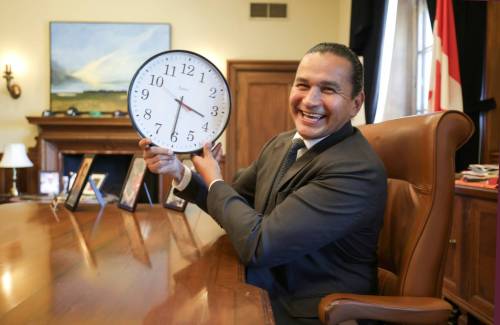
Premier Wab Kinew has decided to adopt permanent daylight savings time, which means a permanent end to the spring forward, fall back tradition of adjusting our clocks. And absolutely no one is surprised.

Read
Updated: Yesterday at 8:43 AM CDT

Family account spiced with magic realism, geopolitical intrigue and a ghost story

Reviewed by Zilla Jones 4 minute read Preview

Family account spiced with magic realism, geopolitical intrigue and a ghost story

Reviewed by Zilla Jones 4 minute read 2:01 AM CDT

Tom Lin’s second novel Babylon, South Dakota moves beyond a historical account of an immigrant family’s struggle, delightfully blending and bending genres.

Lin is a Chinese-born novelist whose family emigrated to the U.S. when he was four years old. His debut novel, The Thousand Crimes of Ming Tsu, won the 2022 Andrew Carnegie Medal for Excellence in Fiction, making him the youngest ever recipient of that award. He earned a PhD in English from the University of California Davis and is currently an assistant professor of English and creative writing at the University of Iowa.

Babylon, South Dakota takes place in an unspecified time period that can be understood to be during the Mao era — likely the 1950s or ’60s. A young Chinese couple, the Hsuis, immigrate to the rural community that gives the book its title. They take the names Saul and Mei and settle on a 160-acre homestead left to them by a distant relative.

Saul’s dream is to breed and sell chrysanthemums from seeds he brought from China, while Mei wants to raise livestock. They speak no English, know nothing of life in the United States, are unprepared for the harshness of winter and the isolation of the farm and bring nothing with them except some gold, which Mei hides around the house for emergencies. Their only link to the outside world is a discarded and marginally functioning TV set, which Saul rescues and rigs up.

Read
2:01 AM CDT

American Hostage stars recall warmth of Winnipeggers during brutal winter

Randall King 7 minute read Preview

American Hostage stars recall warmth of Winnipeggers during brutal winter

Randall King 7 minute read Yesterday at 6:13 PM CDT

TORONTO — When you stream the eight-part series American Hostage, a sense of familiarity may strike.

That’s because the show was shot in Winnipeg — especially in the Exchange District — from November of last year to the beginning of February, with Winnipeg portraying Indianapolis circa 1977.

The whole world seemed to be watching that midwest American city that year as a hostage crisis unfolded involving one Tony Kiritsis, an angry man who goes ballistic when a mortgage brokerage was poised to foreclose on property he had dreamed of developing into a shopping centre.

Kiritsis kidnapped his mortgage broker, Richard Hall, wiring a shotgun to the back of his head, and demanded a public airing of his grievances, with the reluctant help of popular radio broadcaster Fred Heckman.

Read
Yesterday at 6:13 PM CDT

Desperate Poilievre wants Canadians to believe the sky is falling when it’s just cloudy outside

Tom Brodbeck 5 minute read Preview

Desperate Poilievre wants Canadians to believe the sky is falling when it’s just cloudy outside

Tom Brodbeck 5 minute read Yesterday at 12:47 PM CDT

Pierre Poilievre has a problem.

Canadians just don’t seem to be paying much attention to him anymore.

So, naturally, the Conservative Opposition leader has decided to turn up the volume.

At a recent party caucus retreat in Penticton, B.C., Poilievre delivered the familiar message: Canada is in trouble, Canadians are hurting and the Liberal government is making everything worse.

Read
Yesterday at 12:47 PM CDT

Steinbach Credit Union member warns others after scammer steals $10K

Scott Billeck 5 minute read Preview

Steinbach Credit Union member warns others after scammer steals $10K

Scott Billeck 5 minute read Yesterday at 5:19 PM CDT

A Winnipeg single mother whose bank account was drained of nearly $10,000 says Steinbach Credit Union needs to warn its members about what she believes is a broader security problem.

The woman, who is not being named to protect her identity, said a scammer gained access to her account earlier this week after calling SCU’s contact centre, claiming to be her and successfully completing the credit union’s authentication process.

She said she knows of at least six others who have experienced similar incidents in which callers impersonate SCU account holders and pass the authentication checks.

The woman discovered something was wrong when her minor son asked why money had been transferred out of an account they jointly hold.

Read
Yesterday at 5:19 PM CDT

Canada must not accept another Iranian autocracy

David Matas 5 minute read 2:01 AM CDT

Iran is a state run by a radical government victimizing its citizens and its neighbours. How do we change that? Any regime change that repeats the mistakes of the past is not a solution.

What went wrong in the past which led to the current regime? One answer is the U.K. and American aided coup which led to the ouster in 1953 of a democratically elected government headed at the time by Mohammad Mossadegh and its replacement with an American friendly autocrat, the Shah of Iran, Mohammad Reza Pahlavi.

The Shah imposed his rule through the Iranian National Intelligence and Security Organization — SAVAK, the acronym of its Persian name. SAVAK systematically inflicted torture, arbitrary killings and extra-judicial killings on perceived opponents of the regime. It was only a matter of time before repression of a regime directed to serving foreign interests would be overthrown.

What replaced the regime of the Shah, in 1979, the current regime of the mullahs, is a regime as intolerant and violent as the regime of the Shah and then some. That was not inevitable. But neither was it surprising. The vicious nature of the current regime, following the example set by the Shah, and its hatred for the United States, reacting to the U.S. aided imposition of the Shah, both echoes and reacts to the past. In 1979, the U.S. reaped what it sowed in 1953.