The Supreme Court will decide if state laws limiting social media platforms violate the Constitution

Advertisement

Advertise with us

WASHINGTON (AP) — The Supreme Court agreed Friday to decide whether state laws that seek to regulate Facebook, TikTok, X and other social media platforms violate the Constitution.

Read this article for free:


or

Already have an account? Log in here »

To continue reading, please subscribe:

Subscribe and receive a limited-edition Free Press branded hat or tote.

Digital Subscription

One year of digital access for only $205*

  • Enjoy unlimited reading on winnipegfreepress.com
  • Read the E-Edition, our digital replica newspaper
  • Access News Break, our award-winning app
  • Play interactive puzzles

*First annual payment billed as $205.00 + GST for one year. This annual subscription will automatically renew at $233.00 + GST every 52 weeks (10% off the regular annual price of $259.35). Offer available to new and qualified returning subscribers only. Cancel any time.

To continue reading, please subscribe:

Add Free Press access to your Brandon Sun subscription for only an additional

$1 for the first 4 weeks*

  • Enjoy unlimited reading on winnipegfreepress.com
  • Read the E-Edition, our digital replica newspaper
  • Access News Break, our award-winning app
  • Play interactive puzzles
Start now

*Your next Brandon Sun subscription payment will increase by $1.00 and you will be charged $17.95 plus GST for four weeks. After four weeks, your payment will increase to $24.95 plus GST every four weeks.

Hey there, time traveller!
This article was published 29/09/2023 (1087 days ago), so information in it may no longer be current.

WASHINGTON (AP) — The Supreme Court agreed Friday to decide whether state laws that seek to regulate Facebook, TikTok, X and other social media platforms violate the Constitution.

The justices will review laws enacted by Republican-dominated legislatures and signed by Republican governors in Florida and Texas. While the details vary, both laws aim to prevent the social media companies from censoring users based on their viewpoints.

The court’s announcement, three days before the start of its new term, comes as the justices continue to grapple with how laws written at the dawn of the digital age, or earlier, apply to the online world.
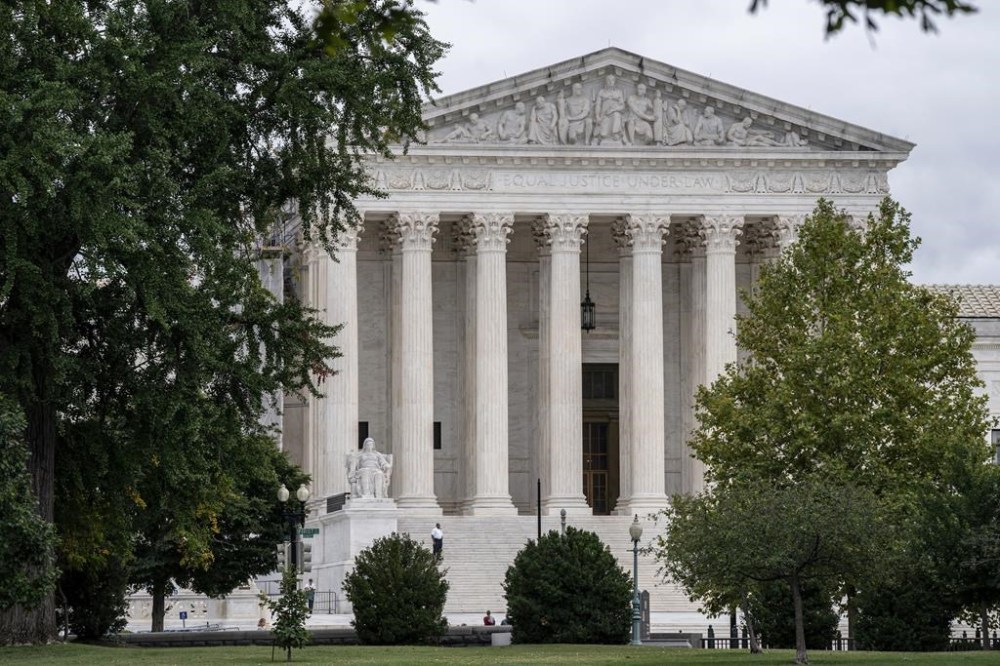
FILE - The Supreme Court is seen in Washington, Sept. 25, 2023. The new term of the high court begins next Monday, Oct. 2. The Supreme Court, which begins its new term on Monday, is awash in ritual. So it’s no surprise that the lawyers have a few regular, if occasionally eccentric, observances of their own. (AP Photo/J. Scott Applewhite, File)

The justices had already agreed to decide whether public officials can block critics from commenting on their social media accounts, an issue that previously came up in a case involving then-President Donald Trump. The court dismissed the Trump case when his presidential term ended in January 2021.

Separately, the high court also could consider a lower-court order limiting executive branch officials’ communications with social media companies about controversial online posts.

In all, the justices added 12 cases Friday that will be argued during the winter. They include:

— A dispute over the FBI’s no-fly list. The appeal came from the Biden administration in a case involving an Oregon man who once was on the list, but had been removed years ago. A federal appeals court said he could continue his lawsuit because the FBI never disavowed his initial inclusion.

— A copyright case that involves a hit for the hip-hop artist Flo Rida in which he made use of someone else’s song from the 1980s. Music publishing companies that were sued for copyright infringement over the 2008 song “In the Ayer” are challenging a lower court ruling against them.

— A plea by landowners in southeast Texas who want the state to compensate them for effectively taking their property. Their lawsuit claims that a successful project to renovate Interstate 10 and ensure it remains passable in bad weather results in serious flooding on their properties in heavy rainfall.

The new social media cases follow conflicting rulings by two appeals courts, one of which upheld the Texas law, while the other struck down Florida’s statute. By a 5-4 vote, the justices kept the Texas law on hold while litigation over it continues.

But the alignment was unusual. Chief Justice John Roberts and Justices Stephen Breyer, Sonia Sotomayor, Brett Kavanaugh and Amy Coney Barrett voted to grant the emergency request from two technology industry groups that challenged the law in federal court.

Justices Clarence Thomas, Samuel Alito, Elena Kagan and Neil Gorsuch would have allowed the law to remain in effect. In dissent, Alito wrote, “Social media platforms have transformed the way people communicate with each other and obtain news.”

Proponents of the laws, including Republican elected officials in several states that have similar measures, have sought to portray social media companies as generally liberal in outlook and hostile to ideas outside of that viewpoint, especially from the political right.

The tech sector warned that the laws would prevent platforms from removing extremism and hate speech.

“Online services have a well-established First Amendment right to host, curate and share content as they see fit,” Chris Marchese, the litigation director for the industry group NetChoice, said in a statement. “The internet is a vital platform for free expression, and it must remain free from government censorship. We are confident the Court will agree.”

Without offering any explanation, the justices had put off consideration of the case even though both sides agreed the high court should step in.

The justices had other social media issues before them last year, including a plea the court did not embrace to soften legal protections tech companies have for posts by their users.

Report Error Submit a Tip

More Stories

Hellebuyck standoff caused by… Nathan MacKinnon?

Mike McIntyre 6 minute read Preview

Hellebuyck standoff caused by… Nathan MacKinnon?

Mike McIntyre 6 minute read Friday, Sep. 18, 2026

Looking for someone to blame in the Connor Hellebuyck fiasco and cast as public enemy No. 1? How about long-time Winnipeg Jets nemesis Nathan MacKinnon?

Allow us to explain as we fire up the time machine and head back to February in Italy.

Oh, what could have been if MacKinnon had been able to score on what appeared to be an open net late in the third period of the men’s gold medal game with Hellebuyck down and seemingly out of position.

Instead, the star forward fired wide, keeping the score deadlocked at 1-1 as the clock ticked down on regulation.

Read
Friday, Sep. 18, 2026

Not falling back means time loop remains unclosed

Jen Zoratti 4 minute read Yesterday at 2:01 AM CDT

I demand restitution. Where’s my hour?

In the traditional fall-back, spring-forward time change set up — you know, ol’ trusty that’s been effect for lo these 63 years — we lost an hour in the spring that we got back in the fall.

That was the social contract: you commit to feeling like you’re on cold medication for a week in March because you know a glorious extra hour of sleep will be returned to you in November. (Unless, of course, you have little kids, but look: we all make our choices.)

Well, that transaction, flawed as it was, isn’t happening this year. That hour you sacrificed to the sun gods in the spring? Gone. Not coming back. We’ve sprung forward and we shan’t be falling back — not in November, and (possibly) not ever. The scale shall remain unbalanced and the loop shall remain unclosed as Manitoba has adopted permanent daylight time.

Grieving child builds backyard rocket ship

Harriet Zaidman 4 minute read Yesterday at 2:01 AM CDT

I Built a Rocket Ship (Kids Can Press, 32 pages, hardcover, $22) by Winnipegger Anna Lazowski is a tender story for children ages 4-8 about a little girl trying to make sense of her mother’s death. The child engages in conversation with her late mom, agreeing and disagreeing about things said as she carries objects (and of course, the cat) to the backyard. There, she is building a rocket ship she will pilot into the skies to find her mom again.

Jennica Lounsbury’s varied perspectives show the range of emotions the little girl experiences.

● ● ●

Northwoods Lullaby by Mary Casanova (University of Minnesota Press, 32 pages, hardover, $25) is a bedtime book for readers up to age eight, perfect to bring a busy, happy day to a close. Just like children who are listening to adults reading the book, all the animal babies are being tucked into their nests and burrows by loving parents: “Thump and scamper,/nimble clover./ Soon it’s time to rest. Baby loon/ nestles in/as Papa floats along.”

Give-and-take relationship of Roman leaders takes centre stage in Harris’s historical fiction

Reviewed by Kathryne Cardwell 4 minute read Preview

Give-and-take relationship of Roman leaders takes centre stage in Harris’s historical fiction

Reviewed by Kathryne Cardwell 4 minute read Yesterday at 2:01 AM CDT

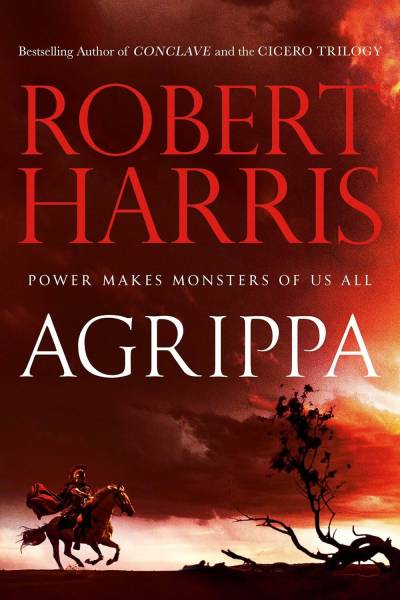
British novelist Robert Harris’s latest work is a reflection on tyranny, corruption and betrayal among all-powerful political leaders.

You might be forgiven for thinking it’s a contemporary thriller — it’s actually historical fiction set in ancient Rome.

A former BBC journalist, Harris debuted as a novelist in 1992 with Fatherland, an alternative history where Nazi Germany won the Second World War.

Since then, the prolific author has become best-known for his works of historical fiction, especially his ancient Rome trilogy released from 2006-2015 and the novel Conclave, which was published in 2016 and was made into the film of the same name in 2024.

Read
Yesterday at 2:01 AM CDT

A life’s story: activist, educator, organizer knew the true meaning of community

Janine LeGal 7 minute read Preview

A life’s story: activist, educator, organizer knew the true meaning of community

Janine LeGal 7 minute read Yesterday at 3:00 AM CDT

Somewhere between a love for sharing stories and a love of community connections, Michael (Mike) Maunder lived his life. Giving voice to people and neighbourhoods was a passion for the natural-born community organizer.

An author, teacher and principal, Maunder lived in a one-bedroom apartment in West Broadway and devoted himself to community development, education and neighbourhood renewal.

He maintained a connection with Augustine United Church, whose commitment to social justice he appreciated, volunteered at the Sandy-Saulteaux Spiritual Centre, and found comfort in a Buddhist prayer community.

Maunder died on July 15 at the age of 80.

Read
Yesterday at 3:00 AM CDT

Family account spiced with magic realism, geopolitical intrigue and a ghost story

Reviewed by Zilla Jones 4 minute read Preview

Family account spiced with magic realism, geopolitical intrigue and a ghost story

Reviewed by Zilla Jones 4 minute read Yesterday at 2:01 AM CDT

Tom Lin’s second novel Babylon, South Dakota moves beyond a historical account of an immigrant family’s struggle, delightfully blending and bending genres.

Lin is a Chinese-born novelist whose family emigrated to the U.S. when he was four years old. His debut novel, The Thousand Crimes of Ming Tsu, won the 2022 Andrew Carnegie Medal for Excellence in Fiction, making him the youngest ever recipient of that award. He earned a PhD in English from the University of California Davis and is currently an assistant professor of English and creative writing at the University of Iowa.

Babylon, South Dakota takes place in an unspecified time period that can be understood to be during the Mao era — likely the 1950s or ’60s. A young Chinese couple, the Hsuis, immigrate to the rural community that gives the book its title. They take the names Saul and Mei and settle on a 160-acre homestead left to them by a distant relative.

Saul’s dream is to breed and sell chrysanthemums from seeds he brought from China, while Mei wants to raise livestock. They speak no English, know nothing of life in the United States, are unprepared for the harshness of winter and the isolation of the farm and bring nothing with them except some gold, which Mei hides around the house for emergencies. Their only link to the outside world is a discarded and marginally functioning TV set, which Saul rescues and rigs up.

Read
Yesterday at 2:01 AM CDT