Few Black medical students are pursuing a career in surgery. A new study explains why
Advertisement
Read this article for free:
or
Already have an account? Log in here »
To continue reading, please subscribe:

Digital Subscription
One year of digital access for only $205*
- Enjoy unlimited reading on winnipegfreepress.com
- Read the E-Edition, our digital replica newspaper
- Access News Break, our award-winning app
- Play interactive puzzles
*First annual payment billed as $205.00 + GST for one year. This annual subscription will automatically renew at $233.00 + GST every 52 weeks (10% off the regular annual price of $259.35). Offer available to new and qualified returning subscribers only. Cancel any time.
To continue reading, please subscribe:
Add Free Press access to your Brandon Sun subscription for only an additional
$1 for the first 4 weeks*
- Enjoy unlimited reading on winnipegfreepress.com
- Read the E-Edition, our digital replica newspaper
- Access News Break, our award-winning app
- Play interactive puzzles
*Your next Brandon Sun subscription payment will increase by $1.00 and you will be charged $17.95 plus GST for four weeks. After four weeks, your payment will increase to $24.95 plus GST every four weeks.
Read unlimited articles for free today:
or
Already have an account? Log in here »
Hey there, time traveller!
This article was published 12/03/2024 (921 days ago), so information in it may no longer be current.
Few Black medical students are pursuing careers as surgeons in Canada due to lack of mentorship, problematic admission criteria and racist microaggressions during training, among other factors, a study published Tuesday says.
That’s a problem not only because it shows inequitable access to surgical training, but also because a diverse workforce is essential for good patient care, researchers from St. Michael’s Hospital and the University of Toronto medical school say.
“To improve patient satisfaction and the quality of care patients receive, the surgical workforce must reflect the variety of patients for which they provide care,” said the study published in the Journal of the American College of Surgeons.
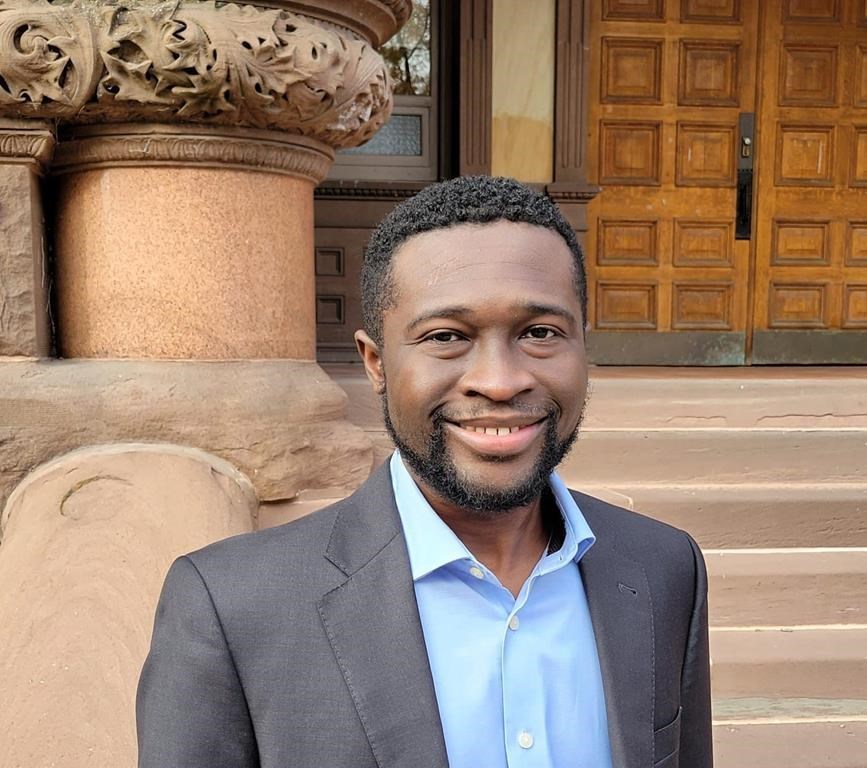
Senior author Dr. Jory Simpson, chief of general surgery at St. Michael’s Hospital, said he wanted to find out what barriers were causing “an underrepresentation of Black surgeons in Canada” so that medical schools and hospitals could address them.
“Not everybody has the same opportunity to succeed right now,” Simpson said in an interview.
Researchers for the qualitative study, led by Black medical students Edgar Akuffo-Addo and Jaycie Dalson, interviewed 27 Black participants in medical schools across Canada, including 18 medical students and nine surgical residents.
A “common struggle” cited was “not really having Black mentors at all, because there are very few Black physicians and even fewer specifically in surgery,” said Dalson.
“So if you’re looking for that question of ‘what is it like to be a Black surgeon?’ … there’s not many people who can answer that question,” she said.
Black students are more likely to come from a lower socioeconomic background than white students, the study said, which in turn affects the connections Black students have to help guide them into and through medical school.
“Mentorship is extremely important early on in one’s medical career,” said Simpson, who is white.
“I had family friends that were surgeons and they kind of took me under their wing on like day one of medical school and, you know, talked to me and mentored me and invited me to opportunities that other people may have not gotten.”
The lack of mentorship, as well as disparities in socioeconomic status, tied into another key barrier identified by the participants — an overemphasis on research experience when selecting medical students for surgical residencies.
“If I don’t have any mentor or don’t have the connection or the social capital, how can I find research projects?” Akuffo-Addo said.
The study found that Black medical students were more likely to have experience with advocacy work than research.
“They’re really doing projects that are seeking to build communities that they come from, because historically, Black people have been marginalized, when it comes to health care,” said Akuffo-Addo.
“Once people get into medical school, they try their best to kind of help their local communities,” he said.
Black med students might spend their time doing things like “blood pressure screening, mentoring kids from underserved high schools, trying to kind of, you know, tell kids it’s possible to be Black and to also be a physician,” Akuffo-Addo said.
That type of work has been undervalued in the surgical residency selection process, Simpson said.
“If you look at the amount of time and commitment it takes to do strong advocacy work, it’s the same amount as it would to do research. And one could argue that the impact is much higher,” he said.
Once Black students get into surgical residencies, they often feel excluded or face racist comments or microaggressions, the study said.
“As a Black surgical resident, you are one of either a few or the only one. The lack of belonging and the isolation that comes with it can impact your psychological well-being,” one of the study’s participants said.
The study authors did not disclose the names of the participants “due to privacy and ethical restrictions.”
“People didn’t expect somebody who looks like me to be in an OR,” another participant said.
“I tried to rationalize that maybe it’s just because they don’t know me, or they’ve never seen me before … in the back of my mind I did wonder if this would this be the same for a white male medical student. I was clearly dressed appropriately to be in the OR, in my scrubs etc.”
Another study participant described experiencing “overpolicing” by nurses and other staff compared to how their white colleagues were treated.
Racism from patients was another issue raised by participants, including an instance where a patient made a racist comment about Arabs “and my staff (supervisor) laughed it off.”
At least one participant called for faculty and staff training programs to foster awareness of implicit bias.
“They sometimes do not even realize what is coming out of their mouths,” a participant said.
Akuffo-Addo agreed.
In an encounter that was not part of the study, a friend who was doing a surgical rotation was told, “you’re really smart for a Black person,” he said.
“Whoever was giving (that) feedback may have thought it was positive feedback,” but it’s a racist comment, Akuffo-Addo said.

The authors hope that medical schools across Canada will use their findings to “offer a safe space for Black students and trainees to access and complete surgical training successfully.”
“We want to support Black students as they go through (medical school) so they get into the specialties that they want,” said Dalson.
“Diversity is so important so we have everybody’s face at the table when we’re making medical decisions.”
This report by The Canadian Press was first published March 12.
Canadian Press health coverage receives support through a partnership with the Canadian Medical Association. CP is solely responsible for this content.