Bombers ride momentum to $5.7-M profit On field success, community engagement major drivers of club’s financial success
Read this article for free:
or
Already have an account? Log in here »
To continue reading, please subscribe:

Digital Subscription
One year of digital access for only $205*
- Enjoy unlimited reading on winnipegfreepress.com
- Read the E-Edition, our digital replica newspaper
- Access News Break, our award-winning app
- Play interactive puzzles
*First annual payment billed as $205.00 + GST for one year. This annual subscription will automatically renew at $233.00 + GST every 52 weeks (10% off the regular annual price of $259.35). Offer available to new and qualified returning subscribers only. Cancel any time.
To continue reading, please subscribe:
Add Free Press access to your Brandon Sun subscription for only an additional
$1 for the first 4 weeks*
- Enjoy unlimited reading on winnipegfreepress.com
- Read the E-Edition, our digital replica newspaper
- Access News Break, our award-winning app
- Play interactive puzzles
*Your next Brandon Sun subscription payment will increase by $1.00 and you will be charged $17.95 plus GST for four weeks. After four weeks, your payment will increase to $24.95 plus GST every four weeks.
Read unlimited articles for free today:
or
Already have an account? Log in here »
Hey there, time traveller!
This article was published 11/04/2024 (915 days ago), so information in it may no longer be current.
The sting of a heartbreaking Grey Cup loss for the Winnipeg Blue Bombers has been eased by a major boost to the bottom line — for a second consecutive year.
On Thursday, the Winnipeg Football Club announced an operating profit of $5.7 million in 2023. That’s an increase of nearly $1 million from 2022 — when the organization boasted record highs in gate revenue and team merchandise sales — and more than double the $2.8 million it made in 2021.
“What our success comes from is the fact that we have such a committed team of staff, that work so hard to find ways to make our game-day experience better and that fan experience better,” Bombers president and CEO Wade Miller told the Free Press in a phone interview Thursday. “To have the on-field product and consistency in our football ops be as successful as they’ve been, that matters and makes a big difference. Then it comes down to the fans, who continue to show us that fire and passion.”
MIKAELA MACKENZIE / FREE PRESS FILES Bombers president and CEO Wade Miller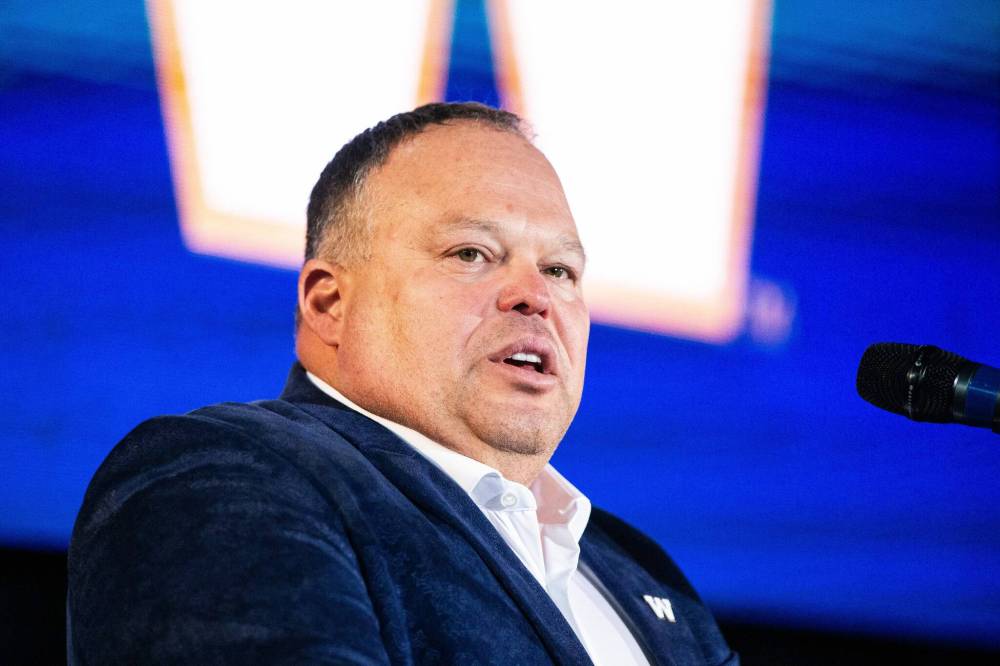
Revenue generated came in at $50.5 million, which topped last year by $5.1 million, for an increase of 11 per cent. The Bombers certainly benefitted from hosting the West Final for a third consecutive year, not to mention leading the CFL in attendance for a second season in a row.
An average of 30,449 fans showed up at each game in 2023, up from an average of 28,642 in 2022. IG Field, which was officially re-named Princess Auto Place on April 1, was sold out the last five games of the season, with two other games exceeding the 30,000 mark.
At a time when sports venues across North America are struggling to fill seats — including the Jets here in Winnipeg — the Bombers continue to see record gate sales. The Bombers generated $15.1 million in ticket sales, accounting for nearly 30 per cent of the club’s total revenue.
“It’s massive to the bottom line,” Miller said of ticket sales, noting season tickets remain at a healthy pace, although no concrete numbers were revealed. “Part of that is we also set new corporate partnership records this year, too, because of all the fans that come to the stadium.”
Miller credited the hard work of volunteers that help ensure a positive game-day experience, which has set the bar across the CFL, including multiple pre-game tailgate options, a wide selection of food and drink inside the stadium and the chance to rush the field after the final whistle. It also speaks to the club’s efforts within the community, with players — several of whom have made Winnipeg their full-time home — visiting and promoting the game to all areas of the province year-round.
“We look for ways and opportunities to connect with the community, whether that be relations with the broader community or specific to amateur football.”–Bombers president and CEO Wade Miller
On the field, the Bombers have been the class of the three-down loop since breaking a decades-long Grey Cup drought in 2019. They’ve been to the Grey Cup the last four seasons — winning a second time in 2021 — and boast a record of 51-17 over the last four years, including 29-7 the last two years.
“What you see is that momentum that just keeps building,” Miller said. “We look for ways and opportunities to connect with the community, whether that be relations with the broader community or specific to amateur football. We refine them and then add different programs to add more community support, with the help of people in our organization and from the incredible support of our partners.”
Operating expenses were just shy of $45 million, marking a jump of nearly $4.5 million from the previous year. Football operations, including team salaries and travel costs, was the largest expenditure, totalling $13.3 million.
During the 2021 season, the Bombers entered into a new agreement with the Manitoba government and Triple B Inc., resulting in the establishment of a capital fund that included a $10.2 million contribution from the province to be used for stadium maintenance and improvements. Prior to the new deal, the club wasn’t on the hook for these bills, although they were expected to make significant payments against the stadium determined through a formula based on profits and often to the tune of millions of dollars.
They no longer have to make the costly stadium payments — the team’s $85-million loan from the provincial government, of which only $6 million was paid off, was forgiven in the new deal — that often left the club in the red. Instead, there’s a new formula that has the football club contributing to the capital fund each year.
Under the new deal, the first $1 million in profits will go to the stadium capital fund and the second $1 million would then be transferred to the team’s operating reserve. Any additional profits would then be added to the capital fund until it’s “fully funded,” which means the WFC would have enough money in the fund to cover major capital upgrades for the next five years and 80 per cent of anticipated capital costs over eight years. The anticipated costs are unpredictable and alter over time.
Heywood Yu / THE CANADIAN PRESS files A major part of the Blue Bombers recent financial success is players such as Zach Collaros leading the team to four consecutive Grey Cup games.
The Bombers allocated $5 million to the capital fund, up from $2.9 million in 2022. The current balance of the capital fund is $9.6 million, which is down $1.9 million from this time last year. That will help pay for new turf for the 2024 season, new suite-level ring-board advertising, as well as a new permanent stage and barbecue section in the tailgate area.
With $1 million added to the operating reserve — which is to be used as a “rainy day” account for unexpected costs — the balance currently stands at $6.6 million.
“The capital fund is to replace or repair key elements of the facility and its operations,” Miller said, ” to ensure the long-term sustainability of the stadium.”
The sore spot in the report centres around Valour FC, the city’s pro soccer team, which ended up costing the Bombers $1.25 million. It’s the third season in a row Valour has finished in the red, with a loss of nearly $1 million in 2022 and $600,000 in 2021, after being profitable in 2019.
“It’s the same thing I said last year, that we want this to be successful,” Miller said. “We need have 5,000 fans, minimum, in the stadium each game. We’ve made changes with the operations of the team, tried to fix on the on-field performance as well. We need fans to come out and show that they want professional soccer.”
jeff.hamilton@freepress.mb.ca
X: @jeffkhamilton

Jeff Hamilton
Multimedia producer
Jeff Hamilton joined the Free Press newsroom in 2015, reporting on the sports and investigative beats until he left the Free Press in July 2026.
Every piece of reporting Jeff produced was reviewed by an editing team before it was posted online or published in print — part of the Free Press‘s tradition, since 1872, of producing reliable independent journalism. Read more about Free Press’s history and mandate, and learn how our newsroom operates.
Our newsroom depends on a growing audience of readers to power our journalism. If you are not a paid reader, please consider becoming a subscriber.
Our newsroom depends on its audience of readers to power our journalism. Thank you for your support.
Related Articles
Three-time Grey Cup champion Shawn Lemon announces retirement from football