What does science say about the ingredients in functional beverages?

Advertisement

Advertise with us

Functional beverages — or drinks promoted as offering mental or physical benefits beyond hydration — are growing in popularity around the world. Hundreds of companies have jumped into the market, hoping to get some buzz with trendy and sometimes unfamiliar ingredients.

Read this article for free:

or

Already have an account? Log in here »

To continue reading, please subscribe:

Subscribe and receive a limited-edition Free Press branded hat or tote.

Digital Subscription

One year of digital access for only $205*

  • Enjoy unlimited reading on winnipegfreepress.com
  • Read the E-Edition, our digital replica newspaper
  • Access News Break, our award-winning app
  • Play interactive puzzles

*First annual payment billed as $205.00 + GST for one year. This annual subscription will automatically renew at $233.00 + GST every 52 weeks (10% off the regular annual price of $259.35). Offer available to new and qualified returning subscribers only. Cancel any time.

To continue reading, please subscribe:

Add Free Press access to your Brandon Sun subscription for only an additional

$1 for the first 4 weeks*

  • Enjoy unlimited reading on winnipegfreepress.com
  • Read the E-Edition, our digital replica newspaper
  • Access News Break, our award-winning app
  • Play interactive puzzles
Start now

*Your next Brandon Sun subscription payment will increase by $1.00 and you will be charged $17.95 plus GST for four weeks. After four weeks, your payment will increase to $24.95 plus GST every four weeks.

Hey there, time traveller!
This article was published 15/04/2024 (843 days ago), so information in it may no longer be current.

Functional beverages — or drinks promoted as offering mental or physical benefits beyond hydration — are growing in popularity around the world. Hundreds of companies have jumped into the market, hoping to get some buzz with trendy and sometimes unfamiliar ingredients.

Here are some of the latest ones found in functional beverages and what scientists say about them.

ADAPTOGENS
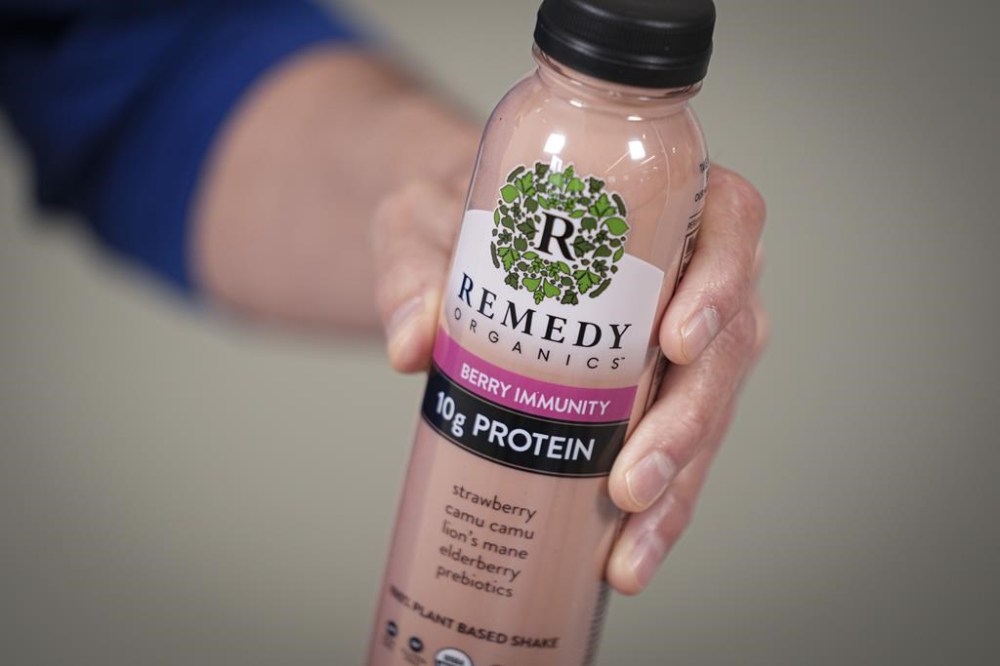
A Remedy Organics plant-based shake with prebiotics, lion's mane, and other ingredients, is shown on Wednesday, April 10, 2024, in New York. The frenzy of functional beverages – drinks designed to do more than just taste good or hydrate - has grown into a multi-billion-dollar industry. (AP Photo/John Minchillo)

— What are they? Plants and mushrooms that may help your body respond to stress, anxiety and fatigue or enhance feelings of well-being. Examples include American and Asian ginseng (an herb), ashwagandha (an evergreen shrub), eleuthero (a shrub), Rhodiola rosea (a flowering plant) and chaga (a mushroom).

— What does the science say? The Cleveland Clinic says adaptogens are known to trigger chemical reactions that can return the body to a more balanced state. Side effects from adaptogens are rare but depend on the plant. Studies show that adaptogens work best for a short duration (less than six months) because the body can build a resistance to them, making them ineffective over time.

NOOTROPICS

— What are they? Also known as “smart drugs,” nootropics are substances that can improve human thinking, learning and memory. Among the most common nootropics are caffeine, L-theanine (an amino acid found in tea), creatine (an amino acid naturally found in meat and fish), Bacopa monnieri (an herb), Gingko biloba (a tree) and lion’s mane (a mushroom). Some adaptogens may also have nootropic properties, like ashwagandha.

— What does the science say? In a study last year in the journal Plants, researchers said that most plant-based nootropics are not immediately effective after a single dose and must be taken for an extended period before any measurable improvement occurs. One problem in research on these natural substances has been standardizing the form they are taken in and the dosage, the study said. Side effects are rare and usually mild, but users should consider their overall health and whether nootropics could affect any other medications before ingesting them.

PROBIOTICS AND PREBIOTICS

— What are they? Probiotics are foods or supplements that contain live microorganisms intended to maintain or improve the “good” bacteria in a person’s gut or other parts of the body. They are naturally found in fermented foods like yogurt, kefir, cottage cheese, kombucha and sauerkraut. Prebiotics are food for the bacteria and other organisms that live in the gut. Prebiotics can be found in whole grains, bananas, greens, onions, garlic, soybeans and artichokes.

— What does the science say? The Cleveland Clinic says probiotics, in theory, work alongside the beneficial microbes in the human body to fight off harmful bacteria, fungi, viruses and parasites. Researchers know that unhealthy microbiomes can contribute to chronic diseases like irritable bowel syndrome. They may also influence mood, pain tolerance and fatigue. The Cleveland Clinic and the Mayo Clinic say there is a lot of active research into the microbiome and the impact of probiotics and prebiotics, but not enough evidence to draw solid conclusions about their effectiveness. Side effects are rare except for people with weak immune systems, whose bodies might not be able to fight off a probiotic that inadvertently contains harmful microbes.

CBD

— What is it? CBD, or cannabidiol, is an active ingredient in cannabis. While it is one of hundreds of components in marijuana, CBD doesn’t cause a high by itself. CBD has been used to treat epilepsy and may also help alleviate anxiety, insomnia, chronic pain and addiction. Side effects could include nausea, fatigue and irritability.

— What does the science say? In an article published in April, Harvard Medical School said CBD appears to be a helpful, relatively non-toxic option for managing anxiety and other issues. But it said more research is needed to pinpoint effective doses.

Report Error Submit a Tip

More Stories

‘Sewing angels’ come to Folklorama pavilion’s rescue after Ghana dancers’ costumes stolen

Chris Kitching 4 minute read Preview

‘Sewing angels’ come to Folklorama pavilion’s rescue after Ghana dancers’ costumes stolen

Chris Kitching 4 minute read Updated: Yesterday at 8:27 PM CDT

Parents and volunteers had tears in their eyes when dozens of young dancers took to the stage for their opening performances at Folklorama’s Ghana pavilion Sunday night.

Read
Updated: Yesterday at 8:27 PM CDT

What does science say about the ingredients in functional beverages?

., The Associated Press 4 minute read Preview

What does science say about the ingredients in functional beverages?

., The Associated Press 4 minute read Monday, Apr. 15, 2024

Functional beverages — or drinks promoted as offering mental or physical benefits beyond hydration — are growing in popularity around the world. Hundreds of companies have jumped into the market, hoping to get some buzz with trendy and sometimes unfamiliar ingredients.

Here are some of the latest ones found in functional beverages and what scientists say about them.

ADAPTOGENS

— What are they? Plants and mushrooms that may help your body respond to stress, anxiety and fatigue or enhance feelings of well-being. Examples include American and Asian ginseng (an herb), ashwagandha (an evergreen shrub), eleuthero (a shrub), Rhodiola rosea (a flowering plant) and chaga (a mushroom).

Read
Monday, Apr. 15, 2024

Toronto’s alternative crisis response model deemed a success

Scott Billeck 4 minute read Preview

Toronto’s alternative crisis response model deemed a success

Scott Billeck 4 minute read Yesterday at 2:01 AM CDT

A Toronto emergency response program that helped inspire Winnipeg’s proposed alternative crisis response model has already expanded city-wide, just four years after launching as a pilot project.

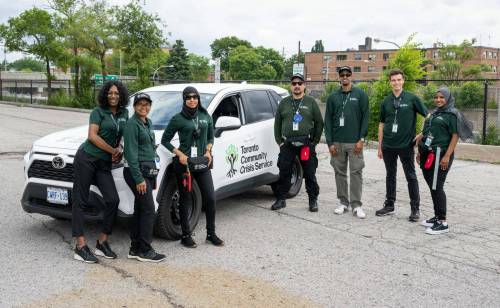
The Toronto Community Crisis Service, launched in 2022, has become the city’s fourth emergency service, providing a 24-7, community-based response to people experiencing mental health crises. The service has handled nearly 50,000 calls through 911 and 211, dispatched mobile crisis teams to more than 41,000 incidents, made more than 11,600 referrals to health and social services and resolved the majority of eligible 911 calls without police involvement.

Winnipeg Mayor Scott Gillingham last week proposed creating a similar “fourth crisis response pathway” that would allow 911 calls that aren’t violent or criminal in nature to be transferred to community-based crisis teams.

Under the proposal, which has support from both the Winnipeg Police Service and the Winnipeg Fire Paramedic Service, a centralized crisis dispatch and co-ordination hub would receive triaged calls and match them with citywide response teams, staffed in part through existing community organizations, including the Downtown Community Safety Partnership and The Link’s mobile crisis teams. The goal is to divert appropriate calls away from the WPS and WFPS.

Read
Yesterday at 2:01 AM CDT

Accused in amateur soccer star’s fatal 2024 Winnipeg shooting arrested in B.C.

Erik Pindera 3 minute read Preview

Accused in amateur soccer star’s fatal 2024 Winnipeg shooting arrested in B.C.

Erik Pindera 3 minute read Yesterday at 12:50 PM CDT

A man who’s been on the lam since he was accused in a brazen Winnipeg shooting in July 2024, in which an amateur soccer star was slain, has been arrested in British Columbia.

Tresor Horimbere, 24, was found and arrested in Langley, B.C., a city just east of Vancouver, on July 30.

Manitoba police officers travelled to B.C. on Monday to arrest him and bring him back to Winnipeg.

He’s been charged with first-degree murder in the July 13, 2024 slaying of Mohamed Yusuf Abdullahi, 22, in the parking lot of the Ralph Cantafio Soccer Complex on Waverley Street.

Read
Yesterday at 12:50 PM CDT

Advocates say rehab benefits animals with behavioural issues, but more resources are needed

By Tiago Resko 4 minute read Preview

Advocates say rehab benefits animals with behavioural issues, but more resources are needed

By Tiago Resko 4 minute read 6:07 PM CDT

After two years at the Winnipeg Humane Society’s shelter, it seemed iffy that Benny would ever find a forever home.

The German shepherd had behavioural issues and was not great at socializing with other dogs, but after one month of rehabilitation with Back to Pack Rescue Shelter, he was able to be adopted.

Benny was fortunate enough to be given another chance, but the lack of resources for rehabilitating dogs means some aren’t as lucky, said Andrew Din, co-founder of Back to Pack.

Din and other animal advocates say more resources and education are needed to retrain dogs and give them a fair shot before they are euthanized or designated as dangerous.

Read
6:07 PM CDT

Storm left $840M of insured losses across Manitoba, Saskatchewan

Gabrielle Piché 3 minute read Preview

Storm left $840M of insured losses across Manitoba, Saskatchewan

Gabrielle Piché 3 minute read 6:41 PM CDT

Severe weather spanning two days in June — hitting both Manitoba and Saskatchewan — has led to at least $840 million in insured losses.

The June 9 and 10 weather is the latest in an increasing number of “catastrophic” events with major insurance payouts, said Rob de Pruis, the Insurance Bureau of Canada’s national director of consumer and industry relations.

The Insurance Bureau didn’t share a breakdown of insured losses by province. Most of the claims cover hail and flood damage, including sewer backups, de Pruis said.

At the time of the storm, Manitoba saw grapefruit-sized hail, torrential downpours and at least one tornado.

Read
6:41 PM CDT