Less alcohol, or none at all, is one path to better health

Advertisement

Advertise with us

It’s wine time. Beer Thirty. Happy hour. Five o’clock somewhere.

Read this article for free:


or

Already have an account? Log in here »

To continue reading, please subscribe:

Subscribe and receive a limited-edition Free Press branded hat or tote.

Digital Subscription

One year of digital access for only $205*

  • Enjoy unlimited reading on winnipegfreepress.com
  • Read the E-Edition, our digital replica newspaper
  • Access News Break, our award-winning app
  • Play interactive puzzles

*First annual payment billed as $205.00 + GST for one year. This annual subscription will automatically renew at $233.00 + GST every 52 weeks (10% off the regular annual price of $259.35). Offer available to new and qualified returning subscribers only. Cancel any time.

To continue reading, please subscribe:

Add Free Press access to your Brandon Sun subscription for only an additional

$1 for the first 4 weeks*

  • Enjoy unlimited reading on winnipegfreepress.com
  • Read the E-Edition, our digital replica newspaper
  • Access News Break, our award-winning app
  • Play interactive puzzles
Start now

*Your next Brandon Sun subscription payment will increase by $1.00 and you will be charged $17.95 plus GST for four weeks. After four weeks, your payment will increase to $24.95 plus GST every four weeks.

Hey there, time traveller!
This article was published 29/04/2024 (856 days ago), so information in it may no longer be current.

It’s wine time. Beer Thirty. Happy hour. Five o’clock somewhere.

Maybe it’s also time to rethink drinking?

Moderate drinking was once thought to have benefits for the heart, but better research methods have thrown cold water on that.

FILE - Bottles of alcohol sit on shelves at a bar in Houston on June 23, 2020. Moderate drinking was once thought to have benefits for the heart, but better research methods starting in the 2010s have thrown cold water on that. (AP Photo/David J. Phillip, File)

“Drinking less is a great way to be healthier,” said Dr. Timothy Naimi, who directs the Canadian Institute for Substance Use Research at the University of Victoria in British Columbia.

ARE DRINKING GUIDELINES CHANGING?

Guidelines vary a lot from country to country but the overall trend is toward drinking less.

The United Kingdom, France, Denmark, Holland and Australia recently reviewed new evidence and lowered their alcohol consumption recommendations. Ireland will require cancer warning labels on alcohol starting in 2026.

“The scientific consensus has shifted due to the overwhelming evidence linking alcohol to over 200 health conditions, including cancers, cardiovascular diseases and injuries,” said Carina Ferreira-Borges, regional adviser for alcohol at the World Health Organization regional office for Europe.

From Dry January to Sober October to bartenders getting creative with non-alcoholic cocktails, there’s a cultural vibe that supports cutting back.

“People my age are way more accepting of it,” said Tessa Weber, 28, of Austin, Texas. She stopped drinking for Dry January this year because she’d noticed alcohol was increasing her anxiety. She liked the results — better sleep, more energy — and has stuck with it.

“It’s good to reevaluate your relationship with alcohol,” Weber said.

WAIT, MODERATE DRINKING DOESN’T HAVE HEALTH BENEFITS?

That idea came from imperfect studies comparing groups of people by how much they drink. Usually, consumption was measured at one point in time. And none of the studies randomly assigned people to drink or not drink, so they couldn’t prove cause and effect.

People who report drinking moderately tend to have higher levels of education, higher incomes and better access to health care, Naimi said.

“It turns out that when you adjust for those things, the benefits tend to disappear,” he said.

Another problem: Most studies didn’t include younger people. Almost half of the people who die from alcohol-related causes die before the age of 50.

“If you’re studying people who survived into middle age, didn’t quit drinking because of a problem and didn’t become a heavy drinker, that’s a very select group,” Naimi said. “It creates an appearance of a benefit for moderate drinkers that is actually a statistical illusion.”

Other studies challenge the idea that alcohol has benefits. These studies compare people with a gene variant that makes it unpleasant to drink to people without the gene variant. People with the variant tend to drink very little or not at all. One of these studies found people with the gene variant have a lower risk of heart disease — another blow to the idea that alcohol protects people from heart problems.

HOW MANY DRINKS CAN I HAVE PER DAY?

That depends.

Drinking raises the risk of several types of cancer, including colon, liver, breast and mouth and throat. Alcohol breaks down in the body into a substance called acetaldehyde, which can damage your cells and stop them from repairing themselves. That creates the conditions for cancer to grow.

Thousands of U.S. deaths per year could be prevented if people followed the government’s dietary guidelines, which advise men to limit themselves to two drinks or fewer per day and women to one drink or fewer per day, Naimi said.

One drink is the equivalent of about one 12-ounce can of beer, a 5-ounce glass of wine or a shot of liquor.

Naimi served on an advisory committee that wanted to lower the recommendation for men to one drink per day. That advice was considered and rejected when the federal recommendations came out in 2020.

“The simple message that’s best supported by the evidence is that, if you drink, less is better when it comes to health,” Naimi said.

___

The Associated Press Health and Science Department receives support from the Howard Hughes Medical Institute’s Science and Educational Media Group. The AP is solely responsible for all content.

Report Error Submit a Tip

More Stories

Chefs gather in St. Boniface to see whose version of jollof is best

Eva Wasney 4 minute read Preview

Chefs gather in St. Boniface to see whose version of jollof is best

Eva Wasney 4 minute read 5:30 PM CDT

Chef Alex Bockarie is bringing an age-old African culinary battle to Winnipeg.

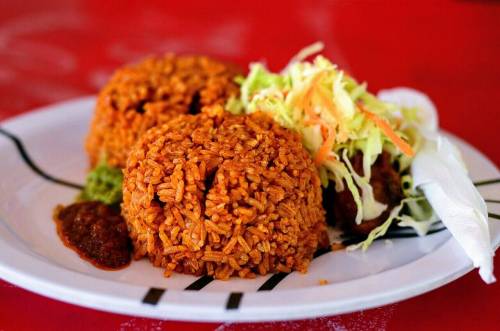
On Saturday, five local chefs hailing from Senegal, Liberia, Sierra Leone, Ghana and Nigeria will go head-to-head to determine who makes the best jollof — a rice dish simmered in a savoury tomato-based stew.

“Jollof rice originated from Senegal but it has spread throughout West Africa and every country has its own method of cooking it,” Bockarie says. “It’s a long-standing fight; even among the communities here in Winnipeg, everybody’s always saying that Sierra Leone’s (jollof) is the best, Ghana’s is the best, Nigeria’s is the best.

“It’s a friendly competition; friendly, but very serious too.”

Read
5:30 PM CDT

Mayoral rematch between Gillingham, Klein gets ugly on Day 1

Joyanne Pursaga 6 minute read Preview

Mayoral rematch between Gillingham, Klein gets ugly on Day 1

Joyanne Pursaga 6 minute read Updated: 6:25 PM CDT

Former city councillor and provincial cabinet minister Kevin Klein says he will soon enter the race to become Winnipeg’s next mayor — prompting an immediate war of words with incumbent Scott Gillingham.

Gillingham quickly responded to the announcement by calling Klein “toxic” and a “fixer” for Peter Nygard.

Klein said Tuesday he had decided not to enter the mayoral race weeks ago due to an unspecified health scare that required surgery. After recovering, he decided to run.

“The future of the city means a lot to me. I believe that we have so much untapped potential that I felt I should do something about it,” said Klein, noting he felt compelled to run because key city issues, such as perceptions of public safety in the downtown, have grown worse over the past four years.

Read
Updated: 6:25 PM CDT

Dynacare strike could lead to lab test logjam

Carol Sanders 4 minute read Preview

Dynacare strike could lead to lab test logjam

Carol Sanders 4 minute read 2:00 AM CDT

DOCTORS and health-care advocates are raising concerns about patient care if a Sept. 8 strike goes ahead at the private company that provides nearly all medical lab services in Manitoba.

There is no essential services agreement in place with Dynacare, so if its lab techs are off the job, patients who need blood tests and urinalysis will be directed to hospitals and public clinics for those services.

“There’s only so many of those workers and I’m sure that the public folks are bracing for big crunch of additional patients if the strike really goes ahead,” Noah Schulz of the Manitoba Health Coalition said Monday.

Dynacare serves 1.2 million Manitoba patients a year at 23 community lab locations.

Read
2:00 AM CDT

Carney’s defence of Lake Ontario carries enormous weight

Niigaan Sinclair 5 minute read Preview

Carney’s defence of Lake Ontario carries enormous weight

Niigaan Sinclair 5 minute read Friday, Aug. 28, 2026

For centuries on Turtle Island (North America), explorers, map makers, and political leaders have erased Indigenous place names and substituted them — more often than not — with political, ethnocentric, and self-aggrandizing names.

In recent years, a few places on the continent have had Indigenous names re-established, but as of today, few of the original names are “official.”

So, it was no surprise when U.S. President Donald Trump on Thursday signed an executive order directing the U.S. Department of the Interior and Board on Geographic Names to take steps within 30 days to officially rename Lake Ontario as “Lake America.”

The move may have been a result of the Canada-U.S. trade war and Trump’s pettiness and ego, but it also fits in perfectly with his career.

Read
Friday, Aug. 28, 2026

Province accused of meddling in Dynacare contract dispute as strike deadline looms

Carol Sanders 5 minute read Preview

Province accused of meddling in Dynacare contract dispute as strike deadline looms

Carol Sanders 5 minute read 4:30 PM CDT

The union for hundreds of Dynacare lab employees in Manitoba has accused the provincial government of interfering in contract talks ahead of next week’s strike deadline.

The Manitoba Association of Health Care Professionals, which bargains on behalf of 350 lab workers at two dozen Dynacare outlets in Winnipeg, Brandon, and surrounding communities, said Tuesday that the labour board has been asked to review the need for an essential services agreement.

Dynacare and the union agreed in March that Dynacare services are not deemed essential under provincial law, and do not need to continue if a strike is held, MAHCP president Jason Linklater said Tuesday. The union, whose collective agreement with the private company expired March 31, said the NDP government was informed the two sides had agreed no essential services agreement was needed.

After contract negotiations broke down, and a strike deadline of 6 a.m. Sept. 8 was set, physicians and health-care advocates warned that patient care will suffer if the strike goes ahead because Dynacare provides nearly all medical lab services in Manitoba.

Read
4:30 PM CDT

Love of the rink blossomed differently for mother-daughter figure skaters

Grace Penner 8 minute read Preview

Love of the rink blossomed differently for mother-daughter figure skaters

Grace Penner 8 minute read 6:20 PM CDT

It’s said that home is where the heart is, and for Dana and Marrin McKee that has always been the rink.

The mother-daughter duo of figure skating coaches always find comfort lacing up in chilly arenas.

Dana McKee’s origin story was very similar to her daughter’s, having a strong motherly push onto the ice. Much like learning to swim or drive a car, Dana’s mother believed that skating was an important life skill that needed to be honed.

Growing up in Morris, McKee spent the majority of her youth in the CanSkate program — a developmental learn-to-skate stage teaching the basics of standing upright.

Read
6:20 PM CDT