Climate change, not habitat loss, may be biggest threat to caribou herds: study

Advertisement

Advertise with us

Climate change, not habitat loss, may be the biggest threat to the survival of threatened caribou herds, new research suggests.

Read this article for free:


or

Already have an account? Log in here »

To continue reading, please subscribe:

Subscribe and receive a limited-edition Free Press branded hat or tote.

Digital Subscription

One year of digital access for only $205*

  • Enjoy unlimited reading on winnipegfreepress.com
  • Read the E-Edition, our digital replica newspaper
  • Access News Break, our award-winning app
  • Play interactive puzzles

*First annual payment billed as $205.00 + GST for one year. This annual subscription will automatically renew at $233.00 + GST every 52 weeks (10% off the regular annual price of $259.35). Offer available to new and qualified returning subscribers only. Cancel any time.

To continue reading, please subscribe:

Add Free Press access to your Brandon Sun subscription for only an additional

$1 for the first 4 weeks*

  • Enjoy unlimited reading on winnipegfreepress.com
  • Read the E-Edition, our digital replica newspaper
  • Access News Break, our award-winning app
  • Play interactive puzzles
Start now

*Your next Brandon Sun subscription payment will increase by $1.00 and you will be charged $17.95 plus GST for four weeks. After four weeks, your payment will increase to $24.95 plus GST every four weeks.

Hey there, time traveller!
This article was published 29/04/2024 (859 days ago), so information in it may no longer be current.

Climate change, not habitat loss, may be the biggest threat to the survival of threatened caribou herds, new research suggests.

“We might need to do additional management actions if our goal is to conserve caribou,” said Melanie Dickie, lead author of a new paper in the journal Global Change Biology.

For years, biologists have pointed to sustained industry-caused damage to the old-growth forests preferred by caribou as the reason the species is now threatened. Many argue that the cutlines and clearcuts left behind are pathways for deer, which lure along packs of wolves that end up preying on caribou as well.
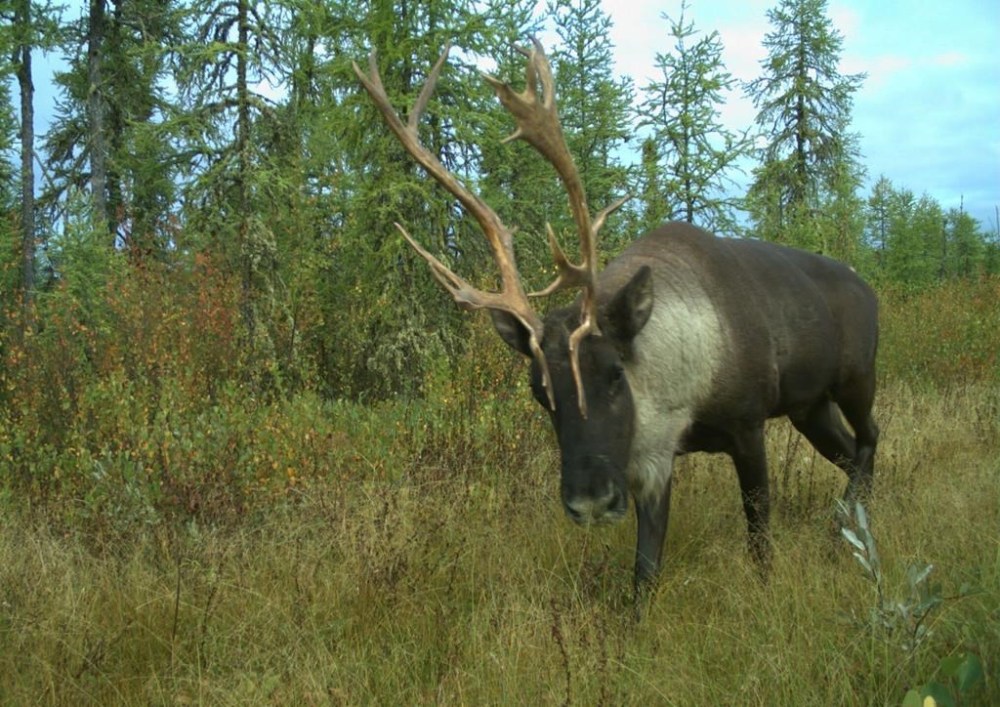
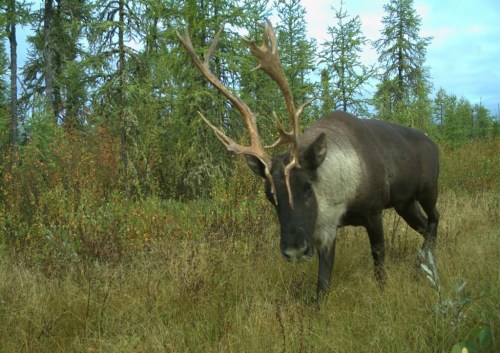
Research suggests climate change, not habitat loss, may be the biggest threat to the survival of threatened caribou herds. A caribou moves through the Algar region of northeastern Alberta in September 2017 in a handout photo. THE CANADIAN PRESS/HO-University of British Columbia-Cole Burton MANDATORY CREDIT

But climate change has also been at work in the forests. Slowly warming temperatures have greatly expanded the range in which whitetail deer can thrive.

“Climate is spreading the envelope of where deer can establish themselves,” said Dickie, senior caribou ecologist for the Alberta Biodiversity Monitoring Institute.

In the late 1990s, whitetails were scarce in the northern boreal, Dickie said. By the turn of the century, they were abundant.

In order to establish whether that envelope was spread by climate or by habitat, the authors looked to a region of northeastern Alberta and northwestern Saskatchewan.

On the Alberta side of the boundary, industrial disturbance was almost four times greater than in Saskatchewan. Meanwhile, the region was large enough that its northern end was significantly colder and snowier than its southern.

Using an extensive network of camera traps that captured tens of thousands of images of whitetail deer, the researchers concluded that the north-south temperature gradient made a much larger difference to deer density than the east-west differences in human disturbance.

“We found far fewer deer in places where the climate was snowier and colder,” Dickie said. “We did not find an effect (from) habitat alteration — it was half the magnitude of the climate impact.

“It was surprising the signal was so clear. Overwhelmingly, it was climate.”

Although human impacts on caribou range are much heavier in western Alberta — some ranges are more than 90 per cent disturbed — Dickie said she would expect similar results for that region as her paper found in the east.

“Habitat alteration might indeed provide more food for deer. But if the climate is such that they can’t make it through the winter, then it’s going to be climate that sets the envelope.”

The consequences for caribou conservation could be profound.

Efforts to keep the species on the landscape focus on remediating disturbed habitat. The Alberta government alone has spent more than $49 million on such efforts.

If Dickie’s paper is correct, no amount of tree-planting and cutline remediation will be enough.

“It might not, on its own, reduce deer densities sufficiently to reduce wolf densities,” she said.

Tough choices are on their way.

“Perhaps we prioritize the northern populations and give caribou a safe haven in the north,” Dickie said. “Places where we have deer established, we might need to do additional management.”

That means killing more wolves, Dickie acknowledged. Hunting more deer might help, too.

“There are some real social, economic and ethical considerations for all of these various management options,” she said.

Dickie maintains caribou can have a future in the boreal forest and that her findings aren’t a reason to stop trying to repair industrial impacts.

“There are a litany of reasons to do restoration and caribou aren’t the only species on the landscape. I think it behooves society to undo the disturbances we’ve created.”

This report by The Canadian Press was first published April 29, 2024.

Report Error Submit a Tip

More Stories

Woman who saved child, father from Red River uncomfortable with hero label

Scott Billeck 5 minute read Preview

Woman who saved child, father from Red River uncomfortable with hero label

Scott Billeck 5 minute read Wednesday, Sep. 2, 2026

A Winnipeg woman who’s been hailed as a hero by police for saving a father and his young child from the Red River says she doesn’t feel like one.

“I’m a mom… and I would do it again,” said Jayclyn Morrissette, who was walking with her neighbour through St. John’s Park on Aug. 24 when they spotted a young girl flailing in the nearby river. “I was meant to be there and that was supposed to happen.”

Morrissette, who spoke to the Free Press Wednesday after police released details about the rescue, said she and her neighbour began looking for the child’s parents and found them at the nearby playground searching for her.

Morrissette waved them over. The father, who she said could not swim, jumped into the river first and immediately began to sink.

Read
Wednesday, Sep. 2, 2026

Mayoral candidate Gillingham vows building boom; Vogiatzakis, Woodstock promise improved safety

Joyanne Pursaga 5 minute read Preview

Mayoral candidate Gillingham vows building boom; Vogiatzakis, Woodstock promise improved safety

Joyanne Pursaga 5 minute read Yesterday at 5:00 PM CDT

Scott Gillingham promised several new steps to help get more homes and businesses built in Winnipeg Friday, if re-elected as mayor, amid other pledges from his competition.

Read
Yesterday at 5:00 PM CDT

Climate change, not habitat loss, may be biggest threat to caribou herds: study

Bob Weber, The Canadian Press 4 minute read Preview

Climate change, not habitat loss, may be biggest threat to caribou herds: study

Bob Weber, The Canadian Press 4 minute read Monday, Apr. 29, 2024

Climate change, not habitat loss, may be the biggest threat to the survival of threatened caribou herds, new research suggests.

"We might need to do additional management actions if our goal is to conserve caribou," said Melanie Dickie, lead author of a new paper in the journal Global Change Biology.

For years, biologists have pointed to sustained industry-caused damage to the old-growth forests preferred by caribou as the reason the species is now threatened. Many argue that the cutlines and clearcuts left behind are pathways for deer, which lure along packs of wolves that end up preying on caribou as well.

But climate change has also been at work in the forests. Slowly warming temperatures have greatly expanded the range in which whitetail deer can thrive.

Read
Monday, Apr. 29, 2024

Smith’s pretzel logic confuses

Editorial 4 minute read Preview

Smith’s pretzel logic confuses

Editorial 4 minute read 2:01 AM CDT

Alberta Premier Danielle Smith had both sides of her mouth working overtime on Aug. 30, when she spoke at an event in Calgary to commemorate Alberta Day, the annual celebration of the province’s entry into Confederation in 1905 (officially Sept. 1, it was celebrated on the weekend).

Smith’s comments — and the things she did not say — revealed a lot about the political tightrope the premier is trying to walk over the challenges currently faced by her province. At the top of that list of challenges is a persistent campaign to separate Alberta from the aforementioned Confederation. A campaign that Smith appears to both support and oppose, depending on which day of the week it is.

Her Alberta Day remarks were an excellent case in point.

Smith has decided that on Oct. 19, Albertans will vote on a series of non-binding propositions in a province referendum. One of those questions will ask Albertans whether they want to hold a referendum on separation, thus making this fall’s vote a “referendum on whether to hold a referendum,” as some observers have dubbed it.

Read
2:01 AM CDT

Wonderful wines to help welcome autumn

Ben Sigurdson 4 minute read Preview

Wonderful wines to help welcome autumn

Ben Sigurdson 4 minute read 3:00 AM CDT

As we creep ever closer to fall, many wine drinkers will start to think about popping corks (or screwcaps, as it were) on wines that suit cooler temperatures.

But summer’s not quite done yet. Here are six new and/or notable wines ideal for sipping as we make the transition from warmer weather into the first hints of autumn…

Wines of the weekThe Willm NV Blanc de Noirs Crémant d’Alsace Brut (Alsace, France — $28.99, Liquor Marts and beyond) is a French bubbly made from the Pinot Noir grape in the traditional method (secondary fermentation, which creates the bubbles, happens in the bottle rather than in tanks before bottling).

It’s pale gold with a hint of pink, and on the nose offers ripe cherry, cranberry, bread dough and strawberry compote notes. On the palate it’s light-bodied and mainly dry, with an almost-wild herbal component coming with the strawberry, tart peach, cranberry, raspberry and bread dough flavours.

Read
3:00 AM CDT

Man who pleaded guilty to killing three cats dies before sentencing

Morgan Modjeski 3 minute read Preview

Man who pleaded guilty to killing three cats dies before sentencing

Morgan Modjeski 3 minute read Updated: Yesterday at 12:51 PM CDT

A Winnipeg man awaiting sentencing after admitting he strangled three cats to death and dumped two of their carcasses under a city bridge, has died, the Free Press has learned.

Randy Jensen, 25, pleaded guilty on May 13 to one count of wilfully causing injury or suffering to animals in connection to the 2024 killings.

He was scheduled to be sentenced in January.

“That’s not something that anybody wanted,” said Kristy Zamonsky, founder of Project Artemis Animal Advocates. “We were all hoping for justice through the courts.”

Read
Updated: Yesterday at 12:51 PM CDT