More money could result in fewer trips to ER, study suggests

Advertisement

Advertise with us

Giving cash to poor people could result in fewer emergency department visits, a new study suggests.

Read this article for free:


or

Already have an account? Log in here »

To continue reading, please subscribe:

Subscribe and receive a limited-edition Free Press branded hat or tote.

Digital Subscription

One year of digital access for only $205*

  • Enjoy unlimited reading on winnipegfreepress.com
  • Read the E-Edition, our digital replica newspaper
  • Access News Break, our award-winning app
  • Play interactive puzzles

*First annual payment billed as $205.00 + GST for one year. This annual subscription will automatically renew at $233.00 + GST every 52 weeks (10% off the regular annual price of $259.35). Offer available to new and qualified returning subscribers only. Cancel any time.

To continue reading, please subscribe:

Add Free Press access to your Brandon Sun subscription for only an additional

$1 for the first 4 weeks*

  • Enjoy unlimited reading on winnipegfreepress.com
  • Read the E-Edition, our digital replica newspaper
  • Access News Break, our award-winning app
  • Play interactive puzzles
Start now

*Your next Brandon Sun subscription payment will increase by $1.00 and you will be charged $17.95 plus GST for four weeks. After four weeks, your payment will increase to $24.95 plus GST every four weeks.

Hey there, time traveller!
This article was published 22/07/2024 (769 days ago), so information in it may no longer be current.

Giving cash to poor people could result in fewer emergency department visits, a new study suggests.

The study published Monday in the Journal of the American Medical Association looked at almost 2,900 low-income people who applied for a lottery in the Boston suburb of Chelsea, Massachusetts. Nearly 1,750 of them got up to $400 per month from November 2020 to August 2021.

The researchers then looked at health records and found that those who received the money had 27% fewer visits an emergency room in the nine-month period compared with those who didn’t receive the monthly payments.
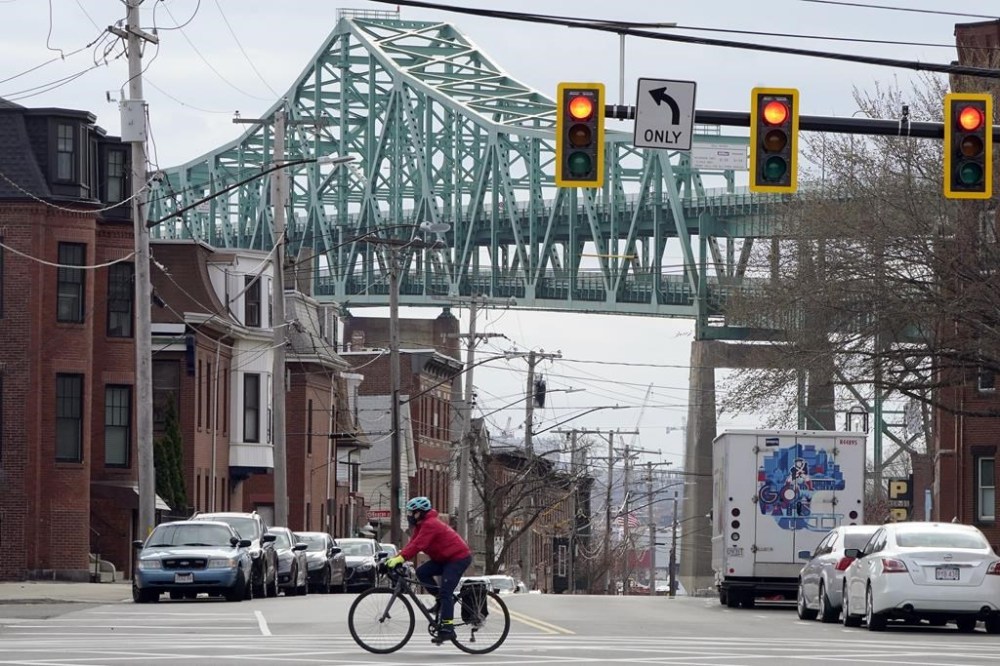
FILE - A cyclist rides along a street near the Tobin Memorial Bridge, background, in Chelsea, Mass., on Wednesday, March 31, 2021. After nearly 1,750 low-income people in the Boston suburb won a lottery to receive monthly stipends from the city from November 2020 to August 2021, researchers found that winners visited emergency departments significantly less than people who did not receive the monthly payments. (AP Photo/Steven Senne, File)

“We can trust the poor with money,” said co-author Dr. Sumit Agarwal, a physician at Brigham and Women’s Hospital in Boston. “There’s this narrative out there that you give people cash and they spend it on drugs and alcohol. I think we’re one of the first studies to really rigorously and empirically show that’s not the case.”

The correlation between poverty and poor health outcomes is well-established. But it’s still unclear if increasing basic income in the U.S. could improve health outcomes.

People in the study who received money used the emergency room less for medical issues related to behavioral health and substance use. There were no significant differences between the two groups in regular doctor visits or prescriptions, the researchers found, though people with the added income used more outpatient specialty care.

The cash recipients’ financial stability seemed to decrease their stress levels, which generally improved their health, leading to fewer emergency room trips, Agarwal said.

Prior studies on income support have shown modest — or no — effects on health because they’ve largely looked at one-time payments, had fewer participants and relied on self-reported data, according to the authors.

In contrast, the Chelsea study uses administrative health data and took into account a longer time frame, which Agarwal said paints a more “complete picture.”

Sara Rosenbaum, of George Washington University’s School of Public Health and Health Services, was not involved in the study. She said the research appears to be one of the first papers to link the health benefits of higher income over time to a reduction in health care costs and spending.

The lottery was originally intended to ease all-around costs for residents of Chelsea, a densely populated city with many low-income immigrant residents. The city was particularly affected by the COVID-19 pandemic, said then-city manager Tom Ambrosino.

“We came up with this plan to just give people money,” he said. “Give them a debit card. Load it with cash, and it’ll be so much easier and more dignified for people.”

Ambrosino figured the program, which he said cost the city about $700,000 a month, would have positive effects, but he didn’t expect the direct impact on health.

“I was kind of pleasantly surprised,” he said. “It supports the proposition that universal basic income programs do work and they aren’t wasteful. People spend money on the things that we want them to spend money on: essentials.”

___

The Associated Press Health and Science Department receives support from the Robert Wood Johnson Foundation. The AP is solely responsible for all content.
Report Error Submit a Tip

More Stories

Hydro announces CEO out after two years

Chris Kitching 6 minute read Preview

Hydro announces CEO out after two years

Chris Kitching 6 minute read Friday, Aug. 28, 2026

Allan Danroth is out as Manitoba Hydro’s president and CEO — a departure that came as a surprise to some observers — just two years after he was hired.

Danroth left for personal reasons, the Crown corporation’s board chair, Jamie Wilson, said Friday, while announcing chief operating officer Hal Turner as interim president and CEO ahead of a national and international search for a replacement.

“Today’s one of those days where you have a lot of mixed emotions,” Turner told reporters at Hydro’s downtown Winnipeg headquarters. “I just want to say on behalf of all the employees in Manitoba Hydro, we very much appreciate Allan’s leadership over the last two years.”

Turner wouldn’t say whether he will apply to be the next permanent CEO.

Read
Friday, Aug. 28, 2026

New businesses start to creep up in former Winnipeg Slurpee shops

Tiago Resko 5 minute read Preview

New businesses start to creep up in former Winnipeg Slurpee shops

Tiago Resko 5 minute read Thursday, Aug. 27, 2026

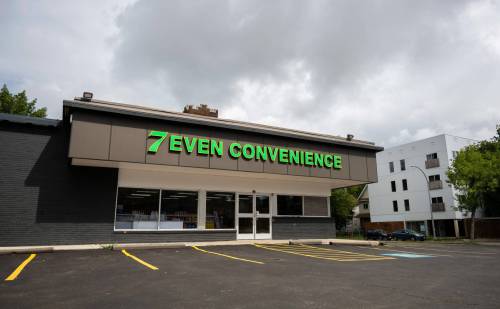
The remnants of 7-Eleven can still be seen as new businesses move into spaces where Slurpee machines and taquitos once ruled.

As fresh paint dries on several new ventures — such as a pizza place and a convenience store with a name that might make a customer do a double-take — holes across Winnipeg once occupied by the international convenience chain are slowly being filled.

Business at a Domino’s Pizza in Elmwood, formerly a 7-Eleven, has been booming since it opened June 1, the store manager said.

“The issues that 7-Eleven would have had might be different than what we would have. They were dealing with a lot of theft where people can just walk in and out, but Domino’s isn’t set up that way,” said Paul Hemmerling.

Read
Thursday, Aug. 27, 2026

Looking back on Bombers shocking, and convincing, win over CFL’s top team

Taylor Allen 7 minute read Preview

Looking back on Bombers shocking, and convincing, win over CFL’s top team

Taylor Allen 7 minute read Yesterday at 4:52 PM CDT

It was getting harder and harder to believe in the 2026 edition of the Winnipeg Blue Bombers.

If anyone outside their locker room picked them to beat the Montreal Alouettes, they must’ve kept it to themselves, as pundits — this one included — and armchair quarterbacks across the nation doubted their chances heading into Friday night.

And honestly, rightfully so. The Bombers had left a lot to be desired through their opening 10 games.

But no matter what the stats say or what outsiders think, they play the games for a reason.

Read
Yesterday at 4:52 PM CDT

Winnipeg police ID deceased man, notify family

Free Press staff 2 minute read Preview

Winnipeg police ID deceased man, notify family

Free Press staff 2 minute read 11:26 AM CDT

Winnipeg police have been able to notify next-of-kin about the death of a man found unresponsive on a city street in July.

The man was identified after police asked for the public’s help and issued a composite sketch and description of the unknown man on Friday.

On Sunday, police said his family has been notified and thanked the public. Additional details about the man were not released in order to respect the family’s privacy, police said.

The man died in hospital after being found unresponsive July 28 at the corner of Main Street and James Avenue in Winnipeg, and investigators’ previous efforts to identify him were unsuccessful.

Read
11:26 AM CDT

Carney’s defence of Lake Ontario carries enormous weight

Niigaan Sinclair 5 minute read Preview

Carney’s defence of Lake Ontario carries enormous weight

Niigaan Sinclair 5 minute read Friday, Aug. 28, 2026

For centuries on Turtle Island (North America), explorers, map makers, and political leaders have erased Indigenous place names and substituted them — more often than not — with political, ethnocentric, and self-aggrandizing names.

In recent years, a few places on the continent have had Indigenous names re-established, but as of today, few of the original names are “official.”

So, it was no surprise when U.S. President Donald Trump on Thursday signed an executive order directing the U.S. Department of the Interior and Board on Geographic Names to take steps within 30 days to officially rename Lake Ontario as “Lake America.”

The move may have been a result of the Canada-U.S. trade war and Trump’s pettiness and ego, but it also fits in perfectly with his career.

Read
Friday, Aug. 28, 2026

Trump’s tariff tantrum, geopolitical turmoil could be blessings in disguise for Manitoba’s diversified economy

Conrad Sweatman 18 minute read Preview

Trump’s tariff tantrum, geopolitical turmoil could be blessings in disguise for Manitoba’s diversified economy

Conrad Sweatman 18 minute read Friday, Aug. 28, 2026

It’s early July and Warren Luky’s second last day before he retires as president of United Steelworkers Local 6166. After a career at the bargaining table and in and around mineshafts, Luky speaks candidly as he fires up a barbecue at his Thompson home.

Luky, who represents 472 miners at Vale’s Thompson mining operation along with other northern labourers, is quite aware of the buzzwords currently attached to his trade and the region.

Phrases like “Arctic sovereignty,” “trade diversification,” “Indigenous-led” and “critical minerals” have caught on with politicians of all stripes over the past couple years as federal and provincial governments tout the need for greater Canadian sovereignty, with the push for major infrastructure projects declared a matter of national interest.

In light of the bitter collapse in trade negotiations between Canada and the U.S. on Aug. 21 — a historic blow to cross-border relations — these phrases are bound to become more contagious.

Read
Friday, Aug. 28, 2026