Facebook, YouTube and TikTok users in Europe get forum to challenge social media content decisions

Advertisement

Advertise with us

LONDON (AP) — Social media users in the European Union will soon have a new forum to challenge decisions by platforms to remove posts and videos for breaking their rules or leave up others that may violate them.

Read this article for free:


or

Already have an account? Log in here »

To continue reading, please subscribe:

Subscribe and receive a limited-edition Free Press branded hat or tote.

Digital Subscription

One year of digital access for only $205*

  • Enjoy unlimited reading on winnipegfreepress.com
  • Read the E-Edition, our digital replica newspaper
  • Access News Break, our award-winning app
  • Play interactive puzzles

*First annual payment billed as $205.00 + GST for one year. This annual subscription will automatically renew at $233.00 + GST every 52 weeks (10% off the regular annual price of $259.35). Offer available to new and qualified returning subscribers only. Cancel any time.

To continue reading, please subscribe:

Add Free Press access to your Brandon Sun subscription for only an additional

$1 for the first 4 weeks*

  • Enjoy unlimited reading on winnipegfreepress.com
  • Read the E-Edition, our digital replica newspaper
  • Access News Break, our award-winning app
  • Play interactive puzzles
Start now

*Your next Brandon Sun subscription payment will increase by $1.00 and you will be charged $17.95 plus GST for four weeks. After four weeks, your payment will increase to $24.95 plus GST every four weeks.

Hey there, time traveller!
This article was published 08/10/2024 (711 days ago), so information in it may no longer be current.

LONDON (AP) — Social media users in the European Union will soon have a new forum to challenge decisions by platforms to remove posts and videos for breaking their rules or leave up others that may violate them.

An “out of court dispute settlement body” named the Appeals Center Europe said Tuesday it has been certified by Irish regulators to act as a referee on content moderation disputes across the 27-nation EU, starting with cases involving Facebook, YouTube and TikTok.

The center is similar to Meta’s Oversight Board, a quasi-independent body set up in 2020 that acts like a supreme court for thorny decisions about content moderation issues on Facebook, Instagram and Threads submitted by users around the world.

FILE - In this May 16, 2012, file photo, the Facebook logo is displayed on a mobile device in Philadelphia. (AP Photo/Matt Rourke, File)

Under the EU’s digital rulebook known as the Digital Services Act, or DSA, tech companies and social media platforms are required to work with dispute settlement bodies and comply with any decisions they make. EU officials in Brussels wanted to give EU citizens a way to challenge any decisions made by Big Tech companies as they sought to balance the right to free speech against the goal of curbing online risks.

The center will hear appeals from users or groups located in the EU about “everything from violence and incitement to hate speech to bullying and harassment,” CEO Thomas Hughes said.

“It could be everything from a case that relates to a head of state all the way through to a neighborly dispute,” Hughes said.

The Digital Services Act is a sweeping set of regulations that requires tech and social media companies operating in Europe to clean up their platforms under threat of hefty fines.

The Appeals Center, based in Dublin, where many Silicon Valley companies have their European headquarters, will start hearing cases from users before the end of the year. It’s initially dealing with Facebook, YouTube and TikTok users because it wanted to start with the biggest platforms, with plans to add others later.

Unlike the Oversight Board, which can cherry pick the biggest and most important cases, the center will have to rule on every case it gets. And decisions won’t be publicly available, unlike Oversight Board judgments that are posted online.

The Oversight Board both issues binding decisions on individual cases, such as ruling in September on three separate posts with the controversial Palestinian rallying cry “ from the river to the sea,” and also weighs in on wider policy issues with non-binding recommendations, such as guidance in July on updating Meta’s policies on non-consensual deepfakes after reviewing a case involving deepfake intimate images of two women.

The Appeals Center’s decisions, in contrast, aren’t binding and will be limited to whether content such as a post, photo or video violates each platform’s rules.

Hughes said the center will hire staff from across the EU to handle what he said could be up to tens of thousands of cases each year. The staff will have expertise in specific regions, languages and policy areas.

Beyond the individual decisions on cases, data on the disputes will help regulators and researchers map out any “systemic risks” to social media users.

The Real Facebook Oversight Board, a group of civil rights leaders and tech experts that has been critical of Meta and its oversight panel, gave a cautious welcome to the new centre.

“We don’t know a lot about the appeals center and how it will work, but moderation enforcement under the DSA has promise that other approaches do not,” said spokesman Ben Wyskida. While the DSA “hasn’t been perfect … it is still far and away superior to anything in the United States.”

Meta’s Oversight Board is providing 15 million euros ($16.5 million) in startup funding, said Hughes, who was previously the Oversight Board’s director. He added that the two bodies will operate separately but will “point in the same direction in terms of platform accountability and transparency, user rights” and applying a human rights framework to online speech.

The Appeals Center will fund its ongoing operations by charging tech companies 95 euros for every case it hears, as well as a 5 euro fee from users who raise disputes. This “nominal” fee is intended to stop people from “gaming or abusing” the system and will be refunded if a user wins, Hughes said.

Even though decisions aren’t binding, users will still get their money back if the center rules in favor of their disputes, regardless of whether or not the platform takes any action.

There’s a 90-day deadline for decisions, but in most cases they will be made much more quickly, he said.

___

Associated Press writer Barbara Ortutay in San Francisco contributed to this report.
Report Error Submit a Tip

More Stories

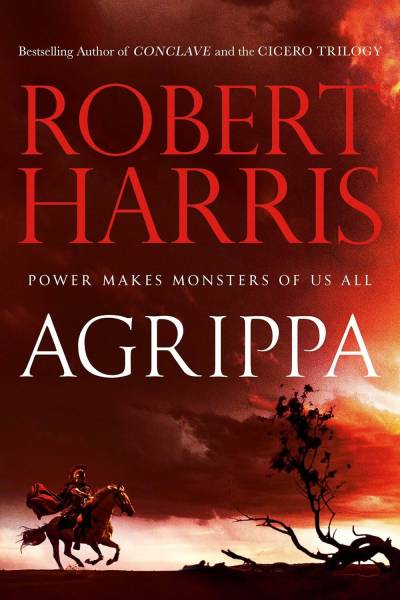
Give-and-take relationship of Roman leaders takes centre stage in Harris’s historical fiction

Reviewed by Kathryne Cardwell 4 minute read Preview

Give-and-take relationship of Roman leaders takes centre stage in Harris’s historical fiction

Reviewed by Kathryne Cardwell 4 minute read 2:01 AM CDT

British novelist Robert Harris’s latest work is a reflection on tyranny, corruption and betrayal among all-powerful political leaders.

You might be forgiven for thinking it’s a contemporary thriller — it’s actually historical fiction set in ancient Rome.

A former BBC journalist, Harris debuted as a novelist in 1992 with Fatherland, an alternative history where Nazi Germany won the Second World War.

Since then, the prolific author has become best-known for his works of historical fiction, especially his ancient Rome trilogy released from 2006-2015 and the novel Conclave, which was published in 2016 and was made into the film of the same name in 2024.

Read
2:01 AM CDT

Not good bet to shoulder gambling issue alone

Maureen Scurfield 5 minute read 2:01 AM CDT

DEAR MISS LONELYHEARTS: We’re living a lie over at our house, but it’s holding the family together.

I know my husband is deeply into gambling. If it weren’t for my steady job I don’t know where the family would be! I insist on paying all of our bills. I also funnel some major cash off to my sister, in case my husband tries to tap into my accounts somehow when I’m out of the house.

He doesn’t know my passwords, since I keep changing them, but he sometimes shows up behind me when I’m online, like he’s dying to ask something.

I say, “What are you looking at? Stop looking over my shoulder!” Then he makes a lame joke and goes away.

Cabernet Sauvignon star of wine festival

Ben Sigurdson 5 minute read Preview

Cabernet Sauvignon star of wine festival

Ben Sigurdson 5 minute read 3:00 AM CDT

The Winnipeg Wine Festival will celebrate the king of red wine grapes next weekend — the theme of this year’s festival, which takes place Sept. 25 and 26 at the RBC Convention Centre, is Cabernet Sauvignon.

Cab Sauv, as it’s also known, is the world’s most widely planted wine grape of any colour, first coming to prominence in the 1800s in France’s Bordeaux region, where the grape is still popular. Rather than single-variety wines, Bordeaux reds tend to be blends, with those coming from the left bank of the Gironde estuary being Cabernet-dominant, while right-bank wines are Merlot-dominant, with Cabernet Sauvignon playing a supporting role. Cabernet and Merlot work well together and many other countries have followed suit in blending the two.

A team at University of California Davis put Cabernet Sauvignon through a DNA test in 1996 and discovered its parent grapes are Cabernet Franc and Sauvignon Blanc — it’s likely that at some point the two varieties, planted next to each other in some vineyard, crossed and mutated and became the grape we know today. (Someone growing grapes in the 19th century must have had an inkling of what was up, as the grape has been called Cabernet Sauvignon since long before the DNA test.)

Flavour-wise, most Cabernet Sauvignon wines are big and bold, with a core of deep dark berry flavours, some graphite and spice notes and relatively bright acidity. It’s a grape that is well-suited to barrel aging, with most examples seeing at least some time in wood.

Read
3:00 AM CDT

Puzzles Palace

1 minute read Monday, Jul. 27, 2026

To solve our puzzles, please subscribe with this special offer: |

Near-future U.S. the setting for surreal dual-world storyline

Reviewed by Morley Walker 4 minute read Preview

Near-future U.S. the setting for surreal dual-world storyline

Reviewed by Morley Walker 4 minute read 2:01 AM CDT

It’s not every day you encounter a seriously intended literary novel that attempts to dramatize a mind-bending physics theory like quantum entanglement.

But then the B.C.-born-and-raised Emily St. John Mandel is not your everyday Canadian literary writer.

In her late 40s, she has lived in the U.S. for her entire writing career. She is best known for her 2014 dystopian novel Station Eleven, about a Shakespearean acting troupe navigating a pandemic-ravaged America.

Her new outing, her seventh, Exit Party, shares DNA with detective and sci-fi genres more than with conventional literary fiction.

Read
2:01 AM CDT

Family account spiced with magic realism, geopolitical intrigue and a ghost story

Reviewed by Zilla Jones 4 minute read Preview

Family account spiced with magic realism, geopolitical intrigue and a ghost story

Reviewed by Zilla Jones 4 minute read 2:01 AM CDT

Tom Lin’s second novel Babylon, South Dakota moves beyond a historical account of an immigrant family’s struggle, delightfully blending and bending genres.

Lin is a Chinese-born novelist whose family emigrated to the U.S. when he was four years old. His debut novel, The Thousand Crimes of Ming Tsu, won the 2022 Andrew Carnegie Medal for Excellence in Fiction, making him the youngest ever recipient of that award. He earned a PhD in English from the University of California Davis and is currently an assistant professor of English and creative writing at the University of Iowa.

Babylon, South Dakota takes place in an unspecified time period that can be understood to be during the Mao era — likely the 1950s or ’60s. A young Chinese couple, the Hsuis, immigrate to the rural community that gives the book its title. They take the names Saul and Mei and settle on a 160-acre homestead left to them by a distant relative.

Saul’s dream is to breed and sell chrysanthemums from seeds he brought from China, while Mei wants to raise livestock. They speak no English, know nothing of life in the United States, are unprepared for the harshness of winter and the isolation of the farm and bring nothing with them except some gold, which Mei hides around the house for emergencies. Their only link to the outside world is a discarded and marginally functioning TV set, which Saul rescues and rigs up.

Read
2:01 AM CDT