Alberta government proposing additional restrictions on wind and solar energy

Advertisement

Advertise with us

EDMONTON - The Alberta government is proposing additional restrictions on wind and solar farms that conservationists think are more about limiting renewable energy than protecting the environment.

Read this article for free:


or

Already have an account? Log in here »

To continue reading, please subscribe:

Subscribe and receive a limited-edition Free Press branded hat or tote.

Digital Subscription

One year of digital access for only $205*

  • Enjoy unlimited reading on winnipegfreepress.com
  • Read the E-Edition, our digital replica newspaper
  • Access News Break, our award-winning app
  • Play interactive puzzles

*First annual payment billed as $205.00 + GST for one year. This annual subscription will automatically renew at $233.00 + GST every 52 weeks (10% off the regular annual price of $259.35). Offer available to new and qualified returning subscribers only. Cancel any time.

To continue reading, please subscribe:

Add Free Press access to your Brandon Sun subscription for only an additional

$1 for the first 4 weeks*

  • Enjoy unlimited reading on winnipegfreepress.com
  • Read the E-Edition, our digital replica newspaper
  • Access News Break, our award-winning app
  • Play interactive puzzles
Start now

*Your next Brandon Sun subscription payment will increase by $1.00 and you will be charged $17.95 plus GST for four weeks. After four weeks, your payment will increase to $24.95 plus GST every four weeks.

Hey there, time traveller!
This article was published 14/10/2024 (705 days ago), so information in it may no longer be current.

EDMONTON – The Alberta government is proposing additional restrictions on wind and solar farms that conservationists think are more about limiting renewable energy than protecting the environment.

Last year the Alberta government imposed a seven-month moratorium on new renewable energy projects, after which Premier Danielle Smith announced her government would be taking an “agriculture first” approach to regulating renewable energy project locations.

That approach includes preventing renewable energy projects from being within 35 kilometres of “pristine viewscapes” and parks and protected areas, and a near total ban where soil conditions are prime for yielding crops.

“We need to ensure that we’re not sacrificing our future agricultural yields, or tourism dollars, or breathtaking viewscapes to rush renewables developments,” Smith said at the time.

Critics of the sudden moratorium and new renewable energy-only restrictions, such as Alberta Wildnerness Association conservationist Ruiping Luo, have said that the United Conservative government is being heavy-handed.

“It seems very clear that this is not about environmental protection,” said Luo.

Back in February Smith also said the government was planning to go beyond viewscapes and cropland and would consider imposing further restrictions related to Alberta’s native grassland areas and irrigated and irrigable land.

A first look at what those grassland and irrigated land restrictions could be was made available when the government asked some municipalities, industry officials, and landowners for input this summer.

According to a webinar used in that engagement process, Alberta is looking to prohibit wind and solar farms on irrigated land.

Land that could be irrigable could also be prohibited, though an analysis would be done before a decision is made.

That same webinar also shows Alberta is considering prohibiting renewable energy facilities from being erected on most grassland areas.

Luo, in a report last month, calculated that these new potential restrictions, on top of those announced by Smith earlier this year, could rule out almost 40 per cent of the province for renewable energy.

The viewscape buffer zone alone rules out close to 23 per cent of Alberta, Luo calculated.

For Luo and the Alberta Wilderness Association, protecting grassland and parks and even irrigated land is a good idea in theory, but she says the government’s restrictions won’t be effective unless applied across the entire energy industry.

“For a lot of these conditions, renewable energy isn’t the greatest threat,” Luo said.

For example, she said oil and gas extraction in Alberta’s southeast has a much more detrimental effect on Prairie grasslands than renewable energy projects like wind or solar farms.

“I think the restrictions start off from ideas that would be good and that would be beneficial environmentally, but the way they’re applied doesn’t make sense from a science perspective,” she said.

“We would especially agree with protecting native Prairie not just from renewable energy, but from all developments… because so much has been lost.”

Luo said she’s sent both her report and a letter to the Alberta government outlining her concerns about the new potential restrictions, but has yet to receive a response.

Jason Wang, a senior electricity analyst with the clean energy think tank the Pembina Institute agreed with Luo, and said if Alberta wants to protect grasslands and agriculture lands then restrictions like these would need to be applied across the energy sector, rather than solely on renewables.

“It feels very elementary to say, but these sectors aren’t being treated in the same way,” Wang said.

In August Wang and the Pembina Institute published a report analyzing the aftermath of the government’s seven-month moratorium, and found that 53 wind and solar projects were abandoned after the announcement.

Those projects, on paper, had a combined energy generation capacity of 8,600 megawatts, which would be enough to power every home in Alberta. However, there was no guarantee that every project would have been approved based on existing regulations by the Alberta Utilities Commission, the agency responsible for regulating the development of energy projects.

In an email, Ashley Stevenson, the press secretary for Alberta’s Utilities Minister Nathan Neudorf, said that the renewable energy restrictions are designed with environmental protection in mind.

“These new rules ensure responsible land use, protecting the environment, Albertans’ property rights, Alberta’s beautiful landscapes, and the best agricultural industry in the world,” Stevenson said.

“Our government is focused on putting Albertans first, not industrial power projects.”

Stevenson said the government’s full suite of regulatory changes is still being developed, but the government is on track to have the policies finalized before the end of 2024.

This report by The Canadian Press was first published Oct. 11, 2024.
Report Error Submit a Tip

More Stories

Give-and-take relationship of Roman leaders takes centre stage in Harris’s historical fiction

Reviewed by Kathryne Cardwell 4 minute read Preview

Give-and-take relationship of Roman leaders takes centre stage in Harris’s historical fiction

Reviewed by Kathryne Cardwell 4 minute read 2:01 AM CDT

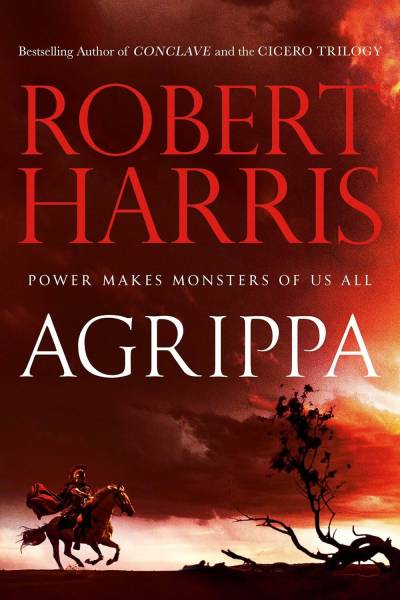
British novelist Robert Harris’s latest work is a reflection on tyranny, corruption and betrayal among all-powerful political leaders.

You might be forgiven for thinking it’s a contemporary thriller — it’s actually historical fiction set in ancient Rome.

A former BBC journalist, Harris debuted as a novelist in 1992 with Fatherland, an alternative history where Nazi Germany won the Second World War.

Since then, the prolific author has become best-known for his works of historical fiction, especially his ancient Rome trilogy released from 2006-2015 and the novel Conclave, which was published in 2016 and was made into the film of the same name in 2024.

Read
2:01 AM CDT

Manitoba abandoning spring, fall clock changes

Carol Sanders 8 minute read Preview

Manitoba abandoning spring, fall clock changes

Carol Sanders 8 minute read Updated: Yesterday at 8:48 AM CDT

Time’s up for the time change in Manitoba.

Manitobans won’t be setting their clocks back an hour in November. The province has decided to permanently stay on daylight time after surveying residents on the twice annual clock adjustment.

“We heard from Manitobans loud and clear — no more changing the clocks in Manitoba,” Premier Wab Kinew said in a news release Thursday.

Most of the 72,000 votes submitted in an online EngageMB survey — 92 per cent — said they would like to see the practice end. The survey asked if they preferred earlier sunrises in winter with standard time or the later sunsets in summer with daylight time. More than half of survey participants (58 per cent) indicated a preference to stay on permanent daylight time; 34 per cent voted to eliminate the time change but stay on standard time.

Read
Updated: Yesterday at 8:48 AM CDT

Siloam Mission, WFPS discussing on-site paramedic to reduce staggering number of emergency calls

Scott Billeck 4 minute read Preview

Siloam Mission, WFPS discussing on-site paramedic to reduce staggering number of emergency calls

Scott Billeck 4 minute read Yesterday at 2:00 AM CDT

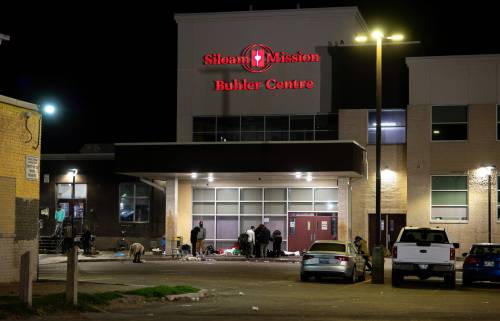
Winnipeg’s fire-paramedic service and its largest homeless-serving organization are discussing what it would look like to station at least one paramedic at Siloam Mission, as emergency calls to the downtown facility surge.

The ongoing discussions come as Winnipeg Fire Paramedic Service crews were dispatched 1,771 times during the first eight months of the year to the two adjacent Siloam properties at 303 Stanley St. and 300 Princess St.

WFPS said most of the calls were related to overdoses or other consequences of substance use, with the total nearly double the 854 calls recorded over the same period last year. By comparison, there were 831 calls during the same span in 2024, and 591 in 2023.

“The number of emergency calls isn’t sustainable for us as a service, but it’s certainly not sustainable for them as an agency trying to provide services,” WFPS chief Ryan Sneath told the Free Press. “And they recognize that they’re impacting emergency services, not them specifically, but the site in a significant way.”

Read
Yesterday at 2:00 AM CDT

Canada-U.S. trade relationship is broken, but the damage can — and will — be repaired

Tom Brodbeck 5 minute read Preview

Canada-U.S. trade relationship is broken, but the damage can — and will — be repaired

Tom Brodbeck 5 minute read Thursday, Sep. 17, 2026

Canada needs to get serious about diversifying its trade beyond the United States. But at the same time, Canadians should expect relations with the U.S. to normalize after Donald Trump is no longer in the White House.

For generations, Canada-U.S. trade was considered almost a fact of geography. The two countries share the world’s longest undefended border, deeply integrated supply chains and a century of commercial relationships.

Canadian manufacturers depend on American customers. American manufacturers depend on Canadian suppliers. Energy, agriculture, automotive production and countless other industries operate across the border as though it barely exists.

That isn’t going to change dramatically, even in the midst of a bitter trade war unleashed by the U.S. president.

Read
Thursday, Sep. 17, 2026

Family account spiced with magic realism, geopolitical intrigue and a ghost story

Reviewed by Zilla Jones 4 minute read Preview

Family account spiced with magic realism, geopolitical intrigue and a ghost story

Reviewed by Zilla Jones 4 minute read 2:01 AM CDT

Tom Lin’s second novel Babylon, South Dakota moves beyond a historical account of an immigrant family’s struggle, delightfully blending and bending genres.

Lin is a Chinese-born novelist whose family emigrated to the U.S. when he was four years old. His debut novel, The Thousand Crimes of Ming Tsu, won the 2022 Andrew Carnegie Medal for Excellence in Fiction, making him the youngest ever recipient of that award. He earned a PhD in English from the University of California Davis and is currently an assistant professor of English and creative writing at the University of Iowa.

Babylon, South Dakota takes place in an unspecified time period that can be understood to be during the Mao era — likely the 1950s or ’60s. A young Chinese couple, the Hsuis, immigrate to the rural community that gives the book its title. They take the names Saul and Mei and settle on a 160-acre homestead left to them by a distant relative.

Saul’s dream is to breed and sell chrysanthemums from seeds he brought from China, while Mei wants to raise livestock. They speak no English, know nothing of life in the United States, are unprepared for the harshness of winter and the isolation of the farm and bring nothing with them except some gold, which Mei hides around the house for emergencies. Their only link to the outside world is a discarded and marginally functioning TV set, which Saul rescues and rigs up.

Read
2:01 AM CDT

Steinbach Credit Union member warns others after scammer steals $10K

Scott Billeck 5 minute read Preview

Steinbach Credit Union member warns others after scammer steals $10K

Scott Billeck 5 minute read Yesterday at 5:19 PM CDT

A Winnipeg single mother whose bank account was drained of nearly $10,000 says Steinbach Credit Union needs to warn its members about what she believes is a broader security problem.

The woman, who is not being named to protect her identity, said a scammer gained access to her account earlier this week after calling SCU’s contact centre, claiming to be her and successfully completing the credit union’s authentication process.

She said she knows of at least six others who have experienced similar incidents in which callers impersonate SCU account holders and pass the authentication checks.

The woman discovered something was wrong when her minor son asked why money had been transferred out of an account they jointly hold.

Read
Yesterday at 5:19 PM CDT