Los Angeles County sues Pepsi and Coca-Cola over plastic bottles

Advertisement

Advertise with us

LOS ANGELES (AP) — Los Angeles County is taking on Pepsi and Coke for their role in plastic pollution.

Read this article for free:


or

Already have an account? Log in here »

To continue reading, please subscribe:

Subscribe and receive a limited-edition Free Press branded hat or tote.

Digital Subscription

One year of digital access for only $205*

  • Enjoy unlimited reading on winnipegfreepress.com
  • Read the E-Edition, our digital replica newspaper
  • Access News Break, our award-winning app
  • Play interactive puzzles

*First annual payment billed as $205.00 + GST for one year. This annual subscription will automatically renew at $233.00 + GST every 52 weeks (10% off the regular annual price of $259.35). Offer available to new and qualified returning subscribers only. Cancel any time.

To continue reading, please subscribe:

Add Free Press access to your Brandon Sun subscription for only an additional

$1 for the first 4 weeks*

  • Enjoy unlimited reading on winnipegfreepress.com
  • Read the E-Edition, our digital replica newspaper
  • Access News Break, our award-winning app
  • Play interactive puzzles
Start now

*Your next Brandon Sun subscription payment will increase by $1.00 and you will be charged $17.95 plus GST for four weeks. After four weeks, your payment will increase to $24.95 plus GST every four weeks.

Hey there, time traveller!
This article was published 31/10/2024 (688 days ago), so information in it may no longer be current.

LOS ANGELES (AP) — Los Angeles County is taking on Pepsi and Coke for their role in plastic pollution.

In a lawsuit filed Wednesday, the county alleged PepsiCo and Coca-Cola companies have misled the public about the recyclability of their plastic bottles and downplayed the negative environmental and health impacts of plastic disposal.

“Coke and Pepsi need to stop the deception and take responsibility for the plastic pollution problems your products are causing,” LA County supervisor Lindsey Horvath said in a statement. “Los Angeles County will continue to address the serious environmental impacts caused by companies engaging in misleading and unfair business practices.”
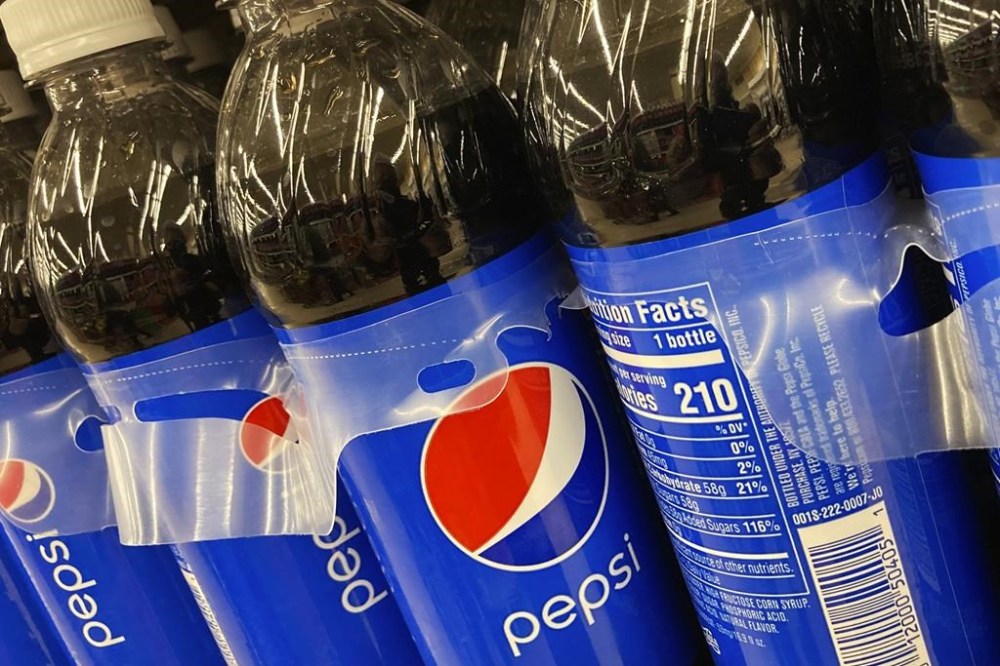
FILE - Bottles of Pepsi are displayed in a grocery store, in Ill., on Feb. 10, 2022. (AP Photo/Nam Y. Huh, File)

Coca-Cola owns brands like Dasani, Fanta, Sprite, Vitamin Water, and Smartwater, while PepsiCo owns Gatorade, Aquafina, Mountain Dew, and more. The two companies have been ranked as the world’s top plastic polluters for five consecutive years, and Coca-Cola has taken the number one spot for six years, according to global environmental group Break Free From Plastic.

PepsiCo produces approximately 2.5 million metric tons of plastic and Coca-Cola produces approximately 3.224 million metric tons of plastic annually, according to Break Free from Plastic.

A European Union consumer protection group and environmental organizations filed a legal complaint against Coca-Cola, Nestle, and Danone last November, accusing them of being misleading when representing packaging as 100% recycled or 100% recyclable.

The LA lawsuit said Coca-Cola and PepsiCo have employed “disinformation campaigns” for consumers to purchase single-use plastic, believing them to be recyclable and less harmful to the environment.

It alleged that both companies promised to create a “circular economy” for its bottles, in which plastic bottles can be recycled and reused an endless number of times, while in reality plastic bottles can only be recycled once, if at all.

The American Beverage Association, which PepsiCo and Coca-Cola are a part of, denied the lawsuit’s accusations about their plastic bottle recycling labels.

“The allegation that our packaging is not and will not be recycled is simply not true,” the group’s spokesperson William Dermody said in a statement.

Dermody said California had a 71% bottle recycling rate in 2023, one of the highest in the country, and that their bottles are “designed to be recycled and remade and can include up to 100% recycled plastic.”

In 2022 alone, an estimated 121,324 to 179,656 tons of plastic waste leaked into the land and ocean in California, and plastics make up seven of the top 10 litter products found on beaches, the lawsuit states.

A big part of the problem is microplastics.

Plastics that have leaked into the environment eventually disintegrate into tiny pieces of plastic measuring five millimeters or less. They can affect soil and plant growth, marine and fish life, and are nearly impossible to remove from the environment, the lawsuit states.

Some Australian researchers, on behalf of the World Wildlife Fund, calculated in 2019 that many people each week consume roughly 5 grams of plastic from common food and beverages, and microplastics have been found in body tissues and organs. Though research is still limited overall, there are growing concerns that microplastics in the body could potentially be linked to heart disease, Alzheimer’s and dementia, and other problems.

The lawsuit is seeking a court order to stop the companies’ “unfair and deceptive business practices” as well as restitution for consumers and civil penalties of up to $2,500 per violation.

In February 2020, environmental nonprofit Earth Island Institute filed a lawsuit in California asking for damages and an order for Coca-Cola, PepsiCo, Nestle USA, Procter & Gamble and six other companies to clean up the plastic waste they should be held responsible for.

New York state also sued PepsiCo last November for its role in creating the plastic waste that littering the Buffalo River, which empties into Lake Erie and supplies the city of Buffalo’s drinking water. A judge dismissed the case Thursday, stating in a court filing that there was no “failure to warn” the public on plastic-related dangers and that there was no cause of action to punish the companies for the actions of a third party — people who litter.
Report Error Submit a Tip

More Stories

Los Angeles County sues Pepsi and Coca-Cola over plastic bottles

Jaimie Ding, The Associated Press 4 minute read Preview

Los Angeles County sues Pepsi and Coca-Cola over plastic bottles

Jaimie Ding, The Associated Press 4 minute read Thursday, Oct. 31, 2024

LOS ANGELES (AP) — Los Angeles County is taking on Pepsi and Coke for their role in plastic pollution.

In a lawsuit filed Wednesday, the county alleged PepsiCo and Coca-Cola companies have misled the public about the recyclability of their plastic bottles and downplayed the negative environmental and health impacts of plastic disposal.

“Coke and Pepsi need to stop the deception and take responsibility for the plastic pollution problems your products are causing," LA County supervisor Lindsey Horvath said in a statement. "Los Angeles County will continue to address the serious environmental impacts caused by companies engaging in misleading and unfair business practices.”

Coca-Cola owns brands like Dasani, Fanta, Sprite, Vitamin Water, and Smartwater, while PepsiCo owns Gatorade, Aquafina, Mountain Dew, and more. The two companies have been ranked as the world's top plastic polluters for five consecutive years, and Coca-Cola has taken the number one spot for six years, according to global environmental group Break Free From Plastic.

Read
Thursday, Oct. 31, 2024

Klein has burned bridges with PM, Gillingham says

Joyanne Pursaga 3 minute read Preview

Klein has burned bridges with PM, Gillingham says

Joyanne Pursaga 3 minute read Yesterday at 5:51 PM CDT

One mayoral candidate accused another of writing a column so critical it could compromise his ability to work with the federal government.

Read
Yesterday at 5:51 PM CDT

Cabernet Sauvignon star of wine festival

Ben Sigurdson 5 minute read Preview

Cabernet Sauvignon star of wine festival

Ben Sigurdson 5 minute read 3:00 AM CDT

The Winnipeg Wine Festival will celebrate the king of red wine grapes next weekend — the theme of this year’s festival, which takes place Sept. 25 and 26 at the RBC Convention Centre, is Cabernet Sauvignon.

Cab Sauv, as it’s also known, is the world’s most widely planted wine grape of any colour, first coming to prominence in the 1800s in France’s Bordeaux region, where the grape is still popular. Rather than single-variety wines, Bordeaux reds tend to be blends, with those coming from the left bank of the Gironde estuary being Cabernet-dominant, while right-bank wines are Merlot-dominant, with Cabernet Sauvignon playing a supporting role. Cabernet and Merlot work well together and many other countries have followed suit in blending the two.

A team at University of California Davis put Cabernet Sauvignon through a DNA test in 1996 and discovered its parent grapes are Cabernet Franc and Sauvignon Blanc — it’s likely that at some point the two varieties, planted next to each other in some vineyard, crossed and mutated and became the grape we know today. (Someone growing grapes in the 19th century must have had an inkling of what was up, as the grape has been called Cabernet Sauvignon since long before the DNA test.)

Flavour-wise, most Cabernet Sauvignon wines are big and bold, with a core of deep dark berry flavours, some graphite and spice notes and relatively bright acidity. It’s a grape that is well-suited to barrel aging, with most examples seeing at least some time in wood.

Read
3:00 AM CDT

Siloam Mission, WFPS discussing on-site paramedic to reduce staggering number of emergency calls

Scott Billeck 4 minute read Preview

Siloam Mission, WFPS discussing on-site paramedic to reduce staggering number of emergency calls

Scott Billeck 4 minute read Yesterday at 2:00 AM CDT

Winnipeg’s fire-paramedic service and its largest homeless-serving organization are discussing what it would look like to station at least one paramedic at Siloam Mission, as emergency calls to the downtown facility surge.

The ongoing discussions come as Winnipeg Fire Paramedic Service crews were dispatched 1,771 times during the first eight months of the year to the two adjacent Siloam properties at 303 Stanley St. and 300 Princess St.

WFPS said most of the calls were related to overdoses or other consequences of substance use, with the total nearly double the 854 calls recorded over the same period last year. By comparison, there were 831 calls during the same span in 2024, and 591 in 2023.

“The number of emergency calls isn’t sustainable for us as a service, but it’s certainly not sustainable for them as an agency trying to provide services,” WFPS chief Ryan Sneath told the Free Press. “And they recognize that they’re impacting emergency services, not them specifically, but the site in a significant way.”

Read
Yesterday at 2:00 AM CDT

United Way, other charities fight for dollars as donor base shrinks

Scott Billeck 7 minute read Preview

United Way, other charities fight for dollars as donor base shrinks

Scott Billeck 7 minute read Yesterday at 2:00 AM CDT

Winnipeg’s charitable sector is being squeezed from both sides: demand for help is growing while the pool of donors to meet that need is shrinking.

The imbalance is increasingly being carried by a relatively small group of deep-pocketed donors. Last year, 600 people — about three per cent of United Way Winnipeg’s individual donors — accounted for roughly $8 million, or 55 per cent of individual donations.

The fundraising pitch isn’t getting any easier.

Homelessness and public drug use have become increasingly visible, household budgets remain strained and the problems charities are trying to address can seem so entrenched that donors may reasonably wonder what difference another contribution can make.

Read
Yesterday at 2:00 AM CDT

Canada-U.S. trade relationship is broken, but the damage can — and will — be repaired

Tom Brodbeck 5 minute read Preview

Canada-U.S. trade relationship is broken, but the damage can — and will — be repaired

Tom Brodbeck 5 minute read Thursday, Sep. 17, 2026

Canada needs to get serious about diversifying its trade beyond the United States. But at the same time, Canadians should expect relations with the U.S. to normalize after Donald Trump is no longer in the White House.

For generations, Canada-U.S. trade was considered almost a fact of geography. The two countries share the world’s longest undefended border, deeply integrated supply chains and a century of commercial relationships.

Canadian manufacturers depend on American customers. American manufacturers depend on Canadian suppliers. Energy, agriculture, automotive production and countless other industries operate across the border as though it barely exists.

That isn’t going to change dramatically, even in the midst of a bitter trade war unleashed by the U.S. president.

Read
Thursday, Sep. 17, 2026