US hikes tariffs on imports of Chinese solar wafers, polysilicon and tungsten products
Advertisement
Read this article for free:
or
Already have an account? Log in here »
To continue reading, please subscribe:

Digital Subscription
One year of digital access for only $205*
- Enjoy unlimited reading on winnipegfreepress.com
- Read the E-Edition, our digital replica newspaper
- Access News Break, our award-winning app
- Play interactive puzzles
*First annual payment billed as $205.00 + GST for one year. This annual subscription will automatically renew at $233.00 + GST every 52 weeks (10% off the regular annual price of $259.35). Offer available to new and qualified returning subscribers only. Cancel any time.
To continue reading, please subscribe:
Add Free Press access to your Brandon Sun subscription for only an additional
$1 for the first 4 weeks*
- Enjoy unlimited reading on winnipegfreepress.com
- Read the E-Edition, our digital replica newspaper
- Access News Break, our award-winning app
- Play interactive puzzles
*Your next Brandon Sun subscription payment will increase by $1.00 and you will be charged $17.95 plus GST for four weeks. After four weeks, your payment will increase to $24.95 plus GST every four weeks.
Read unlimited articles for free today:
or
Already have an account? Log in here »
Hey there, time traveller!
This article was published 11/12/2024 (666 days ago), so information in it may no longer be current.
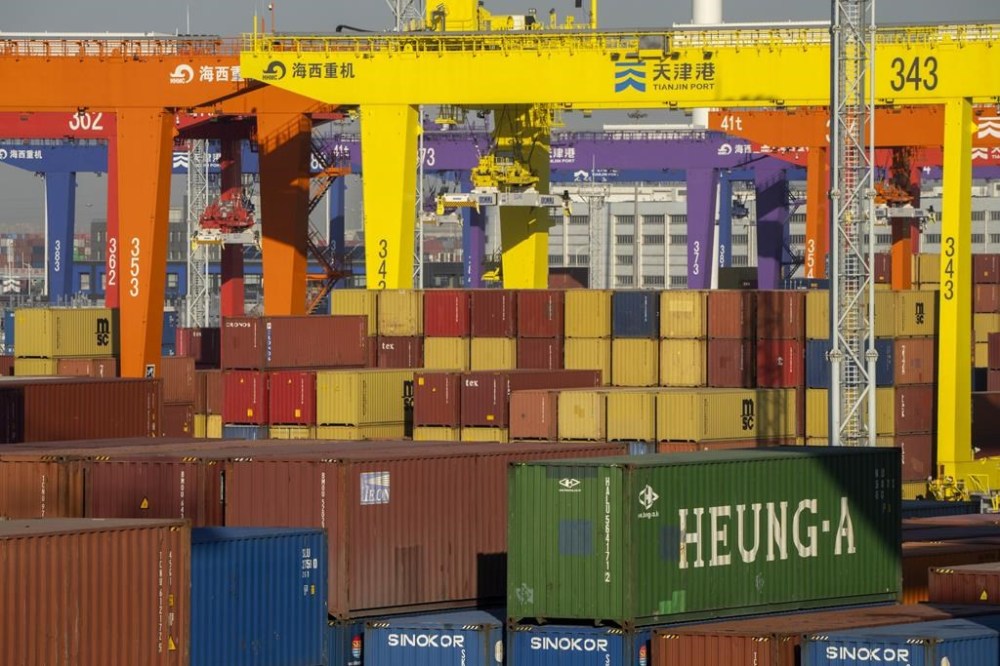
BANGKOK (AP) — The Biden administration plans to raise tariffs on solar wafers, polysilicon and some tungsten products from China to protect U.S. clean energy businesses.
The notice from the U.S. Trade Representative’s office said tariffs on Chinese-made solar wafers and polysilicon will rise to 50% from 25% and duties on certain tungsten products will increase from zero to 25%, effective on Jan. 1, following a review of Chinese trade practices under Section 301 of the 1974 Trade Act.
The decision followed a public comment period after the USTR said in September that it was considering such actions.
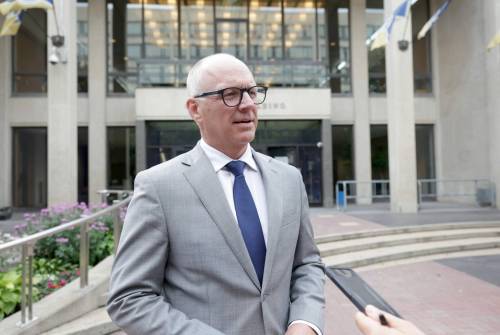
“The tariff increases announced today will further blunt the harmful policies and practices by the People’s Republic of China,” USTR Katharine Tai said in a statement. “These actions will complement the domestic investments made under the Biden-Harris Administration to promote a clean energy economy, while increasing the resilience of critical supply chains.”
Reports Thursday said U.S. and Chinese officials were meeting this week and next for trade talks ahead of the year’s end.
Last week, Washington tightened restrictions on Chinese access to advanced semiconductor technology. Beijing responded by banning exports to the U.S. of certain critical minerals needed to make computer chips, such as gallium, germanium and antimony. It also stepped up its controls on graphite exports to the U.S.
China provides a very large share of most of those materials and the United States has been working to secure alternative sources in Africa and other parts of the world.
Tungsten is another strategically vital metal whose production is dominated by China. The U.S. does not produce it, but South Korea is a potential big supplier. It’s used to make armaments and is also used in x-ray tubes and light bulb filaments, among other industrial applications. U.S. imports of the metal from China fell to $10.9 million in 2023 from $19.5 million the year before.
After Beijing announced its ban on exporting gallium and the other materials to the United States, analysts said tungsten was another likely area where China might strike back.

Trade frictions have been escalating ahead of the inauguration of President-elect Donald Trump, who has vowed to impose 60% tariffs on Chinese goods, among other threats. President Joe Biden has said Trump’s promise of broad tariffs on foreign imports would be a mistake.
His administration has kept in place tariffs that Trump imposed during his first term in office, but says it has a more targeted approach.
China has sharply ramped up production of cheap electric vehicles, solar panels, and batteries at a time when the Biden administration has championed moves to support those industries in the U.S.
The U.S. and other trading partners say China improperly subsidizes exports, giving exporters of solar panels and other products an unfair advantage in overseas markets, where its manufacturers charge lower prices thanks to government support. Washington also says China improperly pressures foreign companies to hand over technology.
China accounts for more than 80% of the market for solar panels at all stages of production, according to the International Energy Agency, more than double domestic demand for those products. Its huge economies of scale have made solar power more affordable, but also concentrated the supply chain inside China. The IEA has urged other countries to assess their solar panel supply chains and develop strategies to address any risks.
In early 2018, the Trump administration imposed 30% tariffs on imports of Chinese solar panels. Beijing filed a complaint with the World Trade Organization charging that the U.S. was unfairly supporting electric vehicle purchases.

The investigation that led the USTR to raise the tariffs on solar panels concluded with a report in May that has prompted increases in tariffs on a range of products including electric vehicles, syringes and needles, medical gloves and facemasks, semiconductors and steel and aluminum products, among others.
It has pushed tariffs on Chinese-made electric vehicles up to 100% from 25%, raised tariffs on Chinese-made lithium batteries to 25% from 7.5%.
Related Articles
Manitoba girds itself for tariff battle with Trump
Advertisement Advertise With Us
Advertisement Advertise With Us