Canadian doctor says WHO headquarters ‘stressed, devastated’ as Trump orders U.S. exit
Advertisement
Read this article for free:
or
Already have an account? Log in here »
To continue reading, please subscribe:

Digital Subscription
One year of digital access for only $205*
- Enjoy unlimited reading on winnipegfreepress.com
- Read the E-Edition, our digital replica newspaper
- Access News Break, our award-winning app
- Play interactive puzzles
*First annual payment billed as $205.00 + GST for one year. This annual subscription will automatically renew at $233.00 + GST every 52 weeks (10% off the regular annual price of $259.35). Offer available to new and qualified returning subscribers only. Cancel any time.
To continue reading, please subscribe:
Add Free Press access to your Brandon Sun subscription for only an additional
$1 for the first 4 weeks*
- Enjoy unlimited reading on winnipegfreepress.com
- Read the E-Edition, our digital replica newspaper
- Access News Break, our award-winning app
- Play interactive puzzles
*Your next Brandon Sun subscription payment will increase by $1.00 and you will be charged $17.95 plus GST for four weeks. After four weeks, your payment will increase to $24.95 plus GST every four weeks.
Read unlimited articles for free today:
or
Already have an account? Log in here »
Hey there, time traveller!
This article was published 21/01/2025 (572 days ago), so information in it may no longer be current.
TORONTO – Staff at the World Health Organization are “devastated” by President Donald Trump’s executive order to pull the U.S. out of the agency, a Canadian global health specialist says.
Dr. Madhukar Pai, the Canada Research Chair in Epidemiology and Global Health, is at the WHO headquarters in Geneva this week for meetings about tuberculosis and was there at the time Trump signed the order Monday.
“Everything went crazy,” said Pai, who is also a global health professor at McGill University in Montreal, in an interview from Geneva on Tuesday.
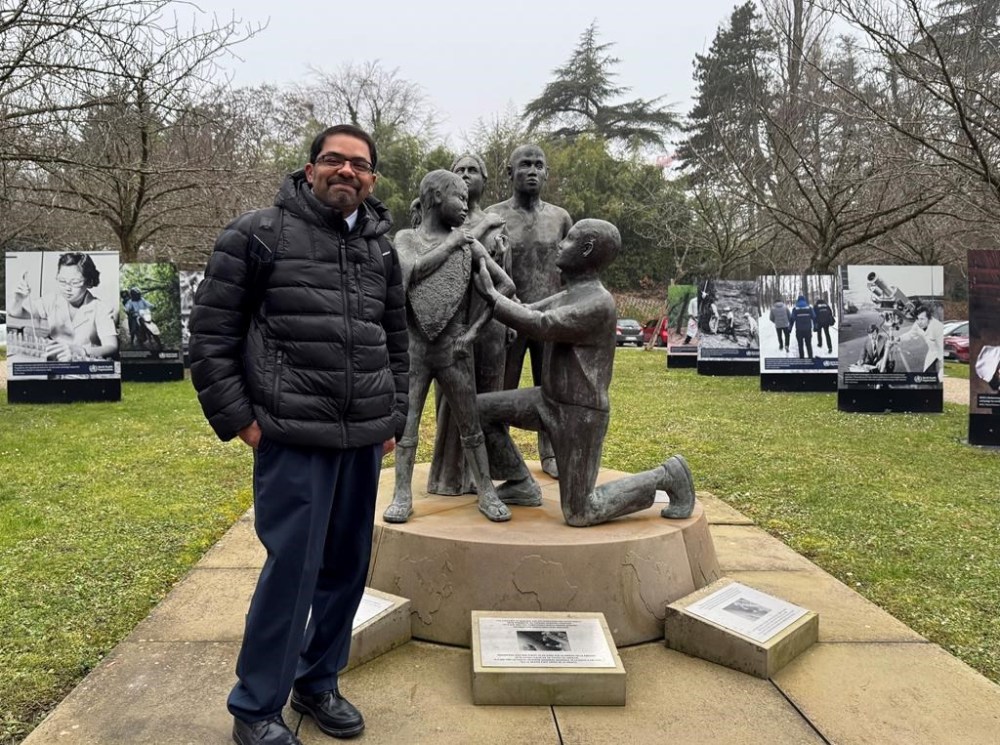
”Everybody here is absolutely stressed, devastated, and literally freaking out because some of their programs at WHO are extremely reliant on U.S. government funding,” he said.
“They’re not even sure how to keep the lights on, keep their staff working, keep the programs going, so it’s a pretty massive crisis.”
Losing the large amount of funding the U.S. provides the WHO — about 18 per cent of its budget in 2023, according to the agency — is a threat to public health, Pai said.
”There are wide-ranging impacts, I would say, to all countries, not just Canada,” he said.
But Canada’s geographic proximity puts it at additional risk if its southern neighbour fails to respond appropriately to public health threats, Pai said.
“I think we’ll be hit, for example, if there is a new outbreak and (the) U.S. is simply not engaged with WHO or the global response. And if that outbreak spreads within the U.S. … I think Canada will be the first one to be impacted given the movement of population between our two countries, trade and our fairly open borders.”
One current threat is H5N1 avian flu — a highly pathogenic strain of influenza that has wiped out poultry farms in both Canada and the U.S., he said. Although the illness has primarily infected U.S. farm workers with mild symptoms, one senior who was exposed to a backyard flock in Louisiana died of the virus earlier this month.
Canada has had one confirmed human case of H5N1 —a teenage girl in B.C. who became severely ill and was hospitalized.
Pai is calling on the Canadian government — along with other G7 countries — to “step up” and help fill the funding void that will be left by the U.S., both through financial contributions to the WHO as well as by taking a leadership role in global health.
But he noted Canada’s own political turmoil — including the Liberal leadership race to replace Prime Minister Justin Trudeau and Trump’s threat to slap punishing tariffs on the country — could make that unlikely.
“Our leaders are probably more worried about the tariffs than they are worried about anything else at this stage,” Pai said.
Dr. Prabhat Jha, founding director of the Centre for Global Health Research at Unity Health Toronto, said he would also like to see the Canadian government increase support for the WHO.
But he said the country that will hurt the most from Trump’s withdrawal is the U.S. itself.
”A lot of it is symbolism … Trump basically, you know, giving the middle finger to the world,” Jha said in an interview from Sierra Leone on Tuesday.
“In the end, it’s going to hurt Americans because they lose the (health) intelligence, they lose the access to the global networks if there’s another pandemic,” he said.
“(The WHO) won’t share the information as easily with the U.S. as they would otherwise.”
A bigger concern, Jha said, is the message the U.S. pullout “sends about nationalism.”
“(It says) basically that you don’t need to have global co-operation on disease, which is absolutely stupid and completely self defeating.”
Jha said the “silver lining” of Trump’s move is that it could spark “reform” to make the WHO less dependent on the U.S.
“It means the world has to co-operate more, even if America goes it alone.”
In a statement issued Tuesday, the World Health Organization said it “regrets” Trump’s decision.
“We hope the United States will reconsider and we look forward to engaging in constructive dialogue to maintain the partnership between the USA and WHO, for the benefit of the health and well-being of millions of people around the globe,” it said.
Trump’s executive order claimed the U.S. was cutting ties with WHO for reasons including alleged “mishandling of the COVID-19 pandemic” and “unfairly onerous payments.”
Pai noted that the order comes as vaccine-preventable diseases are on the rise — including increasing cases of measles in both the U.S. and Canada.
In addition to losing WHO’s leadership on vaccination, he also worries about the “anti-vaccine rhetoric” from some of Trump’s picks for appointees to leadership positions, Pai said, noting increased vaccination efforts are urgently needed.
”It’s actually pretty shocking for me, stunning for me, to see that in 2025 we’re dealing with measles in Canada or (the) U.S.,” he said.

“We cannot go back in time to a period where kids were getting paralyzed with polio or dying of measles and whooping cough. We had come a long, long way and we’re now starting to slip back and that’s very scary.”
In an email to The Canadian Press, a spokesperson for the Public Health Agency of Canada said Canada’s membership in the WHO “allows us to benefit from the availability of knowledge, resources and expertise from the global community.”
“Canada will continue working to ensure that the WHO is an effective, accountable, inclusive and well-governed institution, while maintaining our sovereignty,” Anna Maddison wrote.
This report by The Canadian Press was first published Jan. 21, 2025.
Canadian Press health coverage receives support through a partnership with the Canadian Medical Association. CP is solely responsible for this content.
Related Articles
22 states sue to stop Trump's order blocking birthright citizenship

Advertisement Advertise With Us
Advertisement Advertise With Us