Ottawa dragging its feet on protecting endangered caribou: B.C. conservation groups
Advertisement
Read this article for free:
or
Already have an account? Log in here »
To continue reading, please subscribe:

Digital Subscription
One year of digital access for only $205*
- Enjoy unlimited reading on winnipegfreepress.com
- Read the E-Edition, our digital replica newspaper
- Access News Break, our award-winning app
- Play interactive puzzles
*First annual payment billed as $205.00 + GST for one year. This annual subscription will automatically renew at $233.00 + GST every 52 weeks (10% off the regular annual price of $259.35). Offer available to new and qualified returning subscribers only. Cancel any time.
To continue reading, please subscribe:
Add Free Press access to your Brandon Sun subscription for only an additional
$1 for the first 4 weeks*
- Enjoy unlimited reading on winnipegfreepress.com
- Read the E-Edition, our digital replica newspaper
- Access News Break, our award-winning app
- Play interactive puzzles
*Your next Brandon Sun subscription payment will increase by $1.00 and you will be charged $17.95 plus GST for four weeks. After four weeks, your payment will increase to $24.95 plus GST every four weeks.
Read unlimited articles for free today:
or
Already have an account? Log in here »
Hey there, time traveller!
This article was published 22/01/2025 (606 days ago), so information in it may no longer be current.
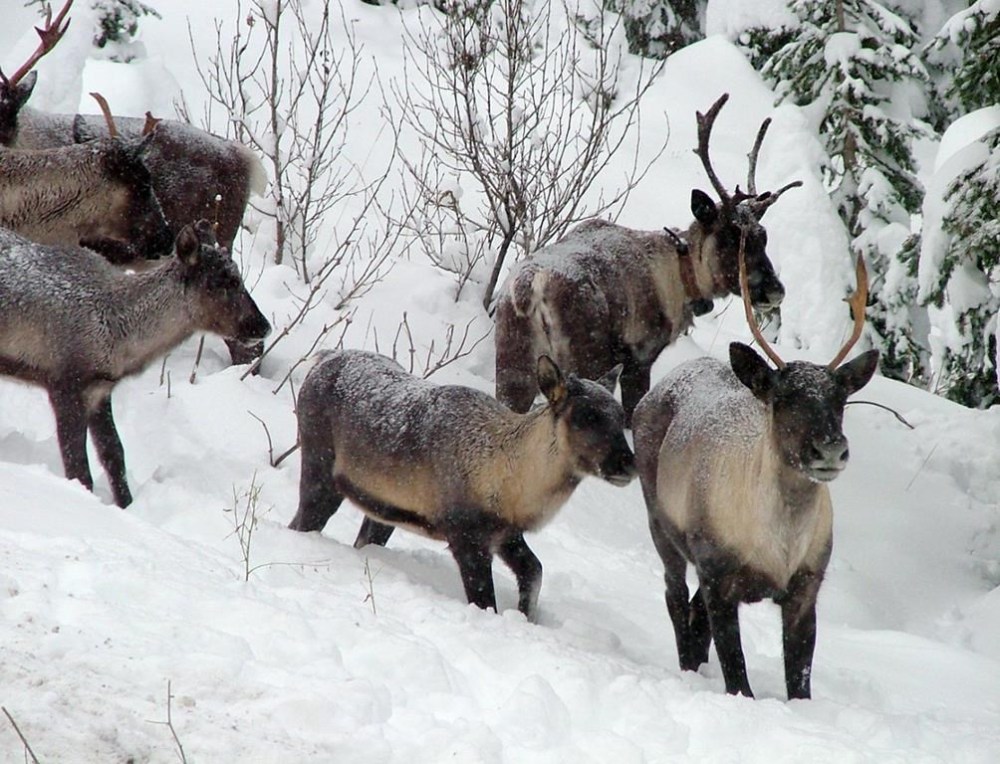
Southern mountain caribou are disappearing in British Columbia and the federal government has been dragging its feet for more than a decade on protecting the endangered herds, conservation groups say in a letter to the environment minister.
The letter sent to Steven Guilbeault on behalf of the Wilderness Committee, Wildsight and Stand.earth on Wednesday said three populations of the caribou are in particularly steep decline as logging and other industrial development cuts through their habitat in the mountains of eastern B.C., near the Alberta boundary.
Eddie Petryshen, a conservation specialist with Wildsight based in B.C.’s East Kootenay, said successive federal governments and environment ministers have “kicked the can further down the road,” and that trend continues today.
“It’s just been this constant, decade-long plan to make a plan, while caribou are disappearing and their habitat is being decimated and logged.”
A representative for Environment and Climate Change Canada did not immediately respond to a request for comment on the letter and its assertions.
Southern mountain caribou are currently classified as threatened under Canada’s Species at Risk Act, and a statement issued by the federal government in 2020 said they numbered roughly 3,100, a reduction of 53 per cent over about six years.
Ottawa released a recovery strategy and partial habitat mapping for the caribou in 2014, but the B.C. conservation groups say the mapping has not been finalized — a requirement under the legislation and a key step toward stopping the decline.
Among the southern mountain caribou, three populations collectively known as the southern group are at greatest risk of disappearing, said the letter sent on behalf of the conservation groups by Ecojustice lawyer Sean Nixon.
Petryshen said eight of 18 herds in the southern group have been extirpated, a term for local extinction, over the last two decades.
“We know what’s causing that extirpation,” he said.
Southern mountain caribou depend on old-growth forests to survive. In particular, they evolved over thousands of years in the inland temperate rainforest ecosystem.
But industrial development including roadbuilding, logging and mining have disrupted that cycle, Petryshen said.
The letter to Guilbeault includes an analysis by the Wilderness Committee that found more than 190,000 hectares of the southern group’s critical habitat were logged between 2007 and 2023.
That analysis used Ottawa’s partial habitat identification from 2014, while the group used mapping from the B.C. government in 2019 to find more than 310,000 hectares of critical habitat were logged during the same time period.
“We’ve gone from an old forest ecosystem to ecosystems where there’s a lot more young forest, which provides more forage for other ungulates like deer and elk,” Petryshen said.
As other ungulates move in, predators follow, and the pathways created by roads and logging cut blocks make it easier for them to prey on caribou, he said.
In 2015, the province began culling wolves in an effort to save threatened caribou herds, a controversial program that involves shooting wolves from helicopters.
The wolf cull relates to about a dozen caribou herds and typically costs between $100,000 and $275,000 per herd, according to a B.C. government website.
The province has also culled cougars known or suspected to have killed caribou from the Central Selkirks, Columbia North and Itcha-Ilgachuz herds.
Predator reduction may be part of a comprehensive recovery strategy for endangered caribou, Petryshen said, but it doesn’t address the destruction and fragmentation of their habitat, which is the driving force behind their decline.
“For every new cut block and road that we add, it makes those measures more and more likely,” he said. “It makes the success of those measures more debatable, too.”
Nixon’s letter to Guilbeault said Ottawa’s ongoing delays and inaction “amount to a tacit endorsement of the extermination of a species.”
It said the Environment Department indicated in 2014 that it would complete full, critical habitat mapping for southern mountain caribou within six months. It missed that target, and in 2020 the department said it intended to finish by summer 2021.

The last update indicated a proposed recovery strategy with critical habitat mapping would be released sometime in 2026, though the department suggested its timeline “may shift,” the letter said.
Environment and Climate Change Canada’s timelines for the habitat mapping have shifted “so regularly as to render them meaningless,” it said.
The Committee on the Status of Endangered Wildlife in Canada recommended in 2014 that the southern group be listed as endangered under the Species at Risk Act, while other southern mountain populations remain classified as threatened.
The federal government did not respond to the recommendation until February 2022, when it referred the population back to the committee for further consideration.
This report by The Canadian Press was first published Jan. 22, 2025.