Huge health challenges face Gaza residents returning to their homes
Advertisement
Read this article for free:
or
Already have an account? Log in here »
To continue reading, please subscribe:

Digital Subscription
One year of digital access for only $205*
- Enjoy unlimited reading on winnipegfreepress.com
- Read the E-Edition, our digital replica newspaper
- Access News Break, our award-winning app
- Play interactive puzzles
*First annual payment billed as $205.00 + GST for one year. This annual subscription will automatically renew at $233.00 + GST every 52 weeks (10% off the regular annual price of $259.35). Offer available to new and qualified returning subscribers only. Cancel any time.
To continue reading, please subscribe:
Add Free Press access to your Brandon Sun subscription for only an additional
$1 for the first 4 weeks*
- Enjoy unlimited reading on winnipegfreepress.com
- Read the E-Edition, our digital replica newspaper
- Access News Break, our award-winning app
- Play interactive puzzles
*Your next Brandon Sun subscription payment will increase by $1.00 and you will be charged $17.95 plus GST for four weeks. After four weeks, your payment will increase to $24.95 plus GST every four weeks.
Read unlimited articles for free today:
or
Already have an account? Log in here »
Hey there, time traveller!
This article was published 27/01/2025 (619 days ago), so information in it may no longer be current.
Hospitals and clinics destroyed. Millions of tons of debris contaminated with toxic substances, unexploded ordnance and human remains. Tens of thousands of people with injuries that will require a lifetime of care.
As Gaza’s residents return to what is left of their homes, they face new risks on top of monumental health challenges. Fifteen months of war has killed more than 47,000 people, according to local health officials, displaced 90% of Gazans and reduced many areas to rubble. Clean water is in short supply and sewers, so important for protecting public health, are badly damaged spurring worries about the spread of infectious disease.
Aid groups are rushing to provide food and supplies amid a fragile ceasefire between Israel and Hamas as they plan the best way forward.
“You have a population with just every health need imaginable … (who have) been unable to get access to care … for more than a year,” said Yara Asi, an expert in global health management and visiting scholar at the FXB Center of Health and Human Rights at Harvard. “What is that going to look like in the near future and the long term ?”
Here’s a look at some of the urgent health issues.
Healthcare in shambles
Most of Gaza’s 36 hospitals were damaged or partly destroyed by Israeli bombs, with only half still partially operational, according to the World Health Organization. Almost two-thirds of health clinics aren’t open. That makes it impossible to treat everyone who needs urgent and long-term care — including an estimated 30,000 people who need ongoing rehabilitation for “life-changing injuries,” such as amputations.
The WHO said that when it’s safe, it’ll team up with other organizations to prioritize critical services such as trauma and emergency care, primary health care and mental health support.
That includes increasing hospital-bed capacity in northern and southern Gaza, and bringing in prefabricated containers to help treat patients at damaged hospitals and clinics, the WHO said.
International workers also are needed to ease staffing shortages, the organization said.
Asi and other experts said most hospital equipment has been destroyed, and is expensive and difficult to import.
“How are Palestinians going to import the advanced, expensive medical equipment that actually makes the hospital more than a building?” Asi said. “That’s going to take years.”
Israel says Hamas is responsible for damage to the health system because the group often used hospitals to hide or gather its men. Under the current six-week ceasefire, Israel has allowed sharp increases of humanitarian supplies. But the sides have not agreed on a permanent end to the war, and Israel has not publicly laid out a postwar vision that would include plans for reconstruction and cleanup of the territory.
Life-changing injuries
The WHO said one-fourth of the estimated 110,000 people injured in the fighting suffered “life-changing” injuries, including over 12,000 who need to be evacuated as soon as possible for specialized care.
Among the injured are thousands of children who lost limbs and will need prosthetics and long-term care, said Marc Sinclair, a pediatric orthopedic surgeon from Dubai who has volunteered in Gaza for over a decade.
He said the charity he helped start, Little Wings Foundation, will partner with the Palestinian Children’s Relief Fund and a German prosthetics company that will supply containers that can be turned into workshops.
They hope to begin training doctors and manufacturing prosthetics in the West Bank and move the operation to Gaza when they are able.
“The volume of injured is so huge that it’s going to be an enormous task to fulfill the needs,” Sinclair said. “We’re talking about children that have not just single amputations, but … multiple amputations.”
Asi, from Harvard, said thousands of people also suffered traumatic injuries, including brain damage, that will require lifelong care. “And then you have those people that have regular health ailments,” she said. “They’ve been unable to get access to care or medications in some cases for more than a year.”
Threat of infectious disease
A shortage of clean water, destroyed sanitation systems, overcrowding and missed childhood vaccinations have created ideal circumstances for spread of infectious disease, said Asi, also co-director of the Palestine Program for Health and Human Rights.
She said children — many of whom experienced malnutrition and mental trauma — are a special concern.
Gaza experienced a polio outbreak for the first time in decades, so it is clear that both children and adults are at risk of other infectious diseases, Asi said.
She said people have described crowded living conditions, a lack of hygiene supplies and garbage and sewage in the streets.
“It’s really a health catastrophe from every potential facet,” she said, adding that there have been outbreaks of respiratory infections in tent camps and shelters, and many people are living with undiagnosed skin rashes and infections.
Dangerous debris
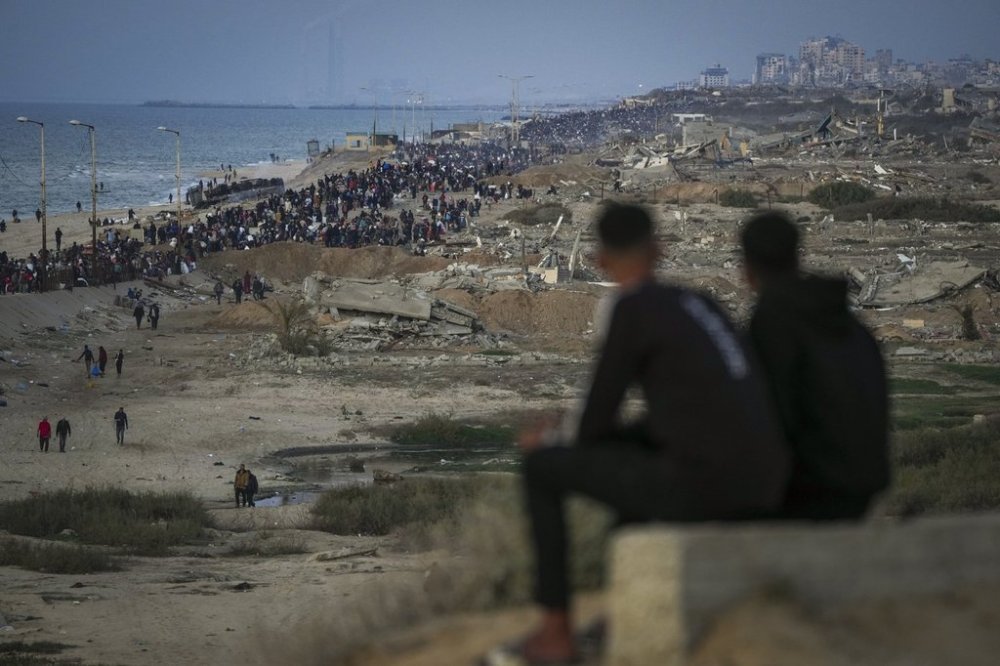
Experts say Palestinians returning to their homes in Gaza will be at risk from breathing dust or touching debris contaminated with toxic chemicals, asbestos and human remains, as well as munitions that never exploded. On Monday, tens of thousands of people began returning to northern Gaza as part of the ceasefire, finding piles of rubble where their homes once stood.
It’s critical to move quickly to identify and contain environmental hazards to “prevent returning residents from inadvertently coming into contact with harmful pollutants” and to keep it from spreading, a United Nations Environment Programme spokesperson said.
The agency plans to begin an on-the-ground assessment within two to three months, as security allows.
The first priority should be for specialized teams to search for and clear unexploded ordnance, then to test air, water and soil for toxic substances, said Paul Walker, chair of the Chemical Weapons Convention Coalition and a former staff member of the House Armed Services Committee.
“People are anxious, I know, to rebuild,” he said, but returning home right now “could be very dangerous … I think we’ve got to expect as people work through the rubble there will inevitably be injuries and deaths.”
But it might be difficult to convince residents to delay their return, said Asi. She said she’s seen videos showing caravans of people walking “in some cases knowing that there’s nothing waiting for them but just wanting to go back to the land to recover the bodies of loved ones or to see if their house survived or what survives from their home.”
___
The Associated Press’ climate and environmental coverage receives financial support from multiple private foundations. AP is solely responsible for all content. Find AP’s standards for working with philanthropies, a list of supporters and funded coverage areas at AP.org.
Related Articles
Northern Gaza is shattered. The spirit of returning Palestinians is not


Advertisement Advertise With Us
Advertisement Advertise With Us