Creating a two-way street
Anti-racism activist hopes to make our communities mutually respectful

Advertisement
Read this article for free:
or
Already have an account? Log in here »
To continue reading, please subscribe:

Digital Subscription
One year of digital access for only $205*
- Enjoy unlimited reading on winnipegfreepress.com
- Read the E-Edition, our digital replica newspaper
- Access News Break, our award-winning app
- Play interactive puzzles
*First annual payment billed as $205.00 + GST for one year. This annual subscription will automatically renew at $233.00 + GST every 52 weeks (10% off the regular annual price of $259.35). Offer available to new and qualified returning subscribers only. Cancel any time.
To continue reading, please subscribe:
Add Free Press access to your Brandon Sun subscription for only an additional
$1 for the first 4 weeks*
- Enjoy unlimited reading on winnipegfreepress.com
- Read the E-Edition, our digital replica newspaper
- Access News Break, our award-winning app
- Play interactive puzzles
*Your next Brandon Sun subscription payment will increase by $1.00 and you will be charged $17.95 plus GST for four weeks. After four weeks, your payment will increase to $24.95 plus GST every four weeks.
Read unlimited articles for free today:
or
Already have an account? Log in here »
Hey there, time traveller!
This article was published 24/02/2025 (554 days ago), so information in it may no longer be current.
Dr. Rehman Abdulrehman is a clinical and consulting psychologist at Clinic Psychology Manitoba. He has a consulting and coaching firm called Lead with Diversity, he is the assistant professor with the department of clinical health psychology at the University of Manitoba and he has just written his first book, Developing Anti-Racist Cultural Competence, which aims to help people develop practical skills, insight and better empathy when working with diverse groups.
We are not born racist but we all have the potential to engage in racism. We live in a soup of colonial white supremacy; it’s very challenging to not swim in the soup we’re born into.
I’ve been a cross-cultural psychologist for a very long time. Sometimes racism isn’t just putting somebody down but the absence of representation. The motivation to move into consulting came when I recognized the impact it was having on my son.
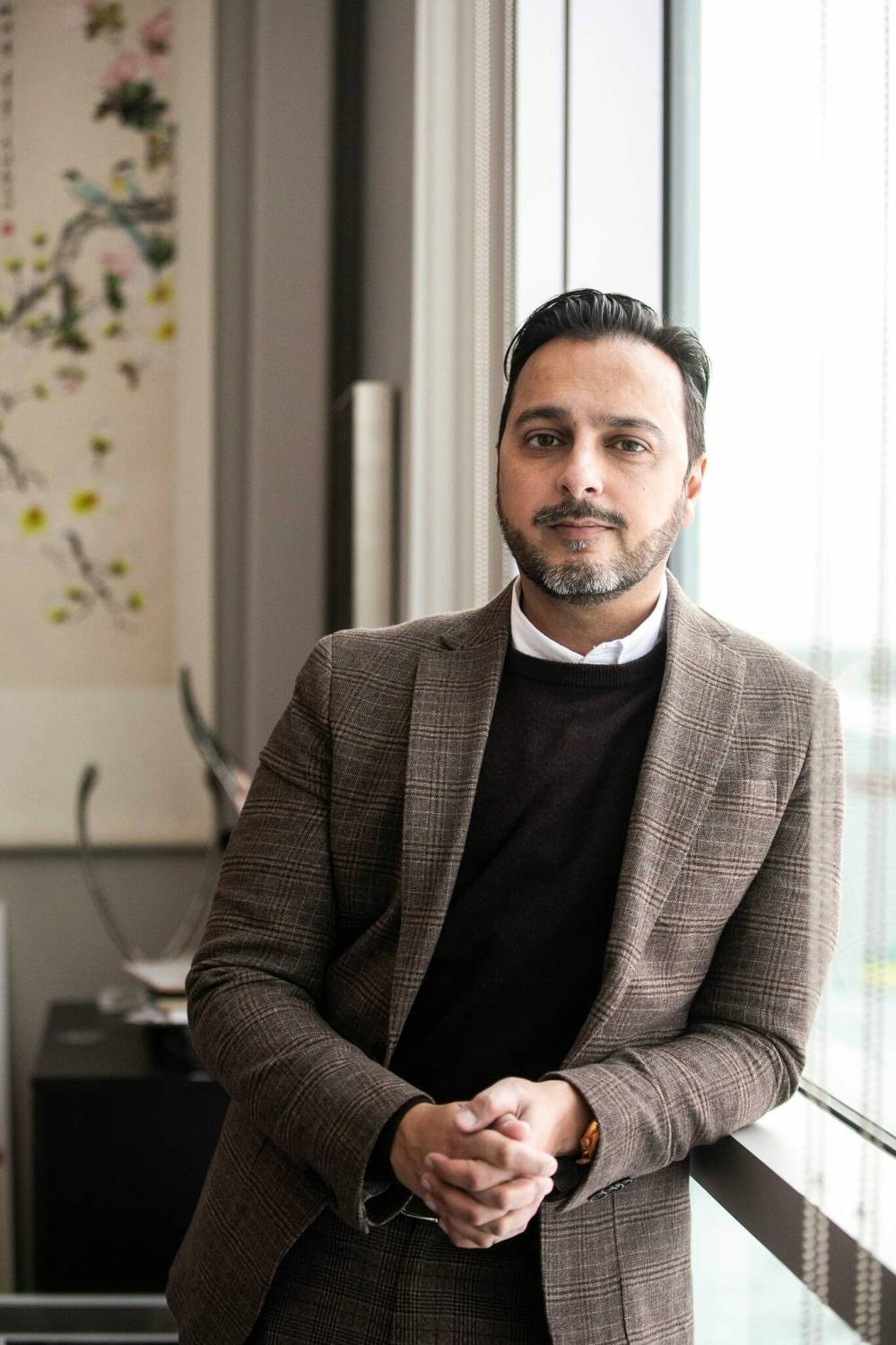
MIKAELA MACKENZIE / FREE PRESS
Rehman Abdulrehman believes we are seeing obvious examples of racism all over the world these days.
My son said he didn’t want to be a Muslim anymore because Paw Patrol only celebrates Christmas. I thought, “I’ve got to do something about this. I’ve got to try to make a difference.”
The dilemma here is that we have cognitive inheritance. We have inherited beliefs of how we see the world, who we think is dangerous, who is a criminal, who is local, who is foreign, who has rights, who doesn’t. We don’t recognize what we have inherited.
There are those who openly believe certain groups of people are worth less than others. They identify with belief systems and values that place the supremacy of one group of people over the other. That is an example of overt, clear racism. We are seeing it all over the world today.
My work is aimed at well-intentioned people who have Black and brown friends but don’t recognize that they still hold racist beliefs. People who believe we live in a world with equity, who believe Canada is a multicultural country.
They are the most dangerous kind of racist because they don’t think they are racist. Because of those labels they continue to engage in racist behaviour, and most of us don’t think that they are racist, so we don’t see it coming.
I wouldn’t be in this business if I didn’t believe in hope. I am trying my damnedest.
The thing that keeps me hopeful is the ability to build individual relationships with people who support this kind of work. People who get to know us and are willing to listen to us, people who are like, “I get that, my point of view has changed.”
What is required is a shift in culture, really. But we cannot do this alone. We have a lot more work to do with groups and organizations. This has to be done through leadership. I don’t think leaders and organizations recognize their impact on culture.
I like the application of psychology in this field. It’s not just about information, it’s about having tools and understanding.
A lot of my work goes towards a sense of mindfulness. To understand who we are, why we think what we do, what we think and how to prevent how we see the world from causing harm to people.
It’s a type of bridge-building that allows us to have conversations to resolve these things so that all of us in the community can remain safe and well.
We polarize the concept of racism as being a good person versus a bad person. We assume if we are good people then we are not racist but that is not the truth.
People think my work is meant to target white people but it’s not. It is equally as important to address racism in people of colour as it is in non-racialized people, too.
There is this belief that people of colour are not racist. If you talk to any Indigenous person, or any Arab or Muslim person who has dealt with other people of colour, they will tell you, “We face discrimination from other people of colour all the time.”
Diversity, Equity and Inclusion (DEI) workshops don’t make a difference on their own. You must have followup. It’s like saying, “I’ve read how to ride a bike, but I refuse to get on the bike to ride it.” No matter how much you read about riding a bike, you will not learn how to ride a bike unless you are actually on it.
Learning comes with error. You will fall off that bike on occasion and you need to be able to do that. You will need to make mistakes to understand and grow.
My personal goal is to make Winnipeg the most inclusive city in Canada. Winnipeg was labelled the most racist city (in Canada by Maclean’s magazine) at one point. I want to change that.
We don’t see relatability between different groups of people. My research has confirmed that, generally speaking, white people don’t see people of colour as local, as part of the community. People of colour are seen as foreign and that includes Indigenous people on a consistent basis.
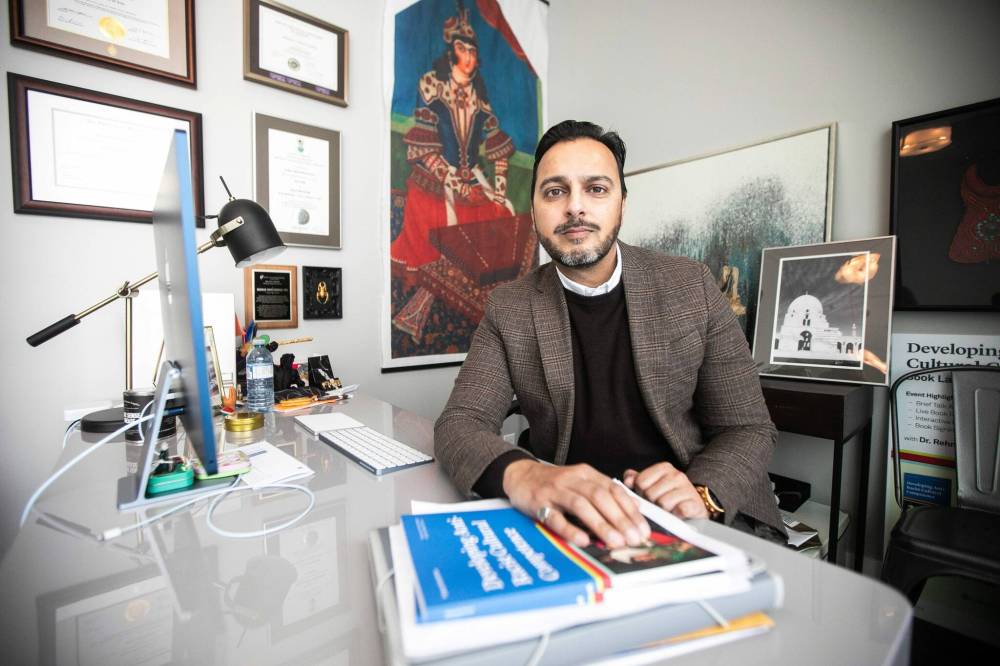
MIKAELA MACKENZIE / FREE PRESS
Dr. Rehman Abdulrehman
People of colour see themselves as part of the community. They learn about white western culture and how to fit in. But white western culture doesn’t do anything to learn about ours. It’s a one-way street. It’s us that needs to acculturate versus the other way around.
Imagine being in a relationship where only one person wants to know about the other person. If this was a romantic relationship you’d leave, but we’re stuck.
People are often very worried about approaching these issues because it all feels very heavy.
I developed the Celebrate Everything initiative where we encourage people and organizations to acknowledge, recognize and celebrate 15 holidays, including Easter and Christmas, that cover all the diverse groups in Canada. This initiative helps people approach it from a celebratory perspective that not only creates equity but also opens the door to understanding different perspectives from different Canadian communities.
Changing our definition of community changes the direction of the relationship to being a two-way street, into a relationship that is mutually caring. It’s a critical element — it allows us to be bi-directional in how we deal with people.
Change happens through relationships. If we are not approaching this as community, if we don’t have those relationships, I don’t think we can get forward.
I receive negative reactions to my work all the time. There is always somebody who feels they have the right to impinge on my safety and well-being.
My concern is that conservative politics have moved to adopt many racist, right-wing policies. I don’t think that’s what conservative politics are; I think that’s what they have become.
When right-wing politics reflect racist policy, we must heavily rely upon centre to left-wing policies for balance, to keep people safe. And sadly, left-wing political groups have chased right-wing ideology and stayed silent on matters of equity and inclusion. Our centre-to-left policies do not reflect anti-racism. That has become very evident in the past year.

Every time I speak publicly or speak in the media — and what I say is not really that frightening; I am not preaching violence or anything like that — my family is worried because they understand what that means. They understand it comes with a risk.
I don’t know that I could live with myself to tolerate abuses and harms that would impact other people of colour, including myself and my family, if I wasn’t talking about it. This is my work.
The trick to having these conversations is to create safe spaces for people to acknowledge they may not be doing the best things.
I am hopeful and I am scared. But it is both hope and fear that motivate me to continue to do this work.
av.kitching@freepress.mb.ca
AV Kitching is an arts and life writer at the Free Press. She has been a journalist for more than two decades and has worked across three continents writing about people, travel, food, and fashion. Read more about AV.
Every piece of reporting AV produces is reviewed by an editing team before it is posted online or published in print — part of the Free Press‘s tradition, since 1872, of producing reliable independent journalism. Read more about Free Press’s history and mandate, and learn how our newsroom operates.
Our newsroom depends on a growing audience of readers to power our journalism. If you are not a paid reader, please consider becoming a subscriber.
Our newsroom depends on its audience of readers to power our journalism. Thank you for your support.
AV Kitching is an arts and life writer at the Free Press. She has been a journalist for more than two decades and has worked across three continents writing about people, travel, food, and fashion. Read more about AV.
Every piece of reporting AV produces is reviewed by an editing team before it is posted online or published in print — part of the Free Press‘s tradition, since 1872, of producing reliable independent journalism. Read more about Free Press’s history and mandate, and learn how our newsroom operates.
Our newsroom depends on a growing audience of readers to power our journalism. If you are not a paid reader, please consider becoming a subscriber.
Our newsroom depends on its audience of readers to power our journalism. Thank you for your support.
Advertisement Advertise With Us
Advertisement Advertise With Us
History
Updated on Monday, February 24, 2025 6:39 AM CST: Fixes story tag