UN report warns Iran is stepping up electronic surveillance of women to enforce headscarf laws
Advertisement
Read this article for free:
or
Already have an account? Log in here »
To continue reading, please subscribe:

Digital Subscription
One year of digital access for only $205*
- Enjoy unlimited reading on winnipegfreepress.com
- Read the E-Edition, our digital replica newspaper
- Access News Break, our award-winning app
- Play interactive puzzles
*First annual payment billed as $205.00 + GST for one year. This annual subscription will automatically renew at $233.00 + GST every 52 weeks (10% off the regular annual price of $259.35). Offer available to new and qualified returning subscribers only. Cancel any time.
To continue reading, please subscribe:
Add Free Press access to your Brandon Sun subscription for only an additional
$1 for the first 4 weeks*
- Enjoy unlimited reading on winnipegfreepress.com
- Read the E-Edition, our digital replica newspaper
- Access News Break, our award-winning app
- Play interactive puzzles
*Your next Brandon Sun subscription payment will increase by $1.00 and you will be charged $17.95 plus GST for four weeks. After four weeks, your payment will increase to $24.95 plus GST every four weeks.
Read unlimited articles for free today:
or
Already have an account? Log in here »
Hey there, time traveller!
This article was published 14/03/2025 (581 days ago), so information in it may no longer be current.
GENEVA (AP) — Iran is increasingly relying on electronic surveillance and the public to inform on women refusing to wear the country’s mandatory headscarf in public, as hard-liners push for harsher penalties for those protesting the law, a United Nations report released Friday found.
The findings of the Independent International Fact-Finding Mission on the Islamic Republic of Iran come after it determined last year that the country’s theocracy was responsible for the “physical violence” that led to the death of Mahsa Amini.
The 22-year-old’s death led to nationwide protests against the country’s mandatory hijab laws and the public disobedience against them that continues despite the threat of violent arrest and imprisonment.
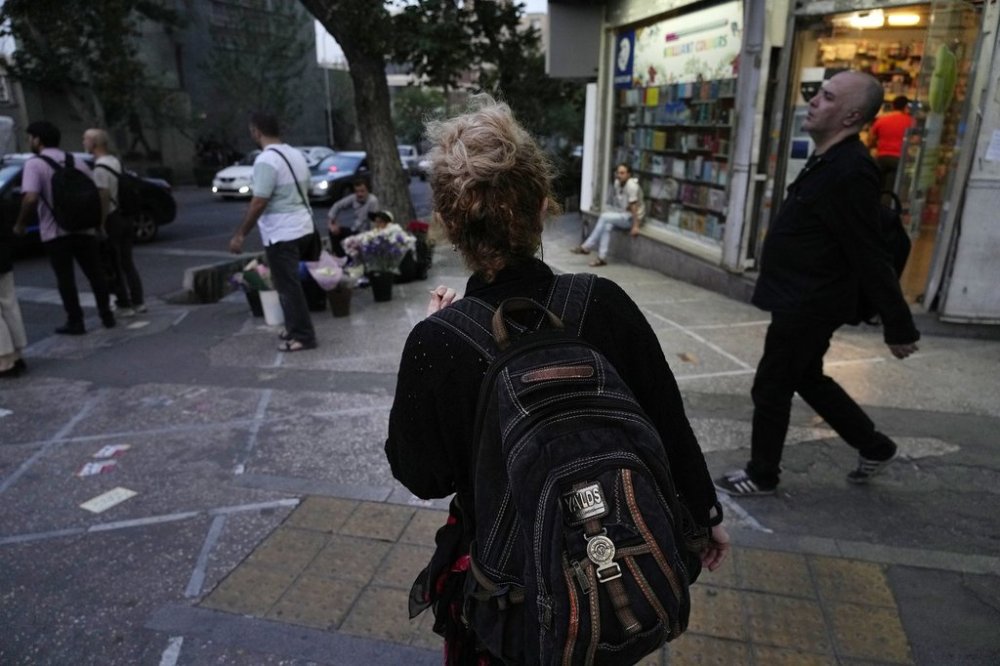
“Two and a half years after the protests began in September 2022, women and girls in Iran continue to face systematic discrimination, in law and in practice, that permeates all aspects of their lives, particularly with respect to the enforcement of the mandatory hijab,” the report said.
“The state is increasingly reliant on state-sponsored vigilantism in an apparent effort to enlist businesses and private individuals in hijab compliance, portraying it as a civic responsibility,” it added.
Iran’s diplomatic missions to the U.N. in New York and Geneva did not respond to a request for comment on the findings of the 20-page report.
Mission chair Sara Hossain cited two new areas of investigation this year: One involved “the disturbing pattern” of deaths of some protesters, including girls, which the state dismissed as cases of suicide. Families faced “judicial harassment” such as being prevented from mourning loved ones who died, she said.
The mission was also looking at the use of mock executions. “We found that detainees men, women and children had been held — in some cases at gunpoint or had nooses put around their necks — in a form of psychological torture,” Hossain told reporters in Geneva.
The team found that “chronic impunity” exists for those responsible for the repression, she added.
Drones, surveillance cameras monitor women
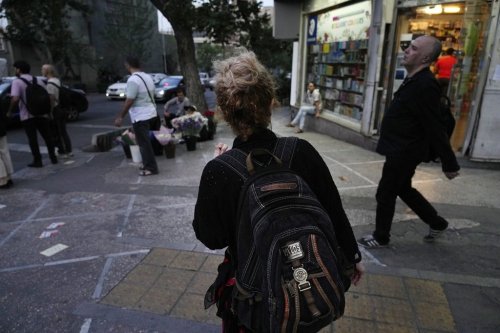
The investigators outlined how Iran increasingly relies on electronic surveillance. Among the efforts include Iranian officials deploying “aerial drone surveillance” to monitor women in public places. At Tehran’s Amirkabir University, authorities installed facial recognition software at its entrance gate to find women not wearing the hijab, it said.
Surveillance cameras on Iran’s major roadways also are believed to be involved in searching for uncovered women. U.N. investigators said they obtained the “Nazer” mobile phone app offered by Iranian police, which allows the public to report on uncovered women in vehicles, including ambulances, buses, metro cars and taxis.
“Users may add the location, date, time and the license plate number of the vehicle in which the alleged mandatory hijab infraction occurred, which then ‘flags’ the vehicle online, alerting the police,” the report said. “It then triggers a text message (in real-time) to the registered owner of the vehicle, warning them that they had been found in violation of the mandatory hijab laws, and that their vehicles would be impounded for ignoring these warnings.”
Those text messages have led to dangerous situations. In July 2024, police officers shot and paralyzed a woman who activists say had received such a message and was fleeing a checkpoint near the Caspian Sea.
The investigators found that 8,000 vehicles were confiscated because their drivers weren’t wearing the proper hijab.
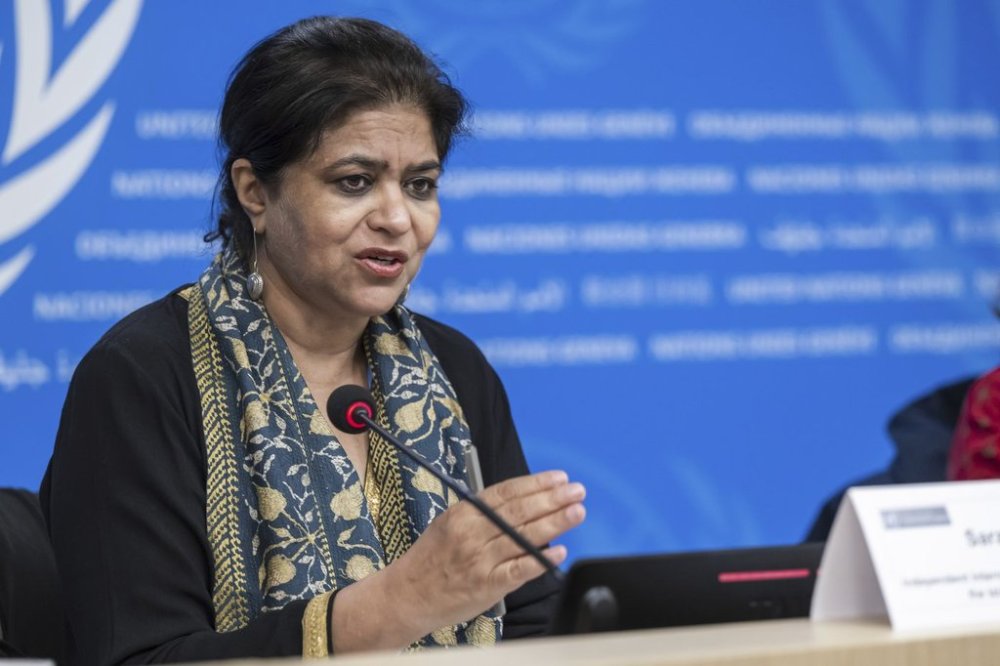
“What’s unusual and extraordinary about this is the kind of activity that is being monitored through the use of this app … what a woman wears or doesn’t wear,” Hossain said. “She shouldn’t have to be sanctioned for that.”
Tensions remain after 2022 death of Mahsa Amini
Amini, 22, died on Sept. 16, 2022, in a hospital after her arrest by the country’s morality police over allegedly not wearing her hijab to the liking of the authorities.
Amini’s death sparked months of protests and a security crackdown that killed more than 500 people and led to the detention of more than 22,000. After the mass demonstrations, police dialed down enforcement of hijab laws, but it ramped up again in April 2024 under what authorities called the Noor — or “Light” — Plan.

At least 618 women have been arrested under the Noor Plan, the U.N. investigators said, citing a local human rights activist group in Iran.
Meanwhile, Iran executed at least 938 people last year, a threefold increase from 2021, the U.N. said. While many were convicted of drug charges, the report said the executions “indicate a nexus with the overall repression of dissent in this period.”
As Iran continues its crackdown over the hijab, it also faces an economic crisis over U.S. sanctions due to its rapidly advancing nuclear program. While U.S. President Donald Trump has called for new negotiations, Iran has yet to respond to a letter he sent to its 85-year-old Supreme Leader Ayatollah Ali Khamenei. Social unrest, coupled with the economic woes, remain a concern for Iran’s theocracy.
___
Gambrell reported from Dubai, United Arab Emirates.
Related Articles
At trial's start, prosecutor blames Iran for plot to assassinate outspoken dissident



Advertisement Advertise With Us
Advertisement Advertise With Us
The Free Press acknowledges the financial support it receives from members of the city’s faith community, which makes our coverage of religion possible.