Cold shock Rare condition triggers potentially deadly allergic reaction to temperature changes
Read this article for free:
or
Already have an account? Log in here »
To continue reading, please subscribe:

Digital Subscription
One year of digital access for only $205*
- Enjoy unlimited reading on winnipegfreepress.com
- Read the E-Edition, our digital replica newspaper
- Access News Break, our award-winning app
- Play interactive puzzles
*First annual payment billed as $205.00 + GST for one year. This annual subscription will automatically renew at $233.00 + GST every 52 weeks (10% off the regular annual price of $259.35). Offer available to new and qualified returning subscribers only. Cancel any time.
To continue reading, please subscribe:
Add Free Press access to your Brandon Sun subscription for only an additional
$1 for the first 4 weeks*
- Enjoy unlimited reading on winnipegfreepress.com
- Read the E-Edition, our digital replica newspaper
- Access News Break, our award-winning app
- Play interactive puzzles
*Your next Brandon Sun subscription payment will increase by $1.00 and you will be charged $17.95 plus GST for four weeks. After four weeks, your payment will increase to $24.95 plus GST every four weeks.
Read unlimited articles for free today:
or
Already have an account? Log in here »
Hey there, time traveller!
This article was published 14/04/2025 (517 days ago), so information in it may no longer be current.
For Manitobans who live with cold urticaria or CU, the end of winter signals the beginning of a more liberating time. Those with the disorder are able to leave their homes safe in the knowledge that exposure to the air outside will not affect their skin or their breathing.
The rare condition, which affects approximately 0.1 per cent of Canadians, is triggered by an abrupt change in temperature.
Symptoms are wide-ranging and can be life-threatening, from hives — an itchy rash with redness and swelling — to low blood pressure, shortness of breath, fainting and seizures.

Rapid exposure to the cold may also result in anaphylaxis, the most severe allergic reaction.
And warmer weather brings its own risks, too — people with the reactive skin disorder still have to take precautions.
Dr. Moshe Ben-Shoshan, a pediatric allergist and immunologist at the Research Institute of the McGill University Health Centre and Montreal Children’s Hospital, and assistant professor of pediatrics at McGill University, says symptoms can appear after being outdoors on a frigid day, when eating or drinking something cold too rapidly and from jumping into a cool pool or lake.
“So it’s not just exposure to the cold but the change in the temperature. Also, cold urticaria seems to be more common in low-latitude areas in Canada. We don’t know the exact mechanism of why it happens. The hypothesis is that these individuals develop an auto-antibody, activated by cold exposure, that activates certain cells called mast cells, which degranulate and secrete the substances that cause the clinical symptoms,” he says.
Although many pediatric studies show males and females affected equally, other studies have demonstrated CU occurring almost twice as often in women.
Those who have been diagnosed are advised to protect themselves when venturing outside in cold weather. Exposure to “radical” temperatures should be kept to a minimum.
If CU sufferers are set on swimming, they should enter the water gradually, rather than diving right in.
People who are prone to anaphylaxis are advised to carry an epinephrine injector at all times.
“Some patients find it challenging to convince people in their environment that this is a serious condition. There is poor awareness regarding its management.”– Dr. Moshe Ben-Shoshan
“We had a patient that developed anaphylaxis by just drinking cold water; we have patients reacting when they eat a burger with a hot patty and then drink a cold drink. We had a patient reacting to cold air out of an air-conditioner. Changes of temperature seem to be very crucial,” Ben-Shoshan says.
Second-generation antihistamines are recommended for outbreaks of hives.
“Take them around exposure and if you know you are going to be exposed to extreme conditions you can take the antihistamines a week before and the week after. Second-generation antihistamines that do not cause drowsiness are safe options,” Ben-Shoshan advises.
Lack of awareness about the severity of an allergy to cold can be a hurdle when it comes to tackling the condition. There are some who are unaware of its life-threatening consequences. Increased awareness of the condition itself and how to manage it can go a long way towards helping those who have CU.
“Some patients find it challenging to convince people in their environment that this is a serious condition. There is poor awareness regarding its management,” Ben-Shoshan says.
“I had a child that went to camp and the camp manager asked me to write a letter saying that she is completely safe when she is swimming in water and that she will never have anaphylaxis. I can’t do that. You can’t predict that, just like you can’t predict an allergy to food. You just need to be prepared if it happens and protect as much as possible.”
‘I have to micromanage every aspect of my daily life’
Lisa Moore, 46, didn’t know she was allergic to the cold until she went into anaphylactic shock the summer she turned 12. She had been swimming in the lake close to her family home in northern Alberta and didn’t realize anything was amiss until she walked out of the water.
“I came out of the cold water and almost died. I went into shock — I was projectile vomiting and my mouth was swelling up. My first symptom was an extreme allergic reaction that I was lucky to survive. It was one of these cases when you have this disease where your first manifestation is your worst manifestation. It came out of nowhere,” she recalls.
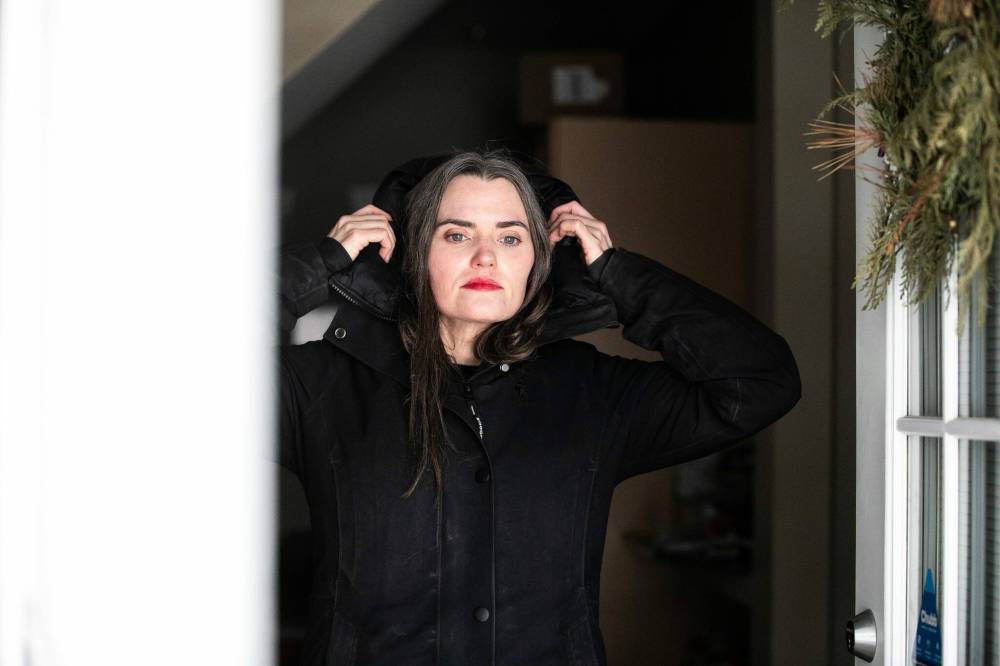
“After that I developed hives, which is what most people have, as well as the extreme reaction. Now I have to carry an EpiPen with me at all times.”
The episode signalled the end of Moore’s lake activities. The beloved summertime ritual was no longer a risk-free pursuit.
“We used to swim every single week; my family was really into it. It was a big deal at the time. I was a very sad child to not be able to swim anymore, but I am lucky I didn’t pass away; it was a pretty terrible allergic reaction,” she says.
She was also unable to eat cold food, drink cold drinks or go outside in winter; however, although she is still allergic to the cold, symptoms have become more manageable.
Moore has become an expert at bundling herself up against frigid winds and low temperatures, pulling out her coats from storage as soon as October comes around in order to lessen her skin’s exposure to the weather.
And she can indulge in popsicles, cold drinks and even eat ice cream, as long as she doesn’t have too much.
“Sometimes if I eat too much ice cream my mouth does swell up, but I can have a salad. Before, if I bit into a cold piece of fruit, my lips would swell, and if I had a Slurpee I would be in trouble. Things started to get better when I was an older teenager,” she says.
Warmer temperatures bring some relief, although the potential of going into anaphylactic shock is still a concern, especially as a physician assistant who works in remote communities in Northern Manitoba two weeks of every month.
In the winter, she flies in to do her job, and when the ice melts, she goes by boat to Garden Hill and Red Sucker Lake. Her EpiPen is with her wherever she is and she’s taught her colleagues how to use it.
“Every time I tell somebody I am allergic to the cold, they say to me, in a jocular manner, ‘Oh, why do you live here?’ My life is here, I am not going to move because I have an allergy.”– Lisa Moore
“As spring progresses, I don’t worry as much about getting caught in a snowstorm or other events like being stuck outside waiting for a helicopter,” she explains.
“That said, I’m still most at risk when I’m in a boat in open water, which is a more likely scenario in the spring and summer. It’s a little counter-intuitive because I get the sickest when I’m in contact with cold water.”
Managing the condition for 34 years hasn’t been easy. Avoiding exposure to cold, while being the most effective way to remain safe, has also removed all spontaneity from her life.
“I have to micromanage every aspect of my daily life in the winter. I have to plan how to get to point A to B, how to stay warm. I have to think about every step. If I go out, if I were to go to Festival du Voyageur, for instance, I would have to figure out how to use the bathroom, I would have to preplan it, think about how to get from the car to the venue. It makes you high maintenance, and you start to wonder if you should even go.”
The condition has affected her quality of life in more ways than one — not only does she have to deal with the physical symptoms and emotional and mental toll of managing them, but she often finds herself fielding jokes and combating ignorance.
“Every time I tell somebody I am allergic to the cold, they say to me, in a jocular manner, ‘Oh, why do you live here?’ My life is here, I am not going to move because I have an allergy,” she says.
“I have had so many people joke that it’s not a real allergy. Just because you haven’t heard of it or haven’t experienced it doesn’t mean it doesn’t exist. When someone tells you they have this, don’t make light of it. Respect that it is a serious thing.”
‘It’s definitely hard, but I can’t do anything about it’
It’s the windchill that affects Holly Feschuk, 22, the most. On windy days, even if the temperature is mild, Feschuk’s face can often break out in hives.
“I just deal with it,” says Feschuk, who finds face warmers uncomfortable. “If it’s super cold I know I will react quicker, so I cover up more, either with a scarf or something on my face. The hives usually take about half an hour to go away after I come back inside.
JOHN WOODS / FREE PRESS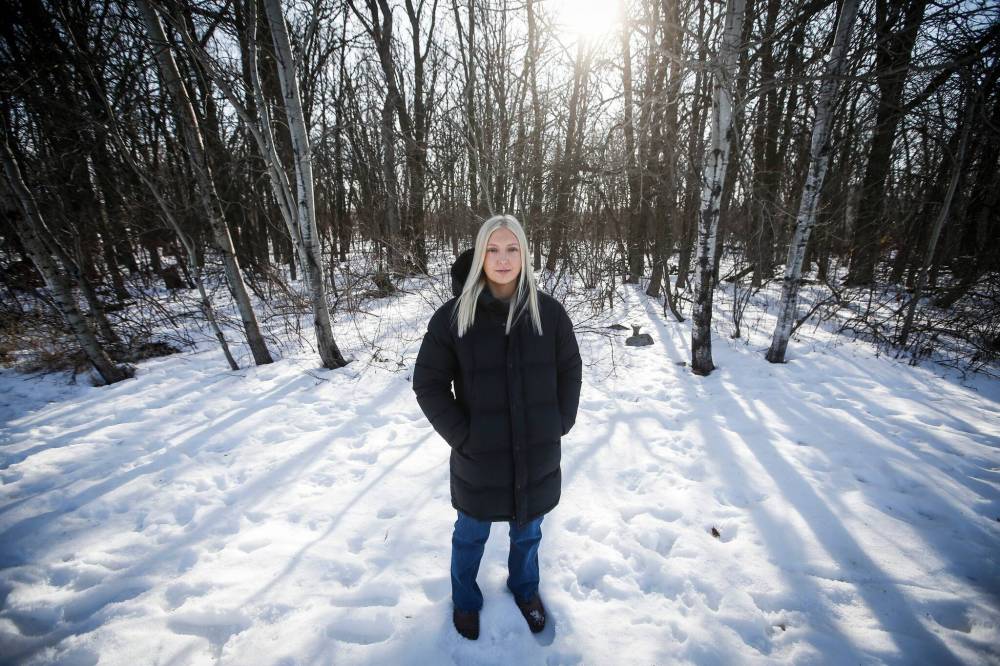
“I always wear a hat and wear mitts and gloves, because my hands can get really swollen in the cold and that swelling takes a little longer to go down.”
The St. Andrews resident was diagnosed when she was in Grade 9. She first realized she was sensitive to the cold when blisters began forming on her fingers whenever she was holding a cold drink or a piece of fruit from the fridge. Her hands would also swell, becoming red and itchy.
She didn’t give it much thought until she went swimming at Birds Hill Provincial Park one day. Stepping out of the water, she noticed her body was covered in hives.
Feschuk was already under the care of an allergist after developing an allergy to grass and to dogs when she was younger. She also has two other forms of urticaria: heat urticaria, when hives form in warm temperatures; and pressure urticaria, which can cause a breakout when something presses down on her skin for too long.
“I didn’t know if it was the temperature or if I reacted to something in the water, so I went to my allergist. He left an ice cube on my wrist for five minutes. I developed a big hive after that,” she says.
“Sometimes when I drink something cold too fast, or if I scarf down an ice cream, then I can feel my throat closing up a little bit, so I have to make sure I eat these things at a moderate pace.”– Holly Feschuk
The registered nurse says she tries not to let the condition change her life. She has a dog, despite her dog allergy, and she continues to take her pet for walks, dealing with hives as and when they come.
“Yes, it does bug me, it’s definitely hard, but I can’t do anything about it so I try not to dwell on it. I am super stubborn like that. I carry an EpiPen with me but I usually get just the hives which are red, itchy and cause my face to swell,” she says.
“Sometimes when I drink something cold too fast, or if I scarf down an ice cream, then I can feel my throat closing up a little bit, so I have to make sure I eat these things at a moderate pace.”
She is looking forward to the warmer weather so she can spend more time outside; the winter months can be very isolating.

Her allergy also impacts her finances. She is currently on a medication she finds effective, but her insurance doesn’t cover the cost. At $300 for a three-month supply, it’s a necessary hit to her wallet.
Feschuk also pays for indoor parking, as walking outside in the winter can be a literal pain. This past winter, with its prolonged cold and temperature sometimes approaching -50 C, was particularly tough.
“I was a nursing student doing my practicum at St. Boniface (Hospital) from December to February. I was forced to park closer and pay the ridiculous parking fee so that I wouldn’t have to walk through the street because I knew I would be super itchy and uncomfortable.”
Feschuk says she will not let the condition dictate the way she lives, although, like Moore, she wishes people would take the condition more seriously
“At the start, even telling people that I am allergic to the cold, they would laugh and say, ‘Yeah, right, me too.’ I want them to know it’s a real thing, it’s not that fun where we live because its cold more than half of the year and even when it’s not cold, I am still trying to figure it out and deal with it.”
‘It’s really important for her to still do the things she enjoys’
Amy Webb wasn’t sure what to expect when her daughter Isla, 10, was diagnosed with CU last October.
Isla, who also has asthma and a number of other allergies, was already under the care of an allergist, who was able to diagnose her after a large hive appeared on her arm when he left an ice pack on it for five minutes.
“I want people to know that cold urticaria is an allergy to the cold. When I go out in the cold, I get hives. If my body doesn’t like the hives, I will go into shock and I’ll have to use my EpiPen,” Isla says.
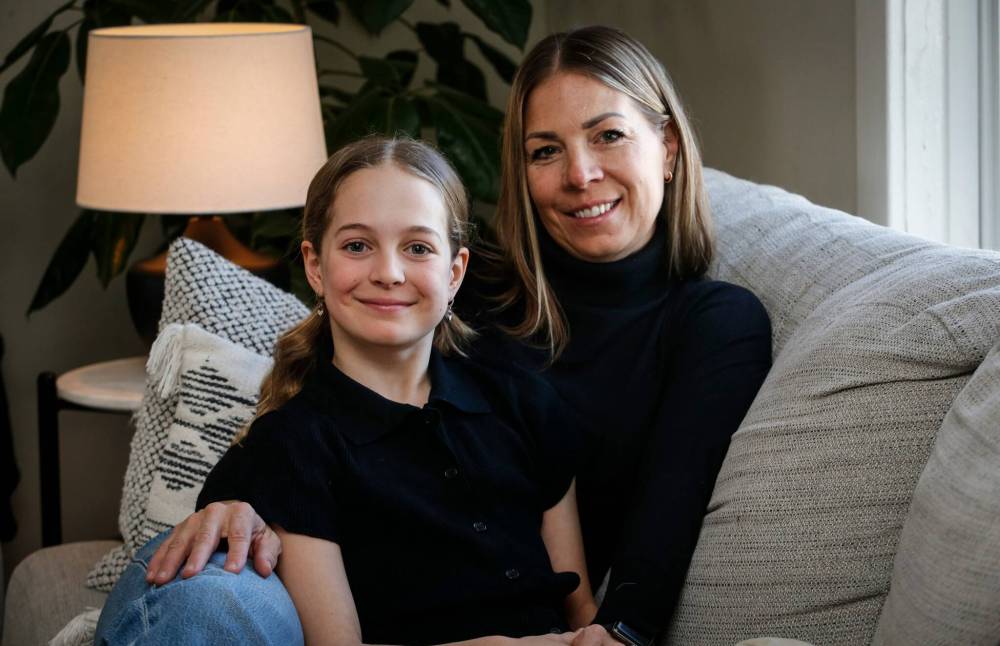
Isla says the condition doesn’t really stop her from doing anything, but she has to be wary of certain activities.
“I have to be careful about polar-bear plunging, which is where I sit in my hot tub then jump into the lake. Sometimes when it’s really cold in winter, I don’t go out for recess, but it doesn’t bother me because I don’t love to put on a balaclava and ski pants, a tuque and a jacket and mitts,” she says.
The family recently returned from a beach vacation; Webb admits she was anxious before they left, but she was unduly worried. Isla’s positive attitude has eased some of her concerns, and she says the diagnosis won’t change the family’s future travel plans.
“I was feeling a little anxious, mostly about swimming in cooler water and swimming in the ocean. Now I feel so much better knowing she was able to swim in the indoor pool, no problems,” Webb says. “She did get hives from the ocean and the cooler pool, but it didn’t bother her at all. It didn’t stop her from looking for seashells every day or splashing around in the water. She had a positive attitude the whole time and accepts this as her new normal.
“In fact, I think she thought I was a little over-the-top that I brought her EpiPen every time she swam or walked on the beach.”
‘Irritating, rather than debilitating’
Olga Kuznetsova, 35, didn’t know about CU until she developed it in 2016 after moving to Canada from Ukraine. She thinks Manitoba’s low winter temperatures triggered her condition.
In southern Ukraine, where she is from, the coldest she had ever experienced was -5 C.
Her symptoms present as hives that fill up with liquid and get really itchy. They look like pimples on her hands, she says.

“Mine is triggered by the cold air; I have the bumps around November and I expect them to go away completely around May. Sometimes when they are very itchy, they become bigger. When it gets cold, they are not painful, they are itchy,” she explains.
“They are irritating, rather than debilitating.”
Kuznetsova avoids taking antihistamines and has learned to live with the hives that appear on the backs of her hands and between her fingers. She wears mitts and gloves until she is indoors, but even that doesn’t really help, as the cold can pierce through the material.
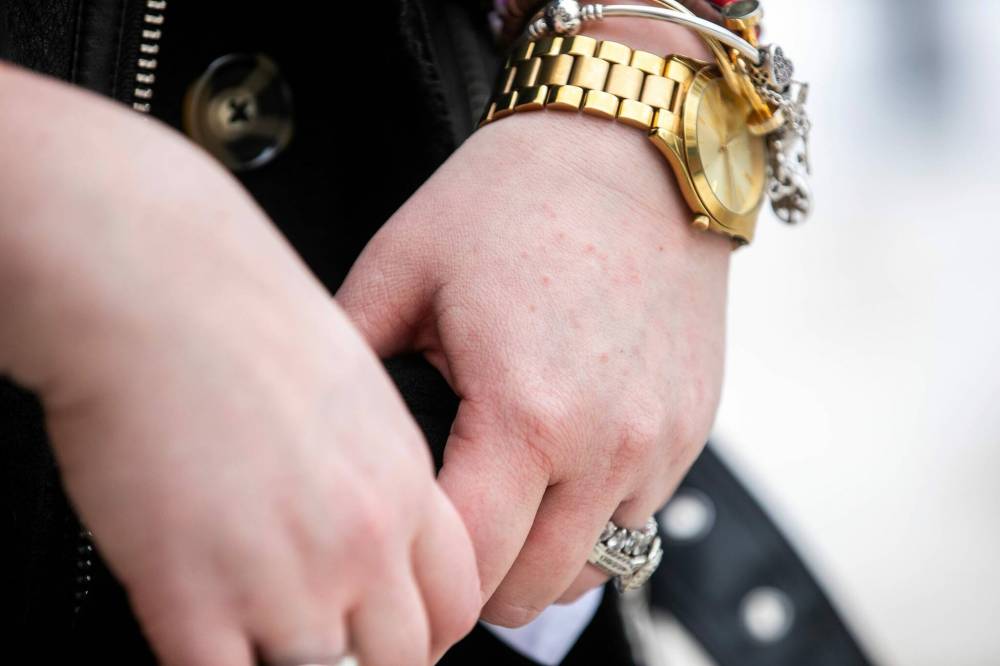
She uses a prescription steroid cream when the condition becomes too unbearable. Otherwise she manages by slathering on rich and protective hand creams, balms and scrubs, which them feel less uncomfortable.
“The balm is like Vaseline and the scrub really helps because it removes the dead skin. In the winter I use it every night so my hands don’t feel as itchy, but when it gets really cold, when it drops to -20 C and below, then nothing helps at all,” he says.
“But I am not stressed about winter; I love winter. This is more of an inconvenience.”
av.kitching@freepress.mb.ca

AV Kitching is an arts and life writer at the Free Press. She has been a journalist for more than two decades and has worked across three continents writing about people, travel, food, and fashion. Read more about AV.
Every piece of reporting AV produces is reviewed by an editing team before it is posted online or published in print — part of the Free Press‘s tradition, since 1872, of producing reliable independent journalism. Read more about Free Press’s history and mandate, and learn how our newsroom operates.
Our newsroom depends on a growing audience of readers to power our journalism. If you are not a paid reader, please consider becoming a subscriber.
Our newsroom depends on its audience of readers to power our journalism. Thank you for your support.
History
Updated on Monday, April 14, 2025 10:20 AM CDT: Corrects reference to physician assistant