Immersive film allows humans to hear like orcas
Read this article for free:
or
Already have an account? Log in here »
To continue reading, please subscribe:

Digital Subscription
One year of digital access for only $205*
- Enjoy unlimited reading on winnipegfreepress.com
- Read the E-Edition, our digital replica newspaper
- Access News Break, our award-winning app
- Play interactive puzzles
*First annual payment billed as $205.00 + GST for one year. This annual subscription will automatically renew at $233.00 + GST every 52 weeks (10% off the regular annual price of $259.35). Offer available to new and qualified returning subscribers only. Cancel any time.
To continue reading, please subscribe:
Add Free Press access to your Brandon Sun subscription for only an additional
$1 for the first 4 weeks*
- Enjoy unlimited reading on winnipegfreepress.com
- Read the E-Edition, our digital replica newspaper
- Access News Break, our award-winning app
- Play interactive puzzles
*Your next Brandon Sun subscription payment will increase by $1.00 and you will be charged $17.95 plus GST for four weeks. After four weeks, your payment will increase to $24.95 plus GST every four weeks.
Read unlimited articles for free today:
or
Already have an account? Log in here »
Hey there, time traveller!
This article was published 03/06/2025 (498 days ago), so information in it may no longer be current.
Manitoba Museum’s latest exhibition invites visitors to dive deep into the waters of the Salish Sea and immerse themselves in the world of the endangered southern resident killer whales.
The augmented-reality experience Critical Distance is a 15-minute animated film that launches its Canadian tour in Winnipeg for Ocean Week 2025, and will be showing at the Science Gallery until Aug. 31.
The film, on tour with Nature Canada in association with the Alliance of Natural History Museums of Canada, makes a strong case for ocean conservation, says Scott Mullenix from Nature Canada.
MIKE DEAL / FREE PRESS A group of participants watch Critical Distance via AR goggles at the Manitoba Museum. 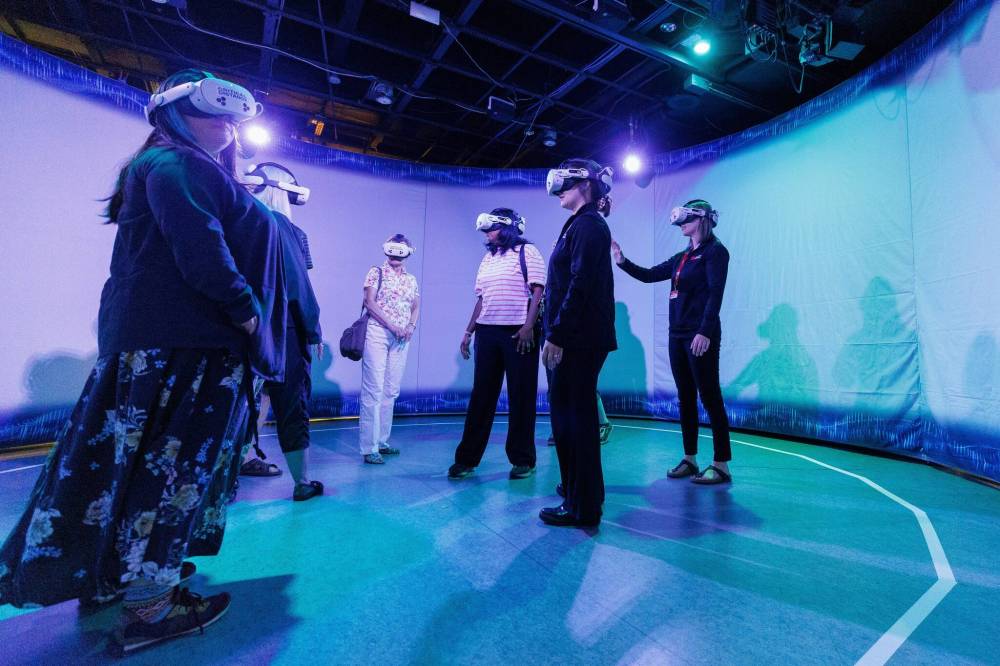
“Some people get pretty emotional going through the experience. We want to take that emotion and engagement and turn it into something useful for the orca pod and the ocean that Nature Canada is trying to protect. We thought a great way to do that would be to have visitors understand the different roles they can play,” he says.
MIKE DEAL / FREE PRESS Adam May is co-creator of Critical Distance.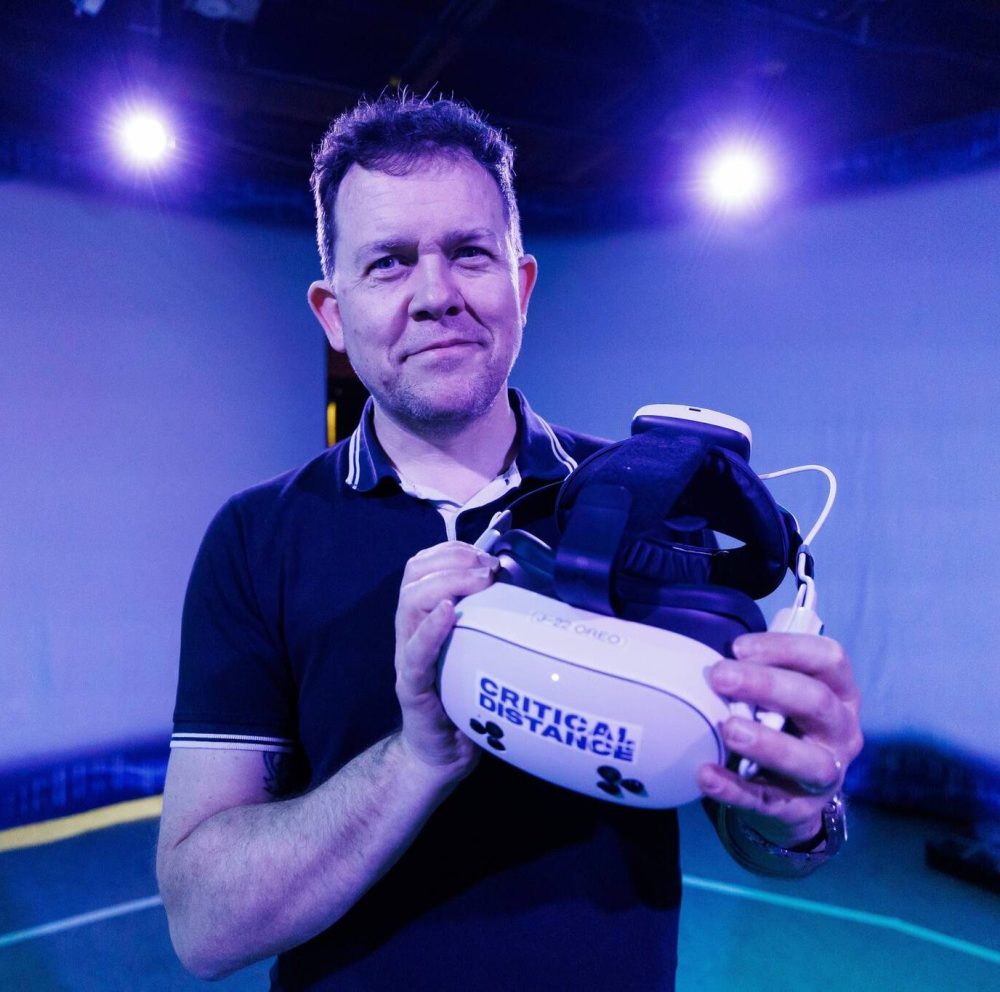
The immersive short focuses on the J Pod, one of three pods in the acoustic clan who are residents of the waters. The audience follows eight-year-old orca Kiki and her family as they navigate the challenges thrown up by human activity.
Sound is vital to the orca whales, who use echolocation to communicate, and sound pollution is threatening the pod’s ability to hunt, bond and navigate.
The term “critical distance” refers to the point in space where direct sound, such as an orca’s call, is equal in intensity to reverberant or background noise.
Placed in the middle of the pod, viewers hear and see the clicks, whistles and calls the members of the pod use to communicate with each other.
These vocalizations are typically effective across long distances in a natural ocean environment, but the orcas, who live beneath a busy shipping area, struggle to make themselves heard.
“Some people get pretty emotional going through the experience. We want to take that emotion and engagement and turn it into something useful.”–Scott Mullenix
Human activity, especially from boats, ships and underwater construction, has introduced significant noise pollution into marine habitats.
This background noise effectively reduces the critical distance, which means orcas have to be much closer to each other before their calls are distinguishable from the surrounding noise.
Submerged underwater with Kiki, the contrast in the varying sounds different vessels make become obvious – paddle boats barely make a splash, but motorboats and trawlers jar the quiet, littering the water with their loud vibrations.
Sounds are translated into visuals so the audience can see what the orcas hear; it’s a simple but effective method to experience the world from an entirely different perspective.
After the AR animation, visitors are invited to join the movement to protect Canada’s ocean by connecting directly with ocean conservation experts through Nature Canada’s Ask the Experts section.
MIKE DEAL / FREE PRESS Critical Distance participants are fully immersed in the orca’s experience.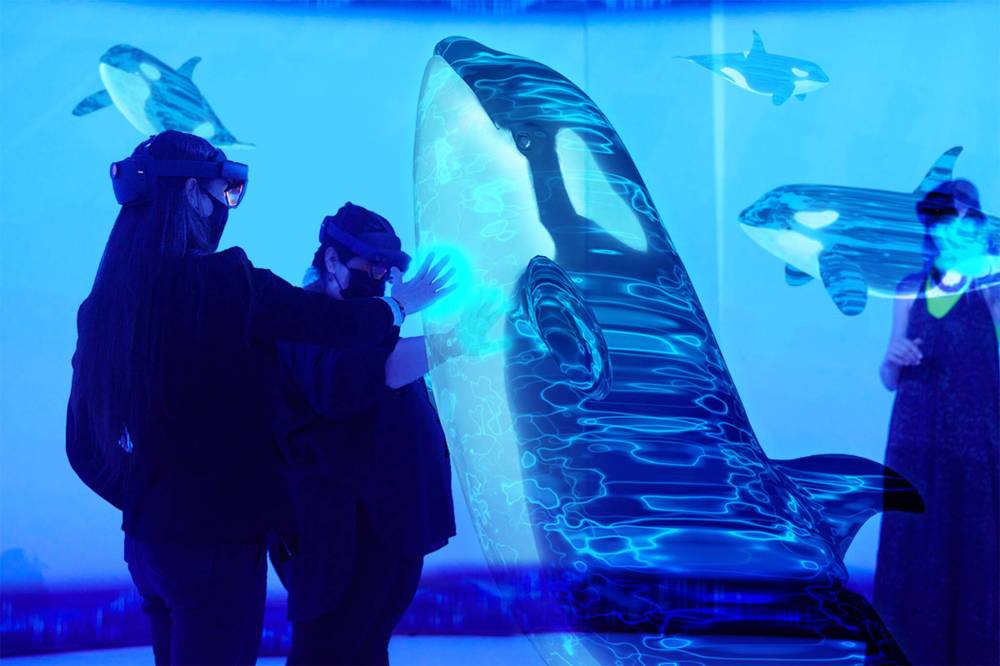
Visitors can ask whatever they want about orcas, threats to the Salish Sea or the ocean in general. Their questions will be sent to experts who include Adam Olsen, lead negotiator and member of Tsartlip First Nation; Julia Laforge, protected areas policy manager at Nature Canada; and Rebecca Brushett, marine planning and engagement co-ordinator at Ecology Action Centre, who will reply with answers.
The hope is that the experience will encourage people to lobby for change to protect one of the country’s most endangered marine mammals — at last count, there were fewer than 80 southern resident killer whales in the Salish Sea.
av.kitching@freepress.mb.ca

AV Kitching is an arts and life writer at the Free Press. She has been a journalist for more than two decades and has worked across three continents writing about people, travel, food, and fashion. Read more about AV.
Every piece of reporting AV produces is reviewed by an editing team before it is posted online or published in print — part of the Free Press‘s tradition, since 1872, of producing reliable independent journalism. Read more about Free Press’s history and mandate, and learn how our newsroom operates.
Our newsroom depends on a growing audience of readers to power our journalism. If you are not a paid reader, please consider becoming a subscriber.
Our newsroom depends on its audience of readers to power our journalism. Thank you for your support.