How Vancouver’s urban orcas create connections and community among followers
Advertisement
Read this article for free:
or
Already have an account? Log in here »
To continue reading, please subscribe:
Digital Subscription
One year of digital access for only $1.44 a week*
- Enjoy unlimited reading on winnipegfreepress.com
- Read the E-Edition, our digital replica newspaper
- Access News Break, our award-winning app
- Play interactive puzzles
*Billed as $5.77 plus GST every four weeks. After 52 weeks, price increases to the regular rate of $19.95 plus GST every four weeks. Offer available to new and qualified returning subscribers only. Cancel any time.
To continue reading, please subscribe:
Add Free Press access to your Brandon Sun subscription for only an additional
$1 for the first 4 weeks*
- Enjoy unlimited reading on winnipegfreepress.com
- Read the E-Edition, our digital replica newspaper
- Access News Break, our award-winning app
- Play interactive puzzles
*Your next Brandon Sun subscription payment will increase by $1.00 and you will be charged $17.95 plus GST for four weeks. After four weeks, your payment will increase to $24.95 plus GST every four weeks.
Read unlimited articles for free today:
or
Already have an account? Log in here »
Hey there, time traveller!
This article was published 18/07/2025 (459 days ago), so information in it may no longer be current.
VANCOUVER – Chatchawan Jaksuwong says he used to feel empty when he looked at the ocean.
But after encounters with whales in the urban waters of Vancouver the photographer now feels a deep sense of connection, and he’s found community with fellow enthusiasts.
“It’s a switch from that feeling that I used to have before to, I don’t know, let’s say (a) warmer feeling,” says Jaksuwong, who moved to the city from Thailand about two years ago.
He grows emotional as he describes the new-found sense of expectation when he gazes at the ocean.
“You know there’s something there that makes you feel OK.”
Jaksuwong is among a growing community of whale fans who track and share the surging number of sightings around Vancouver.
Experts say the return of orcas, humpbacks and other marine mammals has been decades in the making, following the end of commercial whaling in British Columbia in the late 1960s along with the wind-down of the large-scale culling of seals and sea lions, the primary food for certain killer whales.
Andrew Trites, who leads the Marine Mammal Research Unit at the University of B.C., says whales are the “ambassadors of the Salish Sea,” and their recovery is an opportunity to boost public awareness and encourage protections for their habitat.
“People care about what they see, and unfortunately, they see very little below the water’s surface to understand the richness of life and the need to maintain a healthy ocean,” says Trites, a professor in the school’s zoology department.
Jaksuwong once saw a whale from a distance during a tour off Vancouver Island. But he says he never expected to see whales from shore in the city.
“Now I’m obsessed with orcas,” he says, laughing. “It’s my thing now.”
In one encounter last month, he raced to catch up with a pod of whales reported to be passing Stanley Park. He caught a bus, then ran to the middle of Lions Gate Bridge that overlooks the city’s Burrard Inlet in hopes of an overhead shot of the whales using his telephoto lens.
“I’ve never run that fast before (with) the gear and stuff, right?” he recalled in an interview. “If it’s meant to be, it’s meant to be. That’s what I thought.”
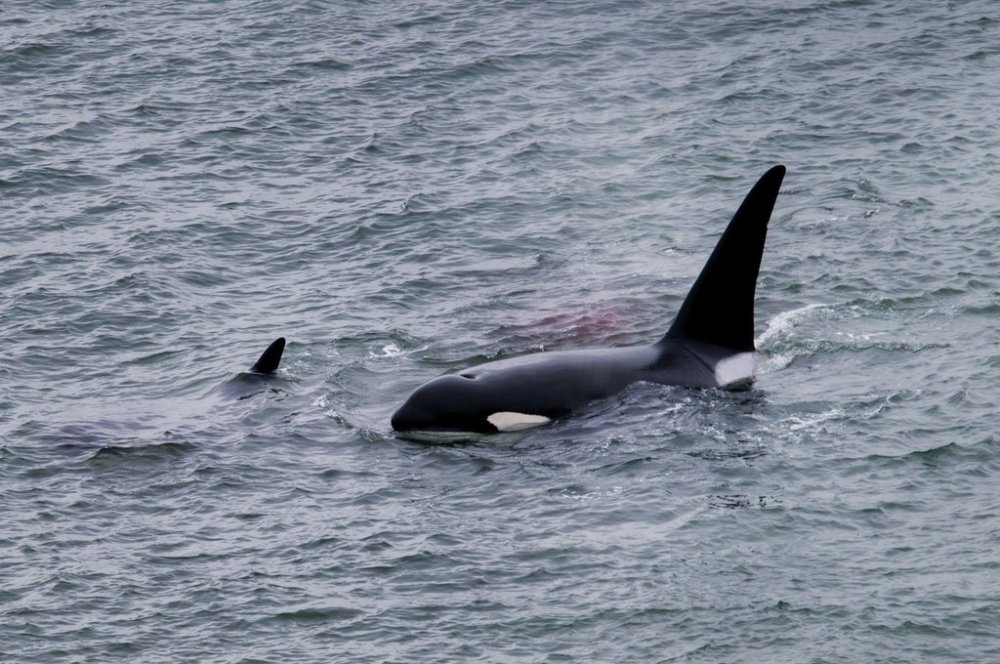
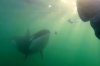
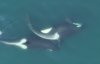
He was greeted with scenes worthy of a wildlife documentary — the whales were hunting a seal. Several of his photos show blood in the water roiling around the orcas.
“I’ve never seen this ever in my life. I feel so lucky, to be honest, to see that here, in nature,” he says.
Jaksuwong was “over the moon” to capture a photo of a young orca leaping out of the water, a moment he had been waiting for, he says.
He shared the photos with the Facebook group “Howe Sound and Sea to Sky wildlife sightings,” devoted to tracking and sharing encounters with orcas and other wildlife in the region. It has almost 27,000 members.
That day, June 14, the orcas had a bigger audience than usual — a crowd was gathered at Locarno Beach to watch a triathlon, with the whales stealing attention from the finish of the men’s event.
Jaksuwong joined the Facebook group in May, when a grey whale known as Little Patch spent several weeks feeding in Vancouver’s waters.
Since then, he’s become friends with fellow enthusiasts.
“We share our interests and we kind of like text each other, ‘whale here, whale there,’ and then we go see them together,” he says.
Erin Gless, executive director of the Pacific Whale Watch Association, which represents 30 companies in both B.C. and Washington state, says there has been an “exponential increase” in sightings around Vancouver in recent years.
It has given whale-watching operators the opportunity to share stories about the whales as individuals, fostering a sense of personal connection, she says.
“We’re going to tell you that this humpback is nicknamed Malachite, and he was born in 2021, and he goes to Mexico in the winter,” Gless says.
“That’s what we’re really trying to do is put a much more personalized spin on these animals, so that they’re not anonymous.”
Trites says he came to B.C. around 1980 and “never thought” he’d see a humpback in local waters in his lifetime, after whaling decimated the population.
“It took the humpback whales a century to find their way back here again,” he says.
There were no other marine mammals to be seen regularly either at Vancouver’s Spanish Banks beach or the Stanley Park seawall, he says, after the culling of seals and sea lions in the name of safeguarding fisheries.
The end of the cull around 1970 laid the groundwork for the long-term recovery of Bigg’s killer whales, also known as transient orcas, which hunt mammals.
“So, we go basically from looking at what I would say was a relatively empty ocean in terms of marine mammals to one now that literally any day I can go and find a whale or a seal or a sea lion or a dolphin or a porpoise,” Trites says.
The seal population has been stable for some years, kept in check by the orcas; but they have spread out to areas where people are more likely to see them, he adds.
“To me, it’s a sign that if people just got out of the way, then Mother Nature can heal itself,” he says.
There is an exception, however, in the story of recovery, Trites says.
Bigg’s orcas differ from the southern resident killer whales that frequent the Salish Sea in the summer months. That population is endangered and at risk of extinction due in large part to declining numbers of their preferred prey, chinook salmon.
In Vancouver’s busy waters, whales are also at risk of ship strikes, Trites says, while noise from vessels disrupts their ability to feed and communicate.

Gless says people are lucky to be part of the story of the whales’ return, but “we need to keep it that way.”
“We can’t be like, ‘Oh, they’re recovered enough, so now let’s go ahead and build this new pipeline or increase shipping traffic.’ Those are all things that still concern us.”
Jaksuwong, meanwhile, continues to watch for whales, monitoring sightings and making his way to the seawall as often as he can, alerting others along the way.
“You see the look on their face when they see the orcas,” he says. “It’s rewarding for me too.”
This report by The Canadian Press was first published July 18, 2025.
Related Articles
Immersive film allows humans to hear like orcas
Advertisement Advertise With Us
Advertisement Advertise With Us