Orcas sharing prey with humans may be trying to learn ‘who we are,’ researcher says
Advertisement
Read this article for free:
or
Already have an account? Log in here »
To continue reading, please subscribe:

Digital Subscription
One year of digital access for only $205*
- Enjoy unlimited reading on winnipegfreepress.com
- Read the E-Edition, our digital replica newspaper
- Access News Break, our award-winning app
- Play interactive puzzles
*First annual payment billed as $205.00 + GST for one year. This annual subscription will automatically renew at $233.00 + GST every 52 weeks (10% off the regular annual price of $259.35). Offer available to new and qualified returning subscribers only. Cancel any time.
To continue reading, please subscribe:
Add Free Press access to your Brandon Sun subscription for only an additional
$1 for the first 4 weeks*
- Enjoy unlimited reading on winnipegfreepress.com
- Read the E-Edition, our digital replica newspaper
- Access News Break, our award-winning app
- Play interactive puzzles
*Your next Brandon Sun subscription payment will increase by $1.00 and you will be charged $17.95 plus GST for four weeks. After four weeks, your payment will increase to $24.95 plus GST every four weeks.
Read unlimited articles for free today:
or
Already have an account? Log in here »
Hey there, time traveller!
This article was published 30/06/2025 (446 days ago), so information in it may no longer be current.
Jared Towers was in his research vessel on two separate occasions watching killer whales off the coast of Vancouver Island when the orcas dropped their prey directly in front of him and his colleagues.
The encounters he describes as “rare” and awe-inspiring have led to a new study published in the peer-reviewed Journal of Comparative Psychology, detailing researchers’ experiences with killer whales apparently sharing their food with humans.
“We have a long history of interacting with other animals, trying to feed them and gauging their responses. But it’s very rare for any wild predator to do the same to us,” says Towers, who is the executive director of the research group Bay Cetology.
“This is really the first report of any kind in the literature documenting these cases for killer whales.”
Towers says he and his colleagues were cruising along when an orca appeared, setting off the second encounter in 2018. They stopped and watched it swim around before it reappeared and released a freshly killed seal next to the boat.
“She could have dropped it off the stern or the bow, but she dropped it right in the middle of the vessel, right next to us,” says Towers.
“We just sat there watching this thing sink down into the water for about 10 or 15 seconds until she did a bit of a circle and came back and picked it up.”
It followed an encounter in 2015 that involved an orca opening its mouth and releasing a dead ancient murrelet, a kind of seabird, directly beside Towers’ boat. He says that orca also left its prey floating for a few moments before taking it again.
“It left us a bit awestruck,” says Towers, adding the two cases stand out among the thousands of encounters with killer whales he’s had around the world.
“I started to think about these animals a bit differently at that point.”
“It left us a bit awestruck… I started to think about these animals a bit differently at that point.”–Jared Towers
Towers and his colleagues began an investigation that led to the study published on Monday, which examines 34 instances in which killer whales around the world appeared to offer their prey to humans.
The researchers wanted to ensure the study only examined cases where whales were “going out of their way to engage with people rather than vice versa,” says Towers, who is based in Alert Bay, B.C., off northeastern Vancouver Island.
In order to be included in the study, the whales had to approach humans directly. Researchers considered cases where people had not approached the whales at a distance closer than 50 metres in the five minutes prior to the interaction taking place.
In all but one of the situations, the study says the whales were observed waiting for people to respond before either recovering or abandoning their prey.
“These weren’t mistakes. They weren’t like the killer whales accidentally dropped the food. They wanted to see how people responded,” Towers says.
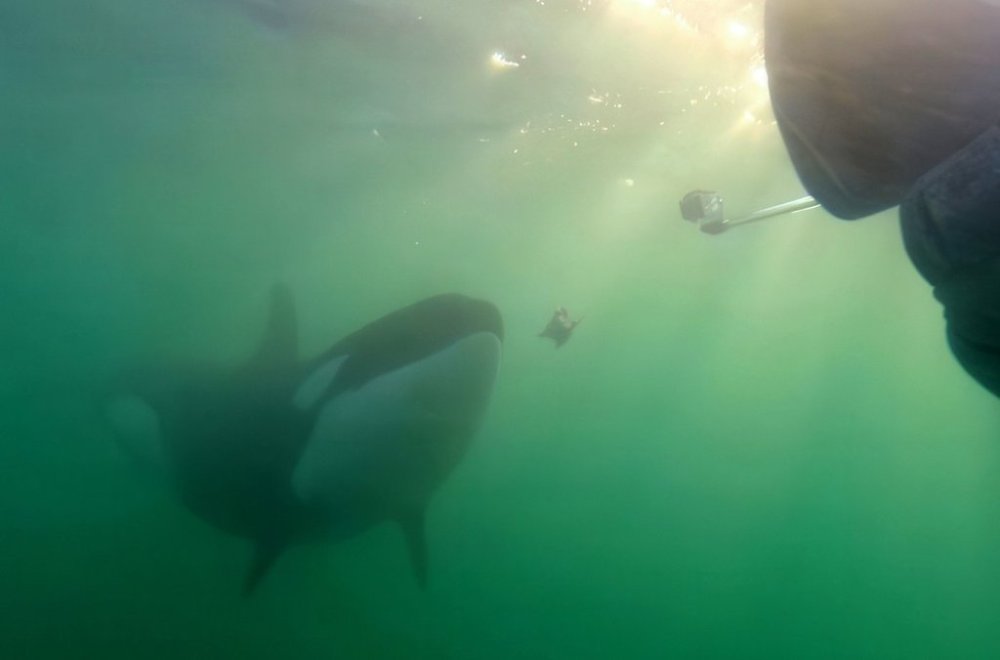
The study does not rule out any selfish motivations behind the behaviour. But Towers says he feels the apparent prey sharing is “altruistic” and “pro-social.”
Sharing food among relatives and other orcas is foundational for the whales, and in attempting to provision humans with prey, he says it could be an example of the whales practicing a cultural behaviour or exploring humans’ capacity to respond.
“I think these cases may really be pro-social representations of conscious learning where these whales are going out of their way to actually try and understand … who we are and how we might interact with them in their environment,” Towers says.
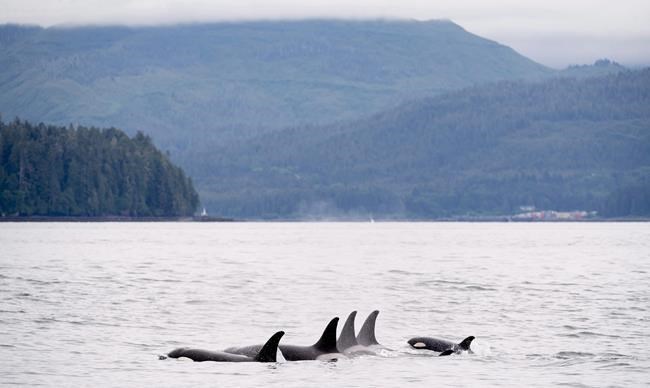
Given the advanced cognitive abilities and the social, co-operative nature of killer whales as a species, the study says the researchers “assume that any or all these explanations for, and outcomes of, such behaviour are possible.”
The whales in the study were transient orcas off the coasts of B.C. and Alaska, the Eastern Tropical Pacific population off the coast of California, along with killer whales off the coasts of New Zealand, central Argentina and Norway. All of the “offering” events took place between 2004 and 2024, the study says.
Orcas commonly use prey to engage in play, and the study acknowledges that 38 per cent of the prey-sharing cases it examined appeared to incorporate play. The whales may have been using their prey to instigate play with humans, it says.
But for several reasons, the study says the researchers do not believe play was the driving factor behind the apparent offerings.
Play often occurs after whales have met their nutritional needs, but in the cases of prey sharing with humans, the offerings were whole in about half of the encounters.
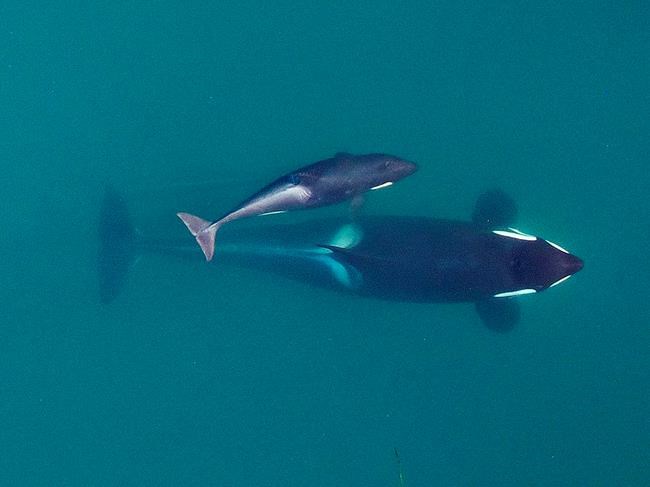
The orcas in the study mostly recovered the prey after it wasn’t accepted by humans and often went on to share it with other whales. In most cases, the interactions did not last longer than 30 seconds. By contrast, the study says the whales typically engage in play more continuously.
The study concludes the whales possess the capacity and motivation to share food for multiple reasons that could include intellectual or emotional benefits.
“Offering items to humans could simultaneously include opportunities for killer whales to practice learned cultural behaviour, explore, or play and in so doing learn about, manipulate, or develop relationships with us,” it says.
Towers says he hopes the study provides an opportunity for people to look at killer whales in a different light, sparking curiosity about their capacity to think “and perhaps even have some convergent evolution of intellect with us.”
The researchers strongly discourage people from accepting any prey offered by orcas, due to the potential for both species to harm one another, Towers adds.
This report by The Canadian Press was first published June 30, 2025.
Note to readers: This is a corrected story. A previous version incorrectly said Alert Bay is off the northwestern coast of Vancouver Island. In fact, it is off the northeastern coast.
Related Articles
Orcas use kelp tools to groom and bond off B.C.'s coast, study suggests



Advertisement Advertise With Us
Advertisement Advertise With Us