Forces of nature

Female primatologists prove pivotal to progress in their field

Advertisement

Advertise with us

Some are world famous — Jane Goodall, Biruté Galdikas and Dian Fossey, for example. Others are scientifically famous, such as Jeanne Altmann, Alison Jolly or Linda Fedigan. But all these women, and many others, were part of a transformation in the 1960s and ‘70s, blazing a scientific trail in jungles around the world to learn more about our closest relatives.

Read this article for free:


or

Already have an account? Log in here »

To continue reading, please subscribe:

Subscribe and receive a limited-edition Free Press branded hat or tote.

Digital Subscription

One year of digital access for only $205*

  • Enjoy unlimited reading on winnipegfreepress.com
  • Read the E-Edition, our digital replica newspaper
  • Access News Break, our award-winning app
  • Play interactive puzzles

*First annual payment billed as $205.00 + GST for one year. This annual subscription will automatically renew at $233.00 + GST every 52 weeks (10% off the regular annual price of $259.35). Offer available to new and qualified returning subscribers only. Cancel any time.

To continue reading, please subscribe:

Add Free Press access to your Brandon Sun subscription for only an additional

$1 for the first 4 weeks*

  • Enjoy unlimited reading on winnipegfreepress.com
  • Read the E-Edition, our digital replica newspaper
  • Access News Break, our award-winning app
  • Play interactive puzzles
Start now

*Your next Brandon Sun subscription payment will increase by $1.00 and you will be charged $17.95 plus GST for four weeks. After four weeks, your payment will increase to $24.95 plus GST every four weeks.

Hey there, time traveller!
This article was published 27/09/2025 (357 days ago), so information in it may no longer be current.

Some are world famous — Jane Goodall, Biruté Galdikas and Dian Fossey, for example. Others are scientifically famous, such as Jeanne Altmann, Alison Jolly or Linda Fedigan. But all these women, and many others, were part of a transformation in the 1960s and ‘70s, blazing a scientific trail in jungles around the world to learn more about our closest relatives.

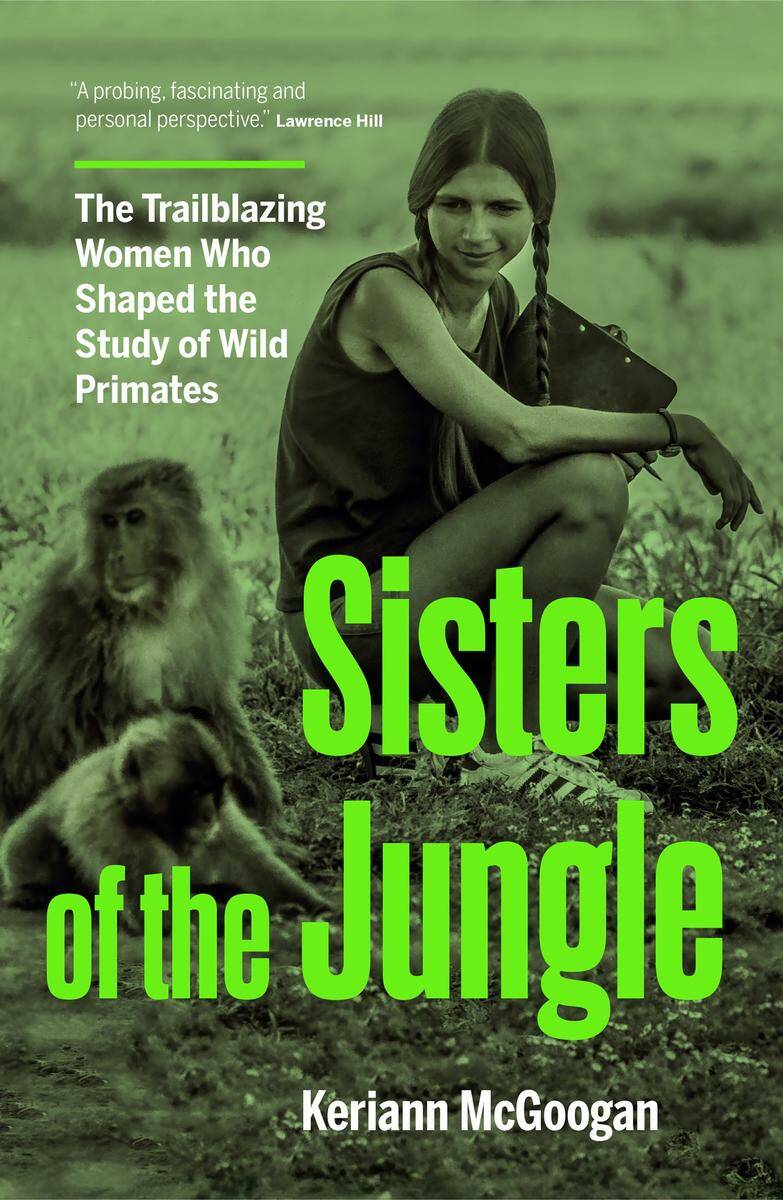
In Sisters of the Jungle: The Trailblazing Women Who Shaped the Study of Wild Primates, Canadian primatologist Keriann McGoogan offers a compelling tribute to the women who revolutionized the study of primates.

Blending memoir, biography and scientific history, McGoogan charts a lineage of female primatologists whose work has shaped both the discipline and its public perception.
Fernando Turmo / Jane Goodall Institute
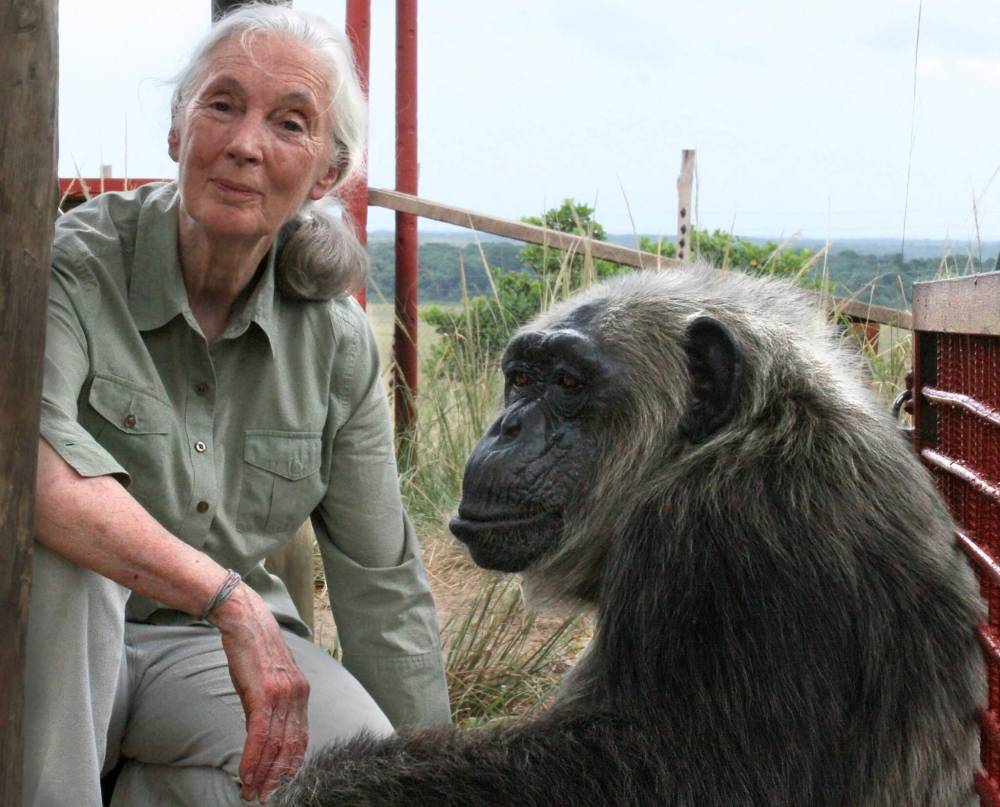
                                Many primatologists, such as Jane Goodall, become conservationists by necessity, confronting the effects of habitat loss and the pet trade on primate populations.

Fernando Turmo / Jane Goodall Institute

Many primatologists, such as Jane Goodall, become conservationists by necessity, confronting the effects of habitat loss and the pet trade on primate populations.

McGoogan herself is an “accidental scientist,” having switched from English to primatology during her undergraduate studies.

Her fieldwork in Belize and Madagascar led her to discover a rich legacy of women who had already carved paths through the jungle — both literal and metaphorical. While women remain underrepresented in most science, technology, engineering and mathematics (STEM) fields, primatology stands out as an exception.

The book’s strength lies in its personal touch. McGoogan has studied under or alongside many of the women she profiles, including Fedigan, who entered the field in the 1960s and later theorized that primatology might be a feminist science. Fedigan’s work, as well as that of others, suggests the discipline’s openness to female mentorship and its focus on social behaviour may have made it more accessible to women.

McGoogan doesn’t shy away from critique. She challenges generalizations, like Louis Leakey’s claim that women make better observers due to their patience and highlights the persistent glass ceiling in academia.

Leakey’s inclusion in a book about women may raise eyebrows, but McGoogan justifies it by acknowledging his pivotal role in launching Goodall’s study of chimpanzees, Fossey’s study of gorillas and Galdikas’ study of orangutans.

To balance this, she also candidly addresses his personal failings and womanizing, refusing to sanitize his legacy.
Sisters of the Jungle

Sisters of the Jungle

The book also introduces lesser-known figures such as Jeanne Altmann, whose five-decade study of baboons and contributions to data standardization were groundbreaking, and Sarah Hrdy, whose controversial research on infanticide among langurs reframed evolutionary theory. Hrdy’s resilience in the face of criticism exemplifies the courage McGoogan admires in her subjects.

Jolly, dubbed the “mother of lemurs,” emerges as a personal hero for McGoogan, whose own PhD research followed in Jolly’s footsteps. This underscores the book’s emotional connections, as McGoogan empathizes with the physical and emotional toll of fieldwork, from malaria and injuries to bureaucratic hurdles and financial strain.

Beyond individual stories, Sisters of the Jungle explores the intersection of science and activism. Many primatologists become conservationists by necessity, confronting the effects of habitat loss and the pet trade on primate populations.

While the narrative occasionally suffers from uneven pacing and repetition, its accessibility and depth of research make it readable and even inspirational. McGoogan resists diving too deeply into technical science, opting instead for a high-level overview that remains relatable to general readers.

Ultimately, Sisters of the Jungle is not just a celebration of pioneering women. It’s a call to recognize their enduring influence and how deeply women have contributed to major discoveries in the field.

Travis Steffens photo
                                Keriann McGoogan

Travis Steffens photo

Keriann McGoogan

McGoogan’s heartfelt and well-researched account ensures their stories won’t be lost in the canopy.

Julie Kentner is a Winnipeg writer.

History

Updated on Sunday, September 28, 2025 10:36 AM CDT: Corrects typo in spelling of Galdikas
Report Error Submit a Tip

More Stories

Not falling back means time loop remains unclosed

Jen Zoratti 4 minute read 2:01 AM CDT

I demand restitution. Where’s my hour?

In the traditional fall-back, spring-forward time change set up — you know, ol’ trusty that’s been effect for lo these 63 years — we lost an hour in the spring that we got back in the fall.

That was the social contract: you commit to feeling like you’re on cold medication for a week in March because you know a glorious extra hour of sleep will be returned to you in November. (Unless, of course, you have little kids, but look: we all make our choices.)

Well, that transaction, flawed as it was, isn’t happening this year. That hour you sacrificed to the sun gods in the spring? Gone. Not coming back. We’ve sprung forward and we shan’t be falling back — not in November, and (possibly) not ever. The scale shall remain unbalanced and the loop shall remain unclosed as Manitoba has adopted permanent daylight time.

Canada-U.S. trade relationship is broken, but the damage can — and will — be repaired

Tom Brodbeck 5 minute read Preview

Canada-U.S. trade relationship is broken, but the damage can — and will — be repaired

Tom Brodbeck 5 minute read Thursday, Sep. 17, 2026

Canada needs to get serious about diversifying its trade beyond the United States. But at the same time, Canadians should expect relations with the U.S. to normalize after Donald Trump is no longer in the White House.

For generations, Canada-U.S. trade was considered almost a fact of geography. The two countries share the world’s longest undefended border, deeply integrated supply chains and a century of commercial relationships.

Canadian manufacturers depend on American customers. American manufacturers depend on Canadian suppliers. Energy, agriculture, automotive production and countless other industries operate across the border as though it barely exists.

That isn’t going to change dramatically, even in the midst of a bitter trade war unleashed by the U.S. president.

Read
Thursday, Sep. 17, 2026

Puzzles Palace

1 minute read Monday, Jul. 27, 2026

To solve our puzzles, please subscribe with this special offer: |

American Hostage stars recall warmth of Winnipeggers during brutal winter

Randall King 7 minute read Preview

American Hostage stars recall warmth of Winnipeggers during brutal winter

Randall King 7 minute read Yesterday at 6:13 PM CDT

TORONTO — When you stream the eight-part series American Hostage, a sense of familiarity may strike.

That’s because the show was shot in Winnipeg — especially in the Exchange District — from November of last year to the beginning of February, with Winnipeg portraying Indianapolis circa 1977.

The whole world seemed to be watching that midwest American city that year as a hostage crisis unfolded involving one Tony Kiritsis, an angry man who goes ballistic when a mortgage brokerage was poised to foreclose on property he had dreamed of developing into a shopping centre.

Kiritsis kidnapped his mortgage broker, Richard Hall, wiring a shotgun to the back of his head, and demanded a public airing of his grievances, with the reluctant help of popular radio broadcaster Fred Heckman.

Read
Yesterday at 6:13 PM CDT

‘She was looking to destroy me’: convicted harasser faces new charges

Dean Pritchard 6 minute read Preview

‘She was looking to destroy me’: convicted harasser faces new charges

Dean Pritchard 6 minute read Thursday, Sep. 17, 2026

When Agnieszka Ciochon-Newton moved into the 55-plus apartment building on Stradbrook Avenue last year, she came across as “timid, soft-spoken and sensitive,” said building manager Tanya Owen.

Little did Owen know the meek-looking 58-year-old woman would soon turn her life and the lives of many of her tenants upside down and threaten her career and family.

“She was looking to destroy me for a simple tenant disagreement,” Owen said Thursday.

Court records show Ciochon-Newton was arrested earlier this month and charged with seven counts of criminal harassment, two counts of uttering threats and one count each of fraud, breaking and entering, attempting to obstruct justice, intimidation of a justice official, mischief and defamatory libel.

Read
Thursday, Sep. 17, 2026

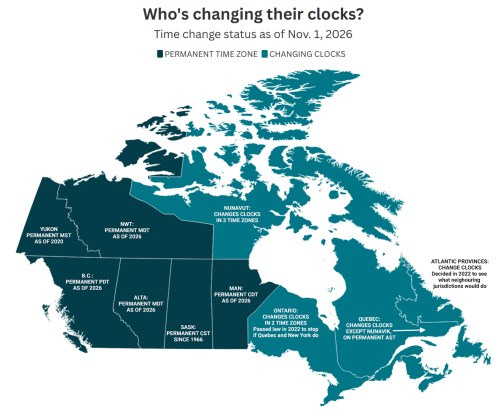
A quick look at where provinces and territories stand on time changes

The Canadian Press 2 minute read Preview

A quick look at where provinces and territories stand on time changes

The Canadian Press 2 minute read Updated: Yesterday at 6:28 AM CDT

WINNIPEG - Manitoba's government said Thursday the province will be sticking with daylight time year-round, making it the latest jurisdiction to move away from twice-annual time changes. Here's a look at where things stand across Canada:

British Columbia said in March that it was moving to permanent Pacific daylight time. The change also means that parts of northeastern B.C., which have been on mountain standard time year round, are now in alignment with the rest of the province.

Alberta also switched to permanent daylight time this year in what it calls Alberta time. The change means it now has the same time as Saskatchewan year round.

Saskatchewan has been on permanent central standard time since 1966.

Read
Updated: Yesterday at 6:28 AM CDT