Is there an AI bubble? Financial institutions sound a warning
Advertisement
Read this article for free:
or
Already have an account? Log in here »
To continue reading, please subscribe:

Digital Subscription
One year of digital access for only $205*
- Enjoy unlimited reading on winnipegfreepress.com
- Read the E-Edition, our digital replica newspaper
- Access News Break, our award-winning app
- Play interactive puzzles
*First annual payment billed as $205.00 + GST for one year. This annual subscription will automatically renew at $233.00 + GST every 52 weeks (10% off the regular annual price of $259.35). Offer available to new and qualified returning subscribers only. Cancel any time.
To continue reading, please subscribe:
Add Free Press access to your Brandon Sun subscription for only an additional
$1 for the first 4 weeks*
- Enjoy unlimited reading on winnipegfreepress.com
- Read the E-Edition, our digital replica newspaper
- Access News Break, our award-winning app
- Play interactive puzzles
*Your next Brandon Sun subscription payment will increase by $1.00 and you will be charged $17.95 plus GST for four weeks. After four weeks, your payment will increase to $24.95 plus GST every four weeks.
Read unlimited articles for free today:
or
Already have an account? Log in here »
Hey there, time traveller!
This article was published 08/10/2025 (370 days ago), so information in it may no longer be current.
LONDON (AP) — Lingering doubts about the economic promise of artificial intelligence technology are starting to get the attention of financial institutions that raised warning flags this week about an AI investment bubble.
Officials at the Bank of England on Wednesday flagged the growing risk that tech stock prices pumped up by the AI boom could burst.
“The risk of a sharp market correction has increased,” the U.K. central bank said.
The head of the International Monetary Fund raised a similar alarm hours after the Bank of England’s report.
Global stock prices have been surging, fired up by “optimism about the productivity-enhancing potential of AI,” IMF Managing Director Kristalina Georgieva said.
But financial conditions could “turn abruptly,” she warned in a speech ahead of the organization’s annual meeting next week in Washington.
Is there an AI bubble?
“Bubbles obviously are never very easy to identify, but we can see there are a few potential symptoms of a bubble in the current situation,” said Adam Slater, lead economist at Oxford Economics.
Those symptoms include rapid growth in tech stock prices, the fact that tech stocks now comprise about 40% of the S&P 500, market valuations that appear “stretched” beyond their worth and “a general sense of extreme optimism in terms of the underlying technology, despite the enormous uncertainties around what this technology might ultimately yield,” Slater said.
The most optimistic projections about the fruits of generative AI products foresee a transformation of the economy, leading to annual productivity gains that Slater says have not been seen since the reconstruction of Europe after World War II. At the lower end, economist Daron Acemoglu of the Massachusetts Institute of Technology has predicted a “nontrivial but modest” U.S. productivity gain of just 0.7% over a decade.
“You’ve got this incredibly wide range of possibilities,” Slater said. “Nobody really knows where it’s going to land.”
Doubts about the worth of top AI companies
Investors have closely watched a series of intertwined deals over recent months between top AI developers such as OpenAI, maker of ChatGPT, and the companies building the costly computer chips and data centers needed to power these AI products.
OpenAI doesn’t turn a profit but the privately held San Francisco firm is now the world’s most valuable startup, with a market valuation of $500 billion. It recently signed major deals with chipmaker Nvidia, the world’s most valuable publicly traded company, and its rival AMD, and a $300 billion deal with tech giant Oracle for the buildout of future data centers.
The Bank of England didn’t name any specific companies but said that on “a number of measures, equity market valuations appear stretched, particularly for technology companies focused on Artificial Intelligence.”
The report said stock market valuations are “comparable to the peak” of the 2000 dotcom bubble, which then deflated and led to a recession. With tech stocks accounting for an increasingly large share of benchmark stock indexes, stock markets are “particularly exposed should expectations around the impact of AI become less optimistic.”
The bank outlined so-called downside risks, including shortages of electricity, data or chips that could slow AI progress, or technological changes that could lessen the need for the type of AI infrastructure currently being built around the world.
The IMF’s Georgieva said current stock valuations “are heading toward levels we saw during the bullishness about the internet 25 years ago. If a sharp correction were to occur, tighter financial conditions could drag down world growth,” she said.
What the tech bosses say
Tech company bosses are downplaying the doomsayers.
The current AI boom is an industrial, rather than financial or banking, bubble and will be beneficial for society even if it bursts, Amazon founder Jeff Bezos said.
“The ones that are industrial are not nearly as bad. It could even be good because when the dust settles and you see who are the winners, society benefits from those inventions,” Bezos said at a recent tech conference in Italy.
He compared it to a previous biotech bubble in the 1990s that resulted in new life-saving drugs.
The excitement around AI is drawing in a huge wave of money to fund new business ideas, but it’s also clouding investors’ judgment, Bezos said.
“Every company gets funded, the good ideas and the bad ideas. And investors have a hard time in the middle of this excitement distinguishing between the good and bad ideas and so that’s also probably happening today,” he said.
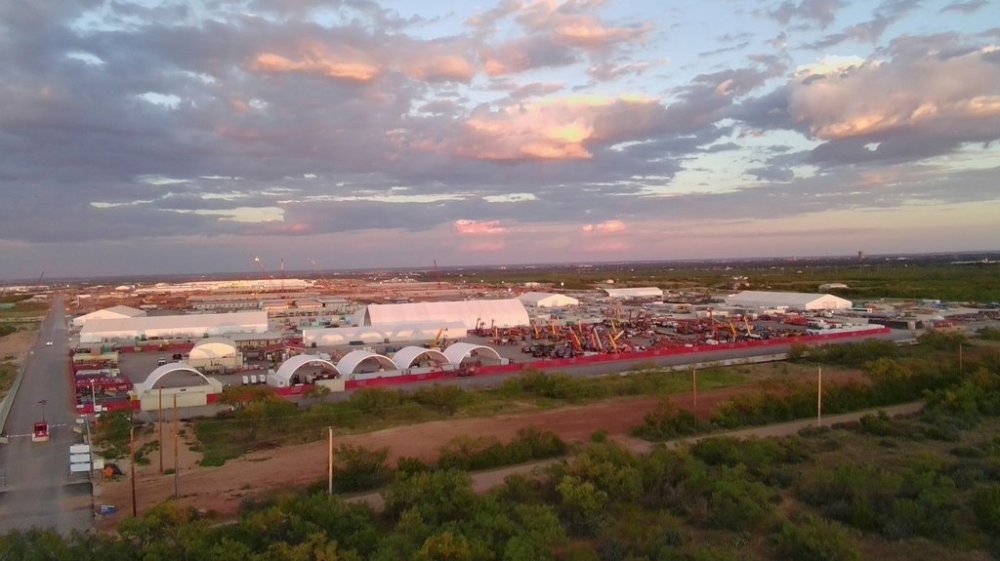
On a tour last month of a Texas data center, OpenAI CEO Sam Altman predicted people will “make some dumb capital allocations” and there will be short-term ups and downs of overinvestment and underinvestment.
But he added that “over the arc that we have to plan over, we are confident that this technology will drive a new wave of unprecedented economic growth,” along with scientific breakthroughs, improvements to quality of life and “new ways to express creativity.”
Awaiting the promise of more useful AI agents
Nvidia CEO Jensen Huang acknowledged in a CNBC interview on Wednesday that OpenAI doesn’t yet have the money to buy its chips, but “they’re going to have to raise that money” through revenue, which “is growing exponentially,” along with equity or debt.
Huang said he also believes a transition has happened as leading AI developers are moving from chatbots that operated “basically at a loss” because the models “weren’t useful enough to pay for” to one in which the AI systems are capable of higher-level reasoning.
“It’s doing research before it answers a question,” he said. “It goes on the web and studies other PDFs and websites, it can now use tools, generate information for you, and it creates responses that are really useful.”
AI companies have spent more than a year pitching the transformative potential of “AI agents” that can go beyond a chatbot’s capability by being able to access a person’s computer and do coding and other work tasks on their behalf. But as the initial hype fades, Forrester analyst Sudha Maheshwari said businesses looking to buy these AI tools are taking a closer look at whether they’re getting enough return on their investments.
“Every bubble inevitably bursts, and in 2026, AI will lose its sheen, trading its tiara for a hard hat,” she wrote in a report Wednesday.
——
O’Brien reported from Providence, Rhode Island and Abilene, Texas.

Advertisement Advertise With Us
Advertisement Advertise With Us