Senator says she was never told her 2005 surgery would leave her sterile
Advertisement
Read this article for free:
or
Already have an account? Log in here »
To continue reading, please subscribe:

Digital Subscription
One year of digital access for only $205*
- Enjoy unlimited reading on winnipegfreepress.com
- Read the E-Edition, our digital replica newspaper
- Access News Break, our award-winning app
- Play interactive puzzles
*First annual payment billed as $205.00 + GST for one year. This annual subscription will automatically renew at $233.00 + GST every 52 weeks (10% off the regular annual price of $259.35). Offer available to new and qualified returning subscribers only. Cancel any time.
To continue reading, please subscribe:
Add Free Press access to your Brandon Sun subscription for only an additional
$1 for the first 4 weeks*
- Enjoy unlimited reading on winnipegfreepress.com
- Read the E-Edition, our digital replica newspaper
- Access News Break, our award-winning app
- Play interactive puzzles
*Your next Brandon Sun subscription payment will increase by $1.00 and you will be charged $17.95 plus GST for four weeks. After four weeks, your payment will increase to $24.95 plus GST every four weeks.
Read unlimited articles for free today:
or
Already have an account? Log in here »
Hey there, time traveller!
This article was published 12/10/2025 (367 days ago), so information in it may no longer be current.
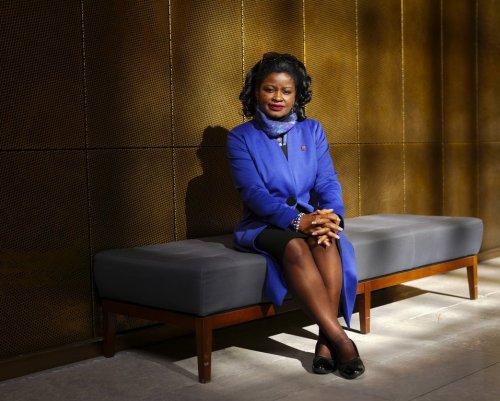
OTTAWA – A Quebec senator says she was never told by her doctor that a surgical procedure she went through in 2005 would render her unable to have children, and hopes her story can advance a broader reckoning on systemic racism in Canada.
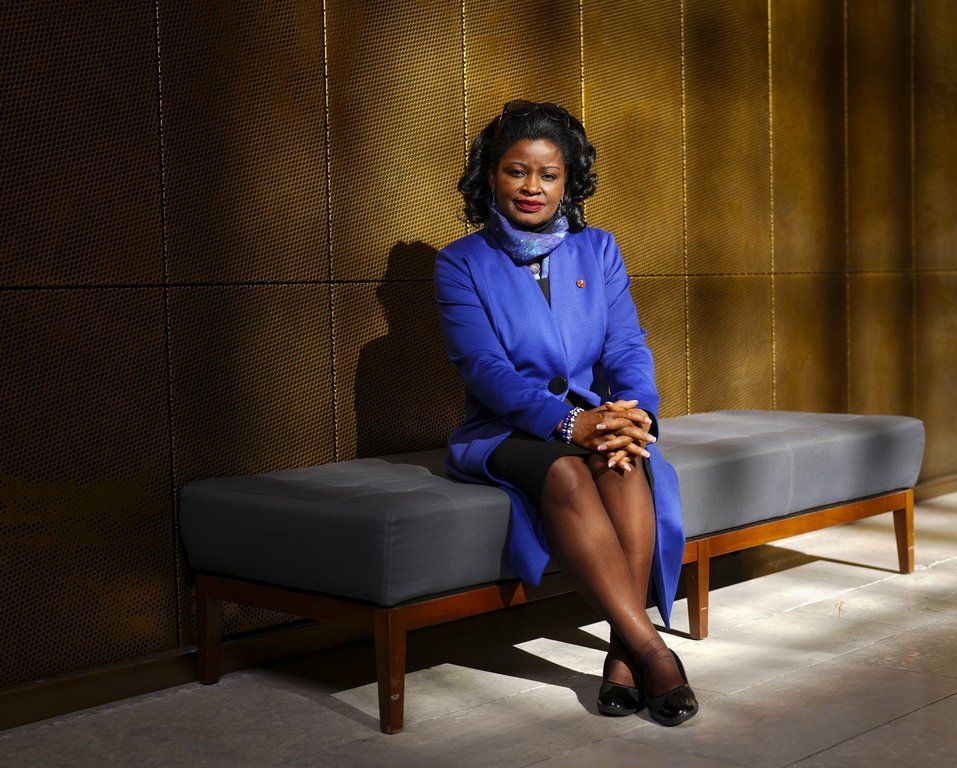
Sen. Amina Gerba told her story to her colleagues on the floor of the Senate earlier this month. She said she went public to support legislation before the Senate to criminalize forced or coerced sterilizations.
“I never wanted to be seen as someone who played the victim. I always fought to move forward,” Sen. Amina Gerba told The Canadian Press in an emotional French-language interview this week.
“I didn’t want to talk about it at all. But it was too hard to keep quiet.”
Gerba said her uterus was removed in 2005 in a Montreal hospital.
She said that for years prior, she experienced intense menstrual pain and profuse bleeding and at one point almost fainted in an international airport.
Gerba said her gynecologist signed her up for an endometrial ablation, which involves the removal of some tissue that causes heavy menstruation.
While pregnancy is still possible after an endometrial ablation, such pregnancies face a high risk of miscarriage or dangerous medical complications. Women are advised to use birth control or some other method to avoid pregnancy following an endometrial ablation.
Gerba said that while she stopped having periods after her operation, her painful symptoms also ended and her life returned to normal.
In 2016, during treatment for an unrelated medical issue, Gerba’s doctor ordered a pelvic ultrasound.
Gerba said she was baffled when her doctor told her she no longer had a uterus because she believed she had only undergone a minor procedure — not a hysterectomy.
“She told me, ‘That’s quite odd. Go see your gynecologist who did the (surgery) for endometriosis again, so he can tell you what he actually did,” Gerba said.
Gerba said the gynecologist who originally treated her had since retired, but the Montreal hospital sent her doctor a medical record indicating they had removed her uterus.
“I was never informed,” she said.
Gerba said she is not naming the hospital or gynecologist publicly because she’s not interested in starting a legal battle that distracts from what she describes as a systemic problem.
She said the hospital records included a generic consent form which allowed for all necessary operations to take place — but didn’t mention removing her uterus.
She said she still doesn’t know if the medical team intended to remove her uterus entirely, or if they found something during the procedure that made removal necessary.
Gerba said she was shocked. She said while she already had four children and was 44 at the time of the procedure, she should have been warned.
Gerba joined the Senate and its human-rights committee, which studied legislation to criminalize coerced sterilization. She said hearing the heartbreaking testimony of Indigenous women from across Canada brought her own story flooding back.
“It was when I listened to the witnesses that I realized that I was actually a victim of this,” she said.
She said that when she talked about it with friends, she kept hearing from women — particularly Black women — who had the same experience.
“It’s a systemic problem that Indigenous people experience, that Black people experience, that disabled people (experience) because people think they’re not able to look after themselves,” she said.
“That’s why I decided to speak out. Because there are many keeping silent.”
She first revealed her experience on the floor of the Senate on Oct. 1.
“Systemic racism does not differentiate between educated and uneducated women, or wealthy and poor women. It affects all Indigenous and racialized women,” she told the chamber. Colleagues rose to applaud and hug her.
In her Senate speech, she raised the term “misogynoir,” a word coined by African-American feminist Moya Bailey to describe the mix of racism and misogyny directed at Black women.
Gerba said Black women across North America report being given little or no pain medicine during medical treatments, reflecting a belief among some medical professionals that Black women somehow don’t feel pain as severely as other people.
Research published by the U.S. National Academy of Sciences found that half of white medical students held that belief and they sometimes offered less pain relief to Black patients than to white ones.
Gerba said the 2020 case of Joyce Echaquan offered a rare glimpse of a widespread problem. Echaquan, an Indigenous woman, died in a Quebec hospital after livestreaming herself screaming in pain while health care workers made derogatory comments suggesting she was a drug addict experiencing withdrawal.
Gerba said she can’t shake the suspicion that she only learned her uterus has been removed because her family doctor is a Black woman running a private practice. The gynecologist who removed her uterus was a white man.
“Our health system has a serious problem of systemic racism, and that must be said,” she said. “If we don’t recognize an evil, we can’t cure it.”
She recalled one of her daughters crying out in extreme pain during labour and medical staff not offering her an epidural or a Caesarian section.
“No matter what we do, there is always, always this feeling that we’re lying, that we’re playing the victim card, that we’re exaggerating,” she said.
It’s an uncomfortable point for Gerba to make.
After coming to Canada from Cameroon, she spent decades starting businesses, including firms manufacturing and distributing beauty products made from organic, fair-trade ingredients from Africa.
Since joining the Senate in 2021, she has focused on opening entrepreneurship and trade and investment opportunities for Canadian businesses in Africa. Self-directed and driven, she shuns the “victim” label.
“I saw around me how people thought of as activists who wanted to draw attention to the problems they were experiencing. I told myself I’m going to work much harder, that I must excel in everything I do, whatever it takes for me to succeed,” she said.
In the Senate, she said, she has both a responsibility to represent “those who have no voice, those who have no opportunity to defend themselves” — and the platform to do it.

“I can no longer keep silent.”
Gerba is pushing for the House of Commons to quickly pass Bill S-228, which reached its final Senate vote on Oct. 2.
The Red Chamber passed a similar bill a year ago, which died when the Liberals prorogued Parliament and before it got any House debate.
“It’s the system that I want to change. That’s why I spoke out,” she said. “This must become criminal.”
This report by The Canadian Press was first published Oct. 12, 2025.
Related Articles
Wounded wombs: Indigenous women who were involuntarily sterilized still grieving their losses
Advertisement Advertise With Us
Advertisement Advertise With Us