AI experts say CRA must fix human responses before pursuing AI

Advertisement

Advertise with us

OTTAWA - Experts in artificial intelligence say it's risky for the Canada Revenue Agency to turn to artificial intelligence to help Canadians with their tax problems when human call centre employees have shown to struggle providing accurate information.

Read this article for free:


or

Already have an account? Log in here »

To continue reading, please subscribe:

Subscribe and receive a limited-edition Free Press branded hat or tote.

Digital Subscription

One year of digital access for only $205*

  • Enjoy unlimited reading on winnipegfreepress.com
  • Read the E-Edition, our digital replica newspaper
  • Access News Break, our award-winning app
  • Play interactive puzzles

*First annual payment billed as $205.00 + GST for one year. This annual subscription will automatically renew at $233.00 + GST every 52 weeks (10% off the regular annual price of $259.35). Offer available to new and qualified returning subscribers only. Cancel any time.

To continue reading, please subscribe:

Add Free Press access to your Brandon Sun subscription for only an additional

$1 for the first 4 weeks*

  • Enjoy unlimited reading on winnipegfreepress.com
  • Read the E-Edition, our digital replica newspaper
  • Access News Break, our award-winning app
  • Play interactive puzzles
Start now

*Your next Brandon Sun subscription payment will increase by $1.00 and you will be charged $17.95 plus GST for four weeks. After four weeks, your payment will increase to $24.95 plus GST every four weeks.

Hey there, time traveller!
This article was published 25/10/2025 (296 days ago), so information in it may no longer be current.

OTTAWA – Experts in artificial intelligence say it’s risky for the Canada Revenue Agency to turn to artificial intelligence to help Canadians with their tax problems when human call centre employees have shown to struggle providing accurate information.

On Tuesday, federal auditor general Karen Hogan issued a damning report which found not only was the CRA answering very few of the calls coming in, when it did pick up the phone, an accurate response was provided by a live agent to fewer than one in five callers about personal income taxes.

Hogan found that Charlie, a rule-based artificial intelligence chatbot, offered correct information about one-third of time.

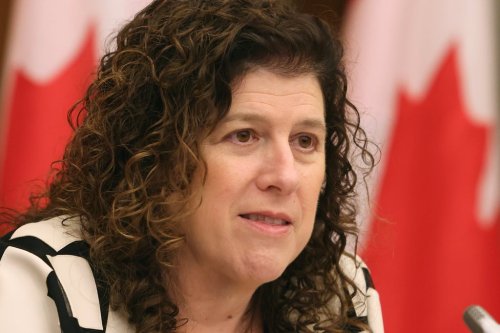
Auditor General of Canada Karen Hogan speaks at a press conference after tabling performance audit reports in Parliament, in Ottawa, on Tuesday, Oct. 21, 2025. THE CANADIAN PRESS/Patrick Doyle

Unlike generative AI which generates new content based on questions asked, Charlie provides answers from pre-determined scripts to assist in frequently asked questions and straightforward inquiries.

The CRA is also piloting a generative AI version, and expanding its use of the chatbots by running them longer hours and expanding the number of questions they can answer.

Anatoliy Gruzd, the Canada Research Chair in Privacy Preserving Digital Technologies, said the CRA needs to get it right with the people before it should rely on AI.

“If you’re a government agent, and you’re launching a chatbot, you want to make sure that you have the process nailed down with the human agent,” he said.

Gruzd explained that chatbots depend on accurate data from human agents.

“I think going back to the basics and trying to figure out why human agents get some of the answers wrong will be critical before launching any major AI initiatives,” he said.

Adegboyega Ojo, a Carleton University professor who specializes in the governance in AI, said the technology can be better utilized, if developed carefully.

Ojo researches technical mechanisms for safe and beneficial AI use in government, and said the CRA should use a mixed human-AI model. That would allow machines to answer frequently asked questions, while passing over more complex and nuanced queries to specialists.

“Whether you talk about AI or not, if you are a public servant, you have to be well trained,” Ojo said. “But, when you have complex tasks, that really requires a lot of cognitive load in terms of remembering things and knowing rules; this is why you need a machine.”

Ojo says AI can ease the burden of high call volumes on CRA staff, but he stressed human workers stay essential and should not be replaced outright.

“Chatbots can be the most sophisticated chatbots and agents today that can do planning, that can speed things up, and still get tripped up because they miss the context,” said Ojo. “I think the ideal way to deploy an AI system is to always have the human oversight, and that’s where the accountability comes in.”

Jasmin Manseau, an associate professor at the University of Ottawa’s Telfer School of Management, said contemporary AI handles predictive-based tasks better than judgment-based tasks, but argued there is still room for machine error.

“I think it depends on the tasks, and something that is routine definitely can be automated, but arguably, not everything can be,” he said.

He said the government’s use of AI is important for technological advancement, but says public trust is needed for success.

“If it is accurate and people trust it, then they’ll use it, and they’ll give better recommendations,” said Manseau. “We need to reach this threshold where it’s at an 70 per cent, 80 per cent, 90 per cent accuracy.”

 This report by The Canadian Press was first published October 25, 2025.

Report Error Submit a Tip

More Stories

Could renewed interest in strategically critical rare earth elements finally make sub-sector profitable?

Joel Schlesinger 6 minute read Preview

Could renewed interest in strategically critical rare earth elements finally make sub-sector profitable?

Joel Schlesinger 6 minute read Saturday, Aug. 15, 2026

Rare earth elements are among the most critical of mined resources for modern economies.

They’re essential in manufacturing specialized magnets used in a host of technologies from wind turbines and electric vehicles to hard drives, smartphones, television screens, and fibre optics. Most notably, however, rare earth minerals are increasingly vital to the defence industry.

These 17 elements — closely related chemically and usually found all together in mineral deposits — have indeed been growing in geopolitical importance as the United States, Canada and other Western nations recognize their dependence on production from China.

It is the world’s largest producer and processor of rare earths, including the most in-demand elements neodymium and praseodymium used to manufacture very light and powerful magnets for an array of technologies, including the most advanced weapons of modern warfare.

Read
Saturday, Aug. 15, 2026

Volunteer helps keep Nellie McClung’s legacy alive

Tiago Resko 4 minute read Preview

Volunteer helps keep Nellie McClung’s legacy alive

Tiago Resko 4 minute read 6:00 AM CDT

Growing up with ties to the community of Manitou, Gillian Potvin has found great inspiration in the traces of Nellie McClung’s legacy.

The 39-year-old has spent nearly a decade channelling that inspiration back into the community by being a key part of the Nellie McClung Museum of Canada’s marketing and events planning since it opened at 55 Main St., in the southern Manitoba town in 2017.

Utilizing her skills in marketing and digital design for the museum is her way of thanking the woman who fought for the rights she has today and continuing her legacy.

“She helped women to be identified as persons and that’s huge,” she said of the woman born in 1873 and considered one of Canada’s most prominent suffragists. “It’s easy to take for granted some of these rights we now have as women, but there would have been a big fight back in the day to change the things that have always been.”

Read
6:00 AM CDT

Hayden Panettiere, who starred in ‘Heroes’ and ‘Nashville,’ dies at 36

Hannah Schoenbaum, The Associated Press 5 minute read Preview

Hayden Panettiere, who starred in ‘Heroes’ and ‘Nashville,’ dies at 36

Hannah Schoenbaum, The Associated Press 5 minute read Updated: 9:17 AM CDT

Hayden Panettiere, who soared to fame two decades ago as a cheerleader with superpowers in the TV show “Heroes” and won country music success playing a singer on “Nashville,” has died. She was 36.

Police said Panettiere was found unresponsive in an apartment in Greenville, South Carolina, shortly before 2 p.m. Sunday. Lifesaving measures were performed but she was pronounced dead at the scene.

No cause of death has been provided. There were no signs of foul play or suspicious circumstances, police said in a statement. The Greenville County Coroner’s Office will perform an autopsy.

The television star, who would have turned 37 on Friday, had been open about her struggles with alcohol addiction and depression, including after the birth of her daughter with Ukrainian boxer Wladimir Klitschko in 2014.

Read
Updated: 9:17 AM CDT

Sea Bears finish on top

Joshua Frey-Sam 6 minute read Preview

Sea Bears finish on top

Joshua Frey-Sam 6 minute read Saturday, Aug. 15, 2026

Beauty. Bliss. Ecstasy.

That is how Aug. 15, 2026 will be remembered in Winnipeg.

What was once a pipe dream in the city’s hoops community became an epic reality on Saturday, when Simon Hildebrandt, who grew up playing on the courts of this very town, made good on a three-pointer from the wing to crown the Winnipeg Sea Bears Canadian Elite Basketball League champions.

A storybook ending to a 98-84 victory over the Brampton Honey Badgers sent a CEBL attendance record of 12,519 fans into pandemonium at Canada Life Centre and capped a Finals run for the ages — one that was fraught with injury, impromptu player exits and unprecedented circumstances.

Read
Saturday, Aug. 15, 2026

AI experts say CRA must fix human responses before pursuing AI

Justin Escoto, The Canadian Press 4 minute read Preview

AI experts say CRA must fix human responses before pursuing AI

Justin Escoto, The Canadian Press 4 minute read Saturday, Oct. 25, 2025

OTTAWA - Experts in artificial intelligence say it's risky for the Canada Revenue Agency to turn to artificial intelligence to help Canadians with their tax problems when human call centre employees have shown to struggle providing accurate information.

On Tuesday, federal auditor general Karen Hogan issued a damning report which found not only was the CRA answering very few of the calls coming in, when it did pick up the phone, an accurate response was provided by a live agent to fewer than one in five callers about personal income taxes.

Hogan found that Charlie, a rule-based artificial intelligence chatbot, offered correct information about one-third of time.

Unlike generative AI which generates new content based on questions asked, Charlie provides answers from pre-determined scripts to assist in frequently asked questions and straightforward inquiries.

Read
Saturday, Oct. 25, 2025

Indigenous peoples are deeply invested in Canada

Niigaan Sinclair 5 minute read Preview

Indigenous peoples are deeply invested in Canada

Niigaan Sinclair 5 minute read 6:00 AM CDT

Elections Canada released a report this week that stated that, in the 2025 federal election, approximately 41 per cent of eligible First Nations, Inuit and Métis voters cast a ballot and contributed significantly to the federal Liberals and Prime Minister Mark Carney making a political comeback.

For anyone curious about how Manitoba fared, the numbers in this province were slightly lower — but still very strong, with 34 per cent participation.

This is a far cry from the highest rate of Indigenous participation in a federal election — that would be the 60 per cent who cast a ballot in 2015, when Justin Trudeau’s Liberals defeated Stephen Harper’s Conservatives — but it’s still higher than the abysmal numbers seen in decades previous.

First Nations voters have only been allowed the legal right to cast a ballot in Canadian elections since 1960, but many in the past — perhaps rightly — felt a sense of complicity in the country’s colonization or, worse, that voting didn’t make a difference.

Read
6:00 AM CDT