‘Different approach’: look inside Winnipeg’s new detox centre Facility will hold people high on long-lasting drugs as long as 72 hours
Read this article for free:
or
Already have an account? Log in here »
To continue reading, please subscribe:
Digital Subscription
One year of digital access for only $1.44 a week*
- Enjoy unlimited reading on winnipegfreepress.com
- Read the E-Edition, our digital replica newspaper
- Access News Break, our award-winning app
- Play interactive puzzles
*Billed as $5.77 plus GST every four weeks. After 52 weeks, price increases to the regular rate of $19.95 plus GST every four weeks. Offer available to new and qualified returning subscribers only. Cancel any time.
To continue reading, please subscribe:
Add Free Press access to your Brandon Sun subscription for only an additional
$1 for the first 4 weeks*
- Enjoy unlimited reading on winnipegfreepress.com
- Read the E-Edition, our digital replica newspaper
- Access News Break, our award-winning app
- Play interactive puzzles
*Your next Brandon Sun subscription payment will increase by $1.00 and you will be charged $17.95 plus GST for four weeks. After four weeks, your payment will increase to $24.95 plus GST every four weeks.
Read unlimited articles for free today:
or
Already have an account? Log in here »
Hey there, time traveller!
This article was published 17/11/2025 (337 days ago), so information in it may no longer be current.
A new 20-suite detox centre in South Point Douglas, where people high on long-lasting drugs can be held for up to 72 hours, will open for alcohol-related detentions by the end of the November.
The facility at 190 Disraeli Fwy. is expected to begin accepting people who are high on methamphetamine or other drugs as early as January, with officials eyeing Brandon and Thompson for similar centres.
“We’re taking a different approach because Manitobans have said they don’t feel safe in their communities,” Housing, Addictions and Homelessness Minister Bernadette Smith said Monday after touring the site with journalists and officials.
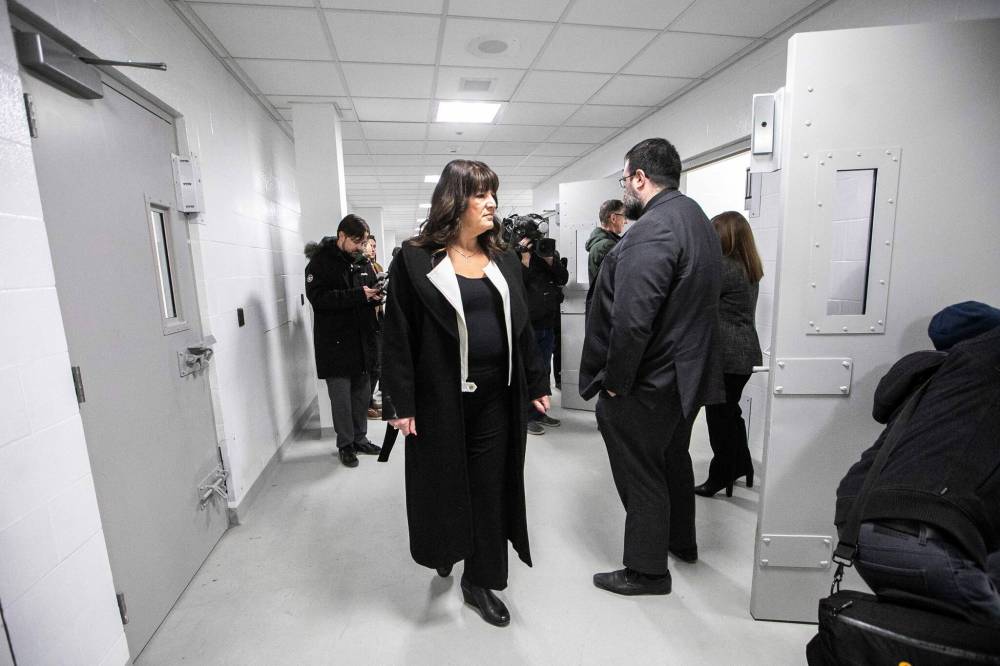
“We know that people aren’t feeling safe when they’re doing substances either, and we want to intervene. This is an intervention that’s going to help keep people safe, help keep people who are using safe, and get them to the supports that they need.”
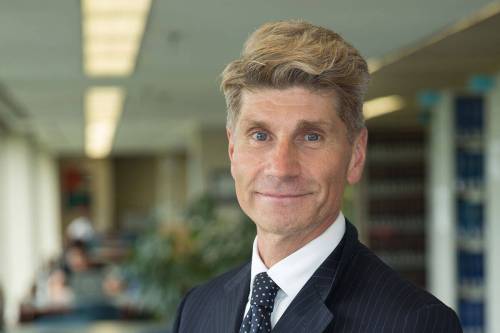
Shared Health’s chief medical officer of emergency response services, Dr. Rob Grierson, who is helping to plan the protective care centre, said he is unaware of any other facility like it.
Operated by Main Street Project, the centre will have four suites for people under the influence of long-lasting drugs, likely starting early in the new year once staff training and schedules are finalized, he said.
“(Four) is a reasonable number for us to kind of ensure that we have all of the care on site that is required for those individuals before we expand,” said Grierson, who is also the Winnipeg Fire Paramedic Service’s medical director.
The remaining 16 suites are for alcohol detentions. Main Street Project has 16 spaces for such detentions in its current facility on nearby Martha Street, which is closing soon for renovations.
Measuring three metres by three metres, each room will be equipped with a bed, toilet, sink, video surveillance, an intercom and a door with a small window and outside lock. Cinder-block walls are painted white, while the floors are grey.
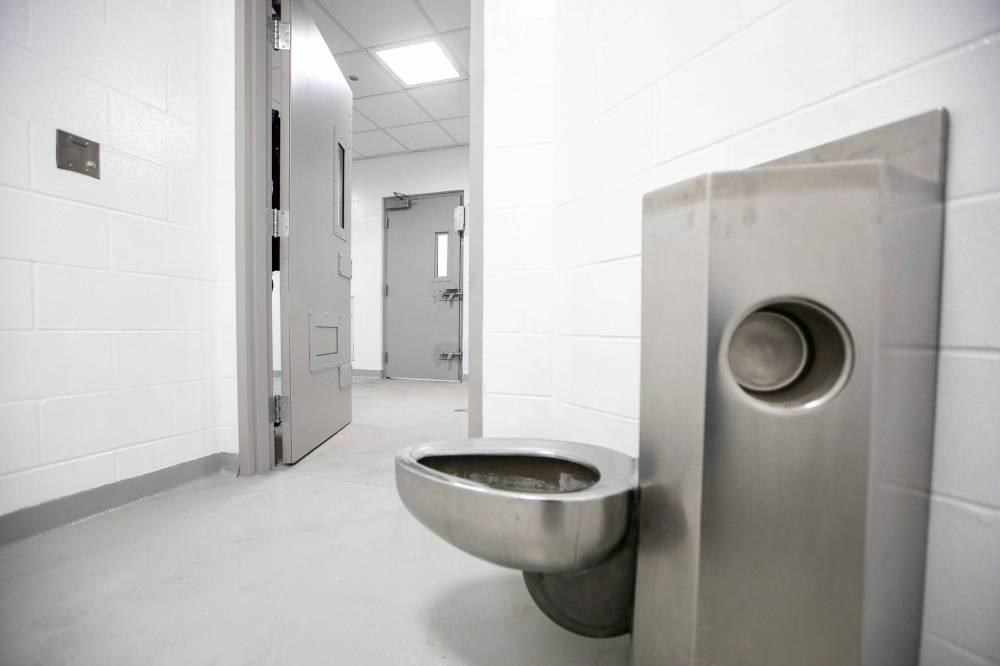
The suites are situated along the same corridor, which has a shower room. Construction started a month ago.
“These rooms are big. They’re not these small, dark places,” Smith said.
The next stage will eventually add 20 more rooms.
The Manitoba government originally hoped to open the centre as early as this week and have it fully operational in December, after introducing the Protective Detention and Care of Intoxicated Persons Act on Oct. 2 and passing it Nov. 6.
“These rooms are big. They’re not these small, dark places.”
The opening was pushed back to ensure proper training and protocols are in place. Some critics have questioned whether involuntary detention is backed by clinical evidence as a way to treat and manage addiction.
The law allows for an intoxicated person in a public place who poses a danger or causes a disturbance to be detained by police or a designated officer, and held at a protective care centre for up to 72 hours.
It replaced the Intoxicated Persons Detention Act, which was based on alcohol use and permitted 24-hour holds.
The centre will accept people who are high on long-lasting drugs for ongoing care once they’ve been medically cleared in a hospital. Some could be under the influence of multiple substances.
The initial model will involve people who attend an emergency room, with officials yet to determine if it will be “select” ERs or all ERs and urgent care centres in Winnipeg, Grierson said.

It has not yet been determined how patients will be transferred from a hospital to the detox centre. It won’t be an ambulance, but it could be a stretcher service with a security officer present, Grierson said.
Patients would be “very stable” from a medical perspective, and most likely would go to the centre to allow a drug-induced psychosis to wear off, he said.
Grierson said every patient will undergo a thorough assessment by on-site paramedics before being placed into a “protective care cell,” where they will be regularly checked and evaluated.
“Methamphetamine is unpredictable, both in the initial phases and then that recovery phase,” Grierson said, noting up to about 40 per cent of users will develop some degree of psychosis, which can last longer than 72 hours. “It’s really that kind of prolonged phase of — I won’t even say intoxication — but influence of that drug is what we’re trying to accomplish and care for individuals here.”
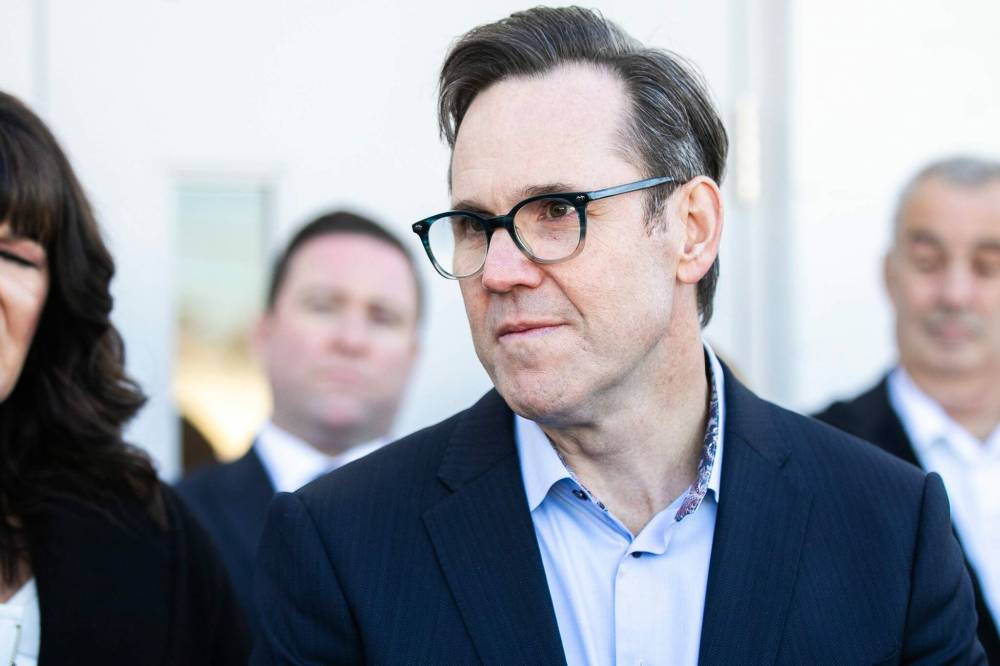
Three paramedics will be on duty 24 hours a day, seven days a week. Addictions physicians and psychiatrists will conduct assessments to help develop care plans and determine lengths of stays on a case-by-case basis.
Dr. James Bolton, a psychiatrist and associate specialty lead for mental health and addictions with Shared Health, said assessments will help to diagnose any untreated conditions such as schizophrenia.
Staff can help connect patients to long-term addictions or mental-health care, and other supports, such as housing, if required.
Main Street Project executive director Jamil Mahmood said the organization will have more staff on hand than it does at its current site on Martha Street, with case managers available to support people after they leave.
“Our goal is that folks don’t end up back here again and again, so we’re kind of closing the revolving door and then making sure people have the care they need,” he said.
“Our goal is that folks don’t end up back here again and again.”
The organization’s Martha Street site is being converted to a facility with 36 detox units and 28 housing units as part of a $19-million capital project that is funded mostly by the federal government.
Bolton believes the new centre will have a positive impact on ERs and the Crisis Response Centre at Health Sciences Centre.
“This is going to be a very important facility that can help give them proper care, safe care, and at the same time remove them from unnecessarily being in the emergency department,” he said.
The Manitoba government spent $3.7 million to purchase the building at 190 Disraeli Fwy., and budgeted $5 million for renovations, a spokesperson said.
chris.kitching@freepress.mb.ca

Chris Kitching is a general assignment reporter at the Free Press. He began his newspaper career in 2001, with stops in Winnipeg, Toronto and London, England, along the way. After returning to Winnipeg, he joined the Free Press in 2021, and now covers a little bit of everything for the newspaper. Read more about Chris.
Every piece of reporting Chris produces is reviewed by an editing team before it is posted online or published in print — part of the Free Press‘s tradition, since 1872, of producing reliable independent journalism. Read more about Free Press’s history and mandate, and learn how our newsroom operates.
Our newsroom depends on a growing audience of readers to power our journalism. If you are not a paid reader, please consider becoming a subscriber.
Our newsroom depends on its audience of readers to power our journalism. Thank you for your support.
Related Articles
Drug detox centre opening on hold ‘to get things right,’ Kinew says
















History
Updated on Tuesday, November 18, 2025 9:34 AM CST: Corrects Dr. Rob Grierson's title