

Senator predicts court challenge for Winnipeg detox centre
Criticizes holding drug users in ‘cells’ for as long as 72 hours

Advertisement
Read this article for free:
or
Already have an account? Log in here »
To continue reading, please subscribe:

Digital Subscription
One year of digital access for only $205*
- Enjoy unlimited reading on winnipegfreepress.com
- Read the E-Edition, our digital replica newspaper
- Access News Break, our award-winning app
- Play interactive puzzles
*First annual payment billed as $205.00 + GST for one year. This annual subscription will automatically renew at $233.00 + GST every 52 weeks (10% off the regular annual price of $259.35). Offer available to new and qualified returning subscribers only. Cancel any time.
To continue reading, please subscribe:
Add Free Press access to your Brandon Sun subscription for only an additional
$1 for the first 4 weeks*
- Enjoy unlimited reading on winnipegfreepress.com
- Read the E-Edition, our digital replica newspaper
- Access News Break, our award-winning app
- Play interactive puzzles
*Your next Brandon Sun subscription payment will increase by $1.00 and you will be charged $17.95 plus GST for four weeks. After four weeks, your payment will increase to $24.95 plus GST every four weeks.
Read unlimited articles for free today:
or
Already have an account? Log in here »
Hey there, time traveller!
This article was published 30/11/2025 (293 days ago), so information in it may no longer be current.
A Canadian senator believes Manitoba’s detox centre in South Point Douglas — which she likened to a jail — will end up subject to a Charter challenge in the courts.
Ontario Sen. Kim Pate, who has advocated for decades on behalf of prisoners, compared the centre’s suites to the solitary confinement cells in the Canadian prisons she has visited over the years.
The detox centre, capable of holding people intoxicated on meth and other long-lasting drugs for up to 72 hours under new legislation, is expected to open soon at 190 Disraeli Fwy.
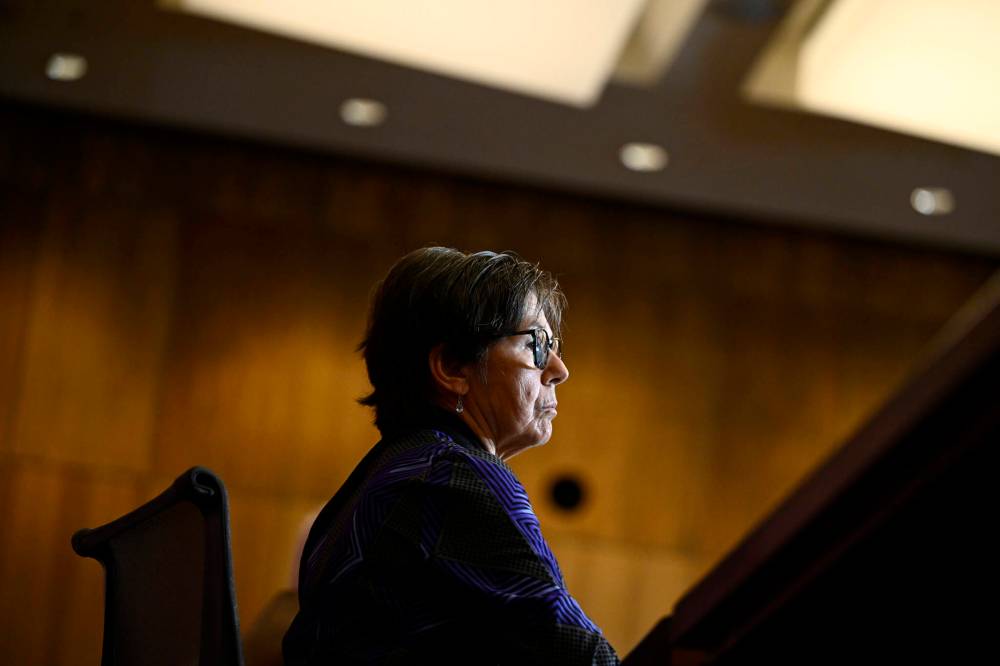
JUSTIN TANG / THE CANADIAN PRESS FILES
Sen. Kim Pate is critical of Manitoba’s detox detention centre, saying the province appears to be using mental health legislation to enact a criminal response to people high on drugs.
She said the province appears to be using mental health legislation to enact a criminal response to people high on drugs.
“(Detention is) permissible under the mental health legislation, but it’s specifically to have people go into hospitals for mental health assessments when they’re in acute situations,” Pate said on Sunday.
“To use that to actually put people in what can only be described as cells… I think it’s rife for a Charter challenge.”
Pate said it appears the individuals will be able to be detained without due process and without a right to a lawyer, presenting the possibility of legal challenges.
Measuring three metres by three metres, each room will be equipped with a bed, toilet, sink, video surveillance, an intercom and a door with a small window and outside lock. Cinder-block walls are painted white, while the floors are grey.
Pate, who was in Winnipeg over the weekend, wanted to tour the detention centre Saturday after being invited by Winnipeg Centre NDP Member of Parliament Leah Gazan, but wasn’t permitted inside.
Pate said she had reached out to the offices of Premier Wab Kinew and Housing, Addictions and Homelessness Minister Bernadette Smith about the visit but was told nobody was able to meet with her.
“Understandably, it was a bit short notice… They said that because they’re getting ready for the opening of the unit, that they couldn’t allow me in to see it,” said Pate.
She did, however, look through the facility’s windows and has seen media videos of the facility. The province brought reporters and camera operators in for a tour of the centre in mid-November.
The centre is to be staffed by medical professionals and individuals are to be brought in once they’re medically cleared at a hospital.
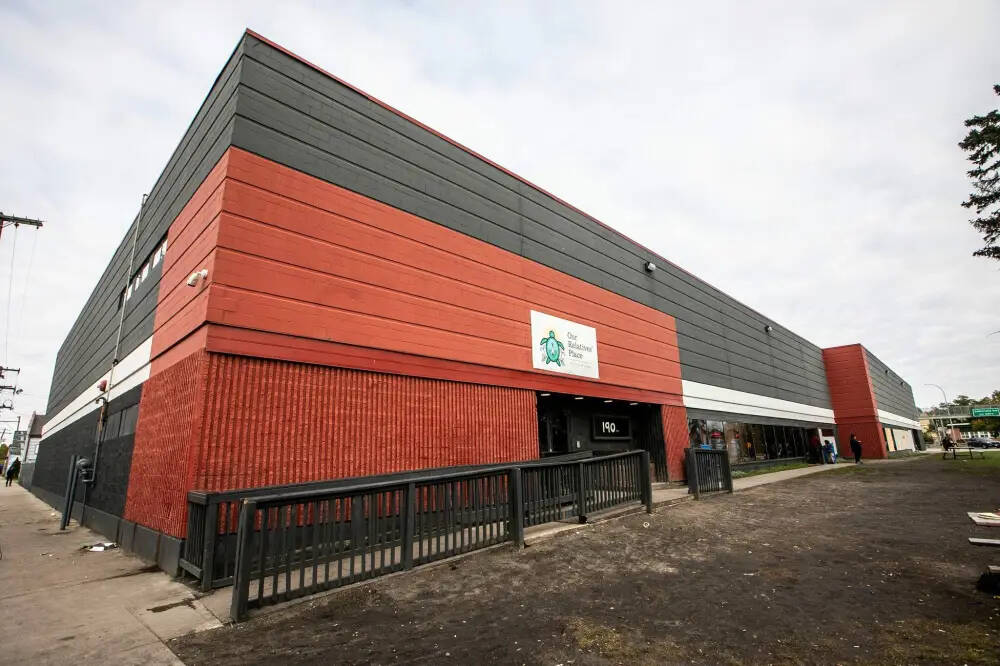
MIKAELA MACKENZIE / FREE PRESS FILES
The detox centre at 190 Disraeli Fwy was initially planned to open before the end of November.
The provincial government passed legislation in early November with near-unanimous support allowing for the enhanced, temporary detention of people experiencing drug-induced psychosis.
The NDP government has argued the centre is necessary to address the meth crisis and alleviate pressure on emergency rooms.
Smith said early in November the centre is meant to help stabilize people suffering from addiction when they’re a danger to themselves and others.
The minister has said these people will not be criminalized but rather provided with “appropriate care and treatment options.” It has been supported by senior officials at the Winnipeg police and fire paramedic services.
Kinew has argued the facility will be more humane and dignified than the current options. In the absence of an appropriate place to hold people during prolonged highs, many people are held in hospital emergency rooms or in police custody. Main Street Project also runs what’s colloquially known as a “drunk tank.”
Kinew and Smith’s spokesman did not return a request for comment on Pate’s visit sent on Sunday morning.
Pate said she believes the Manitoba government’s plans are well-intentioned — but that the detox centre is wrongheaded.
“The folks who are working on this issue are trying to legitimately deal with public concerns about the safety of folks who have mental health issues and addiction issues and who are increasingly visible not just in Winnipeg but throughout the country on the streets,” she said.
“However, this move to essentially incarcerate people through the mental health system, albeit for shorter periods of time than they might be if they were in the prison system, is from my perspective, ill-conceived, in large part because it will likely create additional problems.”
The senator said she worries the centre will traumatize rather than help people struggling with addictions. Others have raised concern that forced detox will result in more opioid overdose risk on the street when individuals get out of the centre.
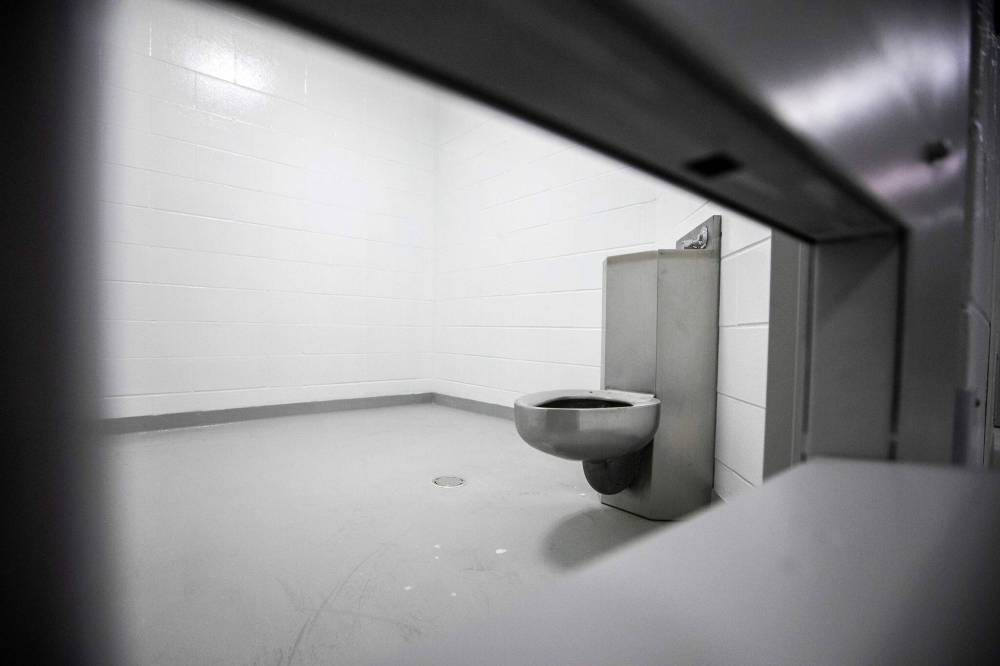
MIKAELA MACKENZIE / FREE PRESS FILES
A room inside the detox facility.
The money used on the centre, Pate argued, could have been used to build housing, for mental health supports, addictions recovery or to hire social services workers.
The government spent $3.7 million to purchase the building and an additional $5 million on renovations.

“What I see is what is potentially an unlawful, ineffective and extremely expensive model… being put in place, and in the end, we will likely see more Indigenous people locked up, whether it’s in the mental health or the prison systems,” said Pate.
The Protective Detention and Care of Intoxicated Persons Act, passed Nov. 6, replaced the Intoxicated Persons Detention Act and extended the amount of time people under the influence of narcotics can be detained.
The prior 24-hour maximum in the legislation adopted in 1987 was based on alcohol, not drug, consumption.
Operated by Main Street Project, the centre will have four suites for people under the influence of long-lasting drugs and 16 suites for alcohol-related detentions. Its capacity is expected to be doubled next year.
erik.pindera@freepress.mb.ca
Erik Pindera is a reporter for the Free Press, mostly focusing on crime and justice. The born-and-bred Winnipegger attended Red River College Polytechnic, wrote for the community newspaper in Kenora, Ont. and reported on television and radio in Winnipeg before joining the Free Press in 2020. Read more about Erik.
Every piece of reporting Erik produces is reviewed by an editing team before it is posted online or published in print — part of the Free Press‘s tradition, since 1872, of producing reliable independent journalism. Read more about Free Press’s history and mandate, and learn how our newsroom operates.
Our newsroom depends on a growing audience of readers to power our journalism. If you are not a paid reader, please consider becoming a subscriber.
Our newsroom depends on its audience of readers to power our journalism. Thank you for your support.
Erik Pindera is a reporter for the Free Press, mostly focusing on crime and justice. The born-and-bred Winnipegger attended Red River College Polytechnic, wrote for the community newspaper in Kenora, Ont. and reported on television and radio in Winnipeg before joining the Free Press in 2020. Read more about Erik.
Every piece of reporting Erik produces is reviewed by an editing team before it is posted online or published in print — part of the Free Press‘s tradition, since 1872, of producing reliable independent journalism. Read more about Free Press’s history and mandate, and learn how our newsroom operates.
Our newsroom depends on a growing audience of readers to power our journalism. If you are not a paid reader, please consider becoming a subscriber.
Our newsroom depends on its audience of readers to power our journalism. Thank you for your support.
Related Articles
Rally urges reforms for new 72-hour detox detention








Advertisement Advertise With Us
Advertisement Advertise With Us