

Province plans to release quarterly stats on sobering centre detentions

Advertisement
Read this article for free:
or
Already have an account? Log in here »
To continue reading, please subscribe:

Digital Subscription
One year of digital access for only $205*
- Enjoy unlimited reading on winnipegfreepress.com
- Read the E-Edition, our digital replica newspaper
- Access News Break, our award-winning app
- Play interactive puzzles
*First annual payment billed as $205.00 + GST for one year. This annual subscription will automatically renew at $233.00 + GST every 52 weeks (10% off the regular annual price of $259.35). Offer available to new and qualified returning subscribers only. Cancel any time.
To continue reading, please subscribe:
Add Free Press access to your Brandon Sun subscription for only an additional
$1 for the first 4 weeks*
- Enjoy unlimited reading on winnipegfreepress.com
- Read the E-Edition, our digital replica newspaper
- Access News Break, our award-winning app
- Play interactive puzzles
*Your next Brandon Sun subscription payment will increase by $1.00 and you will be charged $17.95 plus GST for four weeks. After four weeks, your payment will increase to $24.95 plus GST every four weeks.
Read unlimited articles for free today:
or
Already have an account? Log in here »
Hey there, time traveller!
This article was published 08/01/2026 (274 days ago), so information in it may no longer be current.
The province will report how many intoxicated people have been held at its new 72-hour detention centre on a quarterly basis beginning in the spring.
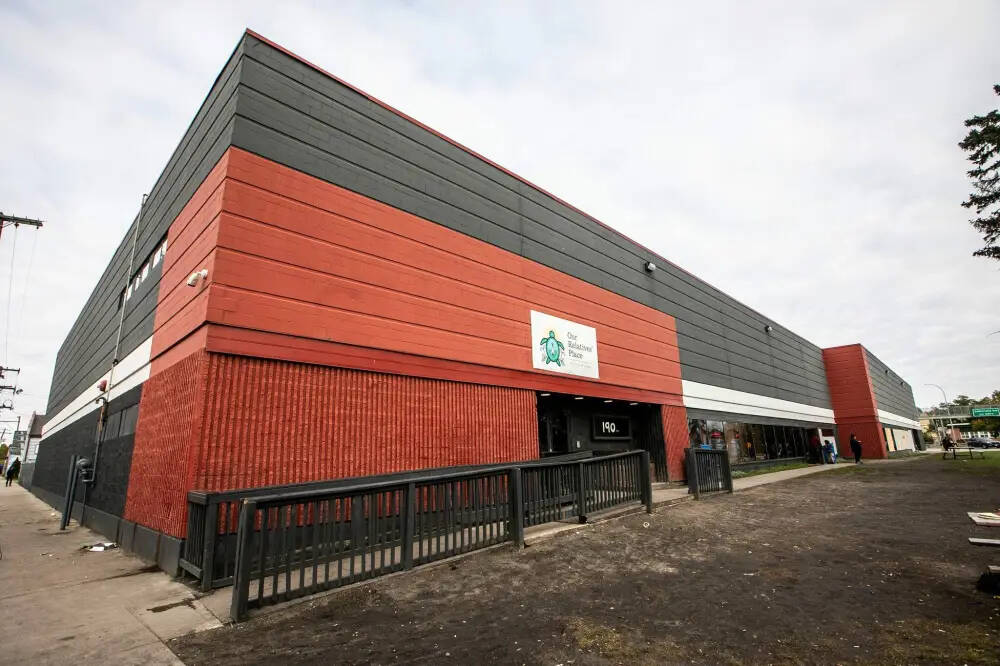
The 20-unit “protective care centre” for those so drunk or high on methamphetamine or other substances that they’re a danger to themselves or the public opened Dec. 2 at 190 Disraeli Fwy.
“The province is monitoring overall uptake and volume and length of stays has varied depending on a variety of factors such as the individual, weather events, or even the time of day,” the provincial government said in an email. Data will be made available to the public starting in the spring, it said, without specifying the scope of information to be provided.
Mikaela MacKenzie / Free Press files
The 20-unit “protective care centre” at 190 Disraeli Fwy. that opened in December.
“The facility is still very new and is being actively used, providing a valuable service to the community,” the government said.
It hasn’t yet detained anyone suspected of being in a state of meth or other drug psychosis, a cabinet communications spokesman confirmed this week. Medical staff are receiving specialized training to safely care for those using methamphetamine and other intoxicants. The centre may be ready for drug psychosis detainees at the end of January, he said.
For now, the site run by the non-profit Main Street Project is being used as a sobering centre for alcohol intoxication. The facility was established following amendments to the Intoxicated Persons Detention Act to allow for detainees on longer-lasting drugs to be held up to 72 hours. The new legislation replaces a law that allowed an intoxicated person to be held for only 24 hours.
The public has a right to know what’s going on inside the building that the Manitoba government spent $3.7 million to buy and budgeted $5 million to renovate, the Tory critic for housing, addictions and homelessness said.
“I’ve had people reach out asking me how it’s going or what’s going on, especially the people from Point Douglas in the north Logan area,” Portage la Prairie MLA Jeff Bereza said Wednesday. “They said ‘there seems to be a lot of secrecy around it.’”
The Progressive Conservatives called for transparency when the government introduced legislation to establish the 72-hour detention centre late in the last session.
“We were looking for the number of persons who are going to be detained in the care centre, the number of persons who are detained more than once, the number of serious injuries or deaths while being detained, the type of programs that they were going to be offered,” Bereza said.

“If Manitoba taxpayers are paying for this, they should be able to provide that information to any Manitoban that’s looking for it. It’s important.”
Critics have raised concerns that the centre’s 20 units look like solitary-confinement jail cells and may traumatize, rather than help, people struggling with addictions. There are questions about whether the 72-hour period is both necessary and proportionate to the province’s public health and safety goals, and if it could be challenged under the Charter of Rights and Freedoms that protects Canadians from arbitrary detention.
The NDP government has argued the centre is necessary to address the meth crisis, alleviate pressure on emergency rooms and connect people with medical care, treatment and recovery supports.
Housing, Addictions and Homelessness Minister Bernadette Smith — who was not made available for an interview this week — has said medical experts helped design the facility that aims to prevent harm to the intoxicated person and the public.
carol.sanders@freepress.mb.ca
Carol Sanders
Legislature reporter
Carol Sanders is a reporter at the Free Press legislature bureau. The former general assignment reporter and copy editor joined the paper in 1997. Read more about Carol.
Every piece of reporting Carol produces is reviewed by an editing team before it is posted online or published in print — part of the Free Press‘s tradition, since 1872, of producing reliable independent journalism. Read more about Free Press’s history and mandate, and learn how our newsroom operates.
Our newsroom depends on a growing audience of readers to power our journalism. If you are not a paid reader, please consider becoming a subscriber.
Our newsroom depends on its audience of readers to power our journalism. Thank you for your support.
Carol Sanders
Legislature reporter
Carol Sanders is a reporter at the Free Press legislature bureau. The former general assignment reporter and copy editor joined the paper in 1997. Read more about Carol.
Every piece of reporting Carol produces is reviewed by an editing team before it is posted online or published in print — part of the Free Press‘s tradition, since 1872, of producing reliable independent journalism. Read more about Free Press’s history and mandate, and learn how our newsroom operates.
Our newsroom depends on a growing audience of readers to power our journalism. If you are not a paid reader, please consider becoming a subscriber.
Our newsroom depends on its audience of readers to power our journalism. Thank you for your support.
Related Articles
Winnipeg MP, Ontario senator take aim at about-to-open detox centre


Advertisement Advertise With Us
Advertisement Advertise With Us