

Convenience stores — the seeds of new neighbourhoods

Advertisement
Read this article for free:
or
Already have an account? Log in here »
To continue reading, please subscribe:

Digital Subscription
One year of digital access for only $205*
- Enjoy unlimited reading on winnipegfreepress.com
- Read the E-Edition, our digital replica newspaper
- Access News Break, our award-winning app
- Play interactive puzzles
*First annual payment billed as $205.00 + GST for one year. This annual subscription will automatically renew at $233.00 + GST every 52 weeks (10% off the regular annual price of $259.35). Offer available to new and qualified returning subscribers only. Cancel any time.
To continue reading, please subscribe:
Add Free Press access to your Brandon Sun subscription for only an additional
$1 for the first 4 weeks*
- Enjoy unlimited reading on winnipegfreepress.com
- Read the E-Edition, our digital replica newspaper
- Access News Break, our award-winning app
- Play interactive puzzles
*Your next Brandon Sun subscription payment will increase by $1.00 and you will be charged $17.95 plus GST for four weeks. After four weeks, your payment will increase to $24.95 plus GST every four weeks.
Read unlimited articles for free today:
or
Already have an account? Log in here »
Hey there, time traveller!
This article was published 08/12/2025 (304 days ago), so information in it may no longer be current.
The COVID-19 pandemic was a gut punch to downtown Winnipeg. No area of the city felt such devastating impacts, and even a few years later it remains the place struggling most to regain its former momentum.
If you look closely, however, you can begin to see evidence of tiny seeds of change taking root in the urban landscape. W
e often walk by without even noticing them, but the sprouts bringing new life to downtown can be found in the form of the humble little convenience store. In the last year or so, 10 of these little shops have opened across the city centre, joining a few others that took root in the two years prior.
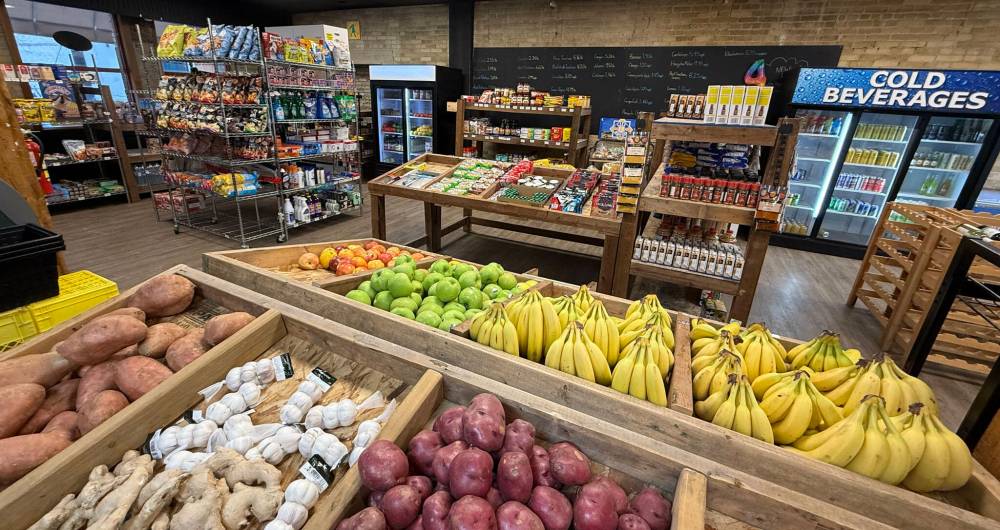
Brent Bellamy / Submitted
Ashdown Market on Bannatyne Avenue in Winnipeg’s Exchange District. Walking into a locally owned store fosters a feeling of belonging.
Convenience stores may seem like small, everyday elements of the city, but their appearance in transitioning neighbourhoods is often one of the earliest and clearest indicators of urban renewal.
When a downtown area struggles with vacant storefronts, declining foot traffic and persistent social challenges, many businesses hesitate to enter the local market.
Reduced demand lowers rents, and when combined with a convenience store business model that has low economic barriers to entry, this can create opportunities for local entrepreneurs.
For many, including first-time business owners and immigrant families that can face barriers to employment such as language or education, these opportunities can offer meaningful economic empowerment.
Convenience stores can adapt to spaces that might be considered too small, awkward or outdated for other businesses, and with minimal reconfiguration a new shop can be up and running quickly. They are often successful early seeds of renewal because their model depends on volume and accessibility, not higher-spending customers.
With long and flexible hours selling basic needs, they are able to harvest business across the full spectrum of daily demand, responding to a diverse range of customers with different schedules, lifestyles and needs instead of a single market like office workers.
Convenience stores are unique because they grow from the beginnings of urban renewal but are also important early catalysts that create the fertile soil for broader investment and neighbourhood growth.
As locally owned small businesses, these shops can become important drivers of the neighbourhood economy. Owners frequently live in and hire within the local community, offering flexible entry-level jobs that are stepping-stones for youth or newcomers to gain experience.
This local employment helps to keep wages circulating within the neighbourhood and builds support for other local businesses, establishing a fine-grained, diverse and resilient neighbourhood economy that can catalyze the development of complementary shops and services.
With customers coming and going over long hours, these neighbourhood hubs can create a vibrancy that helps shift the reputation of a neighbourhood, making it feel more active and vibrant.
Local stewardship and the natural surveillance from increased pedestrian traffic improves the perception of safety, which is a core component of successful urban renewal.
As the feelings of safety and stability improve, more businesses and residents are willing to invest and move to the area, deepening the cycle of positive change.
As a local destination that is visited frequently, convenience stores can further enhance the feeling of neighbourhood stability by acting as social hubs.
Walking into a locally owned store and having a conversation with a familiar employee or crossing paths with a neighbour fosters a feeling of belonging within residents. This can create a stronger community bond and sense of collective identity that empowers transitioning neighbourhoods and inspires new investment and entrepreneurism.
Convenience stores and other small businesses are vital to inspiring ground-up, locally led urban renewal, but they are also an important complement to larger developments that can drive greater change in a city’s trajectory.
Big projects can bring millions of dollars in new investment, create thousands of jobs, and redefine the image of a city, but they can only be successful if the fine-grained neighbourhood around them creates walkable, safe, engaging streets with the economic opportunity and social diversity that allows great neighbourhoods to grow and flourish.
A new apartment building can bring hundreds of new residents, but it’s the small-scale street-scapes that shape daily urban life. Locally owned convenience stores complement major projects by adding human scale and familiarity, authenticity and social connection.
They help ensure that urban renewal is not just about physical transformation but about cultivating a living, breathing neighbourhood.
This is why the organic growth of convenience stores is so timely, arriving just as we embark on a generational redevelopment of Winnipeg’s city centre.
The devastating impacts of the pandemic have prompted some of the most influential players in our urban development community to unite in reimagining the future of downtown Winnipeg.

True North Real Estate Development, the Southern Chiefs’ Organization, the Manitoba Métis Federation, the University of Winnipeg Community Renewal Corporation 2.0, The Forks, and many other public and private developers are advancing major projects that will drive lasting change.
Alongside new commercial, cultural and hotel development, more than 1,500 residential units are currently under construction downtown, with another 1,800 in the pipeline, many expected to break ground over the next year.
These large projects will rightly grab headlines as cranes rise across our skyline, but we shouldn’t overlook the vital and complementary role of the small convenience stores experiencing their own development boom.
They help build a walkable urban lifestyle, create authentic and vibrant streetscapes and establish a resilient neighbourhood economy.
Their contributions will help ensure these major investments succeed and make downtown Winnipeg vibrant and prosperous in the future.
Brent Bellamy is creative director for Number Ten Architectural Group.
Our newsroom depends on a growing audience of readers to power our journalism. If you are not a paid reader, please consider becoming a subscriber.
Our newsroom depends on its audience of readers to power our journalism. Thank you for your support.
Brent Bellamy is creative director for Number Ten Architectural Group.
Our newsroom depends on a growing audience of readers to power our journalism. If you are not a paid reader, please consider becoming a subscriber.
Our newsroom depends on its audience of readers to power our journalism. Thank you for your support.
Related Articles
Data shows opening Portage and Main to pedestrians has minimal impact on rush-hour travel times



Advertisement Advertise With Us
Advertisement Advertise With Us