Fighting for justice

Rideout spousal rape trial at the core of treatise on women’s rights and the law

Advertisement

Advertise with us

At the beginning of her now-iconic essay, The White Album, Joan Didion famously wrote, “We tell ourselves stories in order to live.”

Read this article for free:


or

Already have an account? Log in here »

To continue reading, please subscribe:

Subscribe and receive a limited-edition Free Press branded hat or tote.

Digital Subscription

One year of digital access for only $205*

  • Enjoy unlimited reading on winnipegfreepress.com
  • Read the E-Edition, our digital replica newspaper
  • Access News Break, our award-winning app
  • Play interactive puzzles

*First annual payment billed as $205.00 + GST for one year. This annual subscription will automatically renew at $233.00 + GST every 52 weeks (10% off the regular annual price of $259.35). Offer available to new and qualified returning subscribers only. Cancel any time.

To continue reading, please subscribe:

Add Free Press access to your Brandon Sun subscription for only an additional

$1 for the first 4 weeks*

  • Enjoy unlimited reading on winnipegfreepress.com
  • Read the E-Edition, our digital replica newspaper
  • Access News Break, our award-winning app
  • Play interactive puzzles
Start now

*Your next Brandon Sun subscription payment will increase by $1.00 and you will be charged $17.95 plus GST for four weeks. After four weeks, your payment will increase to $24.95 plus GST every four weeks.

Hey there, time traveller!
This article was published 27/12/2025 (267 days ago), so information in it may no longer be current.

At the beginning of her now-iconic essay, The White Album, Joan Didion famously wrote, “We tell ourselves stories in order to live.”

Didion’s phrase highlights the ways in which we use narratives to help make sense of chaotic and confusing experiences, unrelatable phenomena and misunderstood identities. One area that is often difficult to understand without the aid of a narrative is the sluggish momentum of the women’s rights movement, particularly the treatment of spousal abuse in bygone eras.

Award-winning non-fiction writer Sarah Weinman has shaped a narrative around the inextricable link between the law in the U.S. and women’s rights in the 1970s and ’80s in her latest work, Without Consent: A Landmark Trial and the Decades-Long Struggle to Make Spousal Rape a Crime.

Without Consent

Without Consent

At the centre of Weinman’s narrative is Greta Rideout, an Oregon woman who made history for being the first woman in American history to charge her husband with rape. In December 1978, Rideout pressed charges against her husband John Rideout and testified that he raped her one afternoon while they were still living together. The notion of spousal rape seemed ludicrous to many people across America, and at the time was a crime in only four states.

Many women’s advocates called Greta Rideout courageous for taking a stand against the brutal attack she suffered at the hands of her husband. But she didn’t see it that way. “If I hadn’t called (the police), I would have sunk into the gutter,” Rideout told a Los Angeles Times reporter. “I didn’t want to live my life like that. My mother taught me to think a lot of myself. If I hadn’t called, if I had stayed… I might have been brainwashed into thinking I had deserved it.”

Unfortunately, throughout the high-profile trial Rideout became fodder for a patriarchal nation and a symbol of misogynistic hate and scorn for women’s equality.

Then, on Dec. 27, 1978, the 21-year-old accused, John Rideout, was acquitted. The jury was unable to find him guilty of spousal rape beyond a reasonable doubt, despite substantive medical and other evidence to the contrary. Greta Rideout was devastated, with many women’s advocates calling it a huge setback for equality.

Yet as discouraging as it was, one activist felt the Rideout acquittal was still a victory for women. Gloria Allred, the co-ordinator for the Los Angeles chapter of the National Organization for Women, said the high-profile case forced the nation’s attention toward the spousal exception to rape laws with a mind to reform. She said Oregon’s law could become a model for other jurisdictions, including California, and said, “A man can’t go into a bedroom and beat his wife. Why can he go into the bedroom and abuse her sexually?”

A decades-long fight began to make spousal rape a crime in every jurisdiction across the country. Weinman highlights the hypocrisy and the sobering mentality of many at the time, including one defence attorney who proudly stated that spousal rape was perhaps “the risk of being married.”
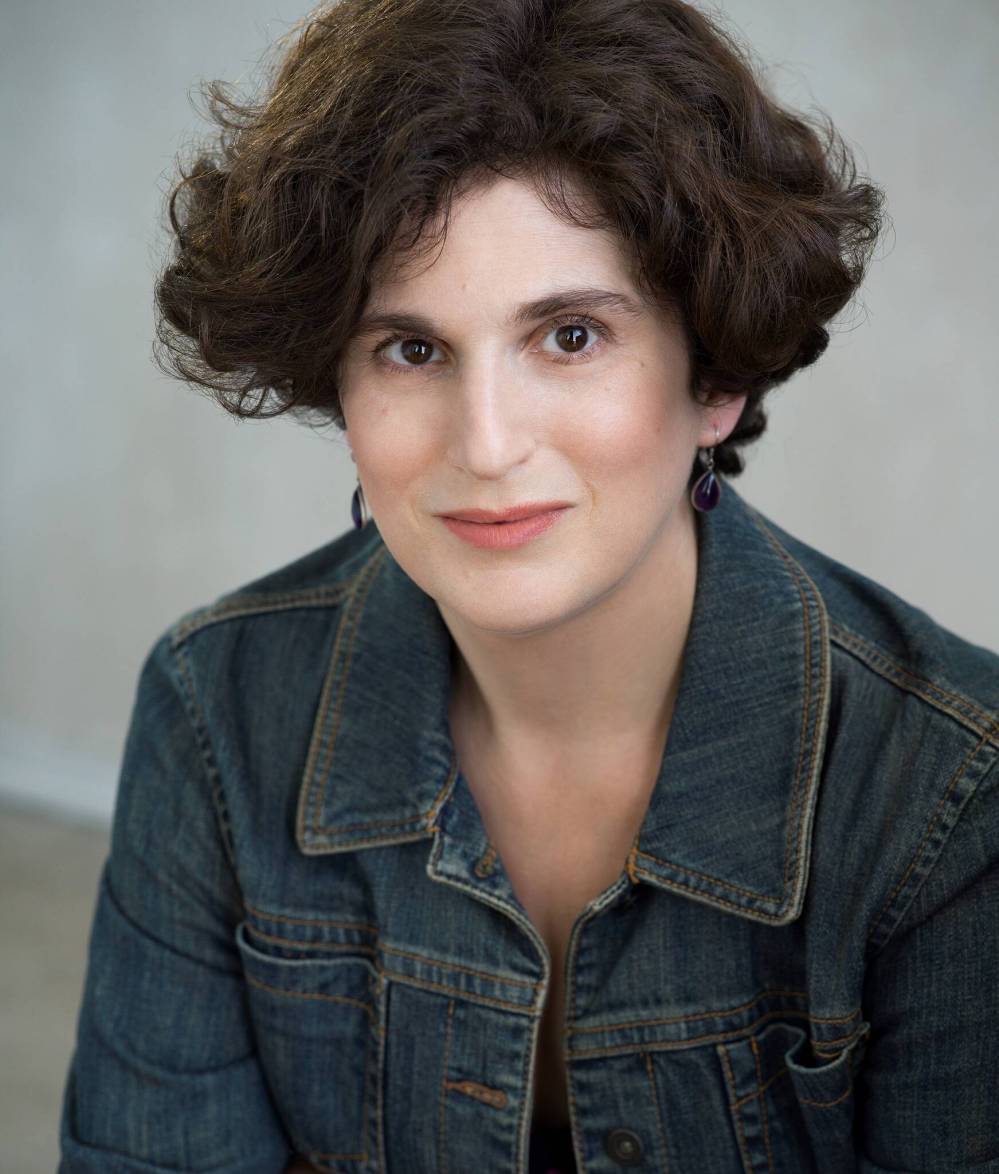
Nina Subin photo
                                Sarah Weinman’s book serves as a not-so-subtle reminder that the fight for equality is not over yet.

Nina Subin photo

Sarah Weinman’s book serves as a not-so-subtle reminder that the fight for equality is not over yet.

Without Consent is not an easy read. Yet its narrative sheds light on the not-too-distant past and helps create understanding about the predominant culture that once kept many women of previous generations paralyzed by a violent patriarchy.

The book also serves as a not-so-subtle reminder that the fight for equality is not over yet. In that way, Without Consent becomes an urgent read for anyone committed to continual progress.

Rochelle Squires is an avid reader and advocate for the elimination of intimate partner violence.


Report Error Submit a Tip

More Stories

Desperate Poilievre wants Canadians to believe the sky is falling when it’s just cloudy outside

Tom Brodbeck 5 minute read Preview

Desperate Poilievre wants Canadians to believe the sky is falling when it’s just cloudy outside

Tom Brodbeck 5 minute read Friday, Sep. 18, 2026

Pierre Poilievre has a problem.

Canadians just don’t seem to be paying much attention to him anymore.

So, naturally, the Conservative Opposition leader has decided to turn up the volume.

At a recent party caucus retreat in Penticton, B.C., Poilievre delivered the familiar message: Canada is in trouble, Canadians are hurting and the Liberal government is making everything worse.

Read
Friday, Sep. 18, 2026

Near-future U.S. the setting for surreal dual-world storyline

Reviewed by Morley Walker 4 minute read Preview

Near-future U.S. the setting for surreal dual-world storyline

Reviewed by Morley Walker 4 minute read Yesterday at 2:01 AM CDT

It’s not every day you encounter a seriously intended literary novel that attempts to dramatize a mind-bending physics theory like quantum entanglement.

But then the B.C.-born-and-raised Emily St. John Mandel is not your everyday Canadian literary writer.

In her late 40s, she has lived in the U.S. for her entire writing career. She is best known for her 2014 dystopian novel Station Eleven, about a Shakespearean acting troupe navigating a pandemic-ravaged America.

Her new outing, her seventh, Exit Party, shares DNA with detective and sci-fi genres more than with conventional literary fiction.

Read
Yesterday at 2:01 AM CDT

Cabernet Sauvignon star of wine festival

Ben Sigurdson 5 minute read Preview

Cabernet Sauvignon star of wine festival

Ben Sigurdson 5 minute read Yesterday at 3:00 AM CDT

The Winnipeg Wine Festival will celebrate the king of red wine grapes next weekend — the theme of this year’s festival, which takes place Sept. 25 and 26 at the RBC Convention Centre, is Cabernet Sauvignon.

Cab Sauv, as it’s also known, is the world’s most widely planted wine grape of any colour, first coming to prominence in the 1800s in France’s Bordeaux region, where the grape is still popular. Rather than single-variety wines, Bordeaux reds tend to be blends, with those coming from the left bank of the Gironde estuary being Cabernet-dominant, while right-bank wines are Merlot-dominant, with Cabernet Sauvignon playing a supporting role. Cabernet and Merlot work well together and many other countries have followed suit in blending the two.

A team at University of California Davis put Cabernet Sauvignon through a DNA test in 1996 and discovered its parent grapes are Cabernet Franc and Sauvignon Blanc — it’s likely that at some point the two varieties, planted next to each other in some vineyard, crossed and mutated and became the grape we know today. (Someone growing grapes in the 19th century must have had an inkling of what was up, as the grape has been called Cabernet Sauvignon since long before the DNA test.)

Flavour-wise, most Cabernet Sauvignon wines are big and bold, with a core of deep dark berry flavours, some graphite and spice notes and relatively bright acidity. It’s a grape that is well-suited to barrel aging, with most examples seeing at least some time in wood.

Read
Yesterday at 3:00 AM CDT

A Winnipeg lawyer has been disbarred after admitting to six counts of professional misconduct and two counts of providing incompetent service involving eight clients.

The career-ending decision marks the sixth time Gisele Champagne has been disciplined by the Law Society of Manitoba since she was called to the bar in 1992.

“Disbarment is the appropriate remedy when a lawyer has demonstrated a repeated pattern of conduct that violates professional standards,” a law society panel said in a written decision released Wednesday.

“A lawyer who has been unable to learn from past discipline proceedings to fulfill his or her obligation to provide ethical and high-quality legal services must at some point lose the privilege of practising law.”

Canada must not accept another Iranian autocracy

David Matas 5 minute read Yesterday at 2:01 AM CDT

Iran is a state run by a radical government victimizing its citizens and its neighbours. How do we change that? Any regime change that repeats the mistakes of the past is not a solution.

What went wrong in the past which led to the current regime? One answer is the U.K. and American aided coup which led to the ouster in 1953 of a democratically elected government headed at the time by Mohammad Mossadegh and its replacement with an American friendly autocrat, the Shah of Iran, Mohammad Reza Pahlavi.

The Shah imposed his rule through the Iranian National Intelligence and Security Organization — SAVAK, the acronym of its Persian name. SAVAK systematically inflicted torture, arbitrary killings and extra-judicial killings on perceived opponents of the regime. It was only a matter of time before repression of a regime directed to serving foreign interests would be overthrown.

What replaced the regime of the Shah, in 1979, the current regime of the mullahs, is a regime as intolerant and violent as the regime of the Shah and then some. That was not inevitable. But neither was it surprising. The vicious nature of the current regime, following the example set by the Shah, and its hatred for the United States, reacting to the U.S. aided imposition of the Shah, both echoes and reacts to the past. In 1979, the U.S. reaped what it sowed in 1953.

Puzzles Palace

1 minute read Monday, Jul. 27, 2026

To solve our puzzles, please subscribe with this special offer: |