

Province freezes maximum price for litre of milk in 2026

Advertisement
Read this article for free:
or
Already have an account? Log in here »
To continue reading, please subscribe:
Digital Subscription
One year of digital access for only $1.44 a week*
- Enjoy unlimited reading on winnipegfreepress.com
- Read the E-Edition, our digital replica newspaper
- Access News Break, our award-winning app
- Play interactive puzzles
*Billed as $5.77 plus GST every four weeks. After 52 weeks, price increases to the regular rate of $19.95 plus GST every four weeks. Offer available to new and qualified returning subscribers only. Cancel any time.
To continue reading, please subscribe:
Add Free Press access to your Brandon Sun subscription for only an additional
$1 for the first 4 weeks*
- Enjoy unlimited reading on winnipegfreepress.com
- Read the E-Edition, our digital replica newspaper
- Access News Break, our award-winning app
- Play interactive puzzles
*Your next Brandon Sun subscription payment will increase by $1.00 and you will be charged $17.95 plus GST for four weeks. After four weeks, your payment will increase to $24.95 plus GST every four weeks.
Read unlimited articles for free today:
or
Already have an account? Log in here »
Hey there, time traveller!
This article was published 14/01/2026 (276 days ago), so information in it may no longer be current.
The maximum retail price of a litre of milk in Manitoba won’t be increasing this year.
The province’s Farm Products Marketing Council, which regulates milk prices, is imposing a freeze in 2026, a government press release said Wednesday.
One litre containers of homogenized milk will remain at a maximum price of $2.10, two per cent at $2.03, one per cent at $1.97 and skim at $1.93.
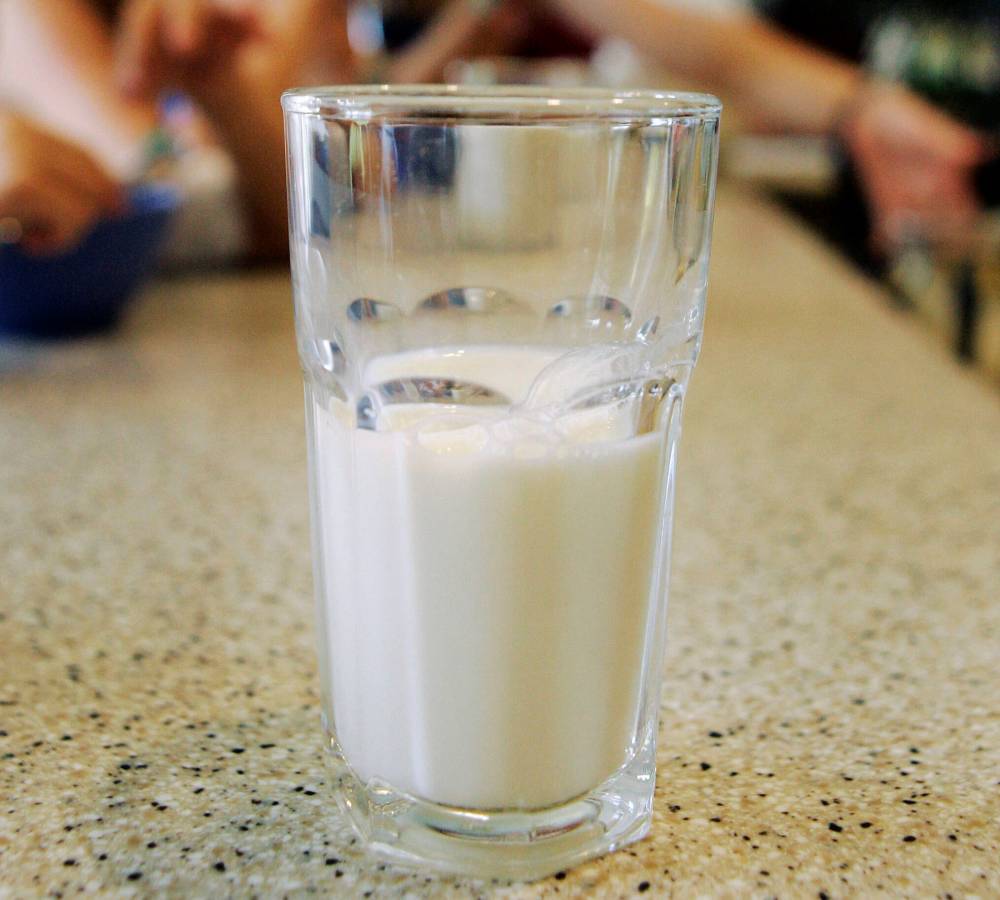
Rob Carr / The Associated Press Files
Manitoba’s Farm Products Marketing Council, which regulates milk prices in the province, is imposing a freeze on the retail price of a litre of milk in 2026.
Prices for larger two- and four-litre containers are not regulated.
“The cost of living is on everyone’s mind, and we’re looking for real ways to help families make ends meet,” Premier Wab Kinew said in a prepared statement late Wednesday.
“Milk is a basic grocery item, and it’s one area where the province has some control. So we acted,” the statement said.
The Kinew government worked with dairy producers and the Farm Products Marketing Council to make sure a planned four-cent-per-litre increase in February won’t be passed on to shoppers, the statement said.
“Dairy producers will still receive the increase they need, but the price of milk at the grocery store will stay the same. It’s a small but meaningful step to help people with the rising cost of living, and we’ll keep looking for more ways to put money back in people’s pockets,” Kinew is quoted as saying.
The Retail Council of Canada said it welcomes collaboration with the provincial government on strategies to support consumers, recognizing that the “sector’s low margins limit the ability to subsidize products without impact.”
“Manitoba grocery retailers acknowledge the combined global and local pressures driving food costs and continue to take extraordinary measures within their control to mitigate impacts on affordability,” John Graham, the council’s director of government relations for the Prairies, said in a statement.
Dairy farmers do not determine the retail or wholesale price. Milk passes through a supply chain where costs and value are added at various steps. The price farmers are paid is determined by the Canadian Dairy Commission, with further regulation by the Manitoba Farm Products Marketing Council.
Manitoba milk prices are determined by a “complex” supply management system, not the governing NDP, said Tory agriculture critic Konrad Narth.
“It’s a typical Kinew government smoke-and-mirrors announcement — taking credit for something that they actually have no control over,” the member for LaVerendrye said.
“Those prices are set as a result of a variety of different factors.”
A federal supply management board presents its prices to a provincially appointed supply management board in Manitoba that takes what’s presented and factors in Manitoba supply and demand before approving a price, Narth said.
In 2022, the regulated price increased by a total of 25 cents. In 2025, after reviewing updated cost data and market conditions, the council reduced the regulated price by one cent.
“This decrease demonstrates the council’s commitment to ongoing oversight and its mandate to ensure prices remain fair, transparent and responsive to changing economic pressures,” the government press release said.
“It wouldn’t have mattered who the premier was,” said Narth. “Those numbers go up and down because it’s supply managed with a quota,” he explained. The producers’ quota has increased by two per cent, allowing for increased milk production in the province, he said. “That has allowed the price to freeze right now to consumers. It has nothing to do with the Province of Manitoba.”
“It allows for the best price to be passed down to the consumer and the best price available to the producer to be profitable in production.”

Agriculture Minister Ron Kostyshyn said Manitoba’s dairy producers are the “backbone of our local food system.”
“They deliver high-quality, safe milk every day, support good jobs in rural communities, and uphold some of the strongest animal care and sustainability standards in the country,” he was quoted as saying in the government release.
The Dairy Farmers of Manitoba “are grateful for the trust Manitobans place in us to help feed their families,” a statement from chairperson Miriam Sweetnam said Wednesday.
They appreciate the provincial government’s “continued acknowledgement of our work and commitment to producing and maintaining a reliable supply of high-quality milk across the province.”
carol.sanders@freepress.mb.ca
Carol Sanders
Legislature reporter
Carol Sanders is a reporter at the Free Press legislature bureau. The former general assignment reporter and copy editor joined the paper in 1997. Read more about Carol.
Every piece of reporting Carol produces is reviewed by an editing team before it is posted online or published in print — part of the Free Press‘s tradition, since 1872, of producing reliable independent journalism. Read more about Free Press’s history and mandate, and learn how our newsroom operates.
Our newsroom depends on a growing audience of readers to power our journalism. If you are not a paid reader, please consider becoming a subscriber.
Our newsroom depends on its audience of readers to power our journalism. Thank you for your support.
Carol Sanders
Legislature reporter
Carol Sanders is a reporter at the Free Press legislature bureau. The former general assignment reporter and copy editor joined the paper in 1997. Read more about Carol.
Every piece of reporting Carol produces is reviewed by an editing team before it is posted online or published in print — part of the Free Press‘s tradition, since 1872, of producing reliable independent journalism. Read more about Free Press’s history and mandate, and learn how our newsroom operates.
Our newsroom depends on a growing audience of readers to power our journalism. If you are not a paid reader, please consider becoming a subscriber.
Our newsroom depends on its audience of readers to power our journalism. Thank you for your support.
Related Articles
Manitoba, Sask. residents believe everyday financial pressures will intensify in 2026
Advertisement Advertise With Us
Advertisement Advertise With Us
History
Updated on Wednesday, January 14, 2026 6:50 PM CST: Adds details