

No normal days at Siloam
Advertisement
Read this article for free:
or
Already have an account? Log in here »
To continue reading, please subscribe:

Digital Subscription
One year of digital access for only $205*
- Enjoy unlimited reading on winnipegfreepress.com
- Read the E-Edition, our digital replica newspaper
- Access News Break, our award-winning app
- Play interactive puzzles
*First annual payment billed as $205.00 + GST for one year. This annual subscription will automatically renew at $233.00 + GST every 52 weeks (10% off the regular annual price of $259.35). Offer available to new and qualified returning subscribers only. Cancel any time.
To continue reading, please subscribe:
Add Free Press access to your Brandon Sun subscription for only an additional
$1 for the first 4 weeks*
- Enjoy unlimited reading on winnipegfreepress.com
- Read the E-Edition, our digital replica newspaper
- Access News Break, our award-winning app
- Play interactive puzzles
*Your next Brandon Sun subscription payment will increase by $1.00 and you will be charged $17.95 plus GST for four weeks. After four weeks, your payment will increase to $24.95 plus GST every four weeks.
Read unlimited articles for free today:
or
Already have an account? Log in here »
Hey there, time traveller!
This article was published 20/01/2026 (195 days ago), so information in it may no longer be current.
When I find myself on the serving line at Siloam next to a new volunteer I often find them asking, “how does this compare to a regular/normal shift?” A reasonable question to ask when you are new to the world of feeding the homeless, but the truth is that Siloam Mission doesn’t really have “normal shifts.”
When the staff and volunteers at Siloam Mission need to hand out 500 plates in an hour, three times a day, 365 days a year, “normal shifts” are better known as “busy shifts.”
That’s 1,500 meals a day, or 547,500 meals a year, never mind the countless bag lunches, wrapped sandwiches, and cups of coffee that also need to be shared (cause homelessness and poverty don’t respect office hours, never mind statutory holidays).
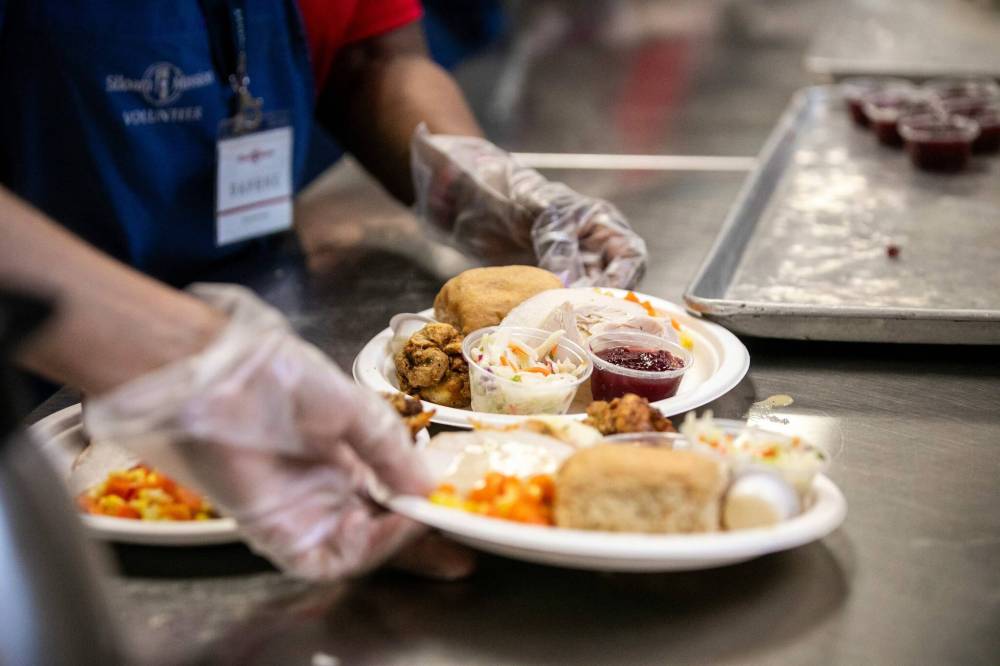
MIKAELA MACKENZIE / FREE PRESS
Siloam Mission — many meals served, and much more.
As a reader of the Free Press, you likely know a little bit about Siloam. Maybe you see the picture of a volunteer holding a special plate at one of our holiday meals (those are 750 plate services — I’m in charge of pouring the gravy using coffee carafes). Perhaps you spotted an article about our health centre, or our social enterprise commercial laundry. But it can often be difficult for people to wrap their heads around everything that happens at Siloam, or what the term “wraparound supports” really means.
Which is why I guess I’m writing this piece. When you’ve logged more than 2,000 hours volunteering at Siloam, you’ve seen a fair share of projects happening behind the scenes and had lots of discussions with new volunteers. These chats always tend to lead to a smile when people hear that we do more than just provide a bed and a plate for people, but also show a problem we have in the “homelessness industry.”
Put simply, we do a really bad job sharing what we are all doing in response to the scourge of poverty, drug addiction, and mental health challenges. Beyond Siloam Mission, countless organizations rely on dedicated staff and volunteers to try and turn back a tide of despair in parts of Winnipeg. Sometimes we have success stories to share like people we’ve gotten into affordable housing, helped re-enter the workforce, or gotten into a drug treatment program. Unfortunately, we aren’t always able to get to everyone in time.
In my time volunteering in the kitchen, I’ve seen this when handing out meals. On the good days I hear from the community member who proudly announces he has been sober for six months. On other days I see first-hand what severe frostbite looks like when community members don’t have a safe place to stay in the winter. Regardless of whether the community members are having good times or bad times, those 500 plates need to be handed out in the hour. I know the act of handing out a plate of food by itself cannot solve homelessness or end an addiction to drugs or alcohol. But us volunteers remind ourselves that each kind gesture can lead to another.

Ideally the community members we serve come to Siloam looking for one piece of help, only to then trust us enough to tell us of their other struggles. In time, one helping hand leads to another, until we’ve worked out a plan to take someone from homelessness to housing.
At this point you might be wondering where I stand on the issue of a supervised consumption site (SCS). After all, whether or not Winnipeg gets a SCS has taken up a fair bit of attention in the news cycle, and the proposed SCS would be located a block away from Siloam Mission. To start — my opinion is my own so I won’t claim to speak on behalf of others, let alone Siloam as a whole organization.
That being said, when Siloam’s staff have to respond to drug overdoses around 15 times a month on average, I think it is reasonable to say we already have consumption sites. The issue now is Winnipeg’s drug consumption sites could be in back alleys, on residential streets, or in the bathroom of an organization with staff trained to administer naloxone. Yes, Siloam staff have had to respond to drug overdoses in our bathrooms, but that is what happens when we don’t have enough drug treatment options for those who need them.
But that is part of why I keep volunteering, donating, and encouraging others to do the same. As an individual I know I cannot solve homelessness, or suddenly cure addictions. But giving people a small measure of hope can lead to them getting the help they need from others around me. I also recognize that some of us have greater means to help, whether financially or with our time, than others. So it is important for those of us with the means to help (myself included) to do more.
Thomas Rempel-Ong is a volunteer at Siloam Mission.
Related Articles
Homelessness a humanitarian crisis, Rattray says

Advertisement Advertise With Us
Advertisement Advertise With Us