

Winnipeg’s downtown safety partnership viewed as model for other cities

Advertisement
Read this article for free:
or
Already have an account? Log in here »
To continue reading, please subscribe:

Digital Subscription
One year of digital access for only $205*
- Enjoy unlimited reading on winnipegfreepress.com
- Read the E-Edition, our digital replica newspaper
- Access News Break, our award-winning app
- Play interactive puzzles
*First annual payment billed as $205.00 + GST for one year. This annual subscription will automatically renew at $233.00 + GST every 52 weeks (10% off the regular annual price of $259.35). Offer available to new and qualified returning subscribers only. Cancel any time.
To continue reading, please subscribe:
Add Free Press access to your Brandon Sun subscription for only an additional
$1 for the first 4 weeks*
- Enjoy unlimited reading on winnipegfreepress.com
- Read the E-Edition, our digital replica newspaper
- Access News Break, our award-winning app
- Play interactive puzzles
*Your next Brandon Sun subscription payment will increase by $1.00 and you will be charged $17.95 plus GST for four weeks. After four weeks, your payment will increase to $24.95 plus GST every four weeks.
Read unlimited articles for free today:
or
Already have an account? Log in here »
The success of Winnipeg’s Downtown Community Safety Partnership foot patrols has caught the attention of cities across Canada.
Representatives in Victoria, Edmonton, Toronto and Kenora, Ont., have met with DCSP leaders to learn how the foot patrol and resource system could be duplicated in their cities, which are also dealing with the scourge of homelessness and addictions.
Edmonton-based private-sector security expert Todd Benner invited DCSP executive director Greg Burnett to a summit last week to pitch the idea to non-profit organizations, representatives from the city, security companies and other players with a stake in Edmonton’s downtown.
“We wanted to bring everyone together to ask, ‘how do we work together to create a safer Edmonton?’” Benner told the Free Press.
MIKAELA MACKENZIE / FREE PRESS Downtown Community Safety Partnership executive director Greg Burnett in the group’s command centre which allows them to view live security footage from several downtown businesses and respond to situations faster.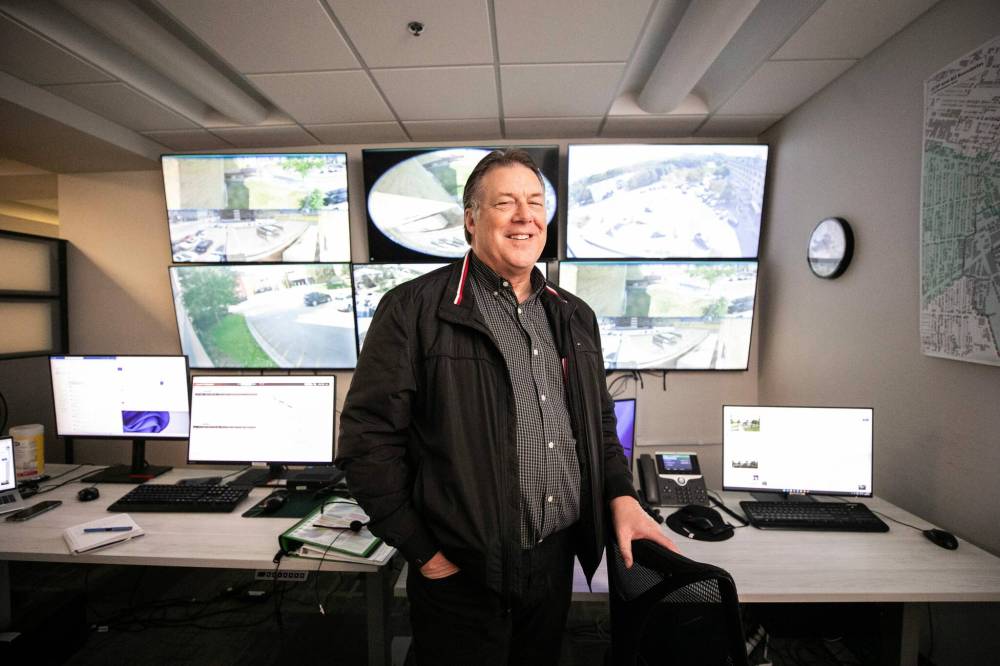
The fluctuating nature of the oil and gas industry has created a large transient population in Edmonton’s downtown. The city has a program that works with organizations and businesses to develop safety strategies, but Benner said it isn’t as effective as the Winnipeg model.
Winnipeg’s safety partnership was established in 2020 through funding from the province, city, Downtown Winnipeg BIZ, and True North Sports + Entertainment.
Foot and mobile patrols monitor the downtown core 24/7 and provide information about resources to the homeless and vulnerable people as well as visitors to downtown. They check in on businesses and walk with people to their workplace or vehicle if they feel unsafe.
“We wanted to bring everyone together to ask ‘how do we work together to create a safer Edmonton?’”
Benner said private-sector involvement is the key to Winnipeg’s success. The lack of co-operation between organizations has hindered getting a program such as the DCSP off the ground in Edmonton.
“We always assume that government is the one that starts it. What I’ve seen is it’s honestly the private sector. People have to come together and put that pressure on governments to do it,” he said. “Everyone shows interest, but everyone’s waiting for someone to pick up the torch.”
Benner said having foot patrols monitor the downtown would significantly improve the area, which has yet to recover from the pandemic.
“We have a lot of people still not back in the office which makes it feel less safe because there’s not enough eyeballs,” he said.
Anecdotally, Burnett said the patrols have had a net-positive effect on the use of Winnipeg’s emergency services because they present an alternative to calling fire and paramedic crews. The patrols have contributed to the feeling of a safer downtown, which has helped people return to the core post-pandemic, he said.
JOHN WOODS / FREE PRESS Burnett says the fact other cities are looking at the DCSP model is a reflection of the philosophy behind the organization.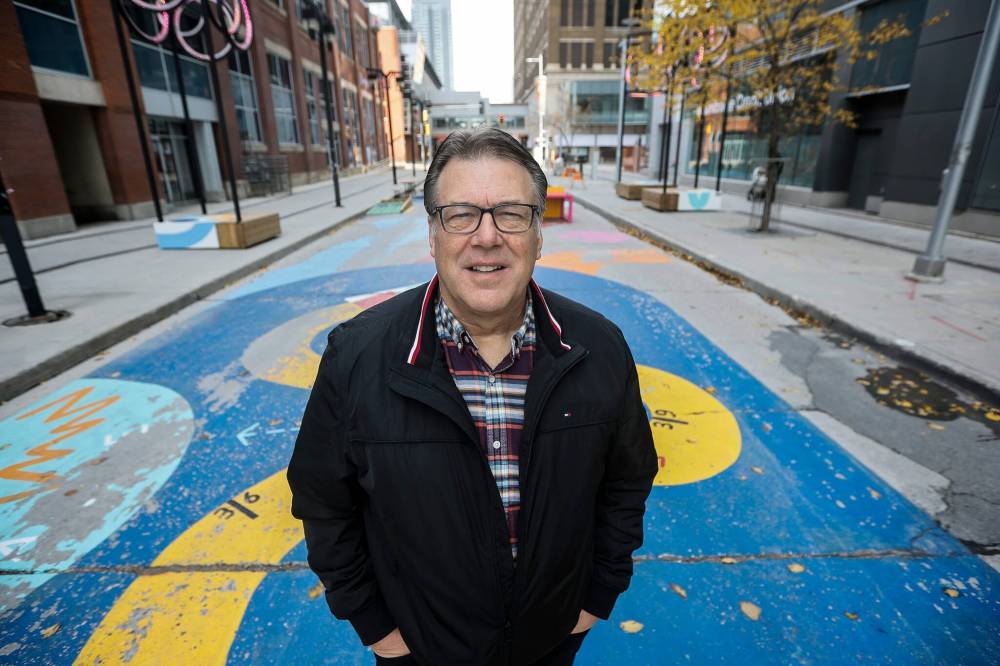
Micayla Hayes was in Winnipeg in January to do consulting work when she met Burnett. She was so impressed she went back to Victoria, where she is the chair of the Victoria and Esquimalt Police Board, and talked up the program.
“I was just so impressed by the model and thought about how it could be scaled up and replicated elsewhere,” she said Wednesday.
Victoria, too, is grappling with issues related to addictions and homelessness that came into focus during the COVID-19 pandemic.
“I was just so impressed by the model and thought about how it could be scaled up and replicated elsewhere.”
While no formal conversations about replicating the DCSP model to the B.C. city are underway, Hayes continues to meet with Burnett.
In 2025, the City of Victoria adopted a community safety and well-being plan. As part of the plan development, staff looked at emerging and best practices in cities across Canada, including Winnipeg, city spokesperson Colleen Mycroft said in an email.
Victoria’s model is similar to Winnipeg’s, but not identical, Mycroft said.
It includes a safe walk program, safety programs and business incentives, programs to help individuals navigate housing options, relocation transportation programs for youth under 30 and Indigenous adults, well-being checks during extreme weather and an on-demand crisis response program.
Hayes said she admires the DCSP model because it marries a policing operational deployment model with community engagement.
“There are so many wonderful not-for-profits that are working in communities all over the country to support vulnerable people, but they might not have that effective deployment model,” she said. “I think that’s what really sets (DCSP) apart,” she said.
Burnett said the fact other cities are looking at the DCSP model is a reflection of the philosophy behind the organization.
“It’s really a community-based program and allowing people to go out there and and use their skills in different ways,” he said. “If we have something that’s gonna help them and improve them, then it’s great. We’re just happy to help.”
nicole.buffie@freepress.mb.ca
Nicole Buffie
Multimedia producer
Nicole Buffie is a reporter for the Free Press city desk. Born and bred in Winnipeg, Nicole graduated from Red River College’s Creative Communications program in 2020 and worked as a reporter throughout Manitoba before joining the Free Press newsroom as a multimedia producer in 2023. Read more about Nicole.
Every piece of reporting Nicole produces is reviewed by an editing team before it is posted online or published in print — part of the Free Press‘s tradition, since 1872, of producing reliable independent journalism. Read more about Free Press’s history and mandate, and learn how our newsroom operates.
Our newsroom depends on a growing audience of readers to power our journalism. If you are not a paid reader, please consider becoming a subscriber.
Our newsroom depends on its audience of readers to power our journalism. Thank you for your support.
Nicole Buffie
Multimedia producer
Nicole Buffie is a reporter for the Free Press city desk. Born and bred in Winnipeg, Nicole graduated from Red River College’s Creative Communications program in 2020 and worked as a reporter throughout Manitoba before joining the Free Press newsroom as a multimedia producer in 2023. Read more about Nicole.
Every piece of reporting Nicole produces is reviewed by an editing team before it is posted online or published in print — part of the Free Press‘s tradition, since 1872, of producing reliable independent journalism. Read more about Free Press’s history and mandate, and learn how our newsroom operates.
Our newsroom depends on a growing audience of readers to power our journalism. If you are not a paid reader, please consider becoming a subscriber.
Our newsroom depends on its audience of readers to power our journalism. Thank you for your support.
Related Articles
City installs remote door locks, buzzers at Sherbrook Pool in response to staff safety concerns





Advertisement Advertise With Us
Advertisement Advertise With Us