Ferragamo expands leather mapping efforts as EU sustainability rules take shape

Advertisement

Advertise with us

MILAN (AP) — Italian luxury brand Ferragamo said it can map the country of origin for much of the leather used to make its coveted footwear and handbags, a first step in traceability according to experts.

Read this article for free:

or

Already have an account? Log in here »

To continue reading, please subscribe:

Digital Subscription

One year of digital access for only $1.44 a week*

  • Enjoy unlimited reading on winnipegfreepress.com
  • Read the E-Edition, our digital replica newspaper
  • Access News Break, our award-winning app
  • Play interactive puzzles

*Billed as $5.77 plus GST every four weeks. After 52 weeks, price increases to the regular rate of $19.95 plus GST every four weeks. Offer available to new and qualified returning subscribers only. Cancel any time.

To continue reading, please subscribe:

Add Free Press access to your Brandon Sun subscription for only an additional

$1 for the first 4 weeks*

  • Enjoy unlimited reading on winnipegfreepress.com
  • Read the E-Edition, our digital replica newspaper
  • Access News Break, our award-winning app
  • Play interactive puzzles
Start now

*Your next Brandon Sun subscription payment will increase by $1.00 and you will be charged $17.95 plus GST for four weeks. After four weeks, your payment will increase to $24.95 plus GST every four weeks.

MILAN (AP) — Italian luxury brand Ferragamo said it can map the country of origin for much of the leather used to make its coveted footwear and handbags, a first step in traceability according to experts.

The announcement comes during a wave of European Union sustainability rules that are increasing pressure on fashion brands to account for materials in their supply chains.

The family-run and publicly traded fashion house has been issuing sustainability reports for over a decade, but the 2025 report released March 31 is the first that contains figures on material traceability — notably for leather, which experts say is harder to trace than textile fibers such as cotton.
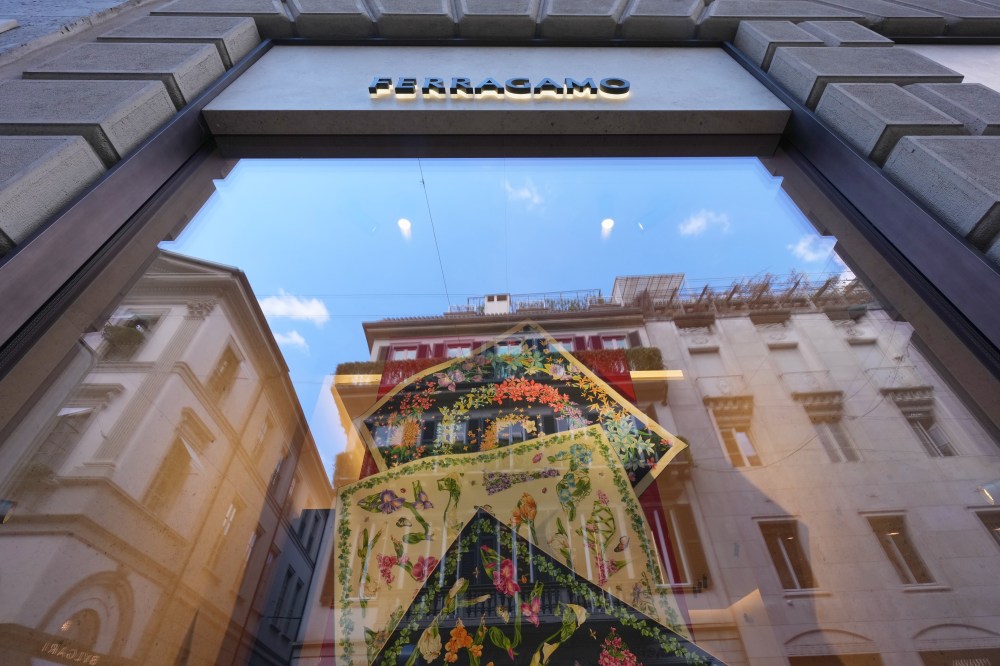
A Salvatore Ferragamo story is seen in downtown Milan, Italy, Wednesday, April 22, 2026. (AP Photo/Antonio Calanni)

“We have been using leather in a more sustainable way,’’ James Ferragamo, the brand’s chief product officer and grandson of founder Salvatore Ferragamo, told The Associated Press in an interview last week. “I think it is one of the more sustainable materials in my point of view.”

Most of the tanneries working with the brand “control their water, have fair treatment of the workforce, monitor their supply chain ensuring that they’re buying leather from those who are not deforesting, and taking the right approach also in terms of breeding and animal welfare,” he said.

Traceability in fashion sustainability

Traceability of materials is considered a first and necessary step for the fashion industry, which is facing a new EU framework that will require brands and their suppliers to ensure the items they produce are sustainable from the drawing board to end-of-life disposal. Precise terms are still being defined and compliance will be phased in over the coming years.

“Traceability is an essential factor, but it’s not sufficient,’’ said Francesca Romana Rinaldi, a sustainability expert and director of the Monitor for Circular Fashion at SDA Bocconi School of Management. “It enables the implementation of sustainability and circularity.”

She said that any company that is not tracing their materials “doesn’t know their supply chain” and “could be also criticized for greenwashing.”

EU regulations and directives are moving toward full circularity of materials to include measures extending the life cycle of garments, accessories and footwear through repairs and end-of-life management, including recycling and upcycling, she said.

The EU is also phasing in restrictions on destroying unsold apparel, accessories and footwear produced by companies with more than 250 employees and more than 40 million euros ($46.8 million) in annual revenues.

From breeding to assembly

The family-run fashion house was founded in 1927 by Salvatore Ferragamo in Florence, after his return from Hollywood, where he had established himself as shoemaker to the stars with clients including Marilyn Monroe and Judy Garland. Material scarcity during World War II pushed Ferragamo to experiment with alternatives, substituting wicker for leather and using cork for soles, the younger Ferragamo said.

In keeping with its origins, Ferragamo remains primarily a footwear and leather goods maker. Together, they comprised 86% of 2025 sales of 976.5 million euros ($1.1 billion).

Ferragamo launched its initiative on leather traceability with the calf leather used for its Fiamma bag, tracing it from breeding to assembly, the group announced in its 2024 annual report.

In 2025, Ferragamo enlisted tanneries supplying 80% of the hides it buys in a project to identify the country of origin of raw materials through supplier declarations. When including textiles such as cotton, silk and nylon, the company says 81% of its materials are certified under third-party sustainability standards.

“Today there is not one single solution, one single technological solution to trace the leather to the birth farm of the cows,’’ said Davide Triacca, Ferragamo’s sustainability director. “We got to that result through a very dedicated and consistent approach and today we are able to trace more than 80% of the entire leather that we supply and the vast majority of which comes from Europe.”

The EU does not require leather to be traceable. Sustainability experts underscore that approaches based on country-level mapping and supplier declarations do not establish a full chain of custody and instead reflect an early stage of traceability.

Ferragamo previously included a capsule collection with silky textiles made from orange fibers in 2017, one of its first research investments. More recently it used nylon from castor oil instead of fossil oil for a men’s tote bag, and its Back to Earth collection featured the brand’s trademark Hug handbag treated with vegetable dyes.

“Research keeps on going. It’s something that we’re doing all the time,” Ferragamo said. “We’re trying to find different ways of creating different materials. And sometimes the materials that we produce are not ready for market. But it doesn’t mean that we don’t experiment.”


Report Error Submit a Tip

More Stories

Police crackdown on Main a pointless, ineffective bit of street theatre

Dan Lett 5 minute read Preview

Police crackdown on Main a pointless, ineffective bit of street theatre

Dan Lett 5 minute read Thursday, Jul. 2, 2026

Winnipeg has just taken an enormous step backward in the ongoing challenge to address the growing homeless, mental-health and addiction crises.

In a campaign that began June 24 and 25, the Winnipeg Police Service deployed significant numbers of officers to some of the roughest spots along Main Street, confronting anyone who appeared to be engaged in open drug use.

The WPS said that over the first two days, it “interacted” with more than 100 people, making 25 arrests — two for drug offences and 23 related to active warrants or breaches of court orders — and taking another 20 to hospital emergency rooms.

Three individuals were taken to the province’s controversial 72-hour detox centre, but they weren’t admitted.

Read
Thursday, Jul. 2, 2026

The View from Here: Linus Woods. After the Nest Ice Age in Long Plain Re, 2017

The View From Here 2 minute read Preview

The View from Here: Linus Woods. After the Nest Ice Age in Long Plain Re, 2017

The View From Here 2 minute read 2:00 AM CDT

Staycation: The Art of Being Here features more than 100 Manitoba-related artworks from the Winnipeg Art Gallery-Qaumajuq collection, spanning the past 50 years. These pieces reveal how the places around us are layered with memory, story and lived experience. Over the coming weeks, the Free Press will spotlight works from this eclectic exhibition, each one offering a new way of seeing home. Experience it in person and enjoy some staycation time at the gallery, on view until December.

Linus Woods. After the Next Ice Age in Long Plain Res, 2017.

Acrylic, mixed media on canvas. Collection of the Winnipeg Art Gallery; Acquired with funds from the Winnipeg Art Gallery Foundation Kathleen M. Richardson Fund, 2018-12. Photo: Scott Benesiinaabandan.

After the Next Ice Age In Long Plain Res was commissioned for the 2017/18 WAG exhibition, INSURGENCE/RESURGENCE. Woods is a Dakota/Ojibway artist from Long Plain First Nation. This large painting takes a humorous look towards the future and hope for cultural resurgence, as elders surf down the waves of change.

Read
2:00 AM CDT

New guy’s gauche gift gaff not a great sign

Maureen Scurfield 3 minute read Yesterday at 2:00 AM CDT

DEAR MISS LONELYHEARTS: My new boyfriend gave me a glittery peacock scarf I just love. But when I wore it out, it was recognized by a friend of mine who has known my guy for a long time. She said his former girlfriend used to wear the same scarf, and everybody noticed it.

His ex obviously gave it back to him. I really don’t want this scarf now. What does it say about my new boyfriend that he would give me a gift that his ex had returned to him and not even tell me where it came from?

— Don’t Want Old Scarf, East Kildonan

Dear Don’t Want: Your new guy is no good at romantic politics. He should have retired that showy scarf gift when it was thrown back at him. So, give it back to him, and suggest what he should do with it — politely.

Forever 21, Bluenotes exit CF Polo Park; Thrifty’s steps in

Aaron Epp 4 minute read Preview

Forever 21, Bluenotes exit CF Polo Park; Thrifty’s steps in

Aaron Epp 4 minute read Thursday, Jul. 2, 2026

Toronto-based retail conglomerate YM Inc. is closing its Forever 21 and Bluenotes stores in CF Polo Park to make way for Thriftys.

Read
Thursday, Jul. 2, 2026

250 years ago Thomas Jefferson and the American Declaration of Independence

Allan Levine 5 minute read Preview

250 years ago Thomas Jefferson and the American Declaration of Independence

Allan Levine 5 minute read 2:02 AM CDT

In the 16th and 17th centuries, countries and territories such as the Netherlands and Portugal boldly declared their independence from Spain. But 250 years ago, on July 4, 1776, the American Declaration of Independence — marked in the U.S. by the semiquincentennial celebrations — was the first time an overseas colony (the 13 colonies, in this case) had set out in an official document its reasons for breaking away from its mother country.

Because the Declaration ultimately gave birth to the United States, it is considered one of the greatest of historical treatises. Thomas Jefferson, its primary author, later explained that his main aim was “not to find out new principles, or new arguments, never before thought of … but to place before mankind the common sense of the subject; in terms so plain and firm as to command their assent.”

He did so brilliantly, creating, in theory at least, an enlightened argument for American independence based on the political, economic, social and philosophical thinking of the era.

Influenced by such philosophers as John Locke and Montesquieu, Jefferson, then 33 years old, a lawyer, landowner, Virginia politician and a delegate to the Second Continental Congress which met in Philadelphia, passionately believed in natural law — that all human beings were born free and equal and that no king or ruler could abolish these rights. It was a key point he made in the Declaration’s well-known preamble.

Read
2:02 AM CDT

Stony Mountain inmate sentenced to more than eight years for $1.2-M drone-delivered drug stash in cell

Erik Pindera 4 minute read Preview

Stony Mountain inmate sentenced to more than eight years for $1.2-M drone-delivered drug stash in cell

Erik Pindera 4 minute read Thursday, Jul. 2, 2026

A Stony Mountain Institution inmate who was caught with a cache of illicit drugs worth more than $1.2 million behind prison walls played a high-level role in a “sophisticated operation” that used a drone to smuggle contraband directly to his cell window, a judge has ruled.

Read
Thursday, Jul. 2, 2026