
The thousand-yard stares of Winnipeg’s drug crisis Exhausted outreach workers add ‘paramedic’ to their list of duties as ODs spike
Read this article for free:
or
Already have an account? Log in here »
To continue reading, please subscribe:
Digital Subscription
One year of digital access for only $1.44 a week*
- Enjoy unlimited reading on winnipegfreepress.com
- Read the E-Edition, our digital replica newspaper
- Access News Break, our award-winning app
- Play interactive puzzles
*Billed as $5.77 plus GST every four weeks. After 52 weeks, price increases to the regular rate of $19.95 plus GST every four weeks. Offer available to new and qualified returning subscribers only. Cancel any time.
To continue reading, please subscribe:
Add Free Press access to your Brandon Sun subscription for only an additional
$1 for the first 4 weeks*
- Enjoy unlimited reading on winnipegfreepress.com
- Read the E-Edition, our digital replica newspaper
- Access News Break, our award-winning app
- Play interactive puzzles
*Your next Brandon Sun subscription payment will increase by $1.00 and you will be charged $17.95 plus GST for four weeks. After four weeks, your payment will increase to $24.95 plus GST every four weeks.
Read unlimited articles for free today:
or
Already have an account? Log in here »
The overdoses never seem to stop. Neither does the toll on the people responding to them.
On Winnipeg’s front lines of the drug toxicity crisis, outreach workers are grappling with burnout, violence and a growing sense of despair as the emergency reaches devastating new heights.
For one Winnipeg outreach worker, it’s the “thousand-yard stares” etched across the faces of exhausted colleagues that reveal how deeply the crisis has taken hold.
The worker, who the Free Press is not naming, said staffers on a recent morning outreach walk came across four separate overdoses requiring intervention.
“It’s dire straits out here.”
“Our people that go out on the walks are coming back traumatized, with that thousand-yard stare, saying, ‘What do I do? How do I help? How do I prevent this?’” the worker said outside a mobile overdose prevention site earlier this week. “It’s dire straits out here.”
Standing nearby with an overdose-reversing naloxone kit within arm’s reach, he kept a watchful eye on a woman lying motionless near the edge of an inner-city parking lot.
“I’m making sure she’s moving,” he said. “It’s scary because she could be (overdosing). It’s a common thing. And the idea that I have to carry (the naloxone) and possibly use it is to the point now where it’s going from possibly to probably.”
A recent weeklong surge in overdoses forced them to scale back services, as a growing number of people sought help and overwhelmed its already limited staff.
The North End Women’s Centre shut down its drop-in program on April 29 after the spike overwhelmed its three front-line workers, forcing a temporary pause to give staff a break.
MIKAELA MACKENZIE / FREE PRESS FILES North End Women’s Centre Executive director Cynthia Drebot 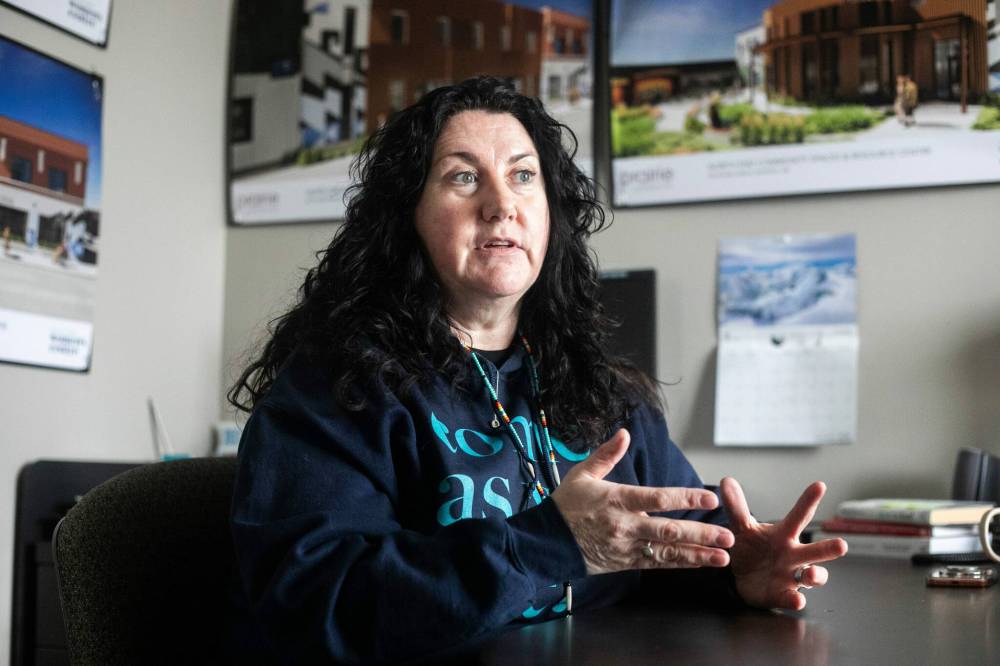
Executive director Cynthia Drebot said staff responded to 11 overdoses over the stretch in late April, administering 31 doses of naloxone.
Another 49 people required monitoring as they drifted in and out of consciousness at the drop-in or on the centre’s Selkirk Avenue property. During the same period, nearly 800 people came through the doors seeking support.
“We just couldn’t sustain it,” Drebot said Wednesday, recalling how staff were even called to a nearby Robins Donuts to help with an overdose inside the shop.
Back at the mobile overdose prevention site, the sense of relief on the outreach worker’s face was palpable as the woman he had been monitoring got back to her feet.
He said outreach workers are having to keep people alive, recalling a recent overdose that required eight doses of naloxone to reverse.
“(They) could have been gone a couple of weeks ago,” he said of the person who overdosed. “It’s the relationships. Even though these people are unhoused, or marginalized by their addiction or whatever it is, they’re still humans.”
“Even though these people are unhoused, or marginalized by their addiction or whatever it is, they’re still humans.”
Drugs like “down,” a mixture of opioids, including fentanyl, carfentanil, and often heroin, have been “stepped on,” or laced, with medetomidine, a veterinary tranquillizer, linked to rising overdose deaths due to its sedative effects and impact on heart rate and breathing.
Naloxone can help reverse the opioid effects, but medetomidine is not an opioid, leading to the need for emergency intervention.
“That’s the tricky part,” he said. “We don’t know what we have to treat. And we can carry all of the naloxone we want, but it’s not (always) going to work.”
Winnipeg’s escalating drug toxicity crisis is increasingly falling on front-line workers — many of whom, advocates say, “never signed up for the work they’re having to do right now.”
Jonny Mexico said calls to declare a public health emergency and open a supervised drug consumption site would help, but argues broader policy reform is needed.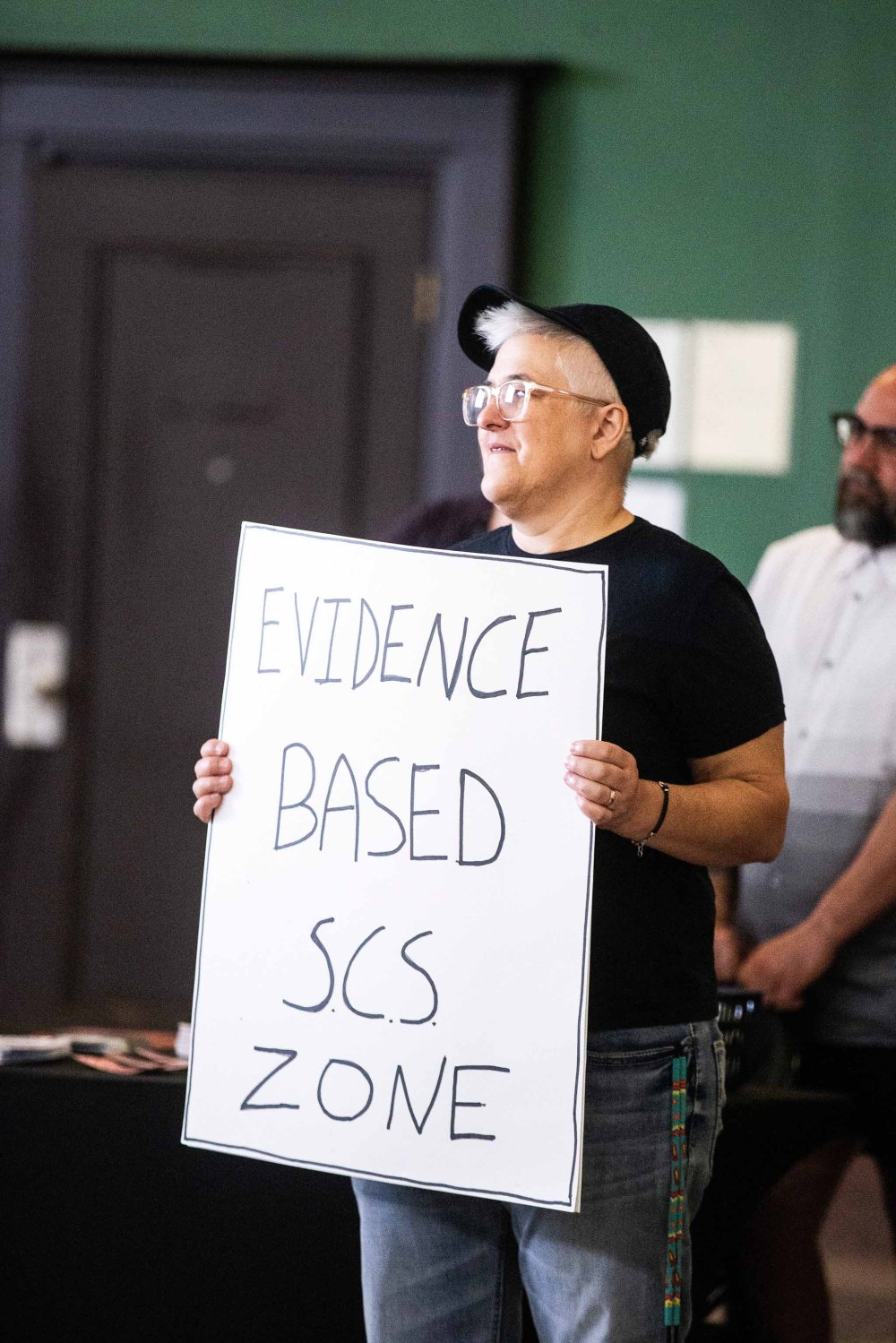
Jonny Mexico, the Manitoba Harm Reduction Network Winnipeg coordinator, said drop-in staff, shelter workers and outreach teams are effectively acting as paramedics on the street.
“They’re supporting folks who are in drug overdose, experiencing overdose crises, monitoring for danger,” Mexico said Monday. “It’s absolutely wild. There are a lot of things that need to change, because what’s happening right now is unsustainable.”
Mexico warned that without change, workers risk developing post-traumatic stress disorder and leaving the field altogether.
Drebot, who has been with the centre for more than 12 years, said she’s already seeing the strain.
“Before (the COVID-19 pandemic), we had about 50 to 75 people coming through the door each day,” she said. “Now, we’re upwards of 120 a day. And then the complexity of need is so much higher than it’s ever been.”
Mexico believes the crisis should be met with the same urgency and scale as the response to COVID-19, and can’t be solved by a magic bullet. They point to the pandemic as a model — not just for public health measures, but for the “all-hands-on-deck” effort to develop treatments and reduce stigma so people felt safe seeking help.
“Where having COVID wasn’t looked at as leading a shitty lifestyle and where we weren’t throwing people that had COVID in jail,” he said, referring to the stigmas surrounding drug users and the province’s 72-hour detox facility.
Drug outreach workers on the front lines in Winnipeg are facing burnout, violence and hopelessness as the toxicity crisis reaches new heights. 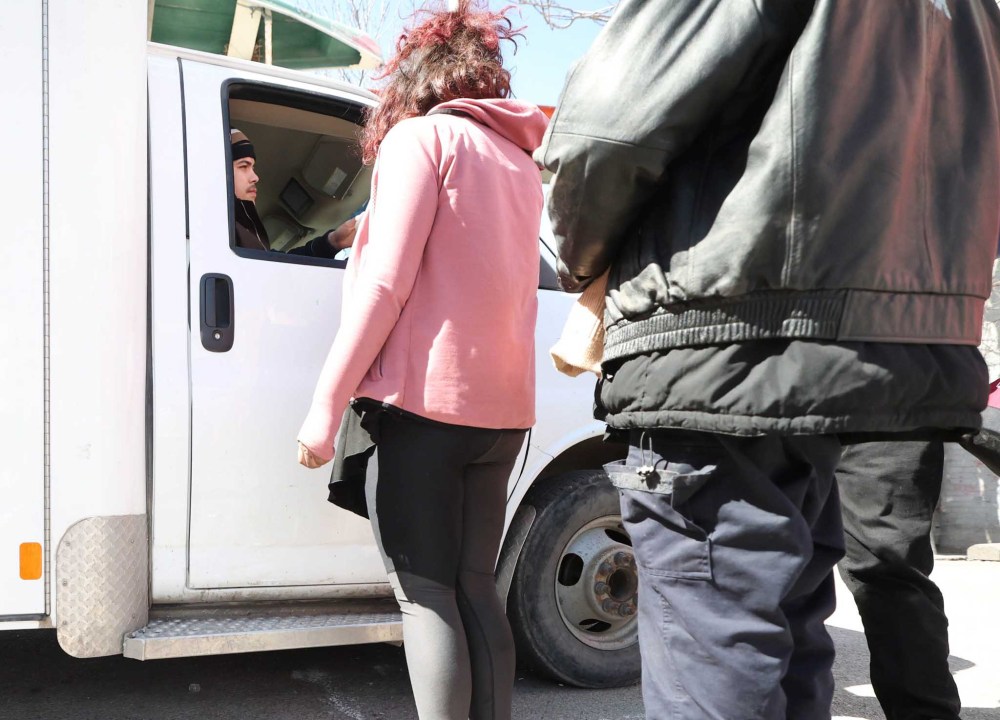
Mexico said calls to declare a public health emergency and open a supervised drug consumption site would help, but argues broader policy reform is needed.
“A safe consumption site is not going to be the only answer, but it’s something that would certainly help,” they said. “Housing is a big thing. Poverty is a massive thing.”
Mexico spoke to the strain on drop-in staff trying to keep people alive, echoing Main Street Project executive director Jamil Mahmood’s comment that 30 deaths a month would trigger a public health emergency anywhere else.
Main Street Project is one of several city outreach organizations calling on provincial and federal authorities to step in.
“Each death is a devastating and preventable tragedy that demands immediate and decisive action.”
Last week, Winnipeg Centre MP Leah Gazan wrote the federal health minister, pleading to have the city’s drug crisis treated as a national emergency after having claimed nearly a dozen lives in recent weeks.
“This comes with a profound sense of urgency regarding the escalating loss of life in our community,” the letter said. “Each death is a devastating and preventable tragedy that demands immediate and decisive action.”
Resource Assistance for Youth executive director Kate Sjoberg launched a petition last Friday, urging the federal government to boost addiction funding, restore cuts, expand Indigenous-led harm reduction and strengthen front-line supports.
“Part of the point we’ve been making is there’s a choice being made on who’s valued,” Sjoberg said. “Ultimately, what we’re trying to do is to flow resources to the places that need them both, whether it’s through a public health emergency or otherwise. But would we call for a public health emergency if the resources were being provided for?”
The petition has reached the 500-signature threshold required for Gazan to bring it to the floor of the House of Commons.

A Health Canada spokesperson acknowledged the “unrelenting and tragic toxic illegal drug and overdose crisis” in an email and said it’s responding to the crisis with a “whole-of-government approach.”
The province has said it is monitoring the situation.
Declaring a public health emergency, usually reserved for communicable diseases such as COVID, would have to be done by the province’s chief public health officer, Dr. Brent Roussin.
The province declined to make Roussin available for an interview this week. At a Thursday news conference declaring an HIV public health emergency, he said declaring a similar emergency for drug toxicity would not advance work already underway, adding, “it is not where we’re likely to go.”
Meanwhile, after several days spent developing a safety plan, the North End Women’s Centre is reopening its drop-in program on Wednesdays with support from the Red Response Team, an Indigenous-led, survivor-centred outreach team that will monitor for overdoses both onsite and in the surrounding community through the end of August.
Drebot said the centre has also introduced additional staff training days, dedicated debriefing time and longer breaks.
“We’re going to try it, and if it changes, then we’ll have to pull back again,” she said. “I’m not going to let my drop-in team burn out and quit.”
scott.billeck@freepress.mb.ca
Meth pipes in high demand
Having enough harm reduction supplies has been a struggle for at least one city health facility.
Nine Circles Community Health Centre, one of Winnipeg’s largest providers of harm reduction supplies, alongside Street Connections and Main Street Project, is running out of bubble pipes — commonly known as meth pipes — almost daily.
Executive director Kim Bailey said a shift in recent years from injection to inhalation has driven demand. The pipes are also used to smoke fentanyl and medetomidine, a veterinary tranquilizer linked to rising overdose deaths due to its sedative effects and impact on heart rate and breathing.
“These pipes are in extremely high demand,” Bailey said, noting that they get 2,000 pipes per month that they ration out daily. “Depending on the day, we run out by noon. Some days, we can get through the whole day. It depends.”
A shift in recent years from injection to inhalation has increased demand for bubble pipes.
When supplies run out, clients are referred to other organizations, including Resource Assistance for Youth Inc., particularly in the West End and West Broadway areas.
Bailey said she supports the call for a public health emergency when it comes to Winnipeg’s drug toxicity crisis, but doesn’t believe there is the political will to follow through on it, leaving outreaches — and in particular their workers — to fend for themselves.
“It does put an incredible burden on community organizations to respond to a crisis not of their own making,” she said. “It’s just wave after wave after wave. It is just starting to really wear people out, and we’re losing our friends and family and community and relatives.
“It has an enormous burden on the people who are experiencing the toxic drug supply, and those of us who support them. It’s incredible, actually. And it’s inhumane.”
— Scott Billeck

Scott Billeck is a general assignment reporter for the Free Press. A Creative Communications graduate from Red River College, Scott has more than a decade’s worth of experience covering hockey, football and global pandemics. He joined the Free Press in 2024. Read more about Scott.
Every piece of reporting Scott produces is reviewed by an editing team before it is posted online or published in print — part of the Free Press‘s tradition, since 1872, of producing reliable independent journalism. Read more about Free Press’s history and mandate, and learn how our newsroom operates.
Our newsroom depends on a growing audience of readers to power our journalism. If you are not a paid reader, please consider becoming a subscriber.
Our newsroom depends on its audience of readers to power our journalism. Thank you for your support.
Related Articles
Tories ask Ottawa to shut down harm-reduction van after assault











History
Updated on Friday, May 8, 2026 2:32 PM CDT: Removes reference to personal medical matter.
Updated on Friday, May 8, 2026 6:04 PM CDT: Removes photo.