

Manitoba is leading, in some very bad ways
Advertisement
Read this article for free:
or
Already have an account? Log in here »
To continue reading, please subscribe:

Digital Subscription
One year of digital access for only $205*
- Enjoy unlimited reading on winnipegfreepress.com
- Read the E-Edition, our digital replica newspaper
- Access News Break, our award-winning app
- Play interactive puzzles
*First annual payment billed as $205.00 + GST for one year. This annual subscription will automatically renew at $233.00 + GST every 52 weeks (10% off the regular annual price of $259.35). Offer available to new and qualified returning subscribers only. Cancel any time.
To continue reading, please subscribe:
Add Free Press access to your Brandon Sun subscription for only an additional
$1 for the first 4 weeks*
- Enjoy unlimited reading on winnipegfreepress.com
- Read the E-Edition, our digital replica newspaper
- Access News Break, our award-winning app
- Play interactive puzzles
*Your next Brandon Sun subscription payment will increase by $1.00 and you will be charged $17.95 plus GST for four weeks. After four weeks, your payment will increase to $24.95 plus GST every four weeks.
Read unlimited articles for free today:
or
Already have an account? Log in here »
The alarming news that Manitoba has declared an emergency over skyrocketing rates of HIV infection provides more evidence that this province is suffering a profound breakdown in essential public health.
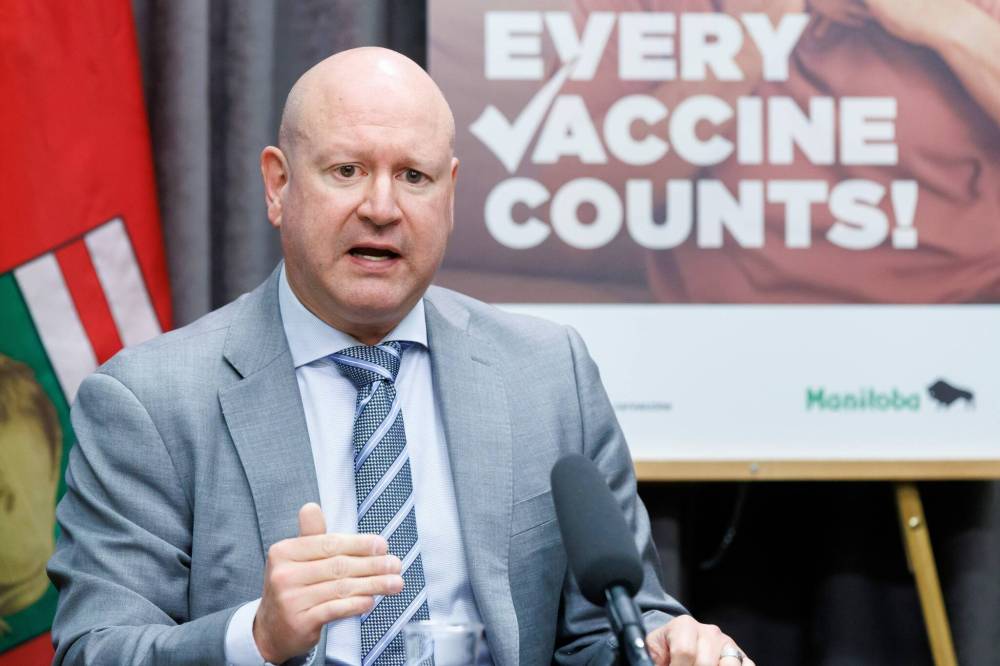
Dr. Brent Roussin, the chief provincial public health officer, told reporters at a news conference this week that there has been a steady increase in the number of HIV cases over the last six years. Last year, Manitoba identified 328 new cases of the deadly virus, up from 90 in 2019.
Roussin said Manitoba’s rate of HIV infection is now nearly 20 per 100,000 people, which is 3.5 times higher than the national rate of 5.5 per 100,000. In declaring a public health emergency, Roussin said he hoped to “raise that level of urgency (and) raise our co-ordination.”
Mike Deal/Winnipeg Free Press files
Manitoba’s chief provincial public health officer Dr. Brent Roussin
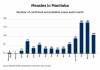
Unfortunately, as Manitoba struggles to deal with HIV, it is also battling the rampant spread of measles. Through the first four months of this year, Manitoba health officials confirmed 519 new cases and another 42 probable cases. That is more in one-third of a year than the province confirmed through the entirety of 2025.
The awful news is that Manitoba now has more confirmed cases than the rest of Canada combined.
Even though measles and HIV are two profoundly different viruses, when you put both stories side by side, it’s not hard to see that something is terribly wrong with the state of public health in this province. Most provinces are facing the same trends and risk factors; why would Manitoba see larger threats to public health?
It’s important to note that the measles and HIV outbreaks do not necessarily affect the same parts of Manitoba’s population.
Ground zero for the measles outbreak appears to be in the Southern Health Region, a mostly rural area of the province where residents have, since the COVID-19 pandemic began in early 2020, expressed a deep distrust of government and vaccines. More than 90 per cent of the confirmed cases in the province involved people who were unvaccinated, and not surprisingly, the Southern Health Region has the lowest rate (just over 50 per cent) of childhood measles vaccination.
HIV, on the other hand, appears to be spreading among people living in poverty in Winnipeg and in northern regions. Intravenous drug users face a much heightened risk. Indigenous people and communities are, according to Roussin, disproportionately impacted.

One of the few areas of intersection between HIV and measles appears to be the Prairie Mountain Health authority, which also has a strong rural component while also including the city’s of Brandon and Dauphin. In that health region, both HIV and measles cases are alarmingly high.
What can Roussin and the public health system do? Getting the word out about the importance of vaccinations and drugs that can help people in high-risk categories take more direct steps to avoid becoming infected.
Roussin noted that more intensive testing will be needed, and he expects health care professionals to help present that option to their patients. As well, pre-exposure prophylaxis for HIV is available free in Manitoba through a HIV medications program.
What appears painfully clear is that even with a state of public health emergency, there is nothing government can do to force Manitobans to protect themselves from HIV or measles. Along with effective and culturally appropriate communication, Manitobans are going to have to embrace preventative measures. Consider a recent measles outbreak centred in Spartanburg, South Carolina: the outbreak officially ended in April, after the Spartanburg area saw a 93.6 per cent increase in measles vaccinations in the first three months of 2026.
Manitoba’s chief public health officer took a bold and appropriate step in declaring an emergency. We can only hope that Manitobans heed his warning.
Related Articles
Governments blasted for inaction as HIV rates rise


Advertisement Advertise With Us
Advertisement Advertise With Us
History
Updated on Monday, May 11, 2026 9:45 AM CDT: Corrects that national HIV infection rate is 5.5 per 100,000