

Governments blasted for inaction as HIV rates rise

Advertisement
Read this article for free:
or
Already have an account? Log in here »
To continue reading, please subscribe:

Digital Subscription
One year of digital access for only $205*
- Enjoy unlimited reading on winnipegfreepress.com
- Read the E-Edition, our digital replica newspaper
- Access News Break, our award-winning app
- Play interactive puzzles
*First annual payment billed as $205.00 + GST for one year. This annual subscription will automatically renew at $233.00 + GST every 52 weeks (10% off the regular annual price of $259.35). Offer available to new and qualified returning subscribers only. Cancel any time.
To continue reading, please subscribe:
Add Free Press access to your Brandon Sun subscription for only an additional
$1 for the first 4 weeks*
- Enjoy unlimited reading on winnipegfreepress.com
- Read the E-Edition, our digital replica newspaper
- Access News Break, our award-winning app
- Play interactive puzzles
*Your next Brandon Sun subscription payment will increase by $1.00 and you will be charged $17.95 plus GST for four weeks. After four weeks, your payment will increase to $24.95 plus GST every four weeks.
Read unlimited articles for free today:
or
Already have an account? Log in here »
An HIV/AIDS advocate who has spent the past 35 years raising awareness about the disease is calling for a national inquiry into what he calls a lack of proactive action by provincial and federal governments to prevent infections.
Albert McLeod, a two-spirit elder from Nisichawayasihk Cree Nation, says HIV pre-exposure prophylaxis — commonly known as PrEP — has been approved by Health Canada since 2016. Despite that, infection rates have continued to climb.
“It’s just this sort of very conservative attitude to our health,” McLeod said Friday, challenging anyone to find a poster in Winnipeg promoting HIV awareness or PrEP on street corners or at bus stops.
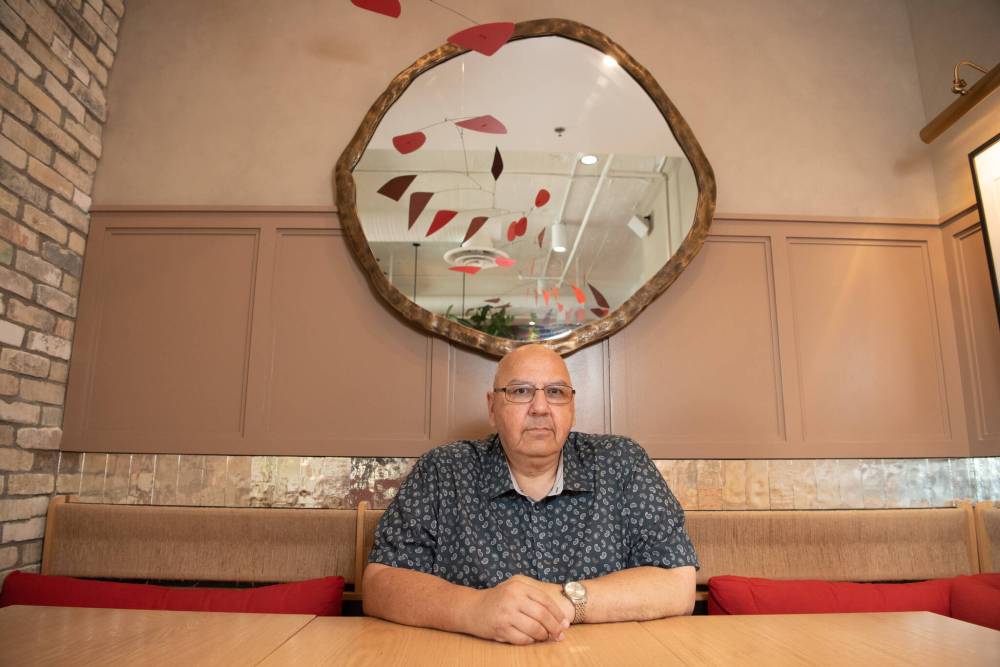
ALEX LUPUL / FREE PRESS FILES
Albert McLeod, a two-spirit elder from Nisichawayasihk Cree Nation, called the situation a failure of public health systems to stay ahead of the curve.
“And now it’s suddenly an emergency in 2026, when we’ve had 10 years to be proactive and let people know about the availability of this medication? Instead, we have people who are HIV positive who could be negative.”
Manitoba health officials declared a public health emergency Thursday over rising HIV rates, which have steadily increased over the past six years.
Manitoba recorded 328 new cases of human immunodeficiency virus in 2025, a sharp rise from the 90 cases tracked in 2019.
“In 2024, we reported a rate of 19.5 cases per 100,000 (people), which is roughly 3½ times that of Canada’s rate of 5.5,” Manitoba’s chief provincial public health officer, Dr. Brent Roussin, said Thursday.
McLeod said a national inquiry is needed because rising infection rates are not limited to Manitoba, and are also affecting Saskatchewan and Alberta.
He believes part of the problem stems from provinces shifting responsibility onto the federal government.
“That’s not public health,” he said. “We saw cross-jurisdictional co-operation with (COVID-19) — testing and vaccination access. Every day, the medical officer of health was on television talking about COVID. You don’t see that with HIV. So there’s still that stigma lingering in governmental systems to not talk about HIV.”
McLeod called the situation a failure of public health systems to stay ahead of the curve.
“I’ve watched those stats go up over the last 20 years,” he said. “So it’s not something that was unpredictable. The government needs to be ahead of this. It’s infectious.”
PrEP is available free of charge through the Manitoba Extended Pharmacare Program for anyone with an active Manitoba health card, and also under Employment and Income Assistance.
The medication, which can be taken orally or by injection, is intended for people who are HIV-negative but remain a high risk of acquiring the virus, including heterosexual individuals, MSM (men who have sex with men), transgender women, gender-diverse people and PWID (people who inject drugs).
To access PrEP, a person needs a prescription from a primary care provider or must seek out a provider authorized to prescribe it.
In 2021, the Pallister government added PrEP coverage under Pharmacare, though patients were still required to pay the deductible. In May 2024, the Kinew government announced it would fully cover the cost of the medicine.
Without coverage, PrEP costs about $250 per month.
Still, uptake is low.
“We find that in Manitoba, it’s underutilized, and it’s underutilized in some of the most high-risk groups,” Roussin previously said, adding that HIV disproportionately affects women and Indigenous populations.
The province’s top doctor also said that in 2024, 70 per cent of HIV transmission in the province was related to injection drug use, and that other factors, including homelessness and mental health issues, also contribute to rising infection rates.
Kalynn Wood, director of primary care at the Aboriginal Health and Wellness Centre of Winnipeg, which provides HIV screening, management and outreach services, says significant barriers to care remain.
For years, HIV treatment in Manitoba was largely centralized through Health Sciences Centre and Nine Circles Community Health Centre, which may have created barriers to care for some patients.
Wood pointed to a June 2025 Shared Health report on race, ethnicity and Indigenous identity data in emergency rooms as evidence of systemic racism within the health-care system, arguing that being directed to those centres could discourage people from seeking treatment.
“The population who is most affected by HIV is the same population that faces barriers in accessing care of any kind,” Wood said. “If we hope to have any meaningful impact, we need to change the way care is provided.”

Wood said the most common form of PrEP is a daily pill. When someone is homeless, experiencing mental health struggles, or using substances, a daily pill can be difficult.
A longer-acting injectable form of PrEP is available; however, there are concerns about using this formulation in a population that is unstably housed, Wood said.
If a dose is missed and HIV is contracted, there is a concern that the individual would be resistant to the main medication used to treat HIV.
“When you add the barriers on top of the existing stigma surrounding HIV, it is no surprise that, for safety and security, many individuals would not feel comfortable carrying a potentially stigmatizing medication on their person,” Wood said.
scott.billeck@freepress.mb.ca
Scott Billeck is a general assignment reporter for the Free Press. A Creative Communications graduate from Red River College, Scott has more than a decade’s worth of experience covering hockey, football and global pandemics. He joined the Free Press in 2024. Read more about Scott.
Every piece of reporting Scott produces is reviewed by an editing team before it is posted online or published in print — part of the Free Press‘s tradition, since 1872, of producing reliable independent journalism. Read more about Free Press’s history and mandate, and learn how our newsroom operates.
Our newsroom depends on a growing audience of readers to power our journalism. If you are not a paid reader, please consider becoming a subscriber.
Our newsroom depends on its audience of readers to power our journalism. Thank you for your support.
Scott Billeck is a general assignment reporter for the Free Press. A Creative Communications graduate from Red River College, Scott has more than a decade’s worth of experience covering hockey, football and global pandemics. He joined the Free Press in 2024. Read more about Scott.
Every piece of reporting Scott produces is reviewed by an editing team before it is posted online or published in print — part of the Free Press‘s tradition, since 1872, of producing reliable independent journalism. Read more about Free Press’s history and mandate, and learn how our newsroom operates.
Our newsroom depends on a growing audience of readers to power our journalism. If you are not a paid reader, please consider becoming a subscriber.
Our newsroom depends on its audience of readers to power our journalism. Thank you for your support.
Related Articles
Manitoba is leading, in some very bad ways

Advertisement Advertise With Us
Advertisement Advertise With Us