Combat in the classroom More than half of the Manitoba public school teachers who participated in a recent survey said violence was making their jobs more difficult; half said administrators aren’t taking the problem seriously enough
Read this article for free:
or
Already have an account? Log in here »
To continue reading, please subscribe:

Digital Subscription
One year of digital access for only $205*
- Enjoy unlimited reading on winnipegfreepress.com
- Read the E-Edition, our digital replica newspaper
- Access News Break, our award-winning app
- Play interactive puzzles
*First annual payment billed as $205.00 + GST for one year. This annual subscription will automatically renew at $233.00 + GST every 52 weeks (10% off the regular annual price of $259.35). Offer available to new and qualified returning subscribers only. Cancel any time.
To continue reading, please subscribe:
Add Free Press access to your Brandon Sun subscription for only an additional
$1 for the first 4 weeks*
- Enjoy unlimited reading on winnipegfreepress.com
- Read the E-Edition, our digital replica newspaper
- Access News Break, our award-winning app
- Play interactive puzzles
*Your next Brandon Sun subscription payment will increase by $1.00 and you will be charged $17.95 plus GST for four weeks. After four weeks, your payment will increase to $24.95 plus GST every four weeks.
Read unlimited articles for free today:
or
Already have an account? Log in here »
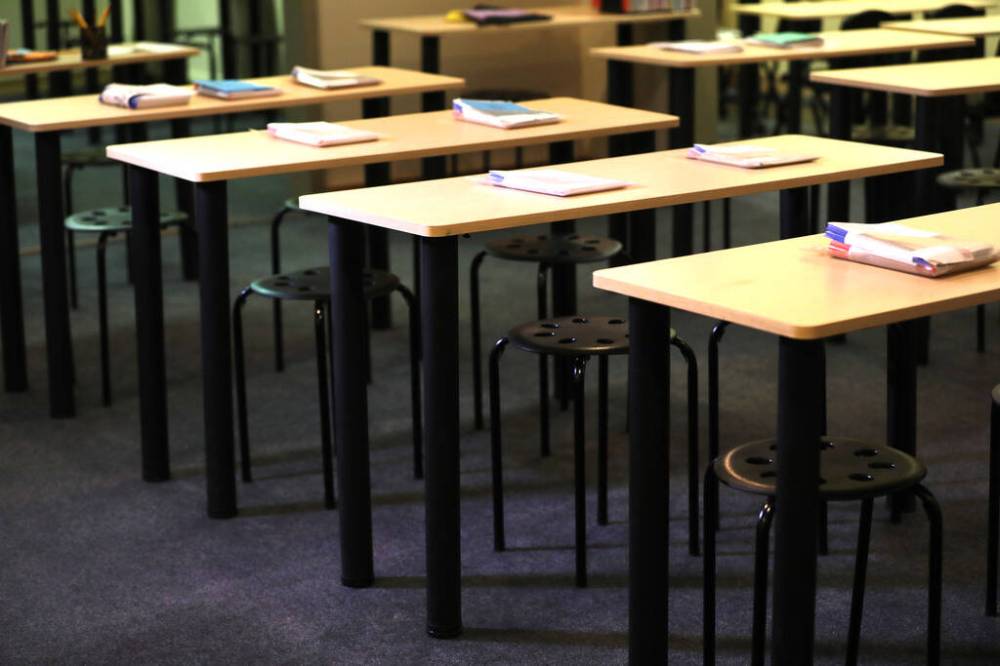
Evidence of the nine-year-old’s latest meltdown was strewn all over the floor of the public school classroom.
In a fit of rage that resulted in an evacuation — the second required of a Grades 4/5 class in Winnipeg recently — the girl ripped a lanyard off her teacher’s neck and kicked her, tore artwork from the walls and stomped on a banana.
She’d also dumped the contents of craft bins and every other container in sight, including her classmates’ water bottles.
Her now-former teacher described the scene as the aftermath of a hurricane and a clear indication she needed to find another profession, one that wouldn’t make her, her colleagues or the children in her care regular targets of verbal and physical attacks.
“It feels so violating… but people just brush it off because they’re kids.”
“It feels so violating, experiences like this, but people just brush it off because they’re kids,” said the woman, who resigned shortly after the mid-April incident that began because the child did not want to go outside for recess.
“When your personal boundaries are violated, it doesn’t matter who’s done it.”
By her calculations, 7½ hours of instructional time was lost over the course of that week because of repeated outbursts. It’s much harder to measure how the other children were impacted by what they witnessed, she said, noting they were visibly shaken, yet all too familiar with the “room clear” protocols.
The majority of teachers in a new Probe Research study reported both the prevalence of violence and severity of incidents has increased since they joined the profession.
Early years and veteran teachers, along with those working in Winnipeg, were the most likely to report worsening conditions.
“Many teachers say behaviour management now dominates their day.”
The Manitoba Teachers’ Society hired Probe to conduct a census-style survey of its membership on workplace experiences and job satisfaction. A total of 3,370 teachers participated in it between Jan. 22 and Feb. 17.
The troubling results revealed 55 per cent feel violence in their school is making the job difficult. Half of the respondents reported school administrators are not taking the problem “as seriously as they should.”
“Many teachers say behaviour management now dominates their day… These needs range from students who are not ready for their grade, to autism and ADHD, to significant trauma that can manifest in violence,” Probe Research said in a summary.
Food insecurity and other stressors that families are facing, deteriorating respect for teachers and large class sizes are among the many complex and often structural contributing factors, said Darby Mallory, a researcher at the University of Ottawa who’s co-authored multiple reports on the topic.
Mallory said violence — which is how incidents are experienced, even if harm is unintentional — is happening in virtually every school in Canada, yet parents aren’t usually notified about incidents unless their child is directly involved.
As far as she is concerned, that needs to change. No problem can be solved if its existence isn’t acknowledged, the PhD student said.
“Violence isn’t just an issue related to workers in schools. Violence is an issue for students who are witnessing it — witnessing it against, predominantly, women, and that becomes normalized,” she added.
Calls for action have grown over the last five years, against the backdrop of high-profile incidents, new research and the addition of schools to the province’s 2022 Workplace Safety and Health list of “high-risk industries.”
The number of time-loss injury claims that non-teacher school employees filed to the Workers Compensation Board surged 332 per cent between 2015 and 2024, with a notable increase in surface wounds, bruises and “traumatic injuries and disorders.”
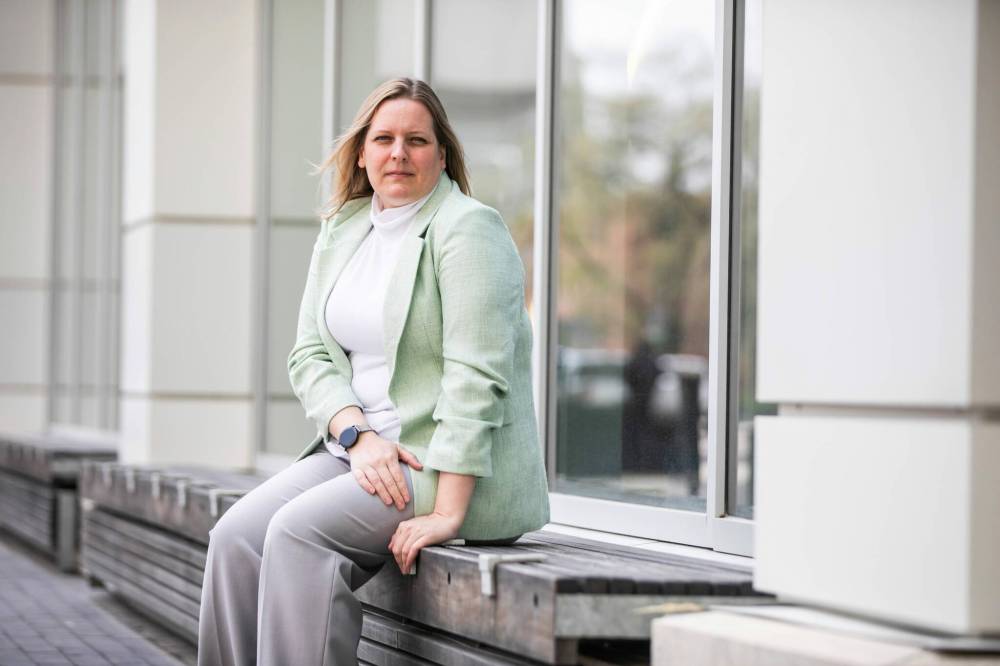
“It’s across all schools and grades…. It’s every walk of life where you’re seeing students unable to cope with their emotions and lashing out in the classroom,” said Kristen Fallis, president of the Winnipeg Teachers’ Association.
Fallis said she regularly hears reports of students biting, scratching, hitting, spitting and throwing books, water bottles and other items at school staff and classmates.
“Anything becomes a weapon,” she said.
“Anything becomes a weapon.”
Meantime, it’s common for teachers to be asked what they did to provoke violence or told to, “take it as a compliment they trust you enough to take out their anger on you,” Fallis said.
She was among more than 350 teachers who gathered in Winnipeg this week to discuss the issue and other pressing concerns in public schools.
In preparation for the Manitoba Teachers’ Society’s annual general meeting — which began Thursday — she submitted a proposal to spend a portion of membership dues on a public-awareness campaign.
It passed, along with similar resolution to make it a priority for the union to lobby provincial and school board leaders to create a universal incident reporting system.
“Without standardized reporting, incidents are often under-reported or inconsistently tracked, making it difficult to assess risks and implement effective prevention strategies,” its authors wrote.
“I would like the adults to run the school instead of the kids.”
Earlier this week, police were called to an elementary school in Brandon in response to “an escalating and violent situation involving an 11-year-old.”
The Brandon Police Service investigation found the boy had flipped furniture, struck a principal in the face multiple times and punched a hole through a wall in the building.
The Free Press spoke to a handful of teachers who recounted similar experiences, some of which led to last-resort 911 calls, in recent years.
Each educator agreed to an interview on the condition of anonymity. They cited concerns they’d face reprisals at work or struggle to find future employment after speaking out.
“I would like the adults to run the school instead of the kids,” one Winnipeg high school teacher said as she described the lack of respect for authority and general decorum.
The career teacher said she’s currently on leave because she got tired of being insulted, told to “f—k off” and feeling on edge about when the next fight was going to break out.

A middle school principal said he felt comfortable being “the last line of defence” for colleagues in crisis for nearly two decades.
Now, however, he said he feels anxious every time his office is buzzed. The Winnipeg administrator was diagnosed with post-traumatic stress disorder following a series of incidents during which he was kicked, shoved and spat on.
“I feel limited by consequences and I feel limited by resources and limited by options available to support (students),” he said.
The Education Department released a policy directive in 2023 calling on school leaders to minimize the use of suspensions. The document outlines the importance of inclusion and proactive intervention.
‘Proactive approaches’
Efforts underway in school divisions to address safety concerns

Posted:
School leaders say they’re staffing up, scaling training and prioritizing post-incident debriefs to address employees’ concerns about violence.
“We want everyone to feel included, all the time. Is it feasible for every learner to be in a room with a larger group of students? No, it’s not. And if that’s the goal — to have everyone in the class — where are the supports for the student who’s going to be overstimulated, overwhelmed?” said Fallis, who represents about 3,000 teachers in the city.
Resource teacher Julie Braaksma identified an increase in students with high needs being integrated into mainstream classrooms in Manitoba as the perceived driver of violence in her 2025 research project.
Braaksma surveyed 191 teachers from 22 divisions last spring for her PhD in organizational leadership at Chicago’s Adler University. More than half of the respondents disclosed they’d been threatened or injured with physical force at least once in 2023-24.
Drawing on her experiences and those of respondents, she drafted 12 recommendations, including the universal implementation of non-violent crisis-intervention training for all school staff.
“Teachers should also receive training on how to plan, adapt and incorporate the different learning needs of neurodiverse students (e.g., autism, ADHD, learning disabilities, etc.),” she wrote in a fall summary.
Braaksma argued teachers need to be equipped with information about common triggers and potential calming methods for students with different diagnoses.
Smaller class sizes are also critical in her view — one she shares with teachers and the UOttawa team that published Canadian Schools: A Hazardous Workplace in February.
“(Education workers) just simply don’t have the time or space to be able to build relationships, to learn triggers, to help the student flourish in the way they know is possible,” Mallory said.
“I’m tired of trying to make the best of it for kids who deserve and have the right to a safe and uninterrupted learning environment.”
Manitoba’s average class size targets — 20 students in kindergarten-to-Grade 3 and 25 in upper elementary grades — have little value in practice, she said, noting they allow for a massive range of student-to-staff ratios in different rooms.
The former Grades 4/5 teacher who quit last month said she found it incredibly difficult to have so many “little nervous faces” staring at her during crises.
“You try and make the best of (these situations),” she said. “But, at the end of the day, I’m tired of trying to make the best of it for kids who deserve and have the right to a safe and uninterrupted learning environment.”
She added that it hasn’t sat right with her for a long time that adults in schools are being directed to stand by and let outbursts play out.
maggie.macintosh@freepress.mb.ca

Maggie Macintosh
Education reporter
Maggie Macintosh reports on education for the Free Press. Originally from Hamilton, Ont., she first reported for the Free Press in 2017. Read more about Maggie.
Funding for the Free Press education reporter comes from the Government of Canada through the Local Journalism Initiative.
Every piece of reporting Maggie produces is reviewed by an editing team before it is posted online or published in print — part of the Free Press‘s tradition, since 1872, of producing reliable independent journalism. Read more about Free Press’s history and mandate, and learn how our newsroom operates.
Our newsroom depends on a growing audience of readers to power our journalism. If you are not a paid reader, please consider becoming a subscriber.
Our newsroom depends on its audience of readers to power our journalism. Thank you for your support.
Related Articles
Efforts underway in school divisions to address safety concerns