

Treating the fever while ignoring the infection
Advertisement
Read this article for free:
or
Already have an account? Log in here »
To continue reading, please subscribe:
Digital Subscription
One year of digital access for only $1.44 a week*
- Enjoy unlimited reading on winnipegfreepress.com
- Read the E-Edition, our digital replica newspaper
- Access News Break, our award-winning app
- Play interactive puzzles
*Billed as $5.77 plus GST every four weeks. After 52 weeks, price increases to the regular rate of $19.95 plus GST every four weeks. Offer available to new and qualified returning subscribers only. Cancel any time.
To continue reading, please subscribe:
Add Free Press access to your Brandon Sun subscription for only an additional
$1 for the first 4 weeks*
- Enjoy unlimited reading on winnipegfreepress.com
- Read the E-Edition, our digital replica newspaper
- Access News Break, our award-winning app
- Play interactive puzzles
*Your next Brandon Sun subscription payment will increase by $1.00 and you will be charged $17.95 plus GST for four weeks. After four weeks, your payment will increase to $24.95 plus GST every four weeks.
Read unlimited articles for free today:
or
Already have an account? Log in here »
At any moment in Manitoba’s hospital system, three patients may be waiting.
One is in the emergency room, waiting to be assessed.
A second has been assessed, admitted to hospital, and is waiting in the emergency department for an upstairs bed.
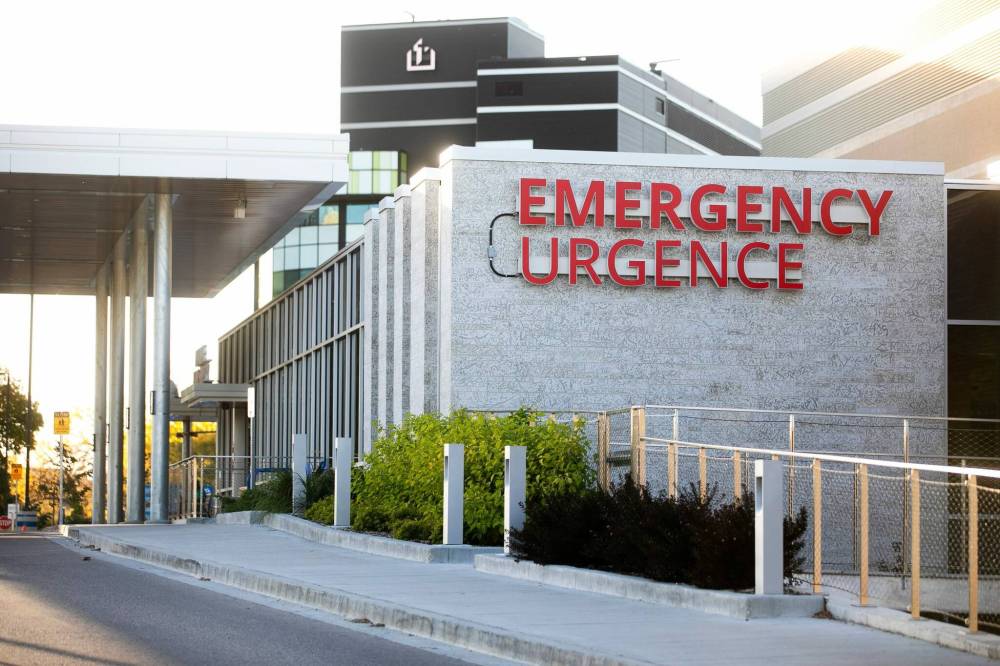
MIKAELA MACKENZIE / FREE PRESS
Is diverting people from crowded emergency rooms treating the symptom, or the illness?
A third sits upstairs in that hospital bed. Their acute problem has resolved, but they cannot safely go home because home care, supportive housing, rehabilitation or long-term care is not ready.
We usually talk about the first patient. We report their wait and build policy around it, because it is public-facing and immediately visible.
Harder is understanding how the second and third waits drive the first.
Manitoba’s health-care system has a fever. It shows up as emergency room waits, crowded hallways, ambulance delays and patients waiting too long for care, all of which show patients suffering and staff working inside a system with very little margin.
A fever, however, is not the infection. It is the symptom.
When a patient has a serious infection, Tylenol may lower the temperature and make the patient look better for a few hours. It does not treat the illness.
Health-care policy can make the same mistake. We see emergency room wait times, then ask how to redirect people from emergency rooms. That instinct makes sense.
The Winnipeg Regional Health Authority’s My Right Care page directs people with common or minor concerns to family doctors, extended-hours primary care, minor injury and illness clinics, walk-in clinics and virtual care. This advice helps patients choose the right door.
But does helping patients choose the right door treat the bottleneck?
Many lower-acuity patients are treated and released. They need a clinician, an assessment, perhaps a test, space and time. They usually do not need admission. The patients who create gridlock are different: the pneumonia patient who needs oxygen and admission, the senior who fell and cannot safely go home, or the stroke patient waiting for a bed upstairs.
WRHA’s public wait-time dashboard is a useful thermometer: it reports patients waiting, patients being treated and registration-to-seen wait time.
It does not show how many treated patients have already been admitted and are waiting for upstairs beds. Once admitted patients wait in the emergency department, the problem has moved beyond emergency care. It has become a problem of patient flow.
St. Boniface Hospital gives us a useful reference point. Its ER averages 42,000 patients per year. For the sake of simple math, round that to 120 patients per day, or about 40 new patients over an eight-hour shift.
Now imagine 20 admitted hospital patients are stuck in emergency beds because no inpatient beds are available upstairs.
Emergency beds and ward beds are both units of capacity. If there is no room upstairs, the emergency bed effectively becomes the hospital bed.
If each emergency bed normally turns over twice during an eight-hour shift, then 20 occupied beds remove space for about 40 additional patients during that shift. That is roughly the same number of new patients St. Boniface would expect over those eight hours.
The emergency department falls behind not only because more patients arrive, but because occupied beds stop reopening for subsequent patients.
Now consider the third patient. An unavailable home-care resource can keep a stable patient in a hospital bed. That occupied hospital bed keeps the second patient in an emergency bed. The occupied emergency bed keeps the first patient in the waiting room. The crowded waiting room delays ambulance offload. That ambulance delay keeps paramedics from returning to the street.
The fever is the wait time. The infection sits in the flow.
Now let’s consider what we are buying.
Manitoba Health has opened minor injury and illness clinics and extended-hour primary care clinics, budgeted at $3.2 million, added $2.5 million to expand five walk-in clinics, and added $1.3 million to expand virtual visits through QDoc. That is $7 million in stated front-door spending.
These services help patients, but they also frame the question: are we investing in the front door of the acute-care system or the back door of the hospital?
At $50 per hour, $7 million could buy about 140,000 hours of home-care support.
That $50 figure is deliberately generous. Manitoba’s median wage for a home-care personal support worker is about $23 per hour. Using $50 leaves room for benefits, scheduling, travel, supervision and administration.
At four hours a day, 140,000 hours buys about 35,000 supported days, nearly enough to support 100 people for a year.
Not every supported day would reduce hospital days equally. Use a conservative assumption: suppose only one out of every five supported days prevented one extra day in hospital.
That would free about 7,000 hospital-bed days annually.
Put differently, that equals roughly 20 hospital beds freed every day. In a crowded hospital, each additional bed can change emergency flow. A few available beds upstairs reopen emergency beds downstairs. A few reopened emergency beds shorten the waiting room.
This is not a budget recommendation. It is a way to ask whether we are buying the right wait-time reduction.
Now convert that capacity into dollars. Assume one acute hospital day costs about $1,500. Four hours of home support, at $50 per hour, would cost about $200 per day.
On those assumptions, one hospital day could instead buy roughly a week of daily four-hour home support.
That is the opportunity cost.
We may be buying ways to change where people wait without knowing whether we are shortening the wait that matters most — the wait for a bed, and the wait to leave the hospital.
Front-door investments have value. They help patients, reduce frustration and make care more humane for people with lower-acuity problems.
Those choices may ease symptoms and may even lower the temperature for a time. If the problem sits in home care, long-term care and community capacity, however, they risk functioning like Tylenol for a system fighting a deeper infection.

The better prescription may sit outside the emergency department.
It may look like home-care worker access, supportive housing for someone who cannot safely live alone, rehabilitation capacity or long-term care spaces.
A different question could guide policymakers: What would it take to safely free 20 hospital beds every day?
That question points us away from the thermometer and toward the disease. It points us away from buying wait-time optics and toward buying flow. Most of all, it points to the place where the next public dollar may do the most good — not only at the front door of the emergency room, but at the hospital exit, and in the community beyond it.
Dr. Rafiq Andani is a physician and health policy expert who has practised across rural, remote and urban Manitoba, including work in First Nations and Inuit communities. He previously served as associate chief medical officer for Shared Health and as the provincial bed doctor for patient flow.

Advertisement Advertise With Us
Advertisement Advertise With Us