

City mulls grant to give life to vacant buildings

Advertisement
Read this article for free:
or
Already have an account? Log in here »
To continue reading, please subscribe:

Digital Subscription
One year of digital access for only $205*
- Enjoy unlimited reading on winnipegfreepress.com
- Read the E-Edition, our digital replica newspaper
- Access News Break, our award-winning app
- Play interactive puzzles
*First annual payment billed as $205.00 + GST for one year. This annual subscription will automatically renew at $233.00 + GST every 52 weeks (10% off the regular annual price of $259.35). Offer available to new and qualified returning subscribers only. Cancel any time.
To continue reading, please subscribe:
Add Free Press access to your Brandon Sun subscription for only an additional
$1 for the first 4 weeks*
- Enjoy unlimited reading on winnipegfreepress.com
- Read the E-Edition, our digital replica newspaper
- Access News Break, our award-winning app
- Play interactive puzzles
*Your next Brandon Sun subscription payment will increase by $1.00 and you will be charged $17.95 plus GST for four weeks. After four weeks, your payment will increase to $24.95 plus GST every four weeks.
Read unlimited articles for free today:
or
Already have an account? Log in here »
The city is looking at a vacant building grant that could entice developers to convert empty buildings into new homes.
If city council approves, the incentive would offer up to $35,000 per eligible project, with a target to create at least 100 new housing units.
“Winnipeg is seeing an increasing number of vacant buildings. Some of those need to be demolished … but some of them are able to be rehabilitated and (be brought) back into occupancy,” said Lissie Rappaport, manager of the city’s Housing Accelerator Fund office.
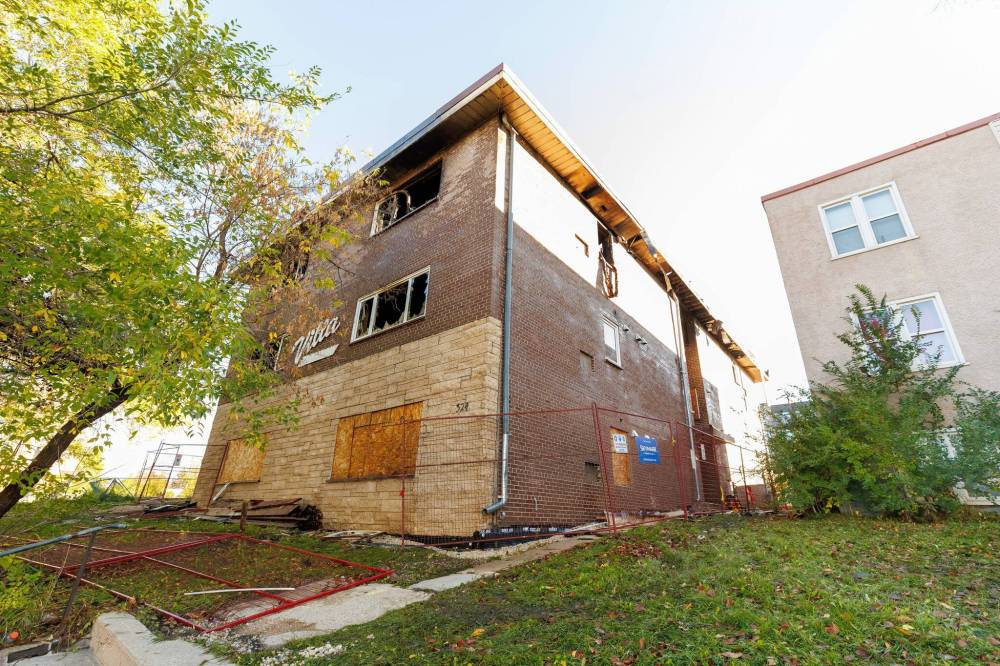
MIKE DEAL / FREE PRESS FILES
In total, 535 empty buildings in Winnipeg had “active orders” under the vacant building bylaw, with a combined 980 dwelling units no longer in use.
In total, 535 empty buildings in Winnipeg had “active orders” under the vacant building bylaw, with a combined 980 dwelling units no longer in use, in a 2025 city housing assessment.
If approved, the city would spend $3 million to provide the new grant and begin accepting applicants in July.
Rappaport said the grant should help breathe new life into some neighbourhoods by reducing the risks posed by vacant structures.
“(If left alone) they eventually could fall into further deterioration, fire and then eventually be needing demolition. There are costs, both social and financial, with that,” she said.
Mayor Scott Gillingham said he will support the proposal.
“This vacant building grant will give property owners an incentive to redevelop their vacant and derelict property. It’s utilizing … public funds in a good way to transform neighbourhoods, lot by lot, vacant property by vacant property,” said Gillingham. “One hundred new units of housing would obviously go a long way to provide more housing at a time where we need (it).”
To be eligible, developers must renovate buildings that are at least 20 years old and have been vacant or underused for at least two years. Each project must create at least four housing units, while each residential building conversion must include at least as many dwellings as it previously held.
Eligible projects must also have affordable rents for at least 30 per cent of all units.
While the grant program would rely partly on Housing Accelerator Fund dollars, any units it triggers won’t count toward the total number of housing units the city is required to create to claim the federal funds.
The reuse of vacant buildings doesn’t count as net new units under that program, said Rappaport.
City staff recommend the new grant in an update on agreements in which Winnipeg would claim up to $126.5 million from the federal Housing Accelerator Fund.
The city is “on track” to meet its overall target to approve 14,251 new housing units by the Dec. 5, 2026 deadline, including 150 units added to that total in March, along with extra funding, the report notes.
Rappaport said the city has secured 90 per cent of that goal, with several months left to go.
The city has received $93.8 million of the federal funding so far but must meet several key targets to qualify for its final $32.6-million HAF payment by December.
Rappaport said the city is not on track to create enough homes near frequent transit to meet that key target, which would require another 2,025 new units by Dec. 5. The city has added 5,504 housing units in that category to date.
“We are continuing to monitor these units closely. We do know that there are about 2,000 units in the pipeline and that’s about what we need … The key issues are if they can meet the deadline in time,” said Rappaport.
She said many developers are still seeking more federal funding to make construction viable, while city housing staff have ramped up supports for large projects near transit to try to meet the deadline.
At this point, the mayor said he’s not concerned the city could miss it, despite slower uptake for that category of home construction.

“The Housing Accelerator Fund has been remarkably successful … We’ve built 2,600 units of affordable housing,” he said.
Meanwhile, city staff have asked city council to set aside $7 million for infrastructure improvements that prepare city land for housing, if the city receives its final federal housing payment. That could pave the way to build about 800 housing units on city land, specifically at a surface parking lot north of the Club Regent Casino and other land just east of Kenaston Boulevard.
Council is also asked to approve $1.5 million to remediate land for a project that will add housing and Winnipeg Transit space at 425 Osborne St. and $600,000 to add parking next to the Granite Curling Club. The granite spaces would offset the loss of stalls due to a 111-unit housing project set to be built next to its facility.
joyanne.pursaga@freepress.mb.ca
X : @joyanne_pursaga
Joyanne is city hall reporter for the Winnipeg Free Press. A reporter since 2004, she began covering politics exclusively in 2012, writing on city hall and the Manitoba Legislature for the Winnipeg Sun before joining the Free Press in early 2020. Read more about Joyanne.
Every piece of reporting Joyanne produces is reviewed by an editing team before it is posted online or published in print — part of the Free Press‘s tradition, since 1872, of producing reliable independent journalism. Read more about Free Press’s history and mandate, and learn how our newsroom operates.
Our newsroom depends on a growing audience of readers to power our journalism. If you are not a paid reader, please consider becoming a subscriber.
Our newsroom depends on its audience of readers to power our journalism. Thank you for your support.
Joyanne is city hall reporter for the Winnipeg Free Press. A reporter since 2004, she began covering politics exclusively in 2012, writing on city hall and the Manitoba Legislature for the Winnipeg Sun before joining the Free Press in early 2020. Read more about Joyanne.
Every piece of reporting Joyanne produces is reviewed by an editing team before it is posted online or published in print — part of the Free Press‘s tradition, since 1872, of producing reliable independent journalism. Read more about Free Press’s history and mandate, and learn how our newsroom operates.
Our newsroom depends on a growing audience of readers to power our journalism. If you are not a paid reader, please consider becoming a subscriber.
Our newsroom depends on its audience of readers to power our journalism. Thank you for your support.
Related Articles
Empty buildings could fill vacancy fund


Advertisement Advertise With Us
Advertisement Advertise With Us
History
Updated on Wednesday, June 10, 2026 6:48 PM CDT: Adds edits