

HBC Royal Charter welcomed in ceremony at Manitoba Museum
Advertisement
Read this article for free:
or
Already have an account? Log in here »
To continue reading, please subscribe:

Digital Subscription
One year of digital access for only $205*
- Enjoy unlimited reading on winnipegfreepress.com
- Read the E-Edition, our digital replica newspaper
- Access News Break, our award-winning app
- Play interactive puzzles
*First annual payment billed as $205.00 + GST for one year. This annual subscription will automatically renew at $233.00 + GST every 52 weeks (10% off the regular annual price of $259.35). Offer available to new and qualified returning subscribers only. Cancel any time.
To continue reading, please subscribe:
Add Free Press access to your Brandon Sun subscription for only an additional
$1 for the first 4 weeks*
- Enjoy unlimited reading on winnipegfreepress.com
- Read the E-Edition, our digital replica newspaper
- Access News Break, our award-winning app
- Play interactive puzzles
*Your next Brandon Sun subscription payment will increase by $1.00 and you will be charged $17.95 plus GST for four weeks. After four weeks, your payment will increase to $24.95 plus GST every four weeks.
Read unlimited articles for free today:
or
Already have an account? Log in here »
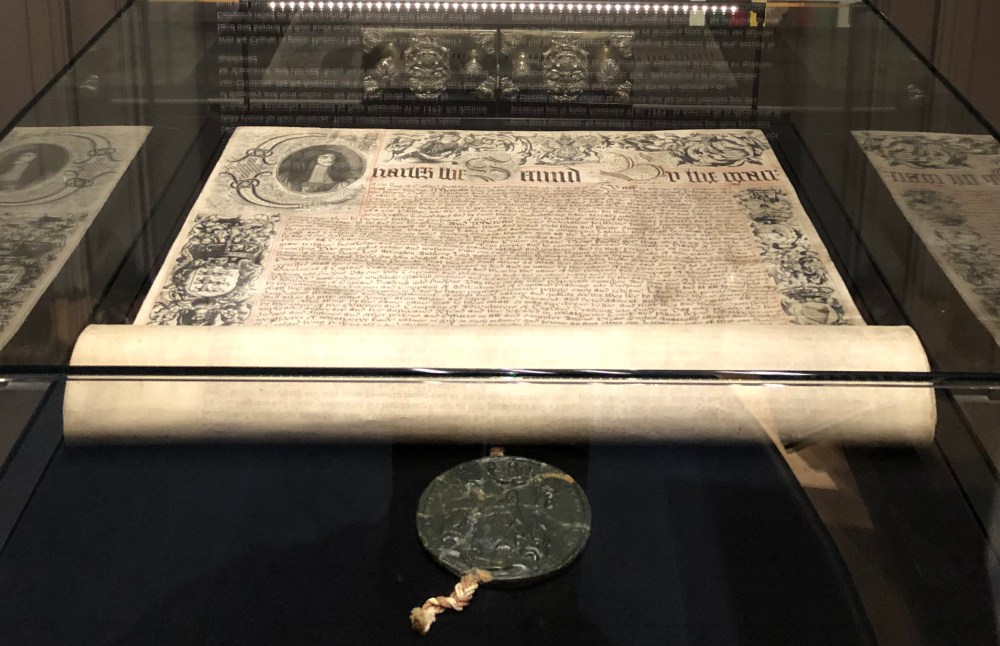
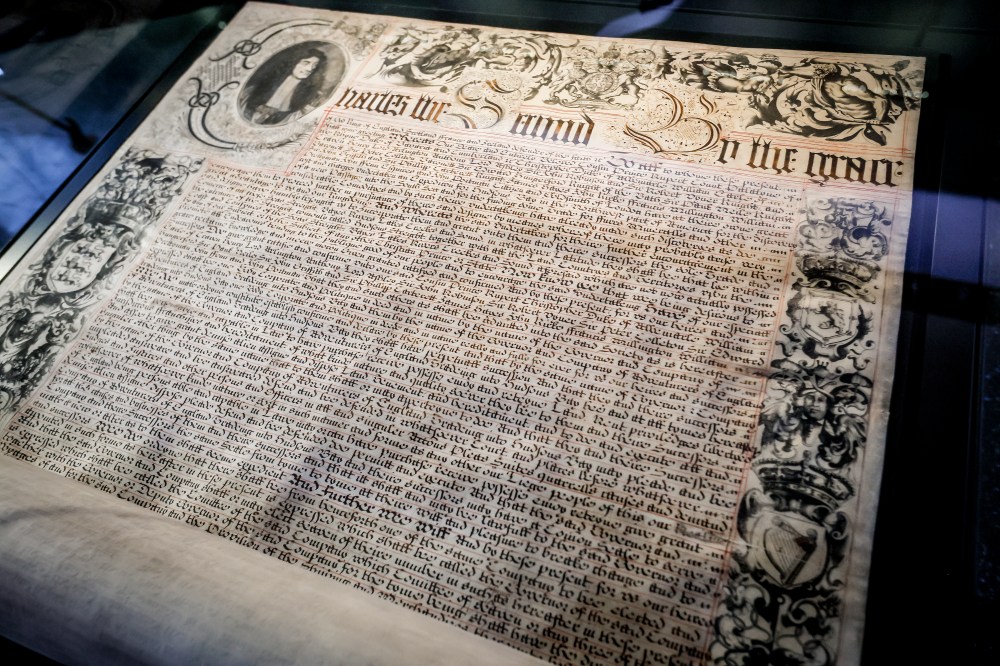
WINNIPEG – A 356-year-old document that granted the Hudson’s Bay Co. control over roughly one-third of Canada is now in public hands.
The HBC Royal Charter was unveiled Thursday at the Manitoba Museum in Winnipeg in a ceremony that was both a celebration of the new life of the document and a reflection on the troubled legacy it created.
“In 1670, a king, sitting across the ocean, claimed authority over our lands,” said Ovide Mercredi, former national chief of the Assembly of First Nations.
“Through the so-called right of discovery, vast territories were granted to the Hudson’s Bay Co., as if our lands and territories were empty. But our lands were not empty, our nations were here.”
Canada later bought the lands from the company, without recognizing the ancestors who originally occupied the land, he said.
“This remains one of the greatest injustices of Canadian history. The land changed hands on paper. The people did not,” said Mercredi.
He said the charter belongs in the hands of Canadians, because it tells the truth about how the country came to be.
“Our land was stolen, and that issue has never been resolved.”
The charter came to the museum after the Weston and Thomson families bought it for $18 million last year, following the collapse of the fur-trading-company-turned-department-store.
The two families donated it to the Manitoba Museum, the Archives of Manitoba, the Canadian Museum of History and the Royal Ontario Museum. They are all expected to take turns hosting the document.
While the charter is now with the Manitoba Museum, it’s not expected to be on public display until likely the fall of 2027.
Manitoba Lt.-Gov. Anita Neville said the complex legacy of the document, its role in colonialism and questions of land rights, is why it’s meaningful for it to now be publicly owned.
“Its return to Canada ensures that this foundational document will be safeguarded for future generations, not as an artifact of triumph, but as a catalyst, we hope, for learning.”
Dorota Blumczynska, CEO of the Manitoba Museum, said she welcomed the gift of the charter with a profound sense of gratitude. She said the museums entrusted with the document will make sure it’s more accessible and more understood.
“Today’s gathering marks an important moment in the story of the HBC Royal Charter, the moment from which it will serve Canadians on our shared journey of truth and reconciliation.”

The ceremony itself included drummers, a blessing, pipe ceremony and a lighting of a qulliq, a traditional Inuit oil lamp.
Kevin Tacan, who performed the pipe ceremony, said it marks a full-circle moment from when Indigenous people first welcomed settlers to the Manitoba region with pipe ceremonies, along with water, food and shared knowledge.
He said the arrival of the charter provides an important way for future generations to learn from the past and think about new ways forward.
“The education of our young people is very important, and this is one of the documents that’s going to be very important for our young people to examine, to take a look at, and to ask ourselves, where do we go from here.”
This report by The Canadian Press was first published June 11, 2026.
Related Articles
At 356, the HBC charter is about to get a Manitoba Museum welcome


Advertisement Advertise With Us
Advertisement Advertise With Us