

MMF suing governments over hunting, fishing rights

Advertisement
Read this article for free:
or
Already have an account? Log in here »
To continue reading, please subscribe:

Digital Subscription
One year of digital access for only $205*
- Enjoy unlimited reading on winnipegfreepress.com
- Read the E-Edition, our digital replica newspaper
- Access News Break, our award-winning app
- Play interactive puzzles
*First annual payment billed as $205.00 + GST for one year. This annual subscription will automatically renew at $233.00 + GST every 52 weeks (10% off the regular annual price of $259.35). Offer available to new and qualified returning subscribers only. Cancel any time.
To continue reading, please subscribe:
Add Free Press access to your Brandon Sun subscription for only an additional
$1 for the first 4 weeks*
- Enjoy unlimited reading on winnipegfreepress.com
- Read the E-Edition, our digital replica newspaper
- Access News Break, our award-winning app
- Play interactive puzzles
*Your next Brandon Sun subscription payment will increase by $1.00 and you will be charged $17.95 plus GST for four weeks. After four weeks, your payment will increase to $24.95 plus GST every four weeks.
Read unlimited articles for free today:
or
Already have an account? Log in here »
The Manitoba Métis Federation has filed two lawsuits against the provincial and federal governments over where in the province its citizens have the right to hunt and fish.
In separate statements of claim filed in the Court of King’s Bench earlier this month, the federation seeks declarations from a judge that the Métis have harvesting rights in several regions of Manitoba, despite current restrictions there, and that those restrictions on Métis hunting and fishing have unjustifiably infringed on their Aboriginal rights under Section 35 of the Constitution.
“The Métis, the Red River Métis, without a doubt have Section 35 rights … equal, side by side with the First Nations and Inuit,” said MMF president David Chartrand in an interview.
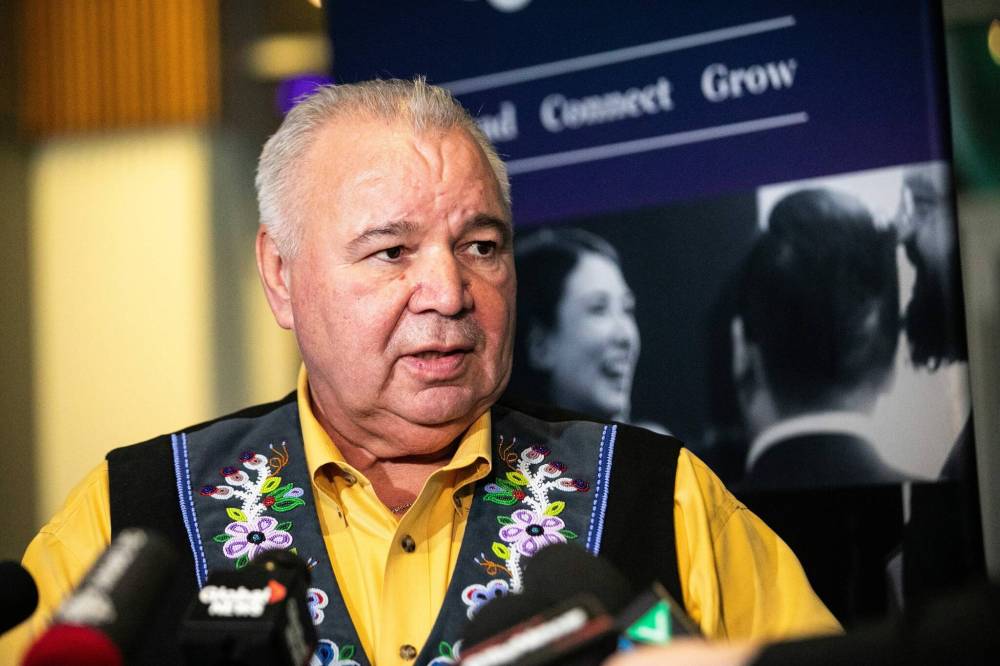
One of the claims is over game hunting areas 5, 7 and 7A around Manigotagan and Grass River, north of The Pas, and areas 17A and 26 on the southeast of Lake Winnipeg.
The other claim is over game hunting areas 9 and 9A — around Paint Lake and Gillam, throughout much of the province’s north — and areas 21 and 21A near Hecla, on the west shore of Lake Winnipeg.
“I’m tired of the governments treating my people like criminals, when they have the right to go and harvest fish for food, according to our seasons,” Chartrand said.
The lawsuits allege that the federal and provincial Crowns have failed to ensure laws are consistent with the United Nations Declaration on the Rights of Indigenous Peoples, and that the province has breached its obligations under its own Path to Reconciliation Act.
The Manitoba government has, since 2012, recognized Métis natural resource harvesting rights in most of southern, central and western Manitoba, along with a small area in the northwest, but not in most of the north or to the east of Lake Winnipeg.
Those rights include hunting and fishing for food without provincial licences, though it requires a Métis harvester card and yearly conservation sticker, among other conservation regulations from the MMF.
Elsewhere in the province, Métis hunters and fishers are required to get licences to hunt or fish and must comply with other government regulations, which the lawsuits argue is an infringement of their rights.
The 2012 agreement between the MMF and the province followed Supreme Court of Canada rulings about constitutional Aboriginal rights for the Métis.
The agreement, the federation argues in its lawsuits, was predicated on the province acknowledging that the Métis also held harvesting rights throughout larger portions of the province, including the areas that are now the subject of litigation.
Various Métis citizens have been charged with violating provincial and federation regulations for hunting or fishing in those areas, the lawsuits say.
The lawsuits also allege that the province advised the federation it would not recognize all of those rights at the same time, for “political reasons.”
The agreement included a commitment between the federation and the provincial government to examine Métis resource right claims in other parts of the province.
The lawsuits say the MMF has since asked the province to jointly conduct research and further recognize harvesting rights in the areas in question, but that the province has failed or refused to expand its recognition of harvesting rights or secure funding for research.

Chartrand argued the government, under former Progressive Conservative premier Brian Pallister, ignored the agreement signed by a New Democratic Party government, while the current NDP government has not expanded recognized areas either.
The federal government also regulates the fishery in Manitoba under a 1987 law which sets out exemptions for First Nations’ harvesting rights, but not for the MMF.
Neither level of government has responded to the new claims in court.
The Manitoba Wildlife Federation, which represents hunters and anglers, and some northern Manitoba First Nations have pushed back as the MMF has sought to expand where its citizens’ hunting and fishing rights are recognized in recent years.
erik.pindera@freepress.mb.ca
Erik Pindera is a reporter for the Free Press, mostly focusing on crime and justice. The born-and-bred Winnipegger attended Red River College Polytechnic, wrote for the community newspaper in Kenora, Ont. and reported on television and radio in Winnipeg before joining the Free Press in 2020. Read more about Erik.
Every piece of reporting Erik produces is reviewed by an editing team before it is posted online or published in print — part of the Free Press‘s tradition, since 1872, of producing reliable independent journalism. Read more about Free Press’s history and mandate, and learn how our newsroom operates.
Our newsroom depends on a growing audience of readers to power our journalism. If you are not a paid reader, please consider becoming a subscriber.
Our newsroom depends on its audience of readers to power our journalism. Thank you for your support.
Erik Pindera is a reporter for the Free Press, mostly focusing on crime and justice. The born-and-bred Winnipegger attended Red River College Polytechnic, wrote for the community newspaper in Kenora, Ont. and reported on television and radio in Winnipeg before joining the Free Press in 2020. Read more about Erik.
Every piece of reporting Erik produces is reviewed by an editing team before it is posted online or published in print — part of the Free Press‘s tradition, since 1872, of producing reliable independent journalism. Read more about Free Press’s history and mandate, and learn how our newsroom operates.
Our newsroom depends on a growing audience of readers to power our journalism. If you are not a paid reader, please consider becoming a subscriber.
Our newsroom depends on its audience of readers to power our journalism. Thank you for your support.
Related Articles
Norway House files suit against Hydro, governments over Lake Winnipeg




Advertisement Advertise With Us
Advertisement Advertise With Us