After an earthquake, how long can trapped victims survive?

Advertisement

Advertise with us

NEW YORK (AP) — For those trapped in rubble after an earthquake, survival depends on many factors, including weather and access to water and air.

Read this article for free:


or

Already have an account? Log in here »

To continue reading, please subscribe:

Subscribe and receive a limited-edition Free Press branded hat or tote.

Digital Subscription

One year of digital access for only $205*

  • Enjoy unlimited reading on winnipegfreepress.com
  • Read the E-Edition, our digital replica newspaper
  • Access News Break, our award-winning app
  • Play interactive puzzles

*First annual payment billed as $205.00 + GST for one year. This annual subscription will automatically renew at $233.00 + GST every 52 weeks (10% off the regular annual price of $259.35). Offer available to new and qualified returning subscribers only. Cancel any time.

To continue reading, please subscribe:

Add Free Press access to your Brandon Sun subscription for only an additional

$1 for the first 4 weeks*

  • Enjoy unlimited reading on winnipegfreepress.com
  • Read the E-Edition, our digital replica newspaper
  • Access News Break, our award-winning app
  • Play interactive puzzles
Start now

*Your next Brandon Sun subscription payment will increase by $1.00 and you will be charged $17.95 plus GST for four weeks. After four weeks, your payment will increase to $24.95 plus GST every four weeks.

NEW YORK (AP) — For those trapped in rubble after an earthquake, survival depends on many factors, including weather and access to water and air.

If their injuries aren’t too severe, victims can survive for a week or more, assuming the weather isn’t too hot or cold, experts say.

In Venezuela, rescue teams have been racing against the clock to pull survivors from the rubble after two powerful earthquakes shook the northern state of La Guaira last Wednesday. More than 770 buildings were totally or partially collapsed from the earthquakes, and aftershocks continued to shake the region.
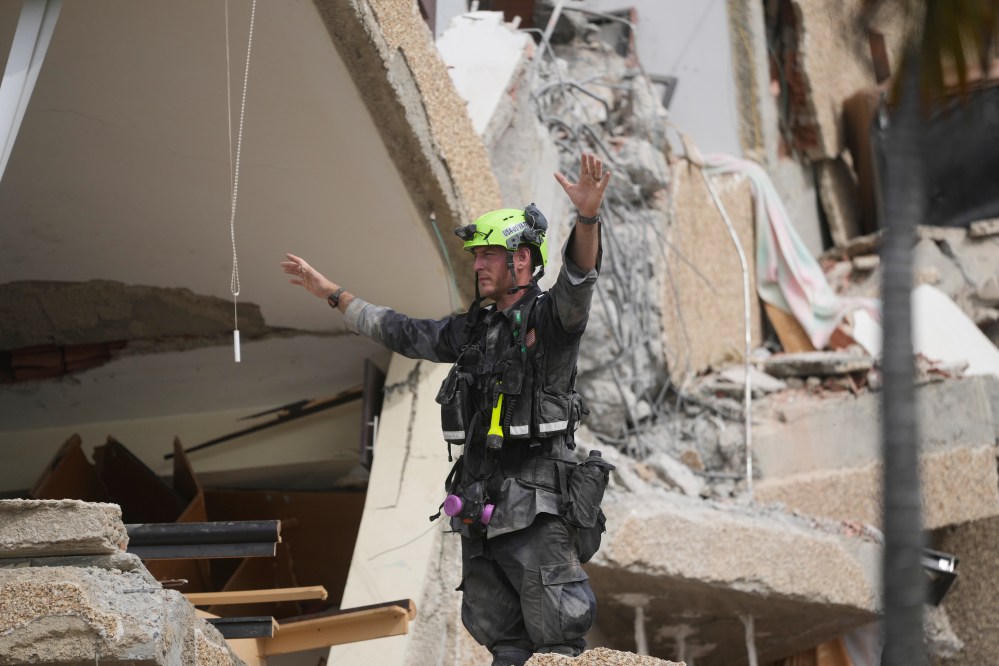
A rescuer from a U.S. search-and-rescue team evaluates access to an earthquake-damaged building in Catia La Mar, Venezuela, Sunday, June 28, 2026. (AP Photo/Fernando Vergara)

Most rescues happen in the 24 hours after a disaster. The chances of survival drop with each day after that, experts say. Most victims are badly injured or buried by falling stones or other debris.

What factors affect earthquake survival?

Trapped victims are more likely to survive if they are in a debris-free pocket that prevents major injury while they await rescue, like under a sturdy desk, said geophysicist Victor Tsai from Brown University. Experts call this a survivable void space.

If fire, smoke or hazardous chemicals were released as a result of the building collapse, they may decrease a person’s survival odds, said emergency response expert Dr. Joseph Barbera, an associate professor at George Washington University.

Beyond that, having air to breathe and water to drink are crucial as the days go on.

“You could survive a while without food,” Barbera said. “You could survive less without water.”

Temperatures where someone is trapped may affect survival, and temperatures outside the rubble can affect rescue missions.

More than 2,600 rescue workers from around the world arrived in Venezuela with trained search dogs and machinery, the government said. And rescue efforts in La Guaira, the hardest-hit area, appeared significantly more organized on Sunday, after residents expressed frustration and anger about the level of response in the days before.

It can be important for survivors to receive vital medical care before they are removed from the rubble, Barbera said. If not, the buildup of toxins from crushed muscles could make them go into shock after they are rescued.

After the 2011 earthquake and tsunami in Japan, a teenager and his 80-year-old grandmother were found alive after nine days trapped in their flattened home. And the year before, a 16-year-old Haitian girl was rescued from earthquake rubble in Port-au-Prince after 15 days.
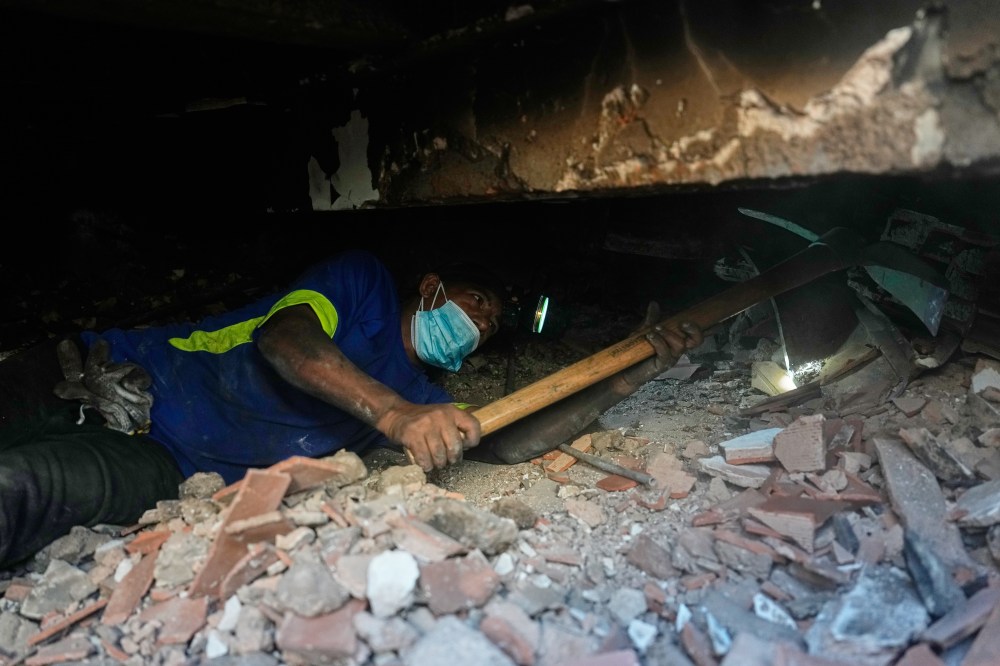
Franklin Rodriguez searches for missing relatives in the rubble of his apartment building, which collapsed in the back-to-back earthquakes that struck La Guaira, Venezuela, Monday, June 29, 2026. (AP Photo/Fernando Vergara)

What to do during an earthquake

The best practices for survival during an earthquake depend on where you are in the world. Building codes in regions with active fault lines are often designed to withstand earthquakes, but that doesn’t hold true everywhere.

In many countries, including the United States, the best practices are to drop, seek cover and hang on unless you are close to a building exit. Seek shelter under a heavy table or near sturdy furniture that may yield a survivable pocket if the roof collapses. Cover your face with cloth or a mask to protect from dust and debris.

If you are trapped in the rubble after an earthquake, save your energy and don’t overexert. Ration food and water, listen for rescue calls and search for something near you to make noise. If you have a phone with you, conserve its battery and try for help in short spurts each day.

—-

The Associated Press Health and Science Department receives support from the Howard Hughes Medical Institute’s Science and Educational Media Group and the Robert Wood Johnson Foundation. The AP is solely responsible for all content.
Report Error Submit a Tip

More Stories

After an earthquake, how long can trapped victims survive?

Adithi Ramakrishnan, The Associated Press 4 minute read Preview

After an earthquake, how long can trapped victims survive?

Adithi Ramakrishnan, The Associated Press 4 minute read Monday, Jun. 29, 2026

NEW YORK (AP) — For those trapped in rubble after an earthquake, survival depends on many factors, including weather and access to water and air.

If their injuries aren't too severe, victims can survive for a week or more, assuming the weather isn't too hot or cold, experts say.

In Venezuela, rescue teams have been racing against the clock to pull survivors from the rubble after two powerful earthquakes shook the northern state of La Guaira last Wednesday. More than 770 buildings were totally or partially collapsed from the earthquakes, and aftershocks continued to shake the region.

Most rescues happen in the 24 hours after a disaster. The chances of survival drop with each day after that, experts say. Most victims are badly injured or buried by falling stones or other debris.

Read
Monday, Jun. 29, 2026

PCs say Hutterite colonies singled out by Bill 21

Alex Lambert 4 minute read Preview

PCs say Hutterite colonies singled out by Bill 21

Alex Lambert 4 minute read 2:01 AM CDT

SOURIS — Members of Hutterite colonies in the province took aim at the NDP government’s proposed changes to drinking water legislation during a public meeting Thursday in Souris.

The meeting was hosted by Progressive Conservative MLA Colleen Robbins (Spruce Woods) to hear from rural residents about their concerns over Bill 21, which the government says will improve oversight on wells and other water systems in the province.

“There’s not enough clarity, but I feel that the overreach that this bill will bring is not clearly defined, and it could have a lot of negative consequences,” attendee Gilbert Hofer, a member of Green Acres colony near Wawanesa, said after the meeting, which drew about 20 people.

The legislation would allow public health officers to designate the type of water source based on its intended use, water quality and use duration rather than solely the number of connections it has.

Read
2:01 AM CDT

Strike mandate for Dynacare workers

Free Press staff 2 minute read Preview

Strike mandate for Dynacare workers

Free Press staff 2 minute read Yesterday at 2:01 PM CDT

Nearly 350 laboratory technicians and technologists at Dynacare’s 22 laboratory and health services centres in Manitoba have voted in favour of a strike.

The Manitoba Association of Health Care Professionals, which represents the employees, said in a news release that 99 per cent of members who voted supported going on strike. A strike notice has not been served to the employer. If and when that occurs, the union is required to give two weeks’ notice.

The collective agreement between the union and Dynacare ended March 31. Negotiations between the parties began in February and they have been in mediation since July 15. They’ve been unable to reach a tentative agreement through mediation, and there are no further bargaining or mediation dates scheduled, the union said in a news release.

Dynacare became Manitoba’s only private outpatient provider for laboratory services in 2017, after purchasing competitor Unicity Labs. The union said Manitoba government records show Dynacare members completed more than 15 million laboratory tests in the 2024-25 fiscal year.

Read
Yesterday at 2:01 PM CDT

Proposed Transcona development — which could add 20,000 people — gets thumbs down from residents

Joyanne Pursaga 5 minute read Preview

Proposed Transcona development — which could add 20,000 people — gets thumbs down from residents

Joyanne Pursaga 5 minute read 6:15 PM CDT

Dozens of Winnipeggers fear plans to make way for up to 20,000 more people to live in south Transcona would dramatically alter their neighbourhood and tie hefty fees for new services to their property titles.

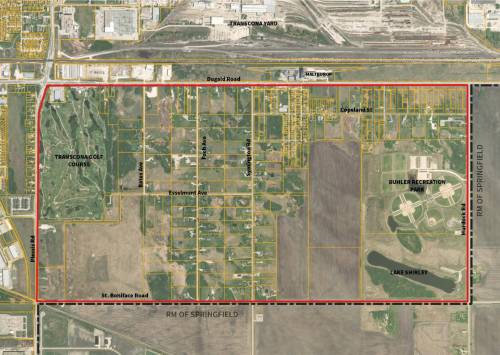
If city council adopts the proposed South Transcona secondary plan, all future development applications would need to conform to its goals. The affected area is located south of Dugald Road, north of St. Boniface Road, east of Plessis Road and west of Murdock Road.

Homeowner Virginia Page Jähne fears the plan could add a massive tab to the title of her 4.3-acre property to cover services required for the development.

“My main concern is that they are wanting to put $1.4 million onto my title to pay for this. Now, they say that I will not have to pay it unless I subdivide. But if a person comes by and wants to buy from me … and they see that $1.4 million … what’s the first thing (they’re) going to do?” said Page Jähne, in an interview.

Read
6:15 PM CDT

City Lego seller continues to build up its business

Gabrielle Piché 5 minute read Preview

City Lego seller continues to build up its business

Gabrielle Piché 5 minute read Updated: 8:54 AM CDT

Brick by brick, a Winnipeg Lego seller is building its third expansion — in less than two years.

Read
Updated: 8:54 AM CDT

Manitoba supports MAID delay: Asagwara

Carol Sanders 5 minute read Preview

Manitoba supports MAID delay: Asagwara

Carol Sanders 5 minute read 2:00 AM CDT

The number of Manitobans receiving medical assistance in dying in 2026 is on track with previous years while the plan to extend it to those suffering from mental illness is delayed indefinitely by the federal government — a move Manitoba’s health minister supports.

“There’s so much more work that needs to be done,” Uzoma Asagwara said.

The parliamentary committee that issued its recommendation in June was the third special committee of Parliament struck to assess the eligibility of people with mental illness since 2021, when MAID eligibility was expanded to include people who were not at the end of their lives.

A key condition for MAID eligibility is that a patient must be suffering from a grievous and irremediable medical condition.

Read
2:00 AM CDT