

Downtown crackdown necessary
Advertisement
Read this article for free:
or
Already have an account? Log in here »
To continue reading, please subscribe:

Digital Subscription
One year of digital access for only $205*
- Enjoy unlimited reading on winnipegfreepress.com
- Read the E-Edition, our digital replica newspaper
- Access News Break, our award-winning app
- Play interactive puzzles
*First annual payment billed as $205.00 + GST for one year. This annual subscription will automatically renew at $233.00 + GST every 52 weeks (10% off the regular annual price of $259.35). Offer available to new and qualified returning subscribers only. Cancel any time.
To continue reading, please subscribe:
Add Free Press access to your Brandon Sun subscription for only an additional
$1 for the first 4 weeks*
- Enjoy unlimited reading on winnipegfreepress.com
- Read the E-Edition, our digital replica newspaper
- Access News Break, our award-winning app
- Play interactive puzzles
*Your next Brandon Sun subscription payment will increase by $1.00 and you will be charged $17.95 plus GST for four weeks. After four weeks, your payment will increase to $24.95 plus GST every four weeks.
Read unlimited articles for free today:
or
Already have an account? Log in here »
It has stirred controversy and been met with loudly voiced objections from some interested parties, but this much can be said about the recent police crackdown on open drug use and trafficking in Winnipeg’s downtown core:
Doing nothing was not an acceptable option.
The Winnipeg Police Service last week embarked on an ambitious 10-day initiative aimed at curbing the very open selling and use of street drugs in the city’s centre, particularly in the area surrounding the strip of Main Street between Logan and Higgins avenues where open drug use has become alarmingly commonplace.
MIKAELA MACKENZIE / FREE PRESS
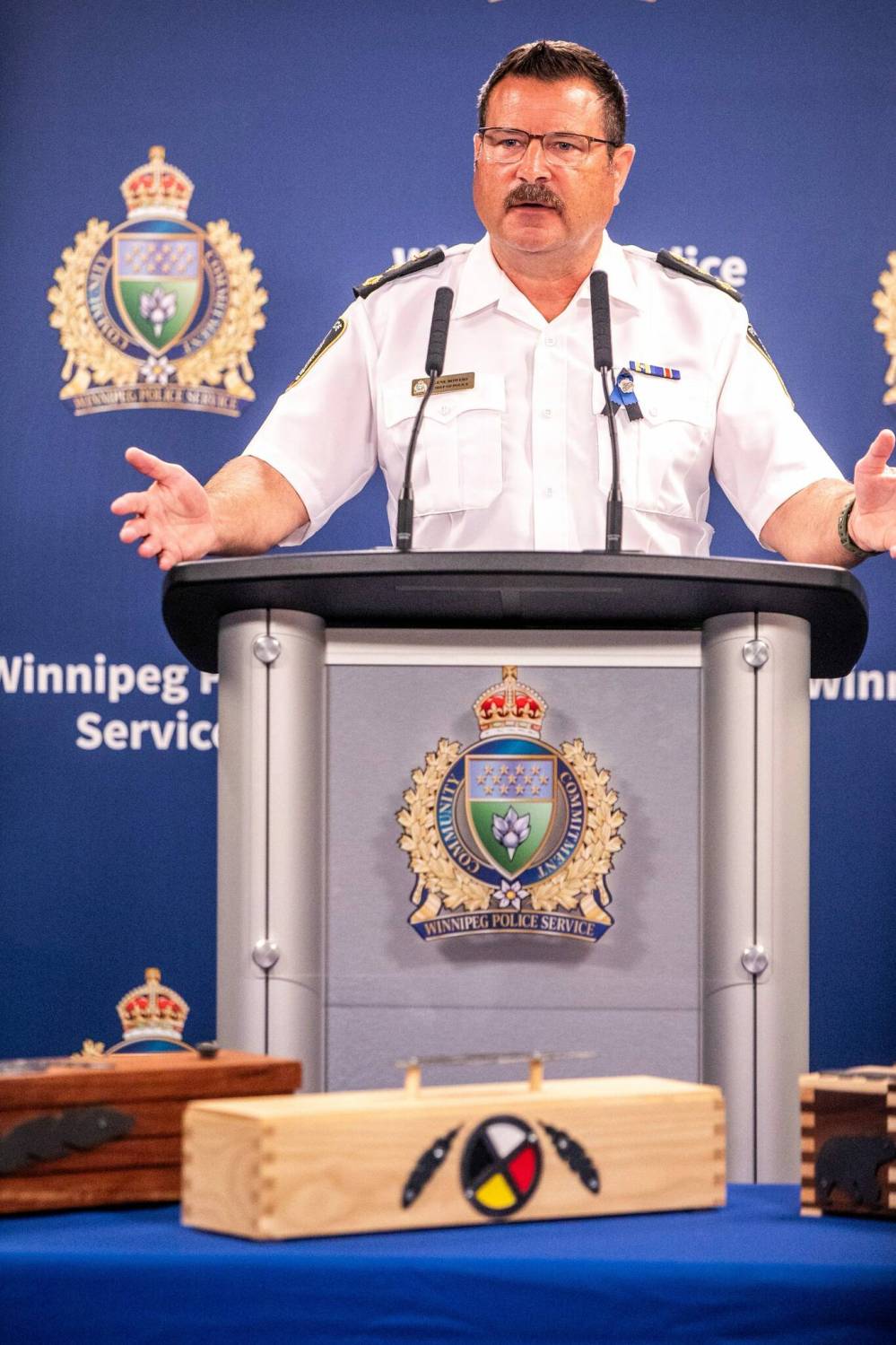
Winnipeg Police Service Chief Gene Bowers
The crackdown, which was jointly announced by WPS Chief Gene Bowers and Mayor Scott Gillingham, is in response to months of escalating complaints from residents, business owners and others concerned about the state of Winnipeg’s downtown.
WPS Supt. Brian Miln described the public outcry as “months and months of complaints, an overwhelming number of them, from communities, from people that live, work and use these neighbourhoods, that are tired of open drug use and all of the negative aspects that brings to their communities — the dangers and safety hazards.”
At issue is the widely held observation that consumption of drugs in public spaces — including in parks, on park benches, in bus shelters and in shopping-mall food courts — has become so common that it has gradually become viewed as “normal” behaviour.
It is not. And it should not be accepted or condoned as such.
The first days of the sweep saw more than 100 people detained, resulting in 25 arrests and 23 severely intoxicated individuals being transported to hospital emergency departments.
In the wake of the crackdown’s launch, officials from some inner-city agencies objected to the initiative and the manner in which it is being carried out, suggesting some interactions between police and people on the street involved the confiscation of not just drugs, but also of harm-reduction supplies that have been made available to drug users.
These are legitimate concerns that reflect the complexity and deep-rootedness of Winnipeg’s accelerating drug crisis. Bringing it under control will require all the political will that can be mustered to address the myriad factors that created, over the span of generations, the cycle of poverty and addiction embodied in the self-harm of those who now openly engage in drug consumption and trafficking in public spaces.

It’s a problem with no easy solutions, and a pursuit that will require years, decades or generations of unwavering commitment.
In the meantime, however, what must also be confronted are the immediate needs and concerns of those living and working in parts of the city hardest hit by the drug crisis. They, too, deserve to be safe, and feel safe, in the public spaces they frequent and the places they call home.
Long before many of them became last-resort refuges for those desperately seeking comfort, bus shelters in Winnipeg were just what their name described: places where would-be transit users could stay warm and dry while waiting for a bus to arrive, not spaces they must avoid and fear because of what might await them inside.
The same sentiment applies to parks and food courts and sidewalks and street-corners; while our city and province must do all they can to assist those for whom urban life includes desperate levels of poverty and addiction, they must also redouble their efforts to make those places safe and accessible for the rest of the population.
The current crackdown will not end Winnipeg’s deeply entrenched drug crisis. But it will reinforce the almost-forgotten idea that downtown and its surrounding neighbourhoods belong to everyone. Surrendering them to dysfunction is not a viable path forward.
Related Articles
Police chief, front-line agencies discuss differences over drug sweep





Advertisement Advertise With Us
Advertisement Advertise With Us
History
Updated on Thursday, July 2, 2026 10:02 AM CDT: Replaces tile photo