Taking flight
Birds’ evolution from feathery, winged dinosaurs chronicled in riveting, well-researched account
Advertisement
Read this article for free:
or
Already have an account? Log in here »
To continue reading, please subscribe:

Digital Subscription
One year of digital access for only $205*
- Enjoy unlimited reading on winnipegfreepress.com
- Read the E-Edition, our digital replica newspaper
- Access News Break, our award-winning app
- Play interactive puzzles
*First annual payment billed as $205.00 + GST for one year. This annual subscription will automatically renew at $233.00 + GST every 52 weeks (10% off the regular annual price of $259.35). Offer available to new and qualified returning subscribers only. Cancel any time.
To continue reading, please subscribe:
Add Free Press access to your Brandon Sun subscription for only an additional
$1 for the first 4 weeks*
- Enjoy unlimited reading on winnipegfreepress.com
- Read the E-Edition, our digital replica newspaper
- Access News Break, our award-winning app
- Play interactive puzzles
*Your next Brandon Sun subscription payment will increase by $1.00 and you will be charged $17.95 plus GST for four weeks. After four weeks, your payment will increase to $24.95 plus GST every four weeks.
Read unlimited articles for free today:
or
Already have an account? Log in here »
Whenever Steve Brusatte’s preschool-aged son was asked which were his favorite dinosaurs, the precocious boy would proclaim: penguins!
He had learned well.
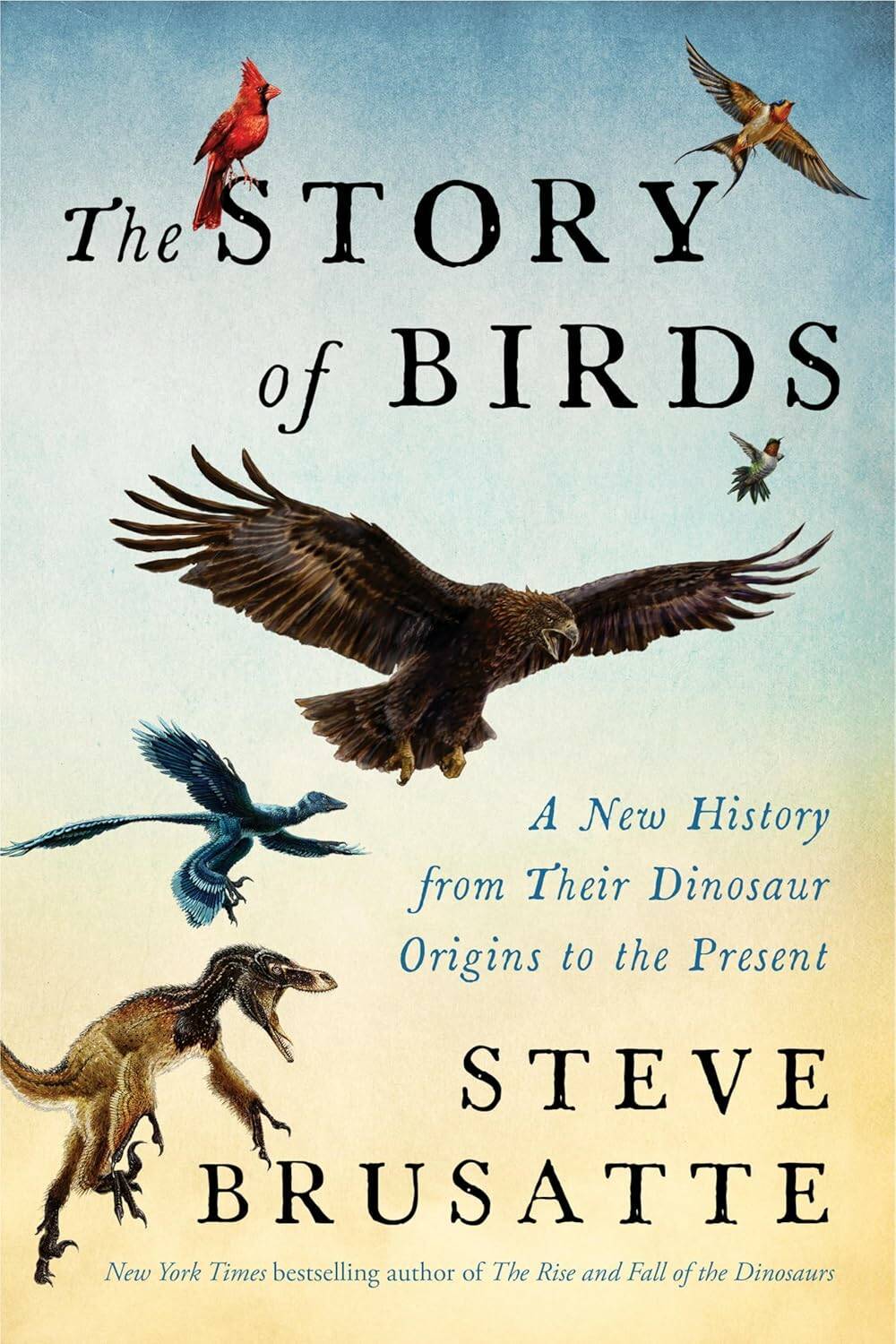
Now his father has extended his educating beyond his family with The Story of Birds, which traces the “long, gradual evolutionary journey” (150 million years) of birds from their origins in the Jurassic period to the over 10,000 species that exist in the world today. It’s a marvelous story.
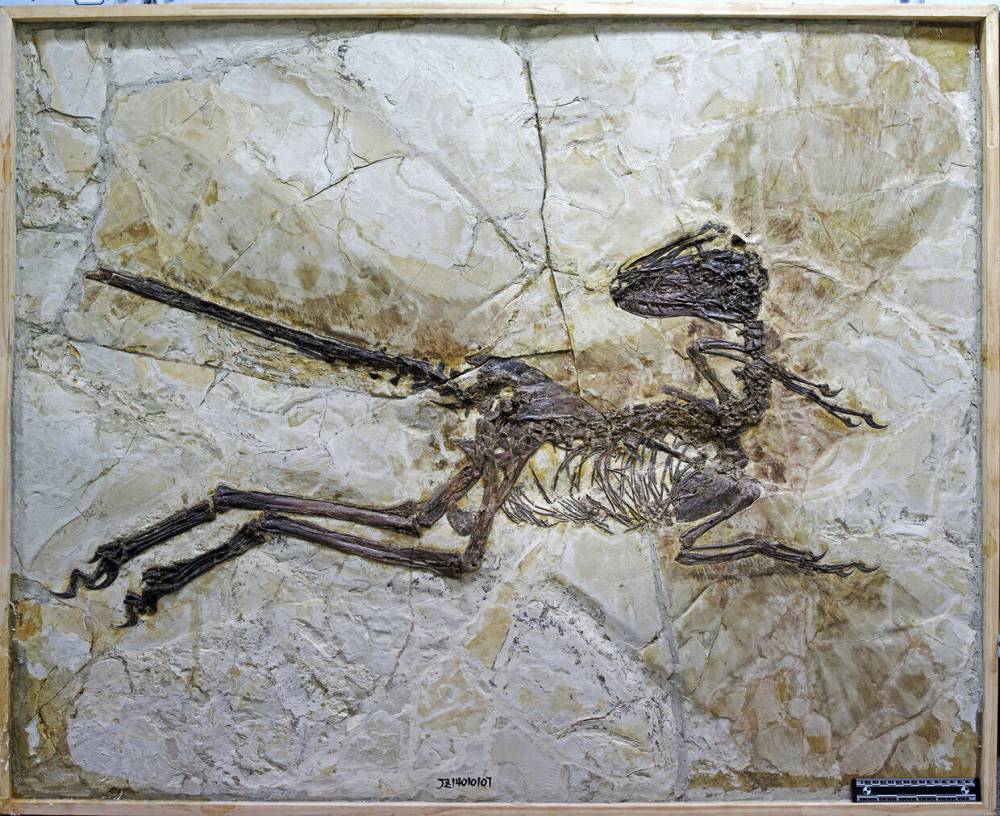
Steve Brusatte / University of Edinburgh / Associated Press files
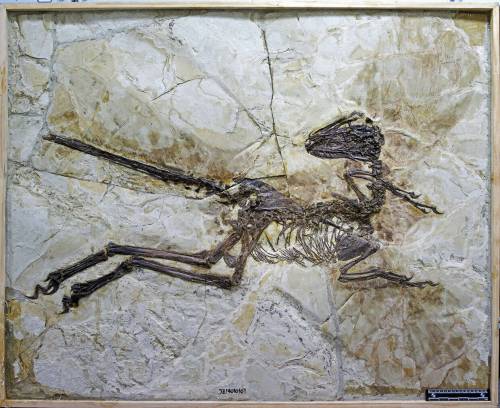
In this 2014 photo taken in Jinzhou, China, the nearly complete, feather-winged fossil of a then-new species of dinosaur named zhenyuanlong suni is shown. While the dinosaur had feathers, it did not fly.
The connection between dinosaurs and birds has been known ever since 1868, when Thomas Henry Huxley first claimed that birds were the descendants of dinosaurs. Few believed him. It was hard to imagine that wrens and robins, even eagles and vultures, were in any way related to such ancient mega-fauna as T. rex or brontosaurus.
Those canonical dinos did not survive when an asteroid hit Earth 66 million years ago. But not all dinosaurs were obliterated; there were thousands of smaller ones that survived. Which ones, how and why are the big questions Brusatte answers in the first two-thirds of his book.
Paleontologists like Brusatte have been aided by a wealth of fossil discoveries in the past 50 years or so. Advances in DNA matching and computer modelling have contributed. What have they discovered?
First off, feathers preceded flying; many non-flying dinos had them. It was the increasing complexity of feathering that, among other changes, led to flight. Adaptations of the bones, muscles, lungs and brains were also necessary.
Pterodactyls were not birds — rather, archaeopteryx is the true matriarch of today’s birds. What happened in the 50 million years or so between this “rudimentary flyer” and modern birds was a longstanding mystery until it was cleared up by a deluge of fossils found by farmers in northern China in the 1990s. They were slightly different anatomically (in the scapula) from today’s birds — so-called “opposite birds” — but they made the connection.
The final major evolutionary transformation that occurred was birds exchanging their teeth for beaks. And, as Darwin’s finches in the Galapagos Islands prove, these unique accessories are still evolving.
Modern bird families took shape during the Paleocene era between 50 million and 60 million years ago. Since then, birds have continued to adapt and diversify. Ratites such as ostriches, kiwis and emus gave up their ability to fly. Others, such as penguins, use their wings for swimming instead of flying.
This is where The Story of Birds gets livelier. There are accounts of what Brusatte calls wonder chickens, terror birds and demon ducks — strange examples of current bird species that have gone extinct.
The Story of Birds

Imagine living in Australia and confronting a dromornis, a “demon duck” three metres in height and weighing over 700 kilograms. Or coming eye-to-eye with a penguin as tall and heavy as a Sumo wrestler. They are among the 1,300 to 1,500 bird species that have disappeared from our world in the past 11 centuries. Not all were victims of human predation.
Birds are not just wonders of colour, flight and song. Neurobiologists have determined that birds have more neurons than mammals of the same-sized brains — and therefore more cognitive power. Crows are famously smart, but even the tiny goldcrest — like our kinglet — has 164 million neurons.
Brusatte is a paleontologist with two decades of outstanding fieldwork, teaching experience (at the University of Edinburgh) and connections. More importantly, he is a gifted writer and storyteller, regularly inserting colourful anecdotes about encounters between dinosaurs and meetings with other scientists. He already has two bestsellers to his credit: The Rise and Fall of the Dinosaurs and The Rise and Reign of the Mammals. This is a perfect third.
If you have any interest at all in dinosaurs, birds, biology, paleontology or evolution, this is a must for your bookshelves.
Gene Walz is the author of Happiness is a Rare Bird: Living the Birding Life.